
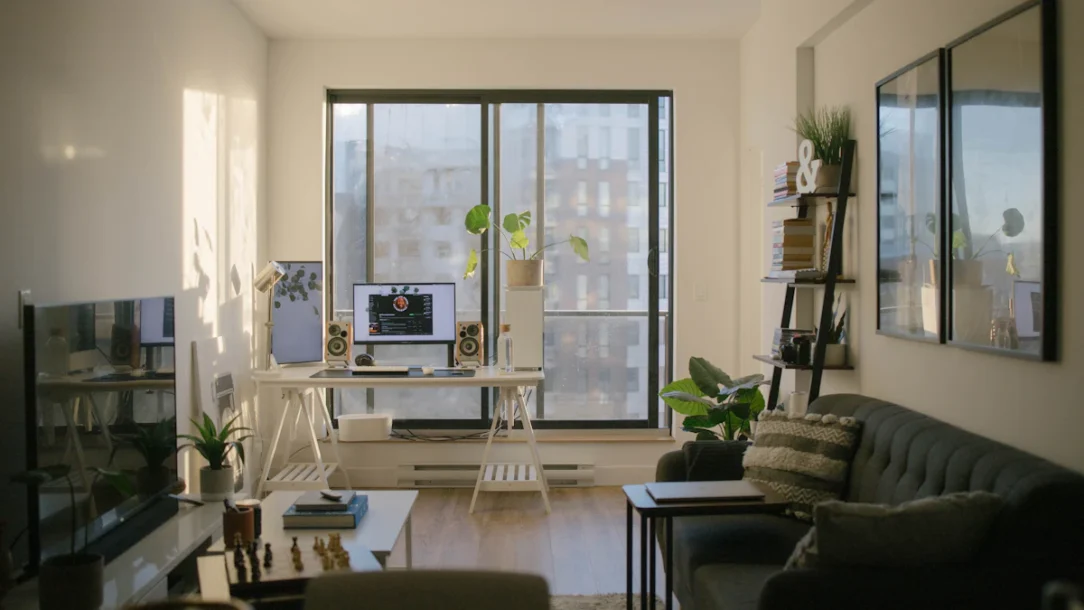
Working from a small apartment gets difficult when every room already has a job. The kitchen is for cooking, the sofa wall holds the TV, the bedroom barely fits the bed, and there is no spare room waiting to become an office. The best small apartment home office ideas solve that problem by borrowing a small part of an existing zone without letting work take over the whole home.
You do not need a large desk or a dedicated room to create a functional setup. A quiet corner, the back of a sofa, one bedroom wall, a dining table, or a shallow alcove can all become a real work zone when the desk depth, chair movement, lighting, storage, and cord route are planned together.
Table of Contents
Plan the Office Footprint Before You Buy a Desk
Start with how you actually work. Someone who uses a laptop for two hours a day needs far less permanent space than someone who works eight-hour days with a monitor, keyboard, mouse, webcam, paperwork, and calls. Write down the equipment that must stay on the desk and what can be stored away after work.
Then identify the apartment’s underused edges. A blank wall beside the sofa, a wide hallway end, the side of a bedroom, or the space between living and dining zones may be enough. Your existing apartment living room layout should still work when the chair is pulled out and someone else walks through the room.
Tape the desk and chair footprints on the floor before buying. This is more useful than measuring the wall alone because the chair is often what turns a “perfect fit” into a blocked walkway.
1. Turn a Living Room Corner Into a Compact Office
A living room corner is one of the easiest places to create a home office because it can borrow the room’s light, outlets, and existing circulation. Use a shallow desk, a chair that tucks in fully, and one focused task light. The goal is to make the office read as part of the living room rather than a separate office suite squeezed into the corner.
A desk around 36 to 48 inches wide is enough for many laptop setups. If you need a monitor, choose a desk deep enough to keep the screen at a comfortable viewing distance instead of pushing the chair farther into the room.
Keep the wall above the desk simple. One shelf, one medium artwork, or a small pinboard is usually enough. If the corner is especially awkward, the footprint-first logic in these awkward corner living room ideas can help you decide whether a desk really belongs there.
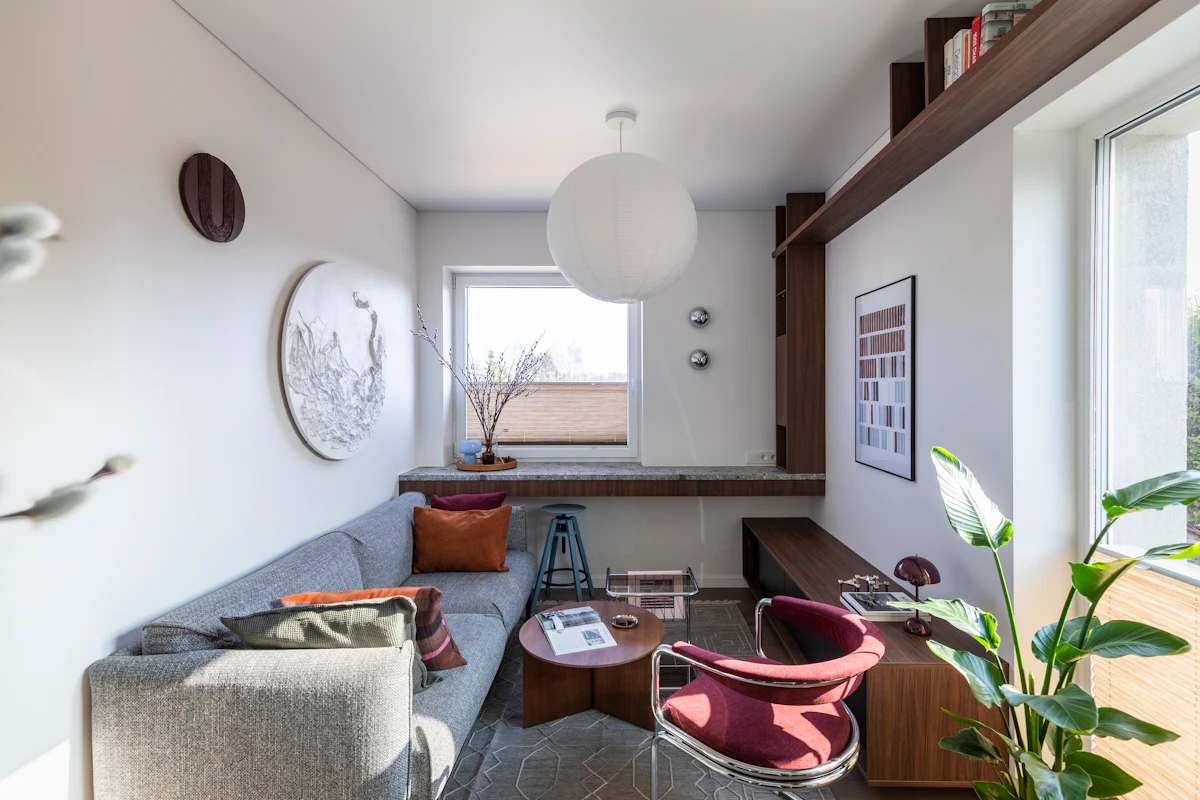
2. Put a Slim Desk Behind the Sofa
When the sofa floats away from the wall, the space behind it can become a surprisingly effective office. A slim desk or console-height work surface creates a defined workspace without taking another entire wall.
Keep the desk slightly shorter than the sofa whenever possible so it does not project awkwardly at either end. A depth around 18 to 22 inches can work for a laptop, while a separate monitor may need more. Make sure the chair pulls back into open floor rather than a dining path or entry route.
This arrangement also helps separate work from relaxation because the sofa acts as a low visual divider. At the end of the day, close the laptop, push in the chair, and the desk can read more like a console than an office.
3. Let the Dining Table Double as a Workstation
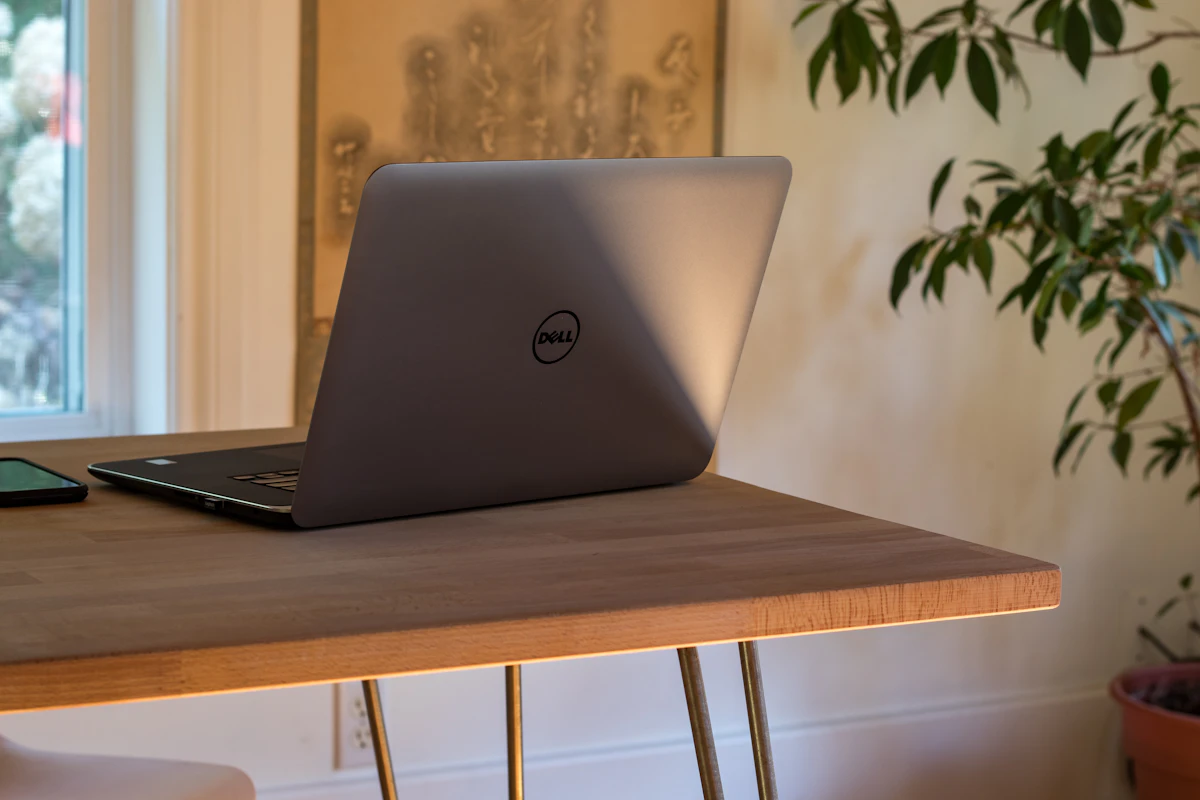
If you do not work from home every day, the dining table may be the best office you already own. It gives you more surface area than many compact desks and avoids adding another permanent piece of furniture.
The key is making the setup easy to remove. Keep a laptop stand, charger, notebook, and mouse in one portable basket or drawer so the table can return to dining mode in a few minutes. A small task lamp that plugs in nearby can improve focus without turning the table into a permanent office.
This works especially well in apartments where the dining zone already has good daylight and a comfortable chair. The flexible-space ideas in these small apartment dining space layouts can help you keep the table functional for both meals and work.
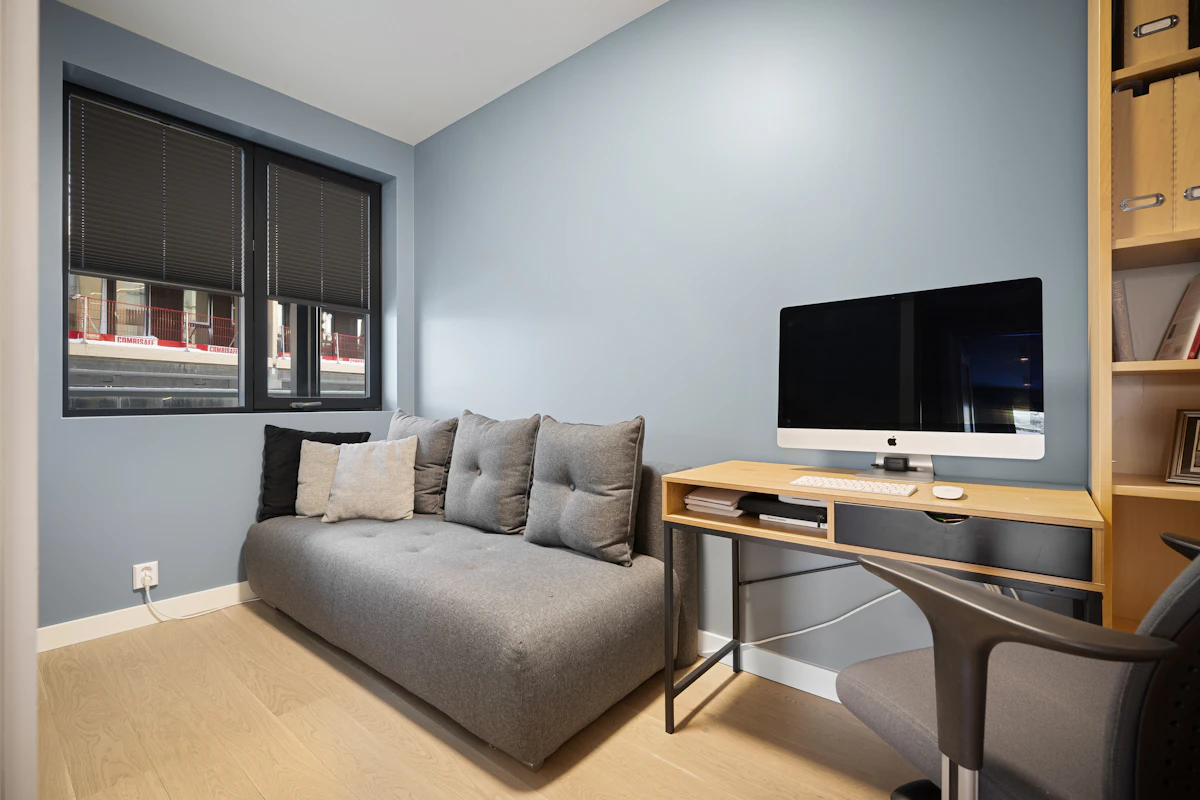
4. Use One Bedroom Wall for a Dedicated Desk
A bedroom desk makes sense when the living room is busy, shared, or too exposed for calls. Place the desk on a wall that does not block bed access, closet doors, or the main path into the room. A window-side wall, one nightstand position, or the wall opposite the bed can all work depending on the room shape.
Keep the office side visually quiet so work does not dominate the room at night. Closed drawers, a compact lamp, and one shelf usually feel calmer than open file storage and multiple organizers.
If the bedroom is tight, use the exact layout tests in these small bedroom with desk layout ideas. That guide goes deeper into desk-nightstand combinations, corner desks, fold-away setups, and chair clearance.
5. Turn an Alcove, Closet Niche, or Hallway Edge Into an Office
A shallow alcove can create the strongest “real office” feeling because the surrounding walls naturally define the work zone. Use a compact desk below and shelves above, or fit a narrow work surface between two walls when the niche is deep enough for your equipment.
An underused closet can also become a desk nook, but only if the apartment can afford to lose that storage. In a small home, giving up the only useful closet for a workstation may create a bigger organization problem elsewhere.
If the niche is near a living area, keep the desk finish related to nearby furniture and use closed boxes or drawers for office supplies. One footprint that combines work and storage follows the same logic as the pieces in these multifunctional furniture ideas.
6. Choose a Fold-Away or Secretary Desk
When you need a dedicated work surface but do not want to see an office all evening, a fold-away desk or secretary cabinet can be ideal. Open it during work hours, then close the work surface and hide the laptop, papers, and charger when you are finished.
A wall-mounted fold-down desk uses the least floor space, but renters may need landlord approval and appropriate anchors. A freestanding secretary desk is easier to move and can provide closed storage above the work surface.
The most useful fold-away setup is one you can open without moving other furniture. If the dining chair, floor lamp, and side table all have to move first, the desk is unlikely to be used consistently.
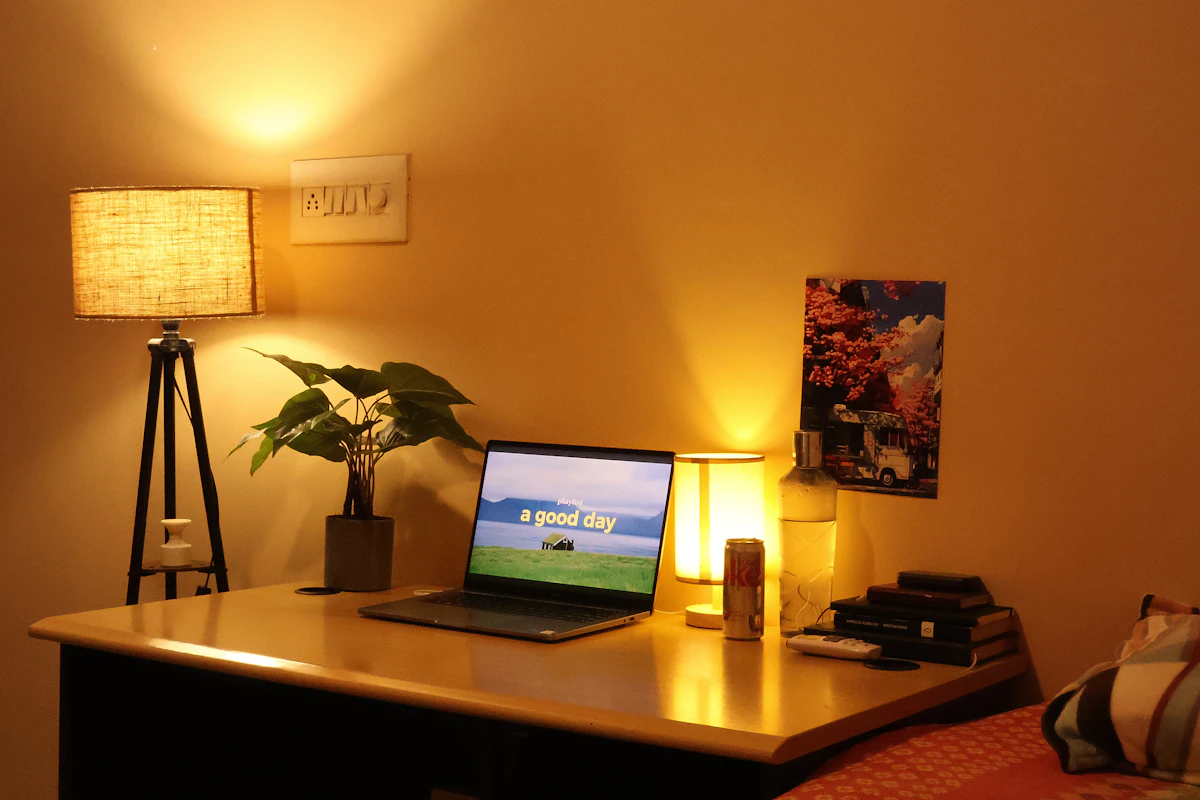
Choose a Desk Size That Fits the Equipment
Do not choose the smallest desk just because the apartment is small. A surface that cannot hold the equipment comfortably usually creates more clutter and poor posture.
For laptop work, roughly 18 to 24 inches of depth may be enough. A larger monitor setup may need more. Width depends on whether you use one screen, two screens, papers, or a printer. Measure the actual equipment and leave enough room for the keyboard and mouse to sit directly in front of you.
Set Up the Workstation for Comfortable Daily Use
If the apartment office is used every day, ergonomics matter as much as space saving. OSHA’s computer-workstation guidance recommends placing the monitor directly in front of you, generally at least 20 inches away, with the top line of the screen at or below eye level. Review OSHA’s monitor placement guidance.
The keyboard and mouse should be close enough that your shoulders can stay relaxed and your elbows remain near the body. A laptop stand paired with an external keyboard and mouse can make a shallow apartment desk more flexible, especially if the laptop would otherwise sit too low.
Plan Light and Glare Before You Commit
Natural light is helpful, but a monitor directly in front of a bright window can create glare. Side-on window placement is often easier. If the desk sits in a darker corner, add a focused task light rather than relying on the apartment’s main ceiling fixture.
Plug-in and rechargeable sconces can save desktop space when wall mounting is allowed. The no-rewiring options in these renter-friendly apartment lighting ideas are especially useful for desks placed far from existing ceiling fixtures.
Keep Power and Cords Out of the Walkway
Place the work zone near a permanent outlet whenever possible. Route laptop, monitor, and lamp cords along the wall or behind furniture rather than across the room. The Electrical Safety Foundation International advises treating extension cords as temporary power, keeping them out of walkways and doorways, and not hiding them under rugs. See ESFI’s extension-cord safety guidance.
If the desk needs several devices, use a properly rated power strip according to its instructions and avoid daisy-chaining strips or extension cords. Good cable planning also makes the office look calmer, which matters more when it shares a living or sleeping space.
Make the Office Disappear After Work Hours
In a small apartment, the visual boundary between work and home matters. You may not be able to close an office door, but you can still create a shutdown routine.
Use one drawer or lidded box for chargers, notebooks, and headphones. Close the laptop, clear the desktop, turn off the task light, and push the chair fully in. A desk that looks calm after 6 p.m. helps the room return to its original job—living, dining, or sleeping.
Common Small-Apartment Home Office Mistakes
Buying a desk before testing the chair clearance. The desk fits against the wall, but the chair blocks the main walkway every time you sit down.
Using a tiny surface for a large monitor setup. Space-saving furniture is not useful if the equipment has nowhere comfortable to go.
Letting office storage spread into the whole room. Keep supplies inside the work zone instead of adding file boxes and organizers to several apartment surfaces.
Putting the office in the apartment’s best circulation route. A bright spot near the entry may still be a bad desk location if everyone has to squeeze around the chair.
Never resetting the workspace. A small apartment feels much more crowded when the office remains visually “open” all evening.
Frequently Asked Questions
Where can I put a home office in a small apartment?
Look for space that already has a clear wall, nearby outlet, and enough room for a chair to pull back. A living room corner, the wall behind a sofa, one side of a bedroom, a dining area, or a shallow alcove can all work.
What size desk is best for a small apartment home office?
For laptop work, a desk around 36 to 48 inches wide and roughly 18 to 24 inches deep can be enough. A separate monitor, keyboard, and mouse often need more depth, so size the desk around the equipment you actually use.
Can I use a dining table as a home office?
Yes, especially if you work from home only part of the week. Use a portable laptop stand, compact task light, and a small bin or drawer so the work setup can clear away quickly before meals.
How do I separate a home office from the living room?
Use furniture orientation, a rug, a wall color, a narrow shelf, or the back of the sofa to define the work zone. You usually do not need a physical room divider unless you also need visual privacy for calls.
How do I make a home office look good in a living room?
Choose a desk finish that relates to the room, keep office storage mostly closed, limit visible cables, use one intentional task lamp, and avoid covering the entire wall with office organizers.
How do I keep home-office cords safe in a small apartment?
Place the desk near a permanent outlet when possible, route cords along the wall or furniture, and keep them out of walkways. Extension cords should be treated as temporary power rather than permanent wiring.
A Real Home Office Does Not Need Its Own Room
The most useful small apartment home office ideas are the ones that fit into your existing life instead of demanding a room you do not have. A living-room corner can become a dedicated desk, the back of a sofa can define a compact office, and a dining table can work perfectly when the setup is easy to clear away. If that desk also serves a PC setup after work, our gaming room ideas cover display placement, equipment storage, and cable organization.
Start with the equipment and chair footprint, protect the apartment’s main walkways, and choose the least permanent setup that supports your actual workday. When the desk is comfortable to use and easy to reset, even a very small apartment can have a home office that feels intentional.

Share Your Thoughts