
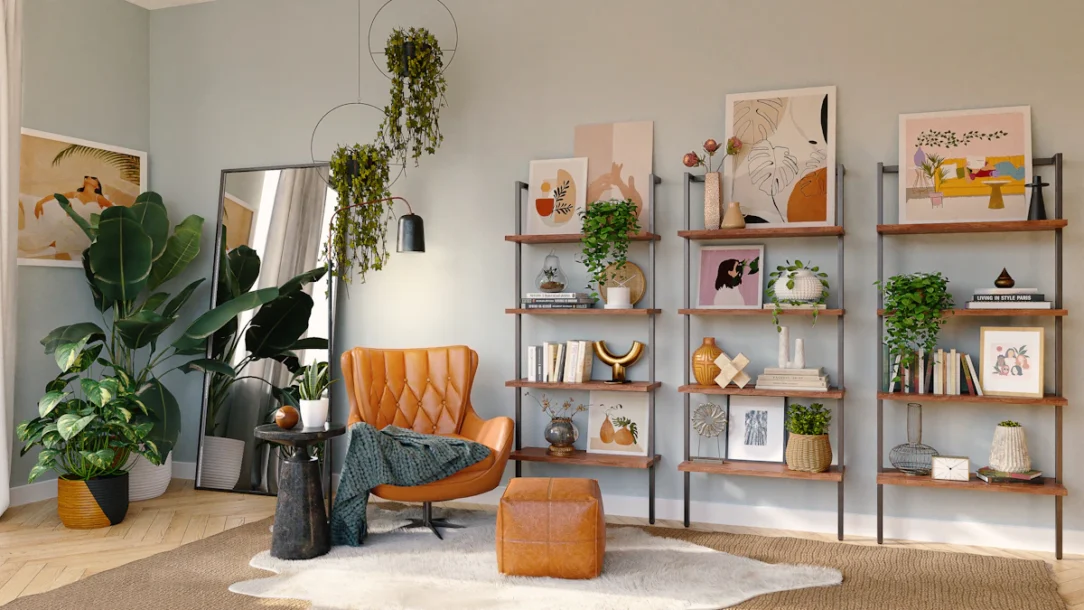
An empty living room corner can feel surprisingly distracting. It is too small for a full furniture arrangement, too visible to ignore, and often sits exactly where a doorway, window, radiator, or sofa arm makes the obvious solution impossible. The best awkward corner living room ideas do not simply fill that gap—they give it one useful job without making the whole room feel tighter.
Before adding a chair, shelf, or plant, look at how people already move through the room. A corner beside the sofa may be perfect for reading, while the space near an entry may work better as closed storage or a narrow landing surface. In a small home, the right answer is usually the option that adds function with the least visual and physical bulk.
Table of Contents
Start With What the Corner Actually Needs to Do
Treat the corner as part of the room plan rather than a leftover decorating problem. Ask whether the space needs seating, storage, light, a work surface, or simply a better visual balance. If you are still arranging the larger pieces, the principles in how to decorate a living room from start to finish are a useful place to begin, because a corner solution only works when the main seating layout already makes sense.
Also check the corner from the main doorway. A piece that technically fits can still look awkward if it blocks the longest sight line into the room. In compact spaces, preserving an open route often matters more than squeezing in another piece of furniture.
1. Build a Reading Nook With One Comfortable Chair
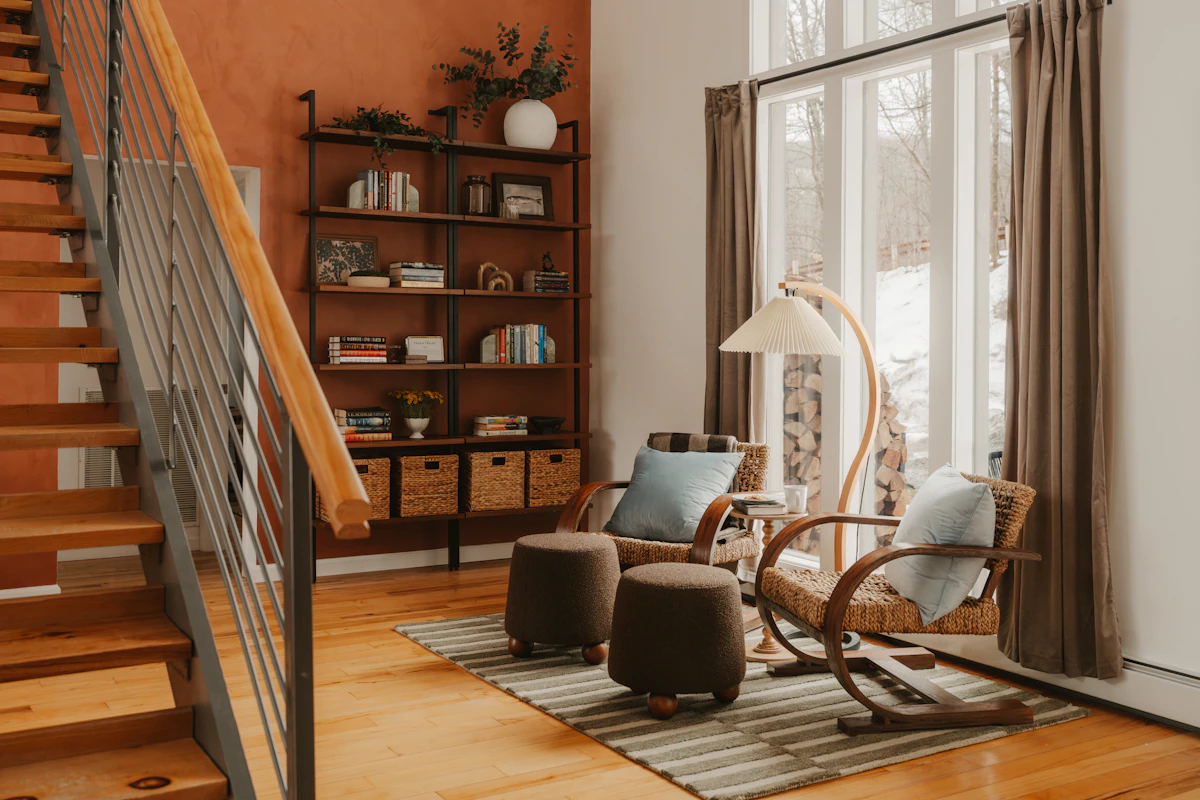
A reading nook is one of the easiest ways to make a dead corner feel intentional. Use one genuinely comfortable accent chair, a focused lamp, and a small surface for a book or drink. The chair does not need to face straight into the corner; angling it slightly toward the sofa lets the nook feel connected to the conversation area when nobody is reading.
For a tight corner, look for a chair around 28–34 inches wide with relatively narrow arms and a moderate seat depth. A tiny drink table—often 10–16 inches across—takes less room than a conventional end table. If the corner is beside a window, choose a lamp that can sit behind or just outside the chair rather than crowding the view.
This works especially well in small living rooms where every furniture piece has to be both attractive and functional. It works less well when the chair would narrow the route to a door, balcony, or another room.
2. Fit a Shallow Desk Into a Workable Corner
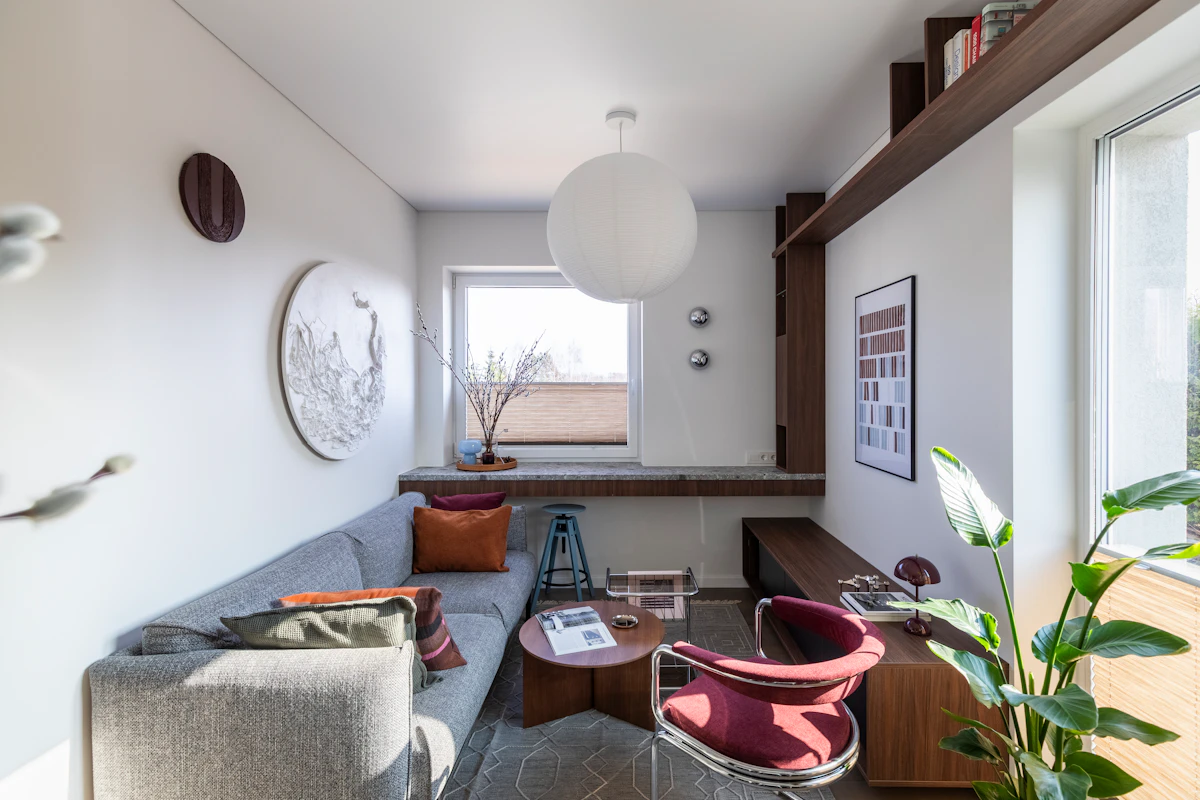
A corner can become a compact work zone when there is enough wall length for a laptop and enough space to pull out a chair without entering the main traffic path. For occasional work, a desk about 36–48 inches wide and 16–20 inches deep is often more practical than a full office desk. A console-height piece can also work if you choose a chair that fits its height.
Keep the finish related to the living room furniture—walnut with warm neutrals, painted wood with a lighter room, or a slim black frame in a more contemporary space—so the desk does not look like office furniture that wandered into the room. A wall-mounted sconce can save desktop space when hardwiring or an approved plug-in option is appropriate.
If the living room already performs several jobs, look at the same “one footprint, two functions” logic used in these multifunctional furniture ideas. Skip the desk if it will become a permanent pile of paperwork in the room’s most visible corner.
3. Use a Tall Narrow Bookcase for Vertical Storage
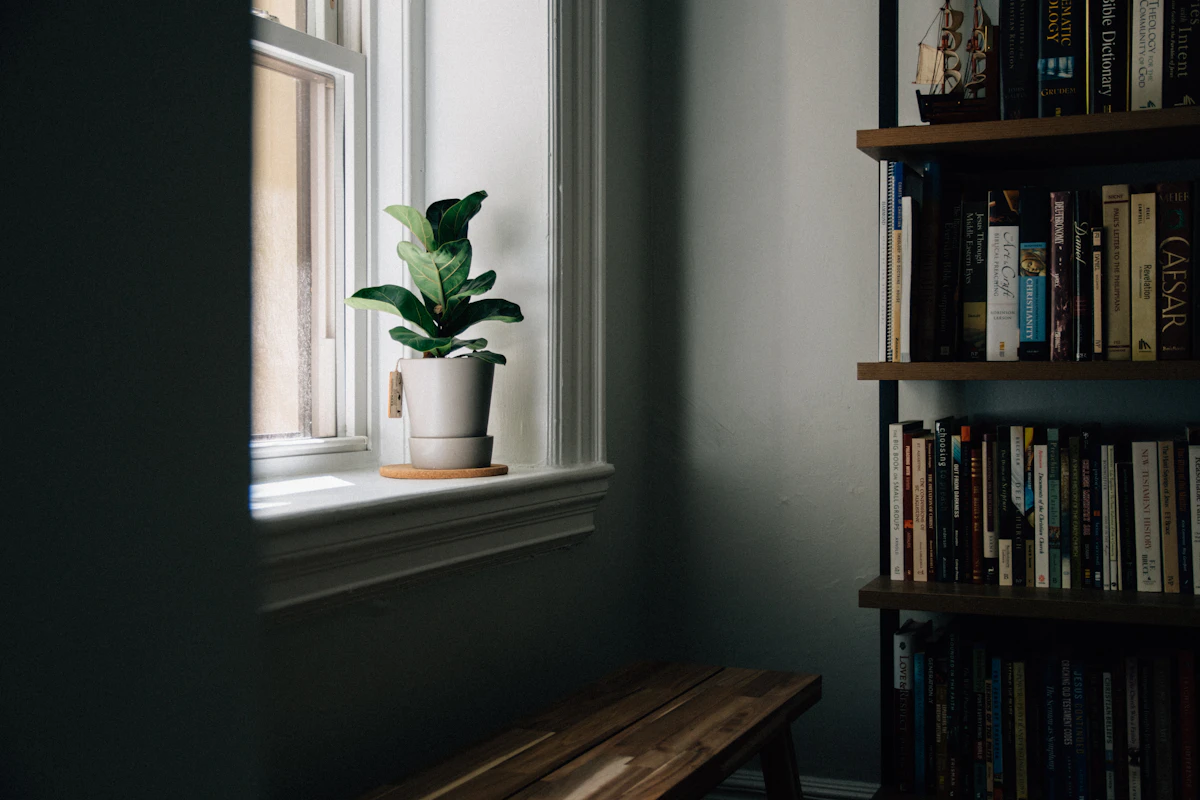
When the floor area is limited but the wall is open, a tall bookcase can give the corner more storage per square foot than a low cabinet. Choose a relatively narrow unit and leave some shelves partially open instead of filling every inch. Books, baskets, one framed object, and a plant usually look calmer than dozens of small accessories.
The scale matters. A bookcase that almost touches a low ceiling can make the room feel boxed in; in that situation, a lower unit or an open étagère may look lighter. If ceiling height is already a problem, the strategies in these low-ceiling living room ideas can help you decide how much visual weight to put high on the wall.
For safety, follow the furniture manufacturer’s anchoring instructions. The U.S. Consumer Product Safety Commission currently recommends securing TVs and furniture such as bookcases and dressers to the wall to reduce tip-over risk. See the current CPSC tip-over guidance.
4. Choose Closed Corner Storage When Visual Clutter Is the Problem
Open shelves are not always the answer. If the corner tends to collect chargers, games, paperwork, pet supplies, or children’s toys, a compact closed cabinet may improve the room more than styled shelving. Look for a shallow cabinet, small chest, or true corner cabinet that gives you doors or drawers without projecting too far into the seating area.
Match its visual weight to nearby furniture. If the sofa and coffee table are already substantial, choose a cabinet on legs or in a lighter finish. If the room feels underfurnished, a darker wood or painted piece can give the corner enough presence to anchor it.
5. Add a Slim Console for Lighting, Charging, and Everyday Drop-Off
A narrow console can solve an awkward corner near a doorway or beside the back of a sofa. It gives you a place for a lamp, a small tray, and a charging station without the depth of a dresser. A console around 10–14 inches deep is often enough for these jobs, but always measure the remaining walkway before buying.
Use the wall above it to create height with one mirror or a medium piece of art. Avoid stacking many small objects on the top; the goal is to turn the corner into a useful landing surface, not a clutter shelf.
6. Use a Small Round Table for Coffee, Games, or Conversation
A round pedestal table is especially useful in a corner where square furniture feels too rigid. With one or two lightweight chairs, it can become a coffee spot, puzzle table, homework surface, or extra dining space. A 24–30 inch table is compact enough for many apartments, while still being useful for two people.
Round shapes are forgiving near door swings and narrow routes because there are no projecting corners to catch a hip. Keep the chairs visually light and easy to move. In an already crowded room, use just one chair and let the table serve as an occasional surface.
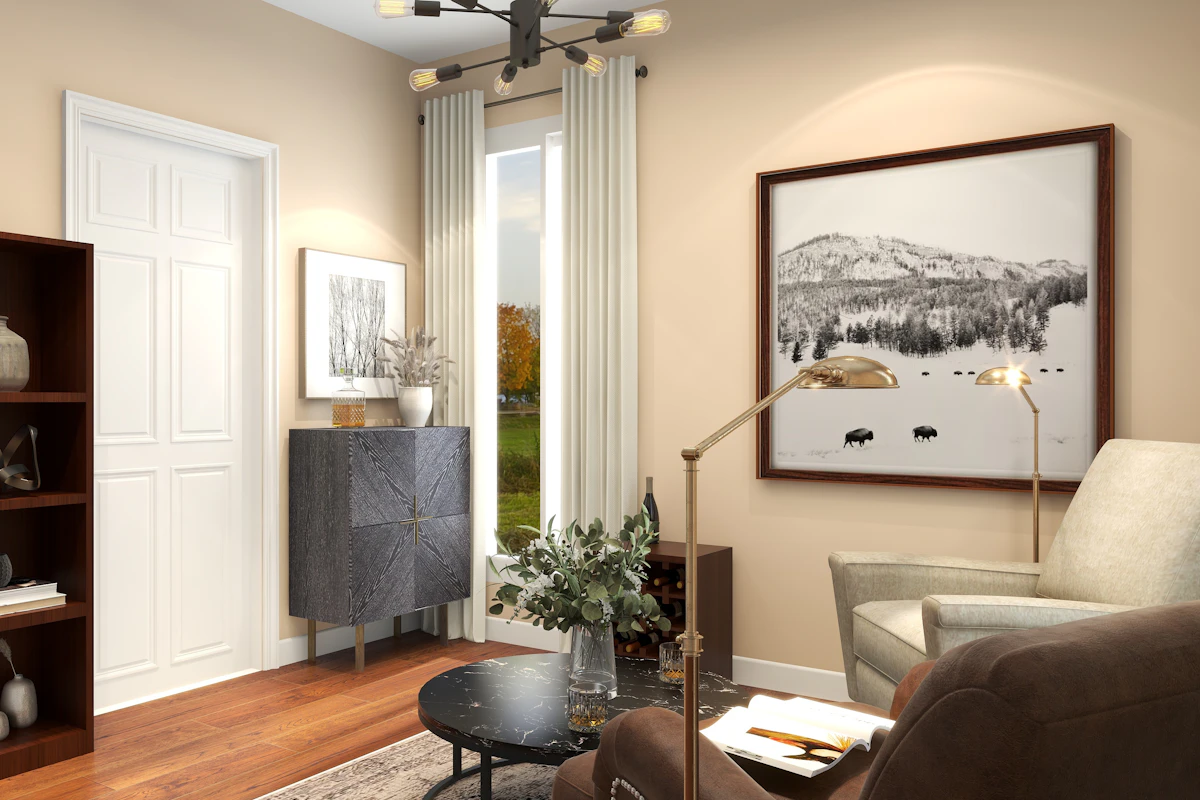
7. Add Floating Shelves When Floor Space Is Tight
Floating shelves are useful when the corner is visually empty but the floor needs to stay clear. Two or three shelves can hold books, small ceramics, framed photographs, or trailing plants while preserving room for a basket or robot vacuum below.
Keep the shelves shallower than standard bookcases—often about 8–10 inches is enough for decor and paperbacks—and stop before the arrangement reaches the ceiling. The most polished version repeats one or two materials already used elsewhere in the room, such as oak, black metal, or painted white wood.
If you rent, avoid improvising heavy shelf installations. Use a wall system approved for the wall type and lease rules, or choose a freestanding alternative instead.
8. Turn the Corner Into Hidden Storage With a Bench or Ottoman
A lidded storage bench or large storage ottoman can turn an underused corner into a place for throws, board games, exercise gear, or seasonal pillows. This is particularly helpful when the living room has very little closed storage.
Choose a piece that can be pulled into the seating group when guests arrive. A roughly 18-inch seat height feels familiar for many adults, but comfort and lid clearance matter more than hitting an exact number. Make sure the lid can open fully without hitting curtains, shelving, or a window sill.
9. Pair a Tall Plant With a Floor Lamp for a Softer Corner
Sometimes the room does not need more storage or seating; it needs height and light. A tall plant beside a slim floor lamp can soften the hard meeting point of two walls and balance a sofa or media unit on the opposite side of the room. This combination is especially useful in corners that feel dark but are too narrow for furniture.
Choose the plant for the actual light level rather than the look alone. Keep the lamp base out of the walking path, and route its cord directly toward an outlet. The Electrical Safety Foundation International advises that extension cords are a temporary solution and should not run through walkways, under rugs, or where they can be pinched. Review ESFI’s extension-cord safety guidance.
10. Create a Compact Drinks or Serving Station
A bar cart or narrow drinks cabinet gives a social living room corner a clear purpose. It can hold glassware, a coffee setup, sparkling water, or serving pieces rather than alcohol if you prefer. Wheels make the cart especially useful because it can move closer to the dining table or sofa when needed.
Style the top lightly: one tray, one lamp or small vase, and the items you actually use. If the corner is beside a sunny window, avoid storing temperature-sensitive food or beverages there.
11. Make a Small Music or Listening Corner
A compact record cabinet, speaker stand, or instrument nook can make an awkward corner feel personal rather than decorative. Keep the setup simple: one low cabinet for records or components, a speaker or turntable, and perhaps one framed print above.
Check equipment ventilation requirements and avoid stuffing electronics tightly into a closed corner. If speakers are part of the setup, experiment with their position before adding permanent wall decor; sound and cable access may determine the best final layout.
12. Keep a Pouf, Stool, or Basket There for Flexible Everyday Use
Not every corner needs a permanent furniture piece. A woven basket for throws beside a compact stool or pouf can create useful storage and an extra seat that moves into the room when needed. This is one of the easiest options for renters because nothing has to be attached to the wall.
Choose pieces with enough visual weight to look deliberate. One oversize basket often looks better than three small ones, and a single sculptural stool can feel more finished than a cluster of tiny side tables. In an apartment living room, that flexibility is often more valuable than filling the corner permanently.
Measure the Corner Before Buying Anything
Corners are deceptive because the usable area is usually smaller than the wall dimensions suggest. Measure wall length, baseboards, outlets, window trim, radiator depth, door swing, and the widest point of any furniture that must pass nearby. Then tape the proposed footprint on the floor.
For a chair, measure the full depth when someone is seated. For a desk or console, include the chair pull-out or drawer opening. For shelves, check whether they will interfere with curtains. Try to preserve a comfortable main walkway; in many rooms, roughly 30–36 inches feels easier to move through, although your layout, household, and accessibility needs may require more.
Common Awkward-Corner Mistakes to Avoid
Filling the corner because it is empty. Negative space is not automatically a problem. If a corner protects circulation or lets the eye rest, leaving it mostly open can be the more finished choice.
Using furniture that is too small. A tiny table, tiny plant, tiny lamp, and tiny artwork often create more visual noise than one correctly scaled piece.
Ignoring the view from the doorway. The corner may look fine from the sofa but cluttered from the entry. Check both viewpoints before committing.
Forgetting outlets and cords. A lamp, desk, or music corner is only practical if power reaches it safely without cords crossing traffic routes.
Matching everything. The corner should relate to the room, but it does not need a miniature copy of the main seating group. Repeat one finish, color, or material and let the zone have its own function.
Frequently Asked Questions
What can I put in an awkward living room corner?
Choose a function before choosing decor. A reading chair, shallow desk, tall bookcase, closed cabinet, small round table, floor lamp and plant, storage ottoman, or drinks cart can all work when the footprint suits the room.
How do I make a corner useful in a small living room?
Use one compact piece that performs a clear job instead of several small accessories. Prioritize shallow furniture, vertical storage, movable seating, and clear walking paths so the new zone adds function without narrowing the room.
Should corner furniture sit tight against both walls?
Not always. A chair often looks and feels better angled slightly toward the main seating group, while a desk, bookcase, or corner cabinet usually needs a more direct relationship with the walls. Let the furniture type and traffic path determine the placement.
How big should a chair be for a small living room corner?
Measure the full footprint, not just seat width. Many compact accent chairs are roughly 28 to 34 inches wide, but arm shape and depth can make two chairs with the same width behave very differently. Tape the footprint on the floor before buying.
How do I decorate an empty corner without making it cluttered?
Use one dominant element and one or two supporting pieces. For example, pair a chair with a lamp and tiny side table, or a plant with a floor lamp. Avoid filling the corner at several different heights unless the arrangement has a clear purpose.
What is the safest way to light a dark corner?
Place the lamp where its cord can reach a permanent outlet without crossing a walkway. If an extension cord is temporarily necessary, use a properly rated cord and keep it out of traffic paths rather than hiding it under rugs or furniture.
Make the Corner Support the Room, Not Compete With It
The strongest awkward corner living room ideas solve a real problem while keeping the larger room easy to use. A reading chair can add a quiet retreat, a shallow desk can create a work zone, a bookcase can add storage, and a plant-and-lamp combination can bring height and light where furniture would feel crowded.
Choose one function, measure the full footprint, and leave enough breathing room around it. When the corner feels connected to the rest of the layout instead of packed with filler decor, the entire living room looks more intentional.

Share Your Thoughts