
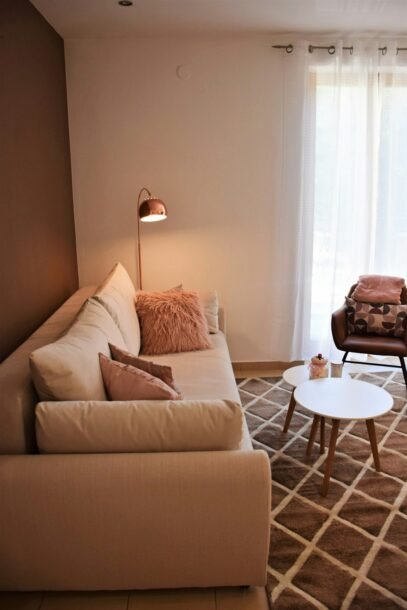
A small living room does not need to feel cramped, under-furnished, or overly minimal. The goal is not to make every piece tiny. It is to choose the right pieces, give them enough breathing room, and make the room easy to move through.
The best small living rooms usually combine three things: a clear layout, storage that controls everyday clutter, and lighting that makes the whole room usable after dark. Once those basics work, color, artwork, textiles, and decorative details can add personality without overwhelming the space.
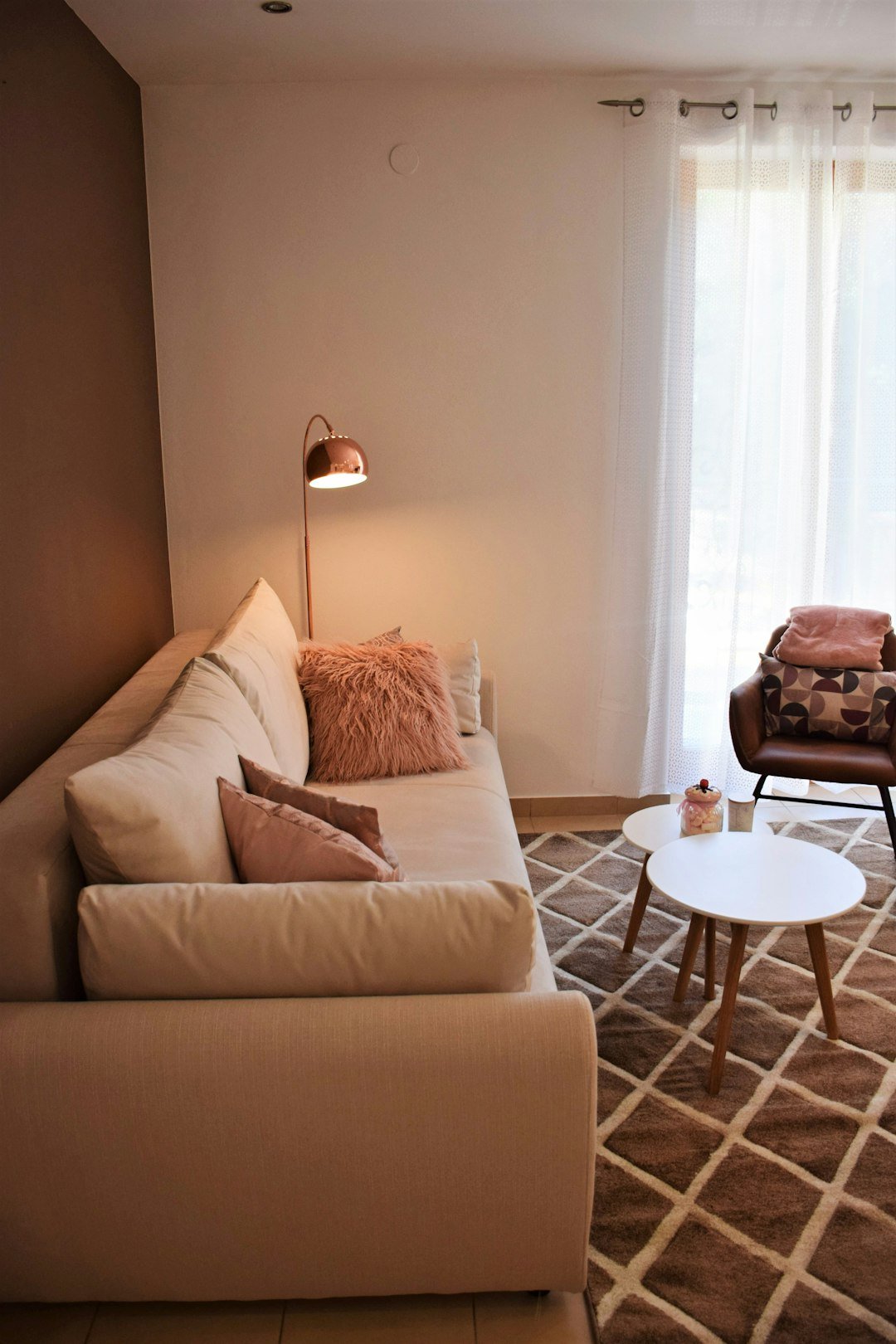
Start With Measurements and Decide What the Room Needs to Do
Before buying furniture or moving anything around, measure the room. Note the length of each wall, the location of doors and windows, any radiators or vents, and the areas people naturally walk through. In a compact room, even a few inches can determine whether a chair feels comfortable or constantly blocks the path.
Then make a short list of what the room actually needs to support. A living room used mostly for TV nights needs a different layout from one that also functions as a home office, play area, or dining space.
- Measure the full room: wall lengths, ceiling height, windows, doors, and openings.
- Mark fixed features: fireplace, TV connection, radiator, outlets, and built-ins.
- Identify the main walkway: keep the route from the doorway to the rest of the home as open as possible.
- List your essentials: sofa, extra seat, coffee table, storage, TV, desk, or anything else you genuinely use.
- Measure existing furniture: do not rely on how large or small a piece looks in a showroom.
If you are decorating the room from scratch, our step-by-step living room decorating guide walks through the broader process from layout and color to furniture and finishing details.
Choose One Clear Focal Point
A small room feels calmer when the eye has an obvious place to land. That focal point might be a fireplace, a large window, the television, a substantial piece of art, or a well-styled shelving wall.
Once you choose it, arrange the major furniture to support it rather than creating several competing centers of attention. For example, if the television is the main focal point, position the sofa for comfortable viewing and let artwork, lamps, and side furniture support that arrangement. If the room has a beautiful window, avoid placing tall furniture directly in front of it when another location works.
You do not need to make the focal point dramatic. In a small living room, one confident visual anchor usually works better than several equally bold features.
Choose the Sofa First and Get the Scale Right
The sofa is usually the largest object in a living room, so it should guide the rest of the furniture plan. A common mistake is assuming that a small room automatically needs the smallest sofa available. A properly sized sofa with comfortable seating can be more useful and less cluttered than several undersized chairs and tables.
Pay attention to depth as well as width. A very deep sofa can project far into a narrow room even if it is not especially long. Slim arms, a tighter back, and visible legs can reduce visual bulk while still giving you a comfortable seat.
Good sofa choices for compact rooms
- A two- or three-seat sofa with relatively slim arms
- A compact sectional when it replaces the need for multiple chairs
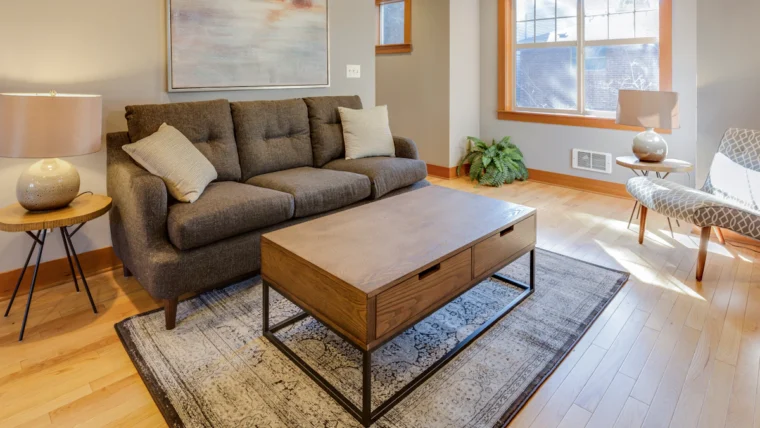
- A sofa on visible legs when you want more floor to remain visible
- A sleeper sofa when the room occasionally needs to host overnight guests
- A sofa with built-in or under-seat storage when storage is a major problem
Before ordering, tape the sofa dimensions onto the floor with painter’s tape. This simple test shows how much walking space will remain and whether nearby doors, drawers, or cabinets can still open comfortably.
Arrange Seating for Conversation and Easy Circulation
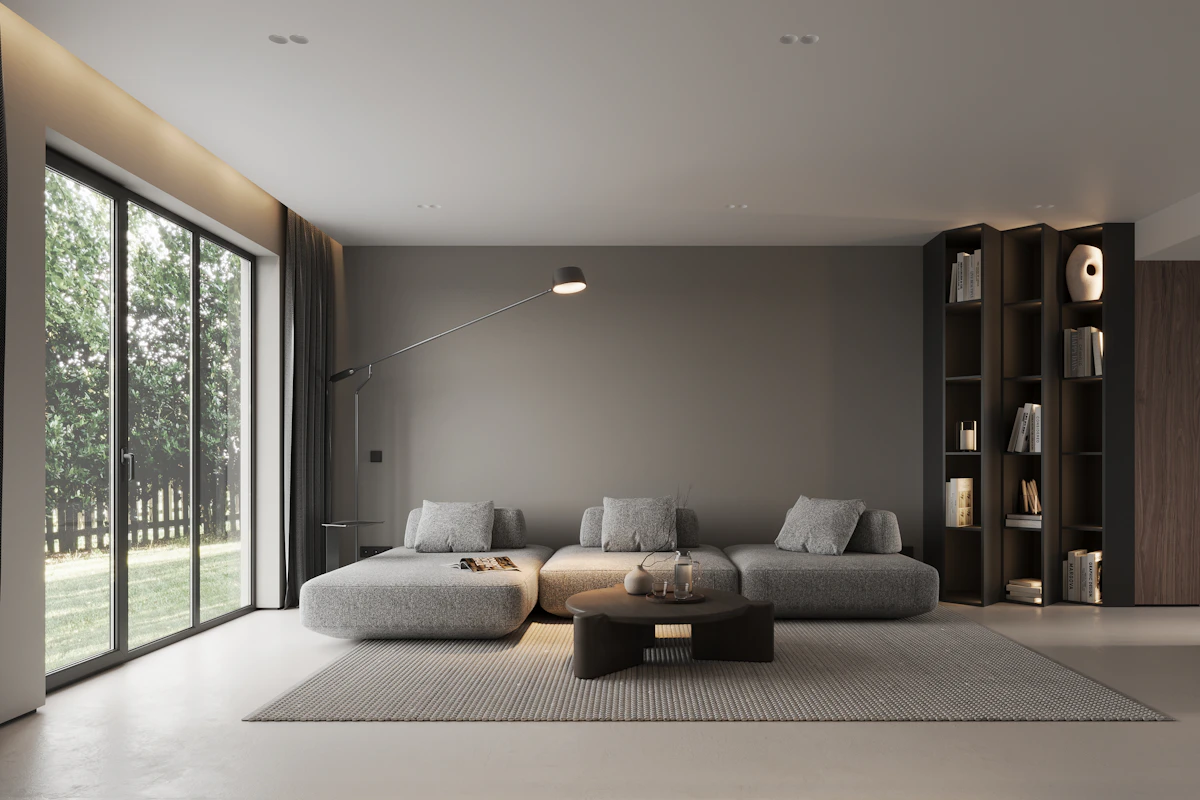
Furniture should support how people use the room, not just line the perimeter. Pushing every piece tightly against the walls can sometimes make the middle feel disconnected. If the room allows it, pulling a chair or sofa slightly inward can create a more intentional conversation area.
At the same time, circulation matters more in a small room than perfect symmetry. Where possible, aim for a main walking path of roughly 30 to 36 inches. In tighter rooms, some secondary gaps may need to be smaller, but the main route should not force people to turn sideways around furniture.
For a coffee table, a gap of roughly 14 to 18 inches from the sofa is a useful starting point: close enough to reach, but not so close that it becomes awkward to sit down or stand up.
Three simple layout approaches
- Narrow room: place the sofa along the longest practical wall and use one light-looking chair rather than a bulky matching set.
- Square room: center the seating around a rug and focal point, using a small side table instead of forcing a large coffee table.
- Open-plan room: use the back of the sofa, a rug, or a slim console to define the living zone without adding a wall.
Use a Rug That Anchors the Room
Our living room rug size and placement guide compares common sizes and seating arrangements before you buy. A rug that is too small can visually break the room into separate pieces. In most small living rooms, one larger rug creates a calmer result than several small rugs scattered around the floor.
A practical arrangement is to place at least the front legs of the sofa and main chairs on the rug. If the rug is large enough for all four legs of the seating to sit on it comfortably, that can work too. The exact size depends on the room, but the important point is that the rug should connect the seating rather than float by itself beneath the coffee table.
Low-contrast patterns, warm neutrals, subtle stripes, and textured solids are easy to layer in a compact room. A bold rug can also work; if you choose one, keep some of the surrounding upholstery and accessories quieter so the room still feels balanced.
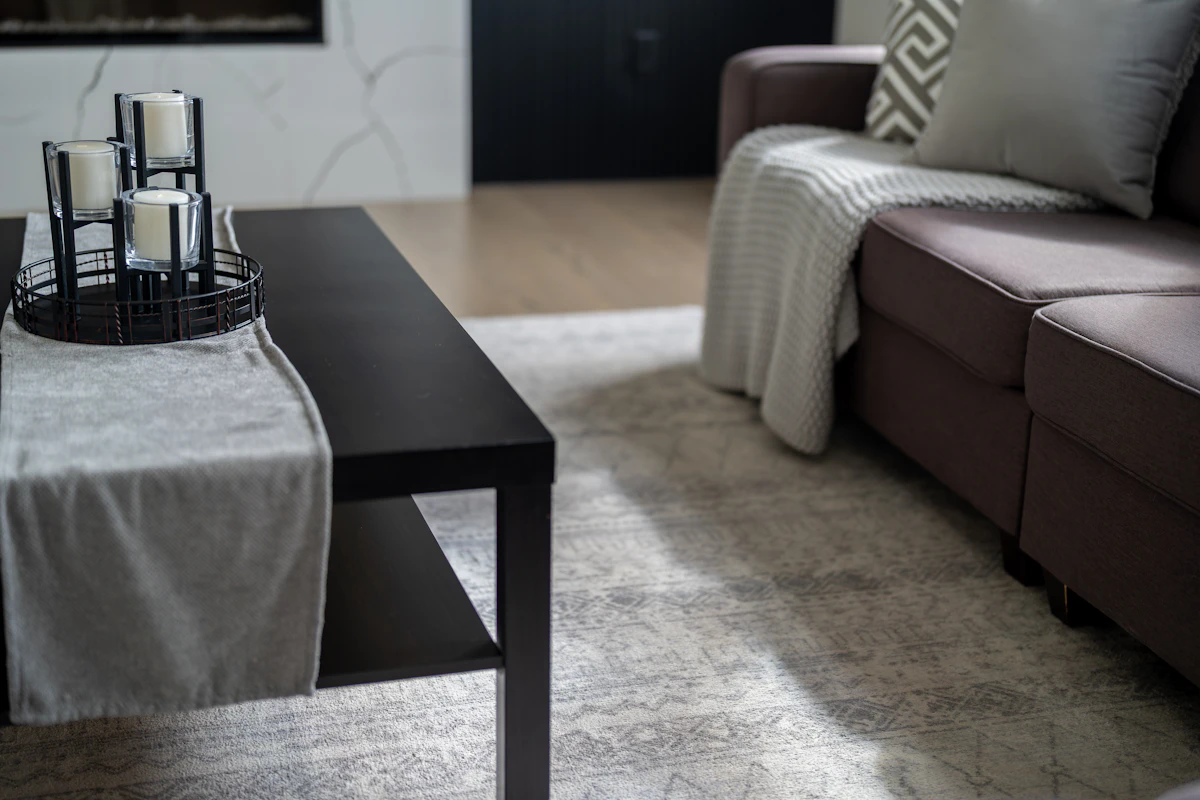
Build Storage Into the Layout Instead of Adding It Later
Small rooms often become uncomfortable because everyday items have nowhere to go. Remote controls, charging cables, toys, books, throws, mail, and hobby supplies can quickly create visual clutter even when the room is technically tidy.
Instead of adding storage containers after the fact, make storage part of the furniture plan.
- Storage ottoman: can work as a footrest, extra seat, occasional table, and hidden storage.
- Closed media console: hides cables, gaming equipment, and electronics better than open shelving alone.
- Wall-mounted shelves: use vertical space without taking up much floor area.
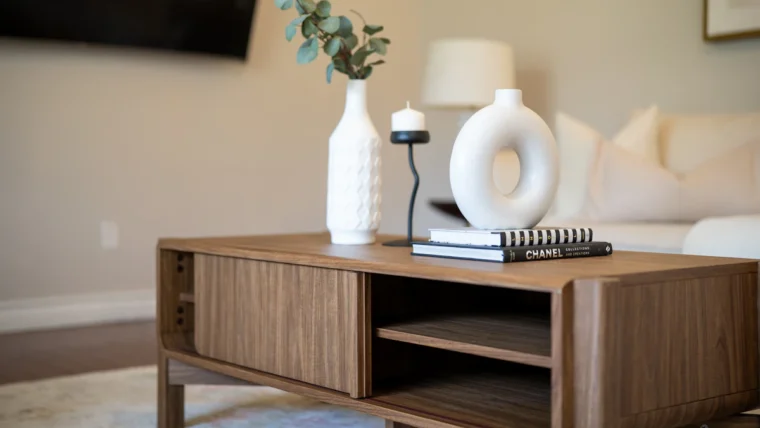
- Storage coffee table: useful when there is no room for an additional cabinet.
- Slim console: can sit behind a sofa or along a narrow wall for lamps, baskets, or frequently used items.
- Built-ins: can turn an awkward alcove into storage while keeping the room visually organized.
The same principle works in other compact rooms too: prioritize frequently used items, hide visual clutter, and make use of vertical space. Our guide to small bathroom storage uses many of the same space-saving ideas in a different setting.
Layer the Lighting Instead of Relying on One Ceiling Light
A small living room can feel noticeably tighter at night if one central fixture leaves the corners dark. A better approach is to combine several types of light so the room works for relaxing, reading, entertaining, and watching television.
- Ambient light: the general light from a ceiling fixture, pendant, or other broad source.
- Task light: a floor lamp, reading lamp, or directional sconce beside a chair or sofa.
- Accent light: a picture light, shelf light, or small lamp that gives depth to a wall or display.
If floor space is limited, wall sconces and plug-in wall lights can be especially useful because they do not require a side table. Lamps at different heights also make the room feel more layered than a single bright overhead source.
Use warm, comfortable light for evening living spaces and make sure the darkest corners receive at least some illumination. The goal is not to flood the room with brightness; it is to avoid one harsh pool of light surrounded by shadow.
Use Color Without Making the Room Feel Busy
White is not the only safe color for a small living room. Soft cream, warm beige, muted green, pale blue-gray, clay-inspired neutrals, and even deeper colors can work when they are used intentionally.
What matters most is visual continuity. Repeating a small palette across the sofa, rug, curtains, artwork, and accessories helps the eye move through the room without stopping at every object.
A simple small-room color formula
- Choose one main wall or background color.
- Add one dominant upholstery or wood tone.
- Introduce one or two accent colors through pillows, art, ceramics, or throws.
- Repeat those accents at least a few times so they look intentional.
If you want ideas for current materials and palettes, our 2026 home decor trends guide covers several approachable directions that can be adapted to a smaller room.
Use the Walls and Vertical Space
When floor area is limited, the walls become valuable decorating and storage space. The goal is not to cover every wall. A few vertical elements can draw the eye upward and make the room feel more finished.
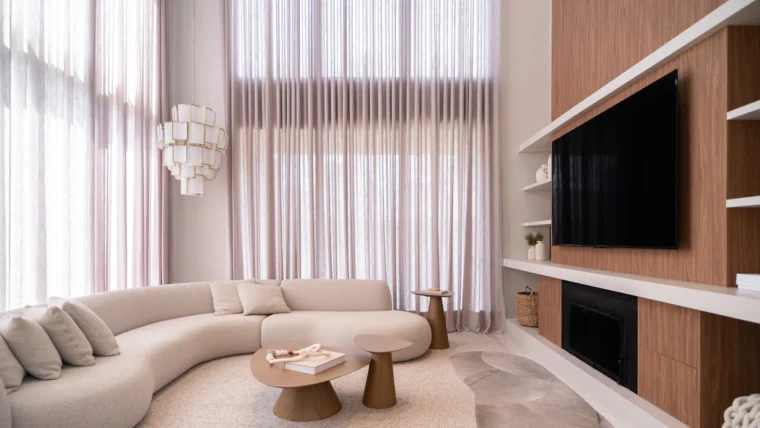
- Hang curtains closer to the ceiling and let them fall near the floor when the architecture allows.
- Use one larger artwork or a controlled gallery arrangement instead of many unrelated small pieces.
- Install shelves above a desk, console, or media unit rather than adding another floor-standing cabinet.
- Use a tall, narrow bookcase in an otherwise unused corner.
- Place a mirror where it can reflect useful light or an attractive view rather than simply adding one because the room is small.
Visible floor also helps a compact room feel less visually heavy, which is one reason furniture with legs, wall-mounted cabinets, and floating shelves can work so well.
Handle the TV Without Letting It Dominate the Room
In many homes the television is unavoidable, and there is nothing wrong with making it part of the layout. The key is to give it a logical position without allowing a large media wall to consume the room.
Use a low-profile console, keep cables contained, and avoid surrounding the screen with too many small decorative objects. If the television shares a wall with shelving, leave some negative space around it so the entire area does not become visually dense.
If your room also has a fireplace, prioritize safe installation requirements for the specific fireplace and television setup rather than forcing a picture-perfect arrangement. In some layouts, placing the television on an adjacent wall creates a much more comfortable room.
Common Small Living Room Mistakes to Avoid
| Mistake | Better approach |
|---|---|
| Buying lots of tiny furniture | Choose fewer pieces that are correctly scaled and genuinely useful. |
| Using a rug that only fits under the coffee table | Use a rug large enough to visually connect the main seating. |
| Pushing everything against the walls | Create a conversation area where the room allows it, while preserving the main walkway. |
| Depending on one ceiling light | Layer ambient, task, and accent lighting. |
| Leaving clutter in open view | Combine attractive open display with enough closed storage for everyday items. |
| Blocking windows with tall furniture | Protect natural light and keep bulky pieces away from important window openings when possible. |
| Using too many unrelated colors and patterns | Repeat a controlled palette and vary texture instead. |
| Choosing furniture before measuring | Measure first and test major footprints with painter’s tape. |
Small Changes That Can Make the Room Work Better on a Budget
You do not need to replace every piece of furniture to improve a compact living room. Start with changes that affect function first.
- Remove one unnecessary piece. An unused side chair or oversized table may be consuming the space the room needs most.
- Rearrange before buying. Try the sofa on another wall or angle a chair toward the conversation area.
- Improve the lighting. A floor lamp or plug-in sconce can change how the room feels in the evening.
- Contain everyday clutter. Add one closed basket, storage ottoman, or cabinet rather than several small organizers.
- Unify the textiles. Coordinating pillows, a throw, and curtains can make mixed furniture look more intentional.
- Make one wall purposeful. Use it for the TV, art, shelving, or storage instead of scattering several small features around the room.
If you enjoy budget-focused decorating, you may also find useful principles in our guide on making a bedroom look more polished without overspending.
Frequently Asked Questions
What type of sofa is best for a small living room?
A sofa with a relatively compact depth, slim arms, and a size that leaves a clear walking route is usually easier to work with. Do not automatically choose the smallest sofa; choose one that provides the seating you need without forcing extra chairs into the room.
Should all furniture be pushed against the walls in a small living room?
No. In some very narrow rooms, wall placement is practical, but it should not be an automatic rule. If space permits, pulling seating slightly inward can improve conversation and make the layout feel more deliberate. Keep circulation as the priority.
What colors make a small living room feel bigger?
Light and mid-tone colors can make a compact room feel airy, but there is no single required color. A cohesive palette, good lighting, controlled contrast, and fewer visual breaks often matter more than simply painting everything white.
Is a sectional too big for a small living room?
Not necessarily. A compact sectional can be efficient when it replaces a sofa plus several separate chairs. Measure the full footprint, including the chaise, and check that it does not block the primary walkway or important doors.
How can I add storage without making the room feel crowded?
Prioritize furniture that performs two jobs, such as a storage ottoman, closed media console, or coffee table with drawers. Then use vertical wall space for items you want to display. Closed storage is especially useful for the small everyday objects that create visual clutter.
Do small living rooms need small rugs?
Usually not. A rug that is too small can make the furniture feel disconnected. In many layouts, a larger rug that reaches under at least the front legs of the main seating creates a more unified look.
Conclusion
A beautiful small living room is less about tricks and more about making deliberate choices. Measure before you buy, protect the main walking path, choose furniture that earns its floor space, use a rug to connect the seating, build storage into the layout, and layer the lighting so the entire room works throughout the day.
Once the practical decisions are solved, decorating becomes much easier. Add color, artwork, plants, books, and textiles in a way that reflects your home rather than trying to hide the fact that the room is small. A compact living room can still feel comfortable, complete, and personal when every element has a clear reason to be there.

2 Comments