
Table of Contents
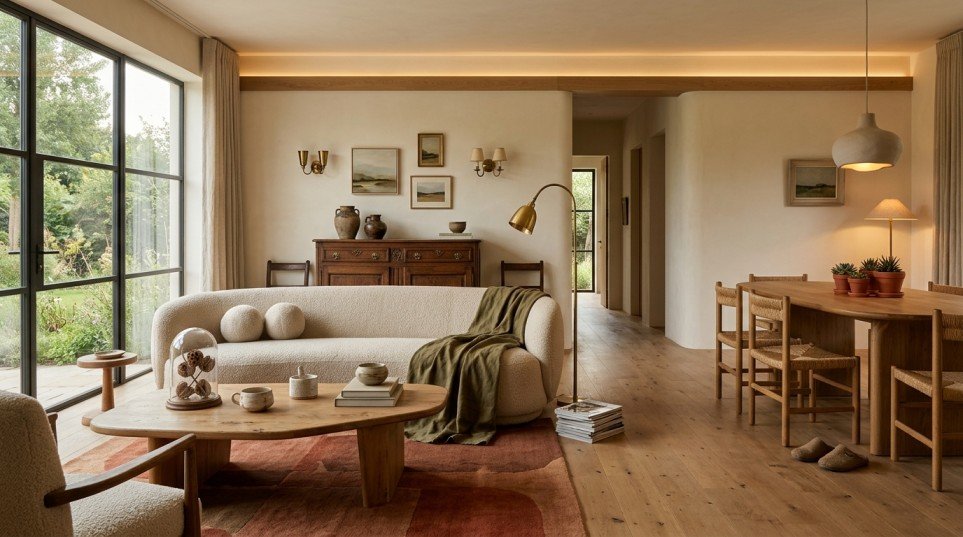
The easiest way to make a home feel dated isn’t necessarily choosing an old-fashioned piece of furniture. It can be creating a room that feels too perfectly matched, too cold, or disconnected from the people who actually live there. In 2026, home decor is moving in the opposite direction: spaces are becoming warmer, more tactile, more expressive and considerably more personal.
Current design research and reporting point to several overlapping shifts, including earthy color palettes, natural materials, softer forms, nostalgic details and interiors that feel collected rather than bought as a single set. Houzz’s 2026 Emerging Summer Trends Report, for example, shows growing interest in warm colors, tactile finishes and curved forms, while its research with design professionals points to warmer, layered and more personalized interiors as a lasting direction.
The good news is that you don’t need a renovation to use these ideas. Below, we’ll look at five of the most useful home decor trends for 2026 and, more importantly, how to adapt each one to an ordinary home without making the space feel overly trendy.
1. Warm, Earthy Colors Are Replacing Cold Neutrals
For a long time, cool white, pale gray and extremely restrained neutral palettes dominated modern interiors. That look isn’t disappearing entirely, but it is becoming warmer.
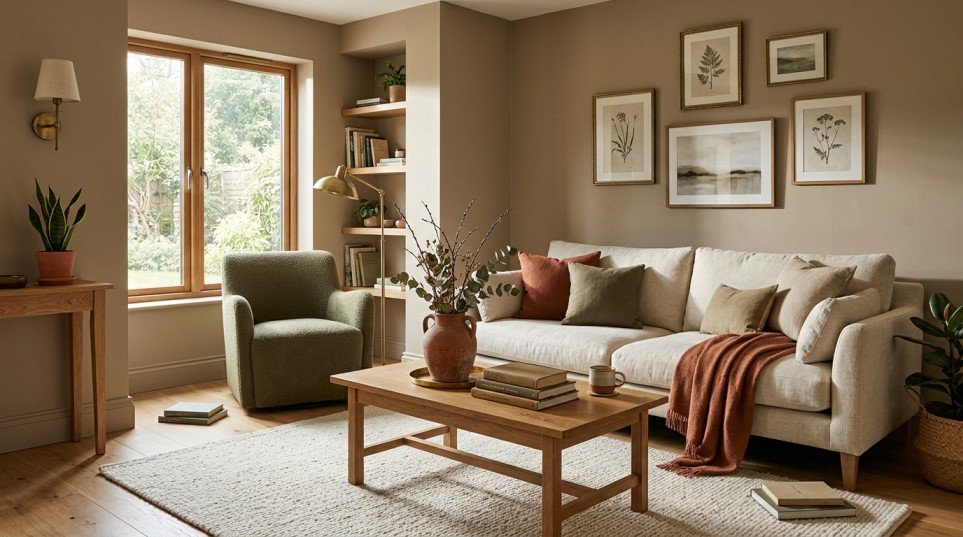
In 2026, designers and homeowners are increasingly turning to terracotta, rust, chocolate brown, olive, sage, taupe, mushroom, cream and other nature-inspired shades. Houzz’s 2026 emerging-trends report found particularly strong growth in searches for rust colors and chocolate brown, alongside rising interest in mushroom, sage, taupe and cream.
That doesn’t mean every room needs dark walls.
The more useful lesson is to introduce warmth through layers.
How to use warm colors without making a room feel dark
Start with the largest permanent elements. If you’re choosing paint, furniture or flooring, think about warm undertones rather than simply selecting the darkest shade available.
For example, a creamy wall color can work beautifully with:
- Medium or dark wood furniture
- Olive-green cushions
- Terracotta pottery
- Warm beige upholstery
- Brass or bronze lighting
- Natural woven materials
The result feels richer without becoming visually heavy.
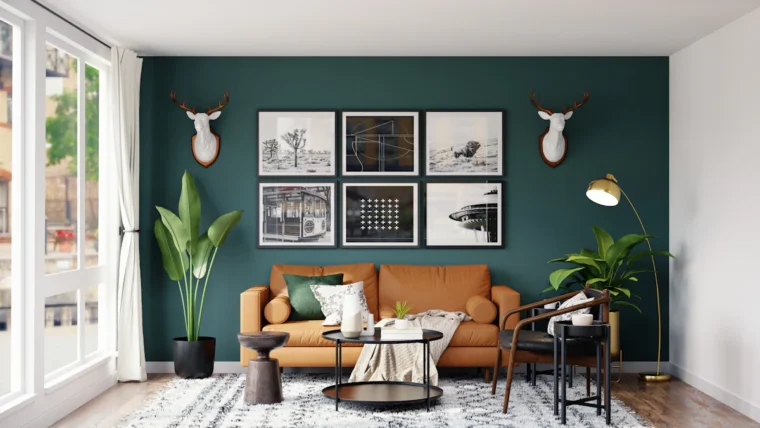
A particularly easy approach is to keep the walls relatively light and bring stronger colors in through furniture, textiles and artwork. This is useful in small rooms where very saturated colors can feel overpowering. Our small living room guide shows how palette continuity, lighting, and furniture scale can work together when space is limited.
Try a three-color palette
A simple decorating formula is to choose:
One dominant neutral + one supporting color + one accent.
For a living room, that could be:
Cream + olive green + terracotta
For a bedroom:
Warm beige + muted blue + dark wood
For a kitchen:
Soft cream + sage + aged brass
The goal isn’t perfect color matching. A slightly varied palette tends to look more natural.
2. Natural Materials and Tactile Finishes Are Doing More of the Decorating
One of the clearest directions in 2026 is that interiors are becoming more tactile.
Smooth, visually identical surfaces are being balanced with materials that have visible grain, variation and texture. Houzz reports rising interest in finishes such as sandstone, linen wallpaper, seagrass wallpaper, Venetian plaster, terracotta flooring and limewash paint.
You don’t need to cover your walls in plaster to participate in this trend.
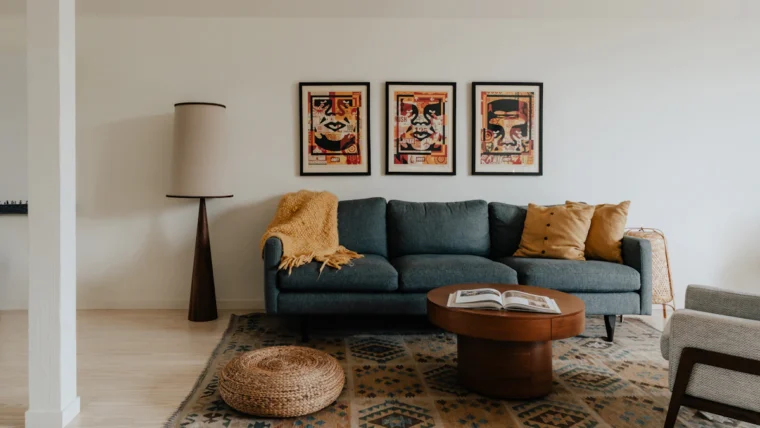
A textured throw, wooden stool or woven basket can create the same visual principle on a much smaller budget.
Build texture in layers
Imagine a bedroom with:
- Crisp cotton sheets
- A linen duvet cover
- A chunky knitted throw
- A wool or jute rug
- A wooden bedside table
- A ceramic lamp
- Woven storage baskets
None of those pieces has to be dramatic. Together, however, they prevent the room from looking flat.
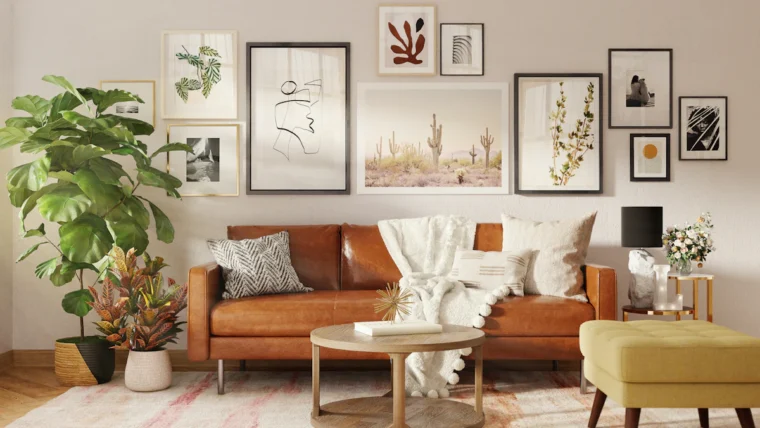
The same idea works in a living room. Pair a smooth sofa with a textured rug, natural wood, woven baskets and handmade-looking ceramics.
Don’t make every surface rustic
This is where the trend can go wrong.
Too many rough finishes can make a room feel visually busy. Contrast matters.
A useful combination is:
One or two strongly textured pieces + several smoother surfaces.
For example, a heavily textured rug can be balanced by a simple sofa and clean-lined table.
Natural materials are also useful because they tend to age more gracefully than highly decorative trend pieces. A solid wood stool or woven basket can remain useful even after your preferred color palette changes. In bedrooms, these materials pair especially well with the layered-texture approach in our modern cozy bedroom ideas.
3. Collected, Vintage and Personal Interiors Are Becoming More Appealing
Perhaps the most interesting home decor shift of 2026 is the move away from rooms that look as though everything was purchased together.
Design reporting increasingly points toward collected interiors, meaningful objects, vintage pieces, inherited furniture and combinations that reveal something about the homeowner. Houzz’s professional survey describes this as a move toward layered, personalized spaces, while Architectural Digest recently highlighted a broader preference for individual expression and emotionally meaningful objects over predictable, mass-produced style. (Houzz)
That doesn’t mean filling your house with antiques.
A single older piece can be enough.
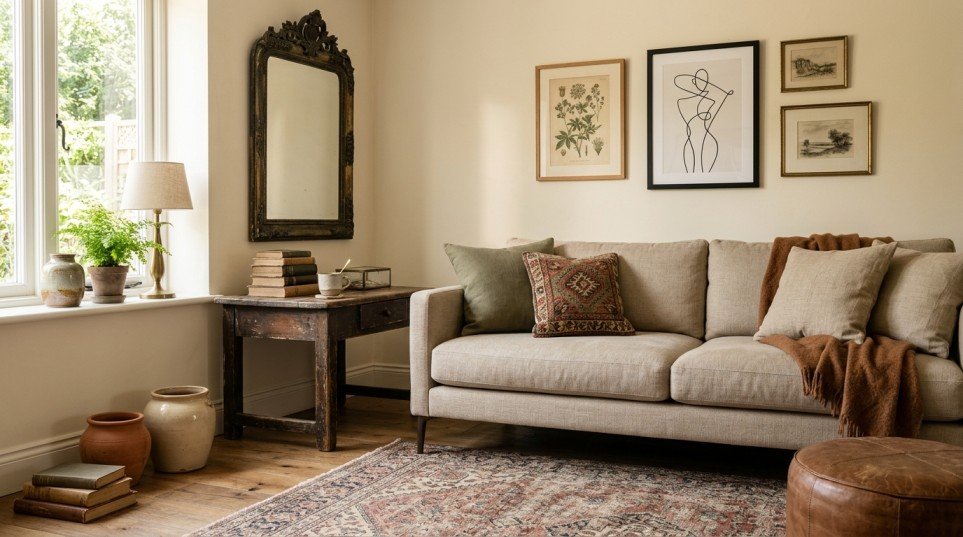
Mix old and new
Try placing:
- A vintage mirror above a contemporary console
- An old wooden stool beside a modern sofa
- Family photographs alongside newer artwork
- A traditional rug beneath streamlined furniture
- Vintage ceramics on an otherwise contemporary shelf
The contrast is what makes the arrangement interesting.
A modern room can actually benefit from one object that doesn’t quite “match.”
Look for meaning, not just age
A secondhand object isn’t automatically good home decor.
Choose pieces because you genuinely like their shape, material, color or story.
A small ceramic bowl picked up during a trip can be more meaningful than an expensive decorative object selected solely because it is currently popular online.
That distinction matters because personal interiors tend to remain enjoyable after individual trends fade.
The emerging idea isn’t simply “add vintage.” It’s “make the room feel like somebody lives here.”
4. Curved Furniture and Softer Shapes Are Changing the Feel of Rooms
Straight-lined furniture isn’t going away, but hard rectangular geometry is no longer the only language of contemporary interiors.
Curved sofas, round coffee tables, arches, scalloped details and wave-like forms are increasingly appearing in furniture and architectural elements. Houzz’s 2026 search data shows strong growth in searches related to scalloped tile, arched kitchen features, rounded islands and curved architectural details.
The appeal is partly practical: softer forms can make a space feel more relaxed and visually approachable.
You only need one curve
You don’t need an entirely curved interior.
In fact, using one rounded element against mostly straight furniture can create more contrast.
Consider:
Living room: Round coffee table
Bedroom: Curved headboard
Entryway: Arched mirror
Dining area: Round dining table
Bathroom: Rounded mirror with a simple vanity
A large curved sofa can be beautiful, but it isn’t necessarily the most practical choice for every room. A smaller decorative element may give you the visual effect without affecting the layout.
Think about movement
Curves can help soften rooms dominated by rectangular furniture.
For instance, place a circular coffee table between a rectangular sofa and two straight-sided chairs. The table interrupts the repeated right angles and creates a more balanced composition.
This is a design principle worth remembering even when the trend eventually changes: contrast in shape creates visual interest.
5. The Most Important Trend: Homes Are Becoming More Personal and Comfortable
The most lasting home decor trend of 2026 may not be a particular color or furniture shape at all.
It’s the growing emphasis on how a home feels and functions for the people who live there.
Houzz’s broader 2026 design research describes a focus on warmth, longevity, well-being and purposeful spaces, while current design commentary increasingly rejects generic interiors in favor of individuality and objects with personal meaning.
That changes the question homeowners should ask.
Instead of:
“What is everyone else decorating with?”
Try:
“What would make this room work better for me?”
Design around real life
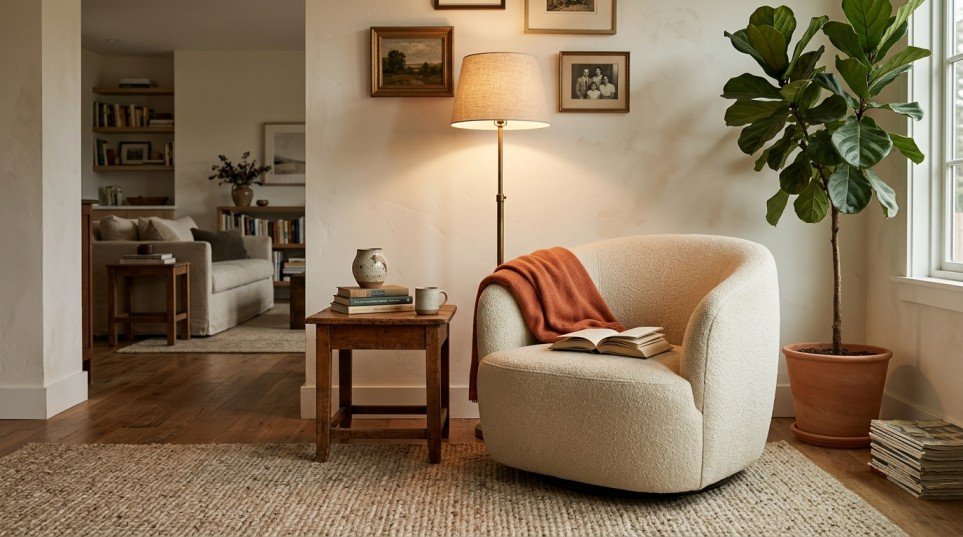
A beautiful reading chair that is actually comfortable is more valuable than a sculptural chair nobody wants to sit in.
A well-organized entryway is more useful than a perfectly styled console covered in objects.
A bedroom with excellent lighting and comfortable bedding is more successful than one that simply photographs well.
Think about what happens in your home on an ordinary Tuesday.
Do children leave shoes by the door? Create storage there.
Do you work from your dining table? Make lighting and cable management part of the design.
Do you regularly host friends? Arrange seating so conversation feels easy.
Don’t redesign everything every year
This approach can also save money.
Invest in relatively timeless pieces for things that are expensive or difficult to replace:
- Sofa
- Dining table
- Flooring
- Cabinetry
- Major lighting
- Bed frame
Use smaller items to experiment with trends:
- Cushions
- Throws
- Artwork
- Vases
- Lampshades
- Small tables
- Curtains
- Decorative objects
Pinterest Predicts 2026 also highlights expressive home directions such as Afrohemian Decor, FunHaus, and Neo Deco. Rather than copying a complete trend, use reports like these as inspiration for a color, material, pattern, or object that genuinely suits your home.
How to Combine 2026 Home Decor Trends Without Making Your Home Look Trendy
The biggest mistake is trying to use all five trends equally.
Instead, choose one as your foundation and use the others as supporting details.
For example, a living room could start with a warm cream and olive palette. Add a natural wood coffee table, one curved chair, a vintage lamp and a few textured textiles.
That’s enough.
The room doesn’t need five more decorative trends layered on top.
A practical rule is to think about balance rather than matching. Combine different shapes, textures and materials, but give the eye some quieter areas to rest.
Before purchasing something, ask yourself three questions:
Does it suit the room?
Will I actually use or enjoy it?
Would I still want it if it weren’t currently trending?
That final question is particularly useful for expensive purchases.
Trends can be excellent sources of inspiration, but your home shouldn’t become a record of everything that was popular in a particular year.
Frequently Asked Questions
Conclusion
The most useful home decor ideas for 2026 aren’t really about making your home look fashionable for one year. They are about creating rooms with warmth, texture, personality and a sense of comfort.
Start with an earthy color palette if your space feels cold. Bring in natural materials when a room looks flat. Add one vintage or meaningful object when everything feels too new. Introduce a curved shape to soften a room dominated by straight lines. Most importantly, make decisions around the way you actually live.
The result doesn’t need to look like a showroom. In 2026, the more appealing direction is often the opposite: a home that feels considered, comfortable and unmistakably yours.
For more practical inspiration, explore our living room decor ideas, bedroom styling guides, and small-space living room guide to continue building a home that feels both current and timeless.

1 Comment