
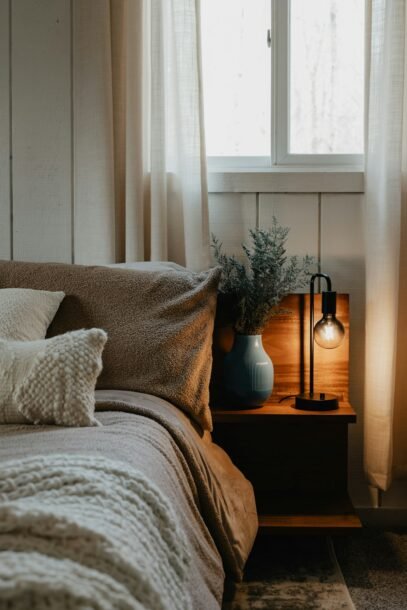
A modern bedroom can look clean and current without feeling cold. The most inviting rooms balance simple shapes and uncluttered surfaces with softness, warm lighting, natural textures, and a few personal details that make the space feel lived in.
You do not need a full remodel to create that effect. In many bedrooms, the biggest improvements come from editing the color palette, upgrading the bedding, improving bedside lighting, controlling clutter, and giving the bed a stronger visual presence.
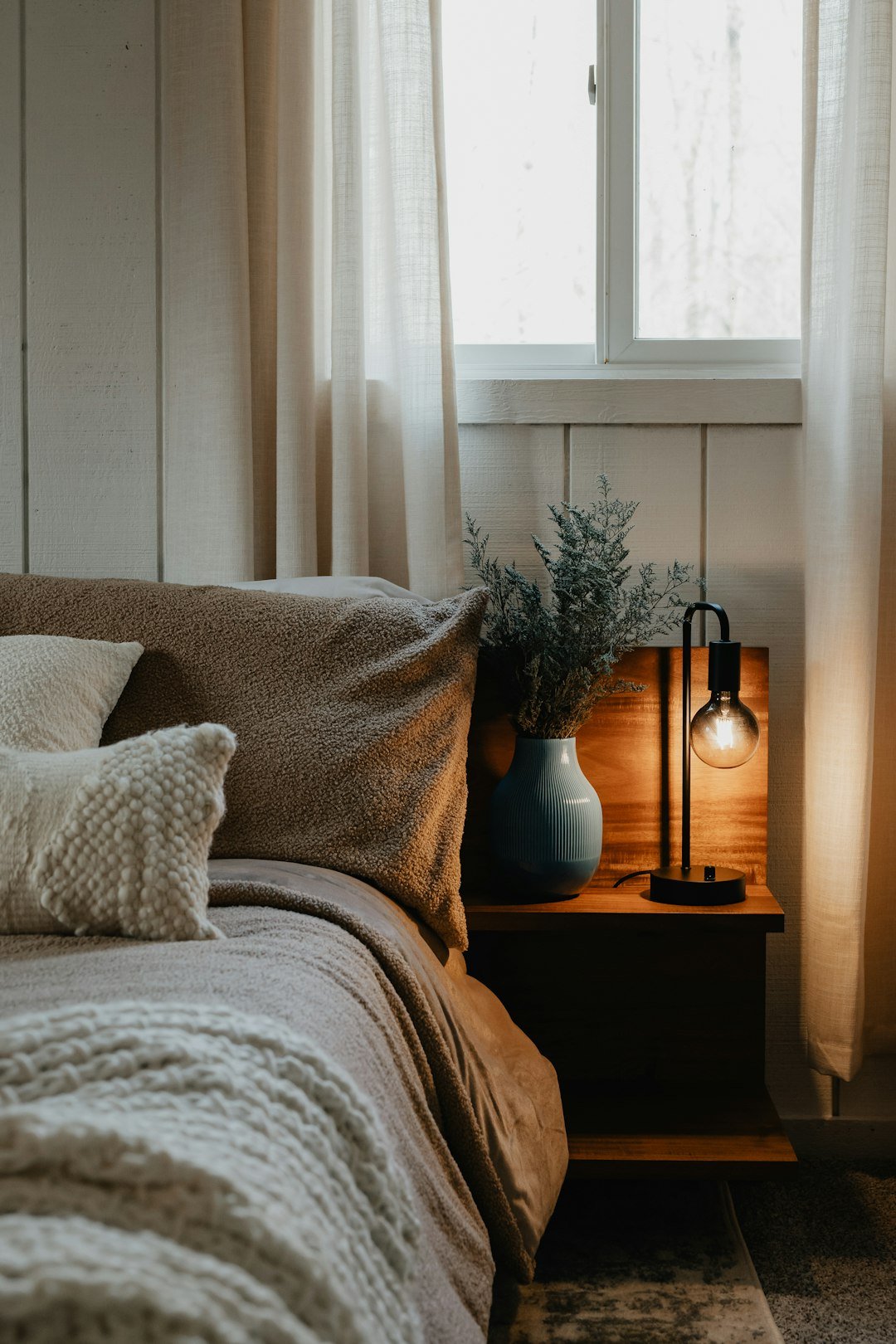
Start With the Room’s Function Before Choosing Decor
Before changing colors or buying accessories, decide what the bedroom needs to do beyond sleeping. Some bedrooms also need to support reading, getting dressed, working occasionally, storing seasonal clothing, or fitting a small vanity. A beautiful plan becomes frustrating if it ignores those everyday needs.
- Measure the bed wall, nightstand space, windows, doors, and walkways.
- Identify the room’s strongest natural focal point, usually the bed wall or a good window.
- List the storage you actually need rather than adding furniture just to fill empty walls.
- Notice where the room feels dark at night so lighting can be planned intentionally.
- Keep the main path from the doorway to the bed and closet as clear as possible.
If your goal is to make the room feel more polished without overspending, our guide on how to make a bedroom look expensive on a budget pairs naturally with the ideas below.
1. Build a Warm Modern Color Palette
Modern bedrooms often work best with a limited palette rather than a large mix of unrelated colors. That does not mean the room has to be all white or gray. Warm neutrals, muted greens, clay tones, soft blues, mushroom browns, and creamy off-whites can all feel modern when the colors repeat intentionally throughout the room.
Choose one main background color, one larger secondary tone, and one or two accents. For example, a warm off-white wall can pair with an oatmeal upholstered bed, walnut furniture, and muted olive accents. Repeating the olive in a pillow, artwork, and small ceramic piece makes the room feel coordinated without looking overly matched.
A simple palette formula
- 60% background: walls, large rug, or major upholstery
- 30% supporting tone: bedding, curtains, wood furniture, or a larger accent piece
- 10% accent: pillows, artwork, ceramics, books, or a small throw
Treat that ratio as a visual guideline rather than a strict rule. The goal is simply to prevent too many equally strong colors from competing in a room designed for rest.
2. Make the Bed the Visual Anchor
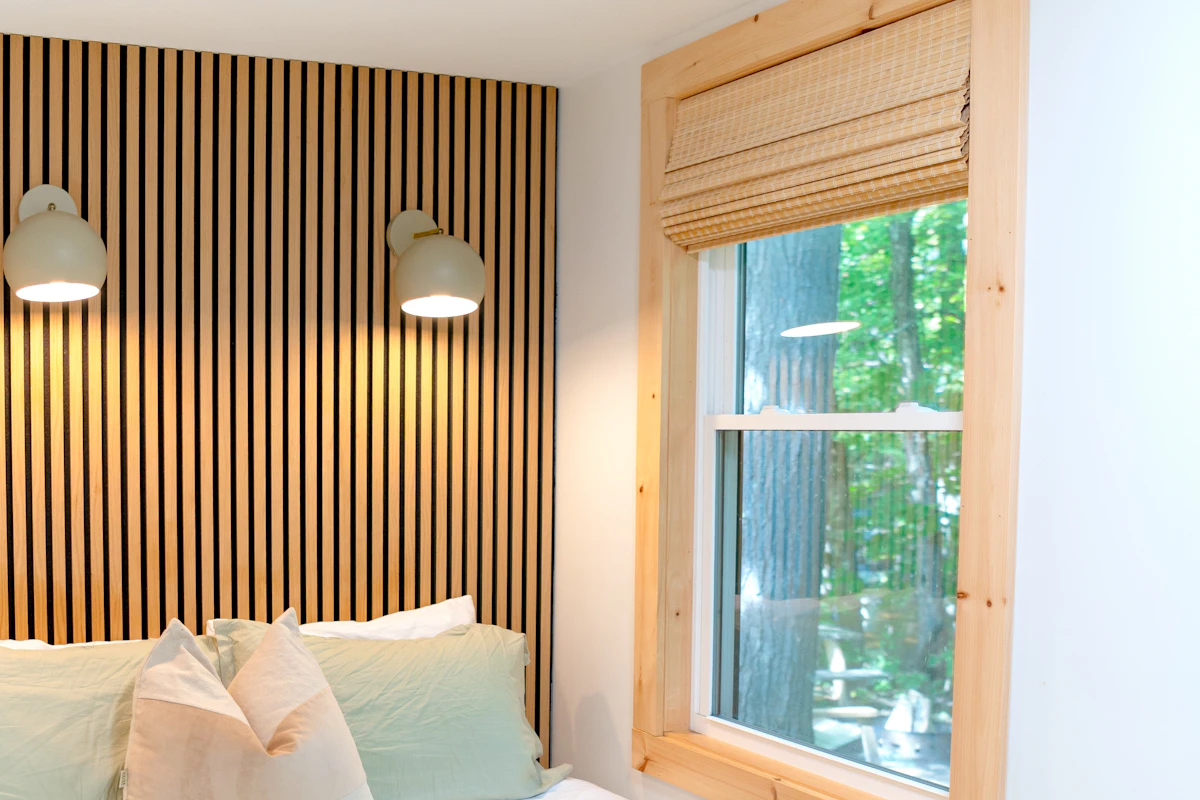
In most bedrooms, the bed is the largest object and should look intentional from the moment you enter. A strong headboard, centered placement where practical, balanced bedside tables, and clear space around the bed can make even modest furniture feel much more finished.
An upholstered headboard adds softness to a room with hard flooring or simple walls. Wood brings warmth and visible grain, while a painted or wall-mounted headboard can work well when floor space is limited.
For a cleaner modern look, avoid filling the bed wall with too many small objects. One larger artwork, a pair of coordinated prints, or a restrained arrangement above the headboard is usually calmer than a dense collection of tiny frames.
3. Layer Bedding Instead of Overdecorating the Room
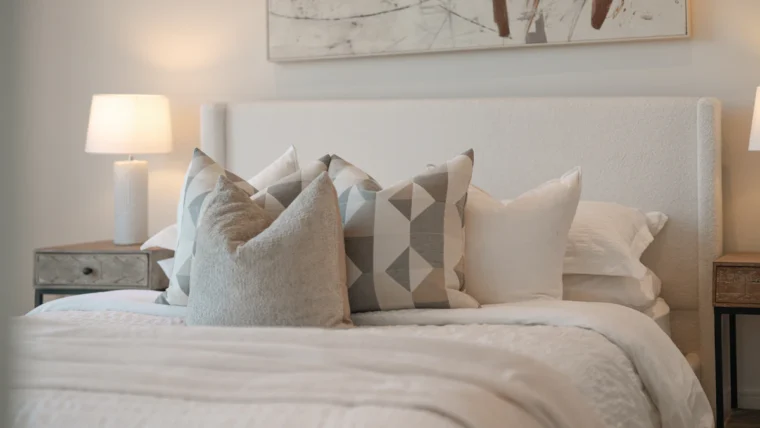
Bedding is one of the easiest ways to make a bedroom feel cozy because it adds softness without using more floor space. Start with sheets and a duvet or comforter that feel comfortable to you, then add only enough layers to create depth.
A simple arrangement might include sleeping pillows, two larger decorative pillows, one smaller accent cushion, and a throw folded loosely across the lower third of the bed. The exact number is less important than keeping the proportions relaxed and usable.
How to keep layered bedding practical
- Limit decorative pillows if removing them every night becomes annoying.
- Mix textures such as cotton, linen, knit, boucle, or velvet instead of using many competing prints.
- Repeat one accent color from elsewhere in the room.
- Let the bedding look slightly relaxed rather than perfectly staged.
- Choose washable layers where possible, especially for everyday throws and pillow covers.
If the room already has several strong patterns, solid bedding with visible texture can give the eye a quieter place to rest. Our cozy bedroom ideas explain how to combine bedding, warm materials, and softer light without adding clutter.
4. Use Better Bedside Lighting
One bright ceiling fixture rarely creates a cozy bedroom on its own. A more comfortable modern setup combines general light with lower-level lighting near the bed and, when useful, a third light source such as a dresser lamp or floor lamp.
Bedside lamps should be easy to reach from bed and positioned so the light is useful for reading without shining directly into your eyes. If nightstands are small, wall-mounted or plug-in sconces can free the surface for a book, phone, glass of water, or alarm clock.
Try to avoid mixing very different light appearances in the same room. Warm, consistent evening lighting usually creates a calmer visual effect than one cool-white bulb beside another yellow-toned bulb.
Three useful lighting layers
- Ambient: ceiling fixture or other general light
- Task: bedside lamp, reading light, or vanity light
- Accent: small dresser lamp, picture light, or subtle shelf lighting
5. Add Texture Through Natural Materials
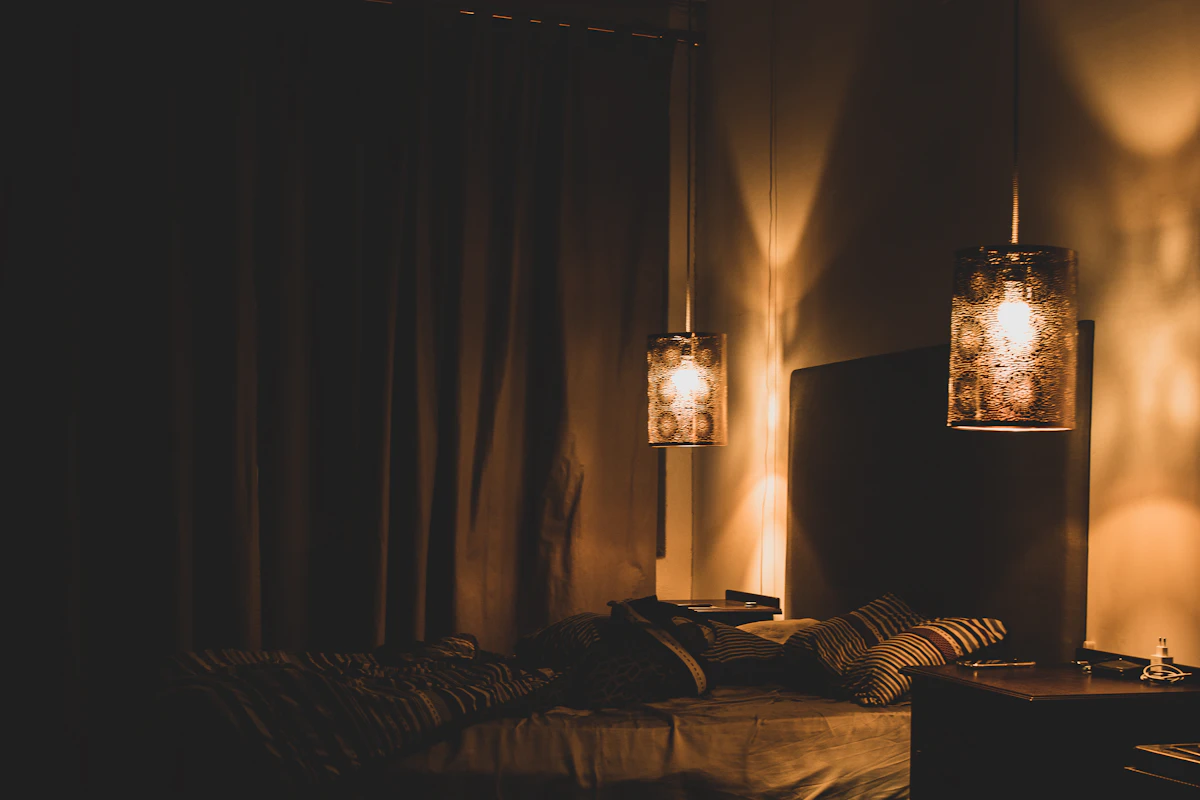
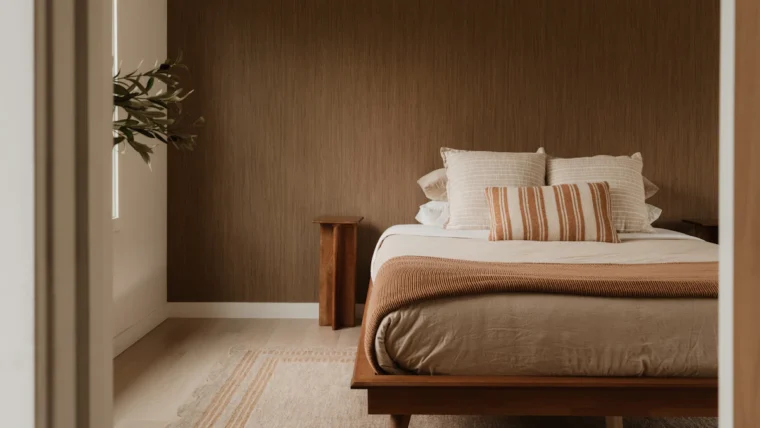
A room can be visually simple and still feel warm when the materials have depth. Natural wood, linen, wool, woven fibers, ceramic, cane, stone, and softly textured upholstery all add interest without requiring loud color.
You do not need every piece to be natural or handmade. Even one wood nightstand, a woven basket, linen-look curtains, and a textured throw can soften a room dominated by painted walls and smooth furniture.
Mixing textures works particularly well in a neutral bedroom. If the palette is mostly cream, beige, and brown, vary the surfaces: smooth cotton sheets, nubby blanket, matte ceramic lamp, wood grain, and a low-pile or woven rug. The room stays restrained while avoiding a flat, showroom-like feeling.
6. Choose Nightstands That Fit the Room
Matching nightstands can create symmetry, but they are not mandatory. What matters more is that their scale works with the bed and that they provide enough surface or storage for daily use.
In a narrow bedroom, consider wall-mounted shelves, compact pedestal tables, or slim nightstands with drawers. If one side of the bed has less space, the two tables can be different sizes while still looking connected through similar materials or lamps.
As a practical starting point, aim for the nightstand surface to sit reasonably close to the height of the top of the mattress. That keeps essentials easier to reach and prevents the furniture from looking dramatically out of scale.
What to keep on a nightstand
- A lamp or wall-light control
- One small tray for daily essentials
- A book or two
- A glass or bottle of water if you use one at night
- One small decorative object at most if the surface is tight
The easiest way to make a small nightstand look better is often to remove half of what is sitting on it.
7. Use Curtains to Soften the Architecture
Curtains do more than control light and privacy. They can soften hard wall lines, add vertical emphasis, introduce texture, and make windows feel more substantial.
Where the architecture allows, hanging the curtain rod above the window frame and extending it somewhat beyond the sides can make the opening feel taller and wider. Full-length panels generally create a more finished look than curtains that stop awkwardly above the floor.
If you need strong light control for sleep, combine blackout functionality with a fabric and color that work with the room. In bedrooms where privacy is needed during the day, a sheer layer behind heavier curtains can provide flexibility without making the window treatment visually heavy.
Keep curtain color connected to the palette. Matching the wall closely creates a quieter look; choosing a slightly deeper tone adds contrast without introducing an entirely new color.
8. Keep Storage Visually Calm
Modern bedrooms quickly lose their restful feeling when clothing, chargers, cosmetics, laundry, and everyday items remain in view. The solution is not necessarily more furniture. It is better storage for the things you actually use.
- Use drawers or closed cabinets for visually busy everyday items.
- Keep open shelves for a smaller number of books, objects, or baskets.
- Add under-bed storage for seasonal bedding or less frequently used clothing if the bed design allows it.
- Use drawer dividers so dresser surfaces do not become overflow storage.
- Create one predictable place for laundry rather than letting clothes collect on a chair.
If your wardrobe or dresser cannot hold everything comfortably, edit what is stored in the room before buying another cabinet. Removing unused items can create more usable space than adding another piece of furniture.
The same principle is useful throughout the home: closed storage controls visual clutter while a smaller amount of open storage lets personality show.
9. Add Artwork and Personal Details With Restraint
A modern bedroom should still look like someone lives there. Family photographs, travel objects, books, favorite art, handmade ceramics, or a meaningful textile can keep a clean design from feeling generic.
The key is editing rather than removing personality. Choose a few pieces with enough visual presence to matter instead of spreading many tiny objects across every surface.
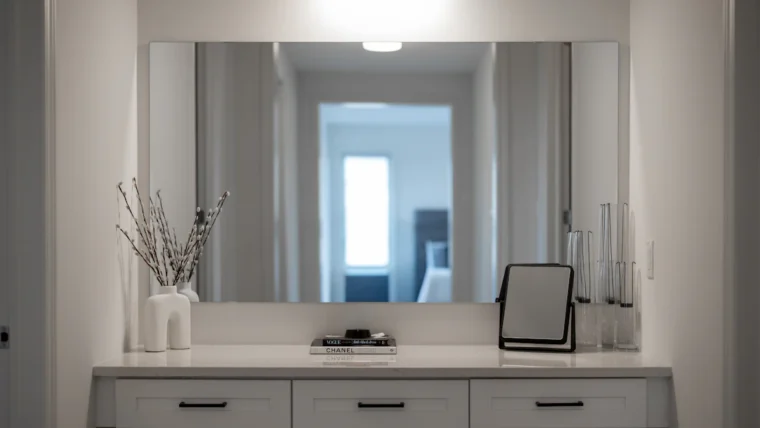
For artwork above a headboard or dresser, consider the furniture below it as part of the composition. One piece that is appropriately scaled to the furniture often feels more intentional than a very small frame floating alone on a large wall.
If you like changing the room seasonally, keep the permanent palette simple and rotate smaller elements such as art prints, pillow covers, or throws instead of rebuilding the entire decor scheme.
10. Create One Cozy Corner
If you have a little extra floor space, give it a purpose. A bedroom corner can become a reading spot, a small getting-ready area, a writing desk, or simply a chair where you can put on shoes without sitting on the bed.
You do not need much: one comfortable chair, a small table or wall shelf, and a lamp can be enough. In a tighter room, a small bench at the end of the bed may provide the same function without requiring a separate corner.
Avoid adding a chair simply because the room looks empty in a photo. If it will become a permanent pile of clothes, the room may feel calmer without it. Cozy design works best when comfort and function support each other.
How to Combine These Ideas Without Making the Bedroom Feel Overdesigned
You do not need to use all 10 ideas at once. Start with the changes that affect the room most.
- Fix the layout first. Make sure the bed, doors, drawers, and walkways work comfortably.
- Choose the palette. This makes later purchases easier and prevents random colors from accumulating.
- Improve the bed. Headboard, bedding, and bedside furniture create the room’s main visual zone.
- Upgrade the lighting. Add at least one comfortable bedside source rather than depending only on the ceiling light.
- Solve visible clutter. Give frequently used items a closed or organized home.
- Add texture and personality last. Art, plants, ceramics, books, and textiles should finish the room rather than compensate for a layout that does not work.
For broader inspiration on colors and materials, see our home decor trends for 2026. Use trends selectively; a bedroom feels more timeless when the main furniture and palette suit your home rather than a single season.
Common Modern Bedroom Decorating Mistakes
| Mistake | Better approach |
|---|---|
| Making the room completely gray, white, or beige with no texture | Keep the palette restrained but add wood, woven fibers, fabric, ceramics, and layered textiles. |
| Buying a matching furniture set simply for convenience | Coordinate scale, wood tones, and shapes without requiring every piece to match exactly. |
| Using only one overhead light | Add bedside or task lighting so the room has softer evening options. |
| Covering the bed with too many pillows | Use enough layers to add depth while keeping the bed easy to use every day. |
| Ignoring storage until clutter becomes a problem | Plan closed storage around daily habits from the beginning. |
| Choosing decor before measuring furniture | Confirm the bed, nightstands, dresser, and walking space first. |
| Following every trend in one room | Use trends as accents and keep larger decisions connected to your own style and needs. |
Frequently Asked Questions
What makes a bedroom look modern but still cozy?
A modern cozy bedroom usually combines simple furniture shapes and a controlled palette with soft bedding, warm lighting, natural textures, and personal details. The room should feel edited, not empty.
What colors work best in a modern bedroom?
Warm whites, soft beige, muted green, clay, taupe, subdued blue, and medium wood tones are all versatile options. Darker colors can also work beautifully when the lighting and room proportions support them. Cohesion matters more than choosing one specific “correct” color.
How can I make a bedroom cozy on a small budget?
Start with inexpensive changes that affect the entire room: rearrange the layout, reduce visible clutter, add a warm bedside lamp, improve the bedding, and repeat a small color palette. You can then add a throw, secondhand art, or a few textured accessories rather than replacing all the furniture.
Do modern bedrooms need matching nightstands?
No. Matching nightstands create easy symmetry, but different pieces can work if their heights, visual weight, materials, or lamps create a clear relationship. This can be particularly useful in rooms where the two sides of the bed have different amounts of space.
How many decorative pillows should be on a bed?
There is no required number. Use only as many as you are willing to remove and replace every day. In many bedrooms, two larger decorative pillows plus one smaller accent pillow provide enough layering without creating unnecessary work.
What should I decorate first in a bedroom?
Start with layout and the bed because they affect almost every other choice. Once the bed placement, main furniture, and color direction are decided, choose lighting, curtains, storage, artwork, and smaller accessories.
Conclusion
A cozy modern bedroom is not created by filling the room with new decor. It comes from getting the basics right: a comfortable layout, a cohesive palette, a bed that feels inviting, useful lighting, controlled clutter, and enough texture to keep clean lines from feeling sterile.
Use the 10 ideas in this guide as a menu rather than a checklist. Start with the changes that solve real problems in your room, then add the decorative layers slowly. The result will feel more personal, more functional, and much easier to live with than a bedroom designed only to look good in a photograph.

1 Comment