
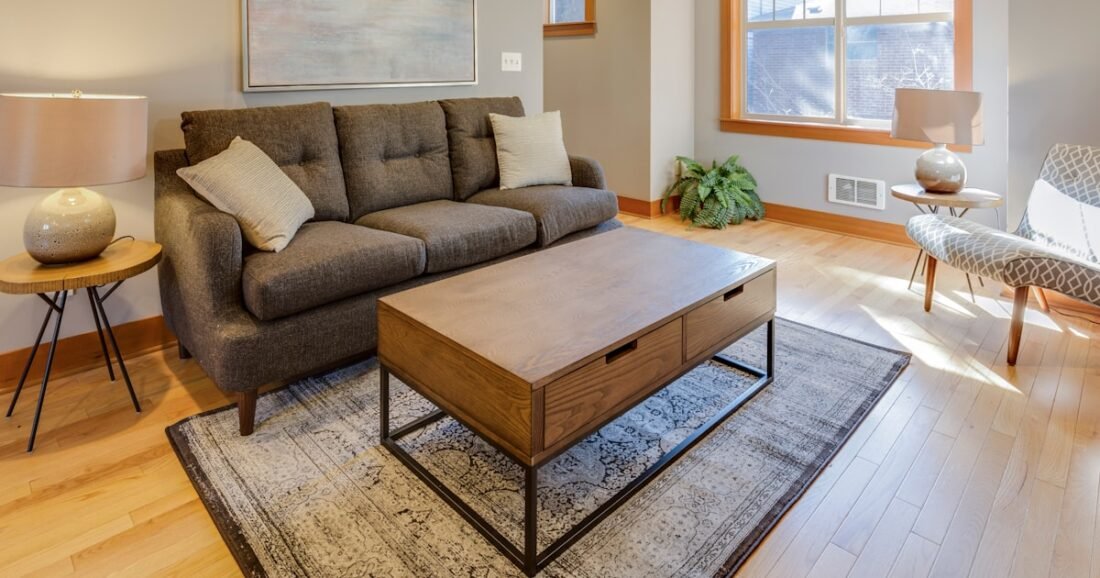
An apartment living room has to do more than look good. It may be the place where you relax, work, entertain, watch TV, eat, store everyday items, and sometimes host overnight guests. When the room is compact, every decision about furniture size, traffic flow, lighting, storage, and wall space has a bigger effect.
The most successful apartment living room ideas do not depend on tiny furniture or a perfectly minimalist aesthetic. They create a clear layout, protect useful walking space, control visual clutter, and use color and lighting to make the room feel connected. The ten ideas below are designed for rentals, studios, small apartments, and compact open-plan homes.
Table of Contents
1. Build the Layout Around Traffic Flow
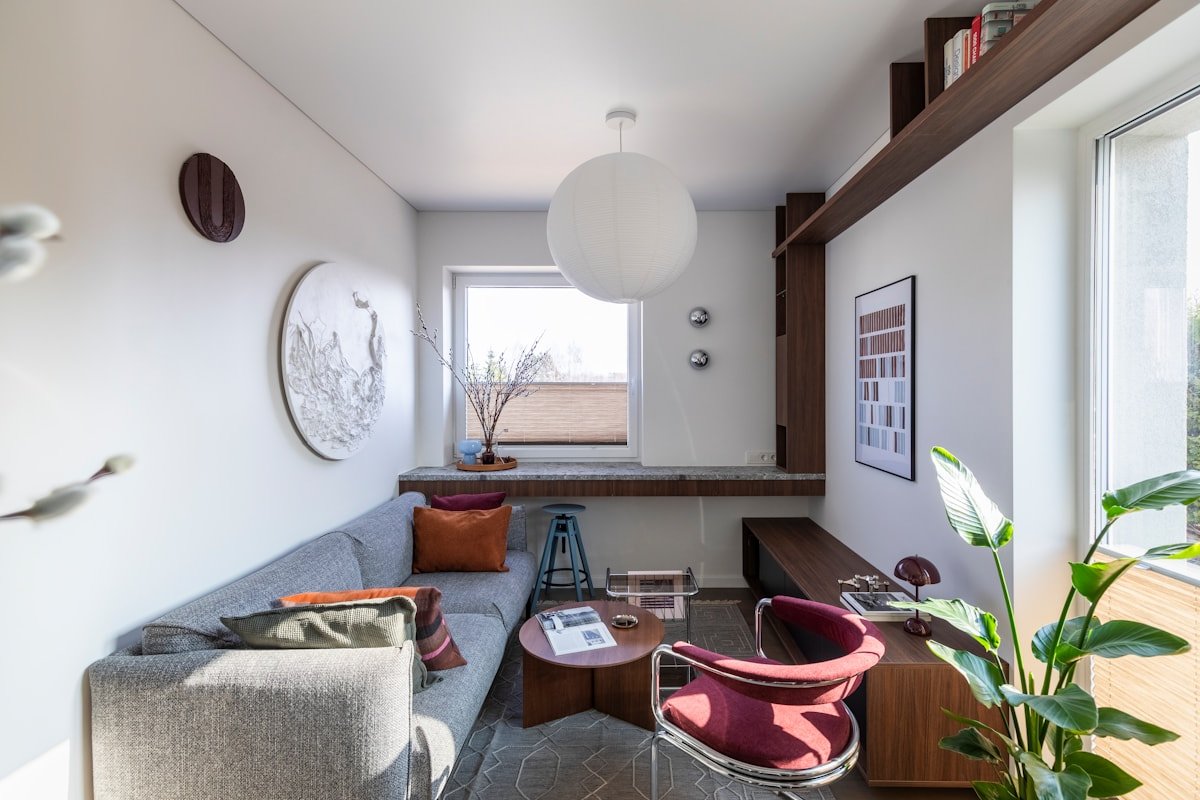
Start with movement, not with decor. Measure the room, mark the door swing, windows, radiators, outlets, and the natural path from the entrance to the rest of the apartment. If someone has to turn sideways around a coffee table every time they cross the room, the layout is working against the space.
Where the room allows it, a main circulation route of about 30 to 36 inches (76 to 91 cm) feels comfortable. In tighter spaces, some secondary gaps may be smaller, but the main route should remain easy to use. If you are planning a more complete remodel, the National Kitchen & Bath Association planning guidelines are a useful reference for understanding how clearance affects everyday movement in compact rooms.
Painter’s tape is one of the easiest planning tools. Mark the sofa, chair, coffee table, and media console on the floor before buying anything. Walk through the arrangement, open nearby doors, and check whether you can reach a window or balcony comfortably.
For a room that is especially tight, our small living room decorating guide goes deeper into circulation, sofa scale, storage, and rug placement.
2. Choose Furniture by Real Dimensions, Not Labels
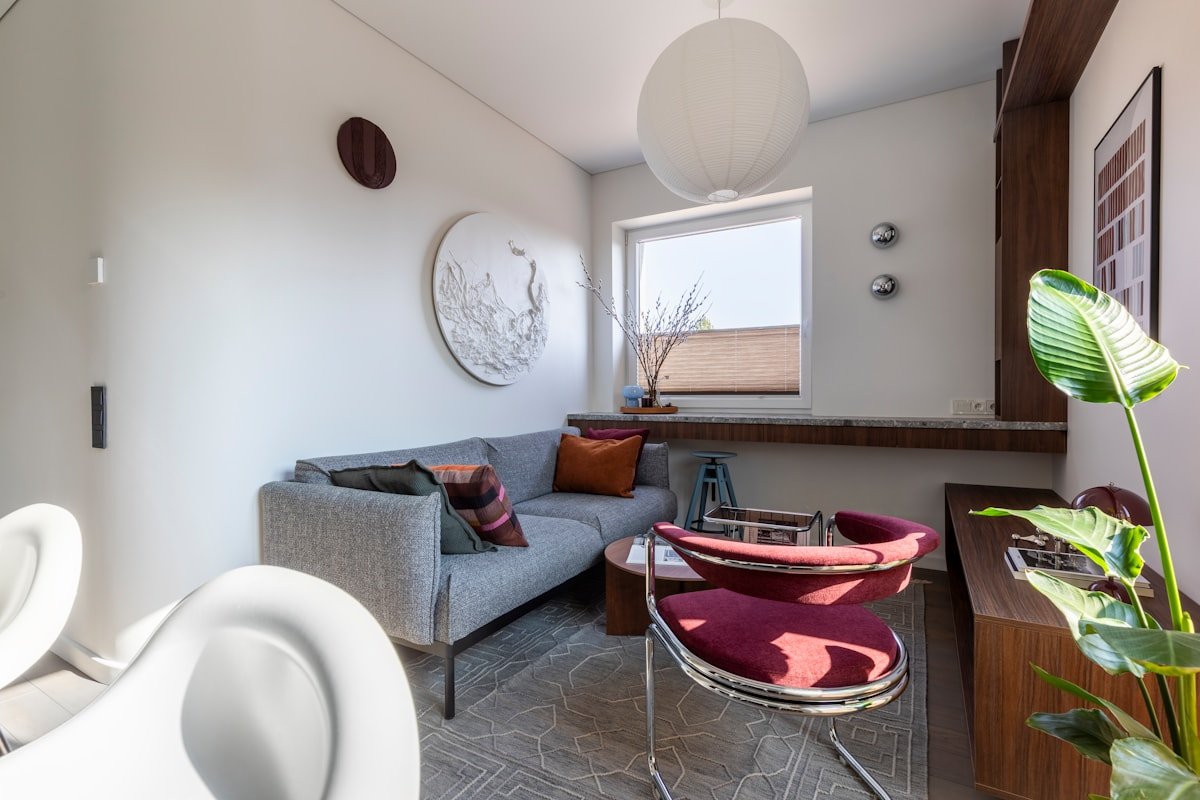
Furniture marketed as “apartment size” is not automatically right for your apartment. Look at width, depth, arm thickness, back height, and the amount of floor the piece visually covers. A sofa that is 78 inches wide with slim arms may provide more useful seating than a 70-inch sofa with bulky rolled arms.
Depth matters just as much as width. A very deep sofa can project far into a narrow room and make the coffee-table gap uncomfortable. If you need more seating, a compact sectional may be more efficient than a sofa plus two separate chairs, but only if the chaise does not block the main route.
Choose pieces that solve more than one problem when possible. A storage ottoman can work as a footrest, occasional seat, and blanket storage. A nesting table can expand when guests arrive and tuck away afterward. A slim console can define the back of a floating sofa while providing a surface for a lamp or charging station.
3. Use a Connected Color Palette
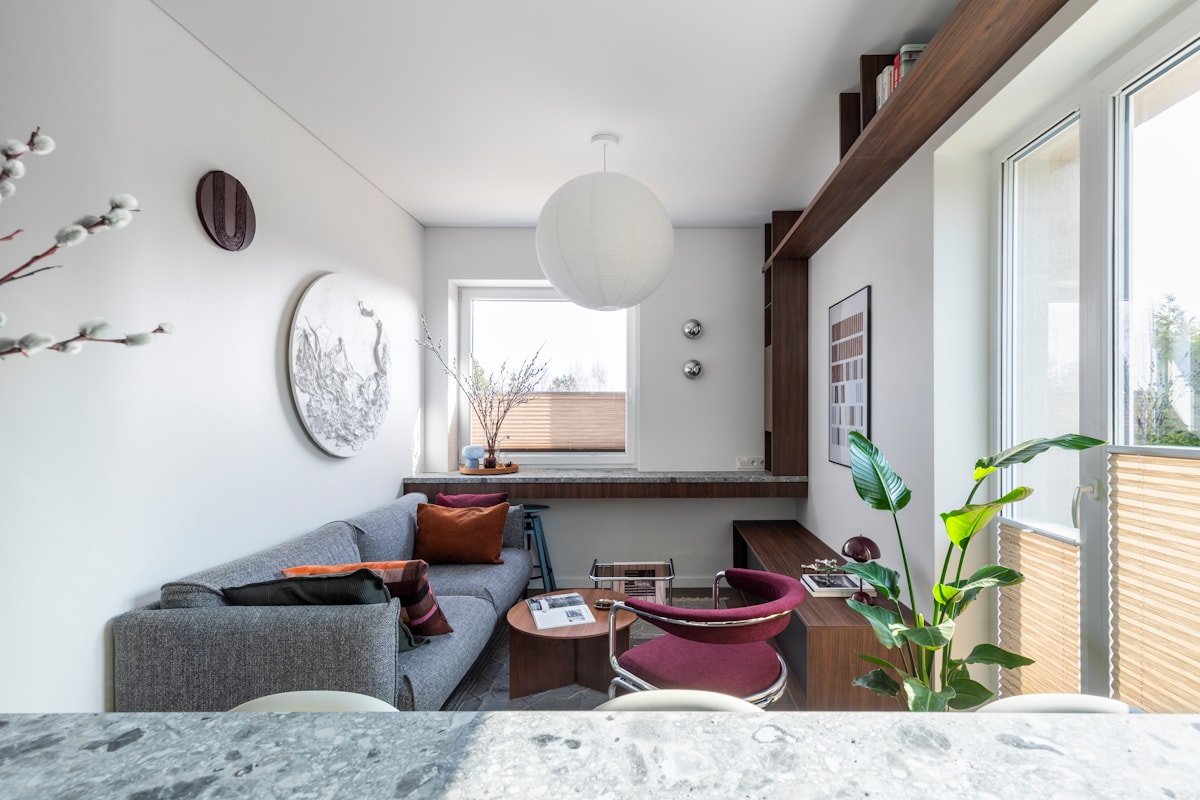
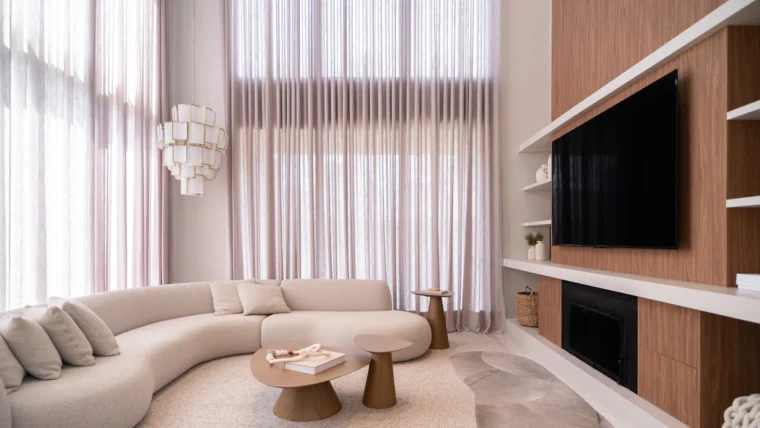
A small living room does not have to be white. What matters more is visual continuity. When the wall color, main upholstery, rug, curtains, and larger wood tones relate to one another, the room is easier for the eye to read and feels less fragmented.
Warm white, soft beige, muted green, dusty blue, taupe, clay, and natural wood can all work. Choose one main neutral, one supporting tone, and one or two accents. Repeat those accents in small ways rather than introducing a new color with every pillow, vase, and print.
If your apartment opens directly into a kitchen or dining area, repeat at least one color or finish between the zones. The same black frame, oak tone, muted green, or warm white can quietly connect the spaces without making them match. Our whole-home color palette guide explains how to manage sightlines and undertones across connected rooms.
4. Layer the Lighting
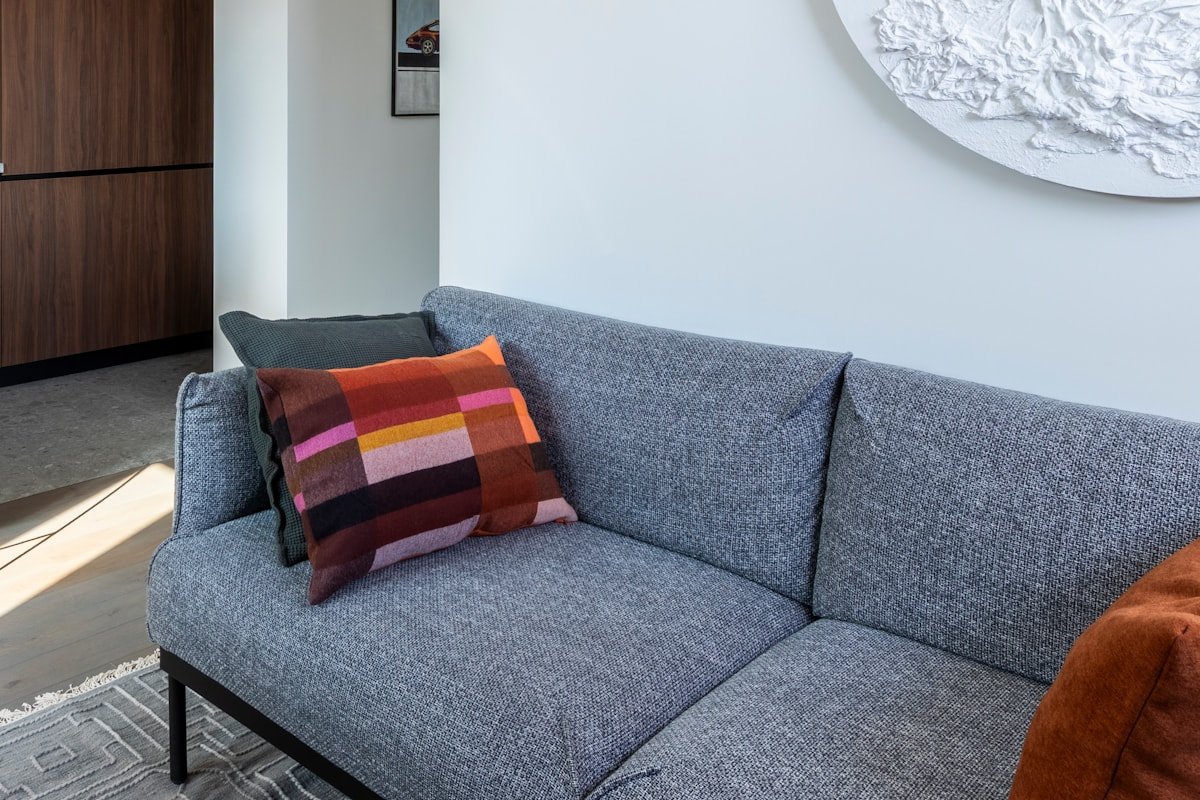
One bright ceiling fixture can make a small apartment feel flat because it puts all the light at one level. Combine ambient light with lower task and accent sources. A floor lamp beside the sofa, a table lamp on a console, and a small lamp in a dark corner can create more depth than simply installing a brighter bulb overhead.
For a warm residential feel, 2700K to 3000K is a useful starting range for many lamps. The U.S. Department of Energy describes 2700K as warm and 3000K as a softer warm-white range, while cooler temperatures appear progressively more blue-white. See the DOE’s light-bulb color-temperature guidance for more detail.
If hardwired changes are not allowed, plug-in sconces, floor lamps, and table lamps can still create a layered plan. Keep visible bulbs and nearby fixtures reasonably consistent in color temperature so the room does not look yellow in one corner and icy blue in another.
5. Use the Rug to Define the Living Zone
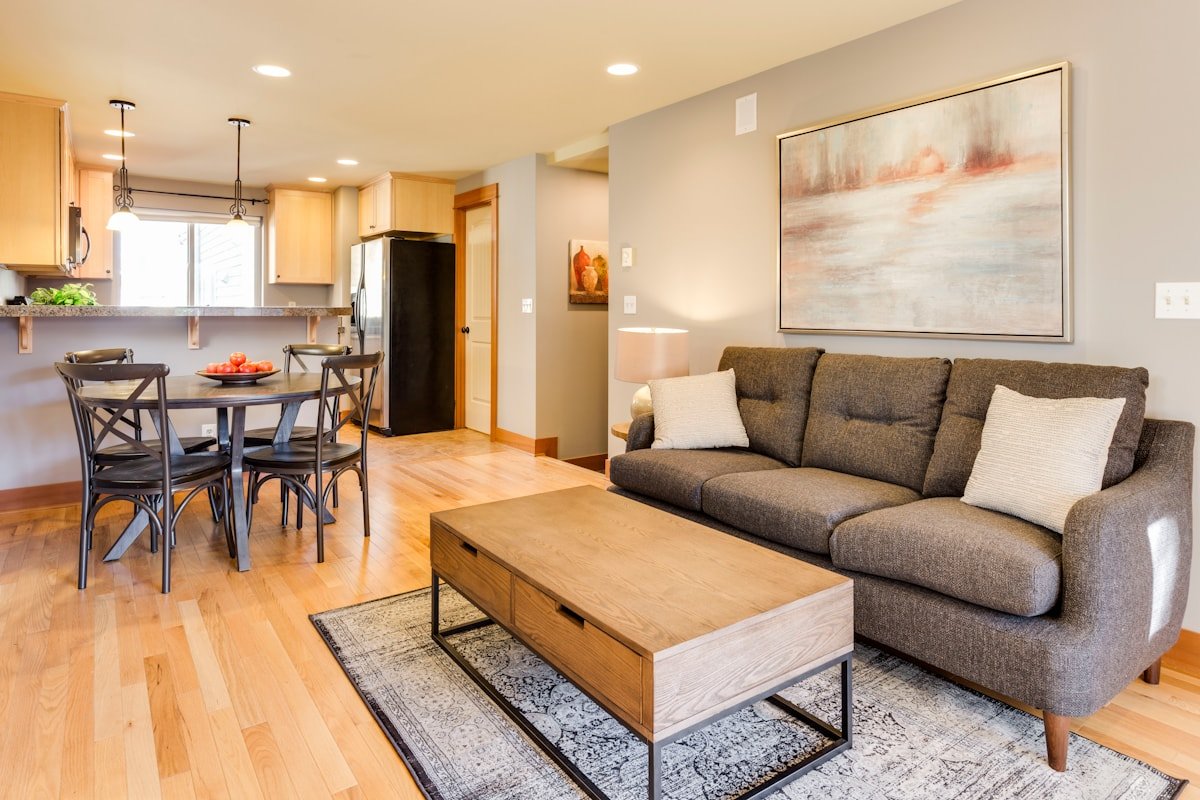
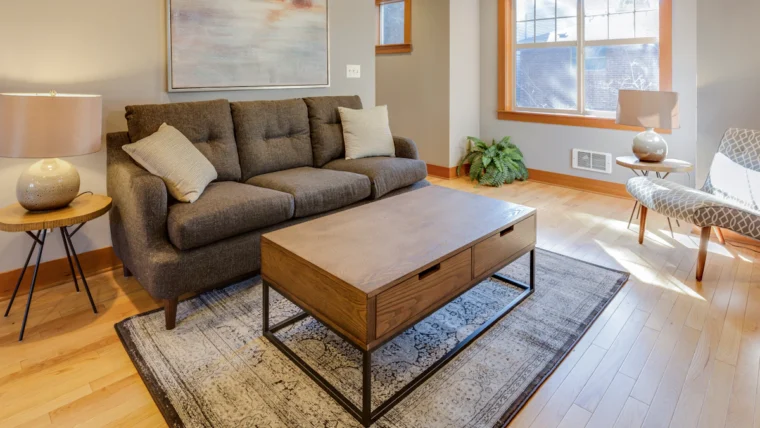
Rugs are useful in open apartments because they define the living zone without adding a wall. A rug that is too small can make the sofa and chairs look disconnected, while a properly scaled rug makes the seating read as one composition.
In many layouts, place at least the front legs of the sofa and main chair on the rug. If the room is large enough for all four legs to sit comfortably on the rug, that can work too. The exact dimensions depend on the room and furniture, so tape the proposed rug size on the floor before ordering.
Keep door clearance in mind. A thick rug that catches the entry door or closet door is not an upgrade. In very narrow rooms, a low-pile rug or flat weave may be easier to live with.
6. Make Storage Part of the Furniture Plan
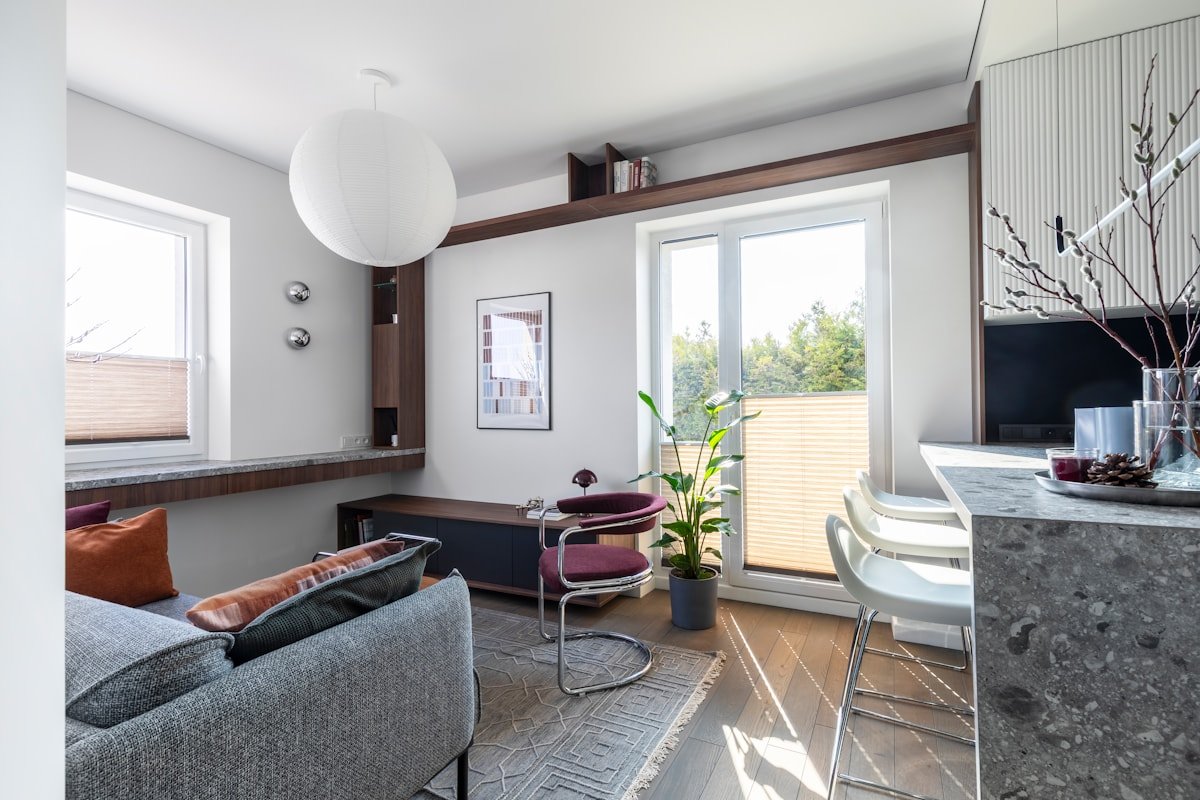
Apartment living rooms often feel crowded because everyday items have no predictable home. Remote controls, chargers, throws, games, paperwork, pet supplies, and hobby materials can create more visual clutter than the furniture itself.
Closed storage is especially valuable for visually busy items. A media console with doors or drawers can hide cables and electronics. A storage ottoman can hold blankets. Baskets inside a bookcase can contain chargers and small accessories without turning every shelf into an open display.
Store items near the activity they support. TV accessories belong near the television, work supplies belong near the desk, and blankets belong near the seating. A storage system that follows the way you already use the room is much easier to reset at the end of the day.
7. Use Vertical Space Without Crowding the Walls
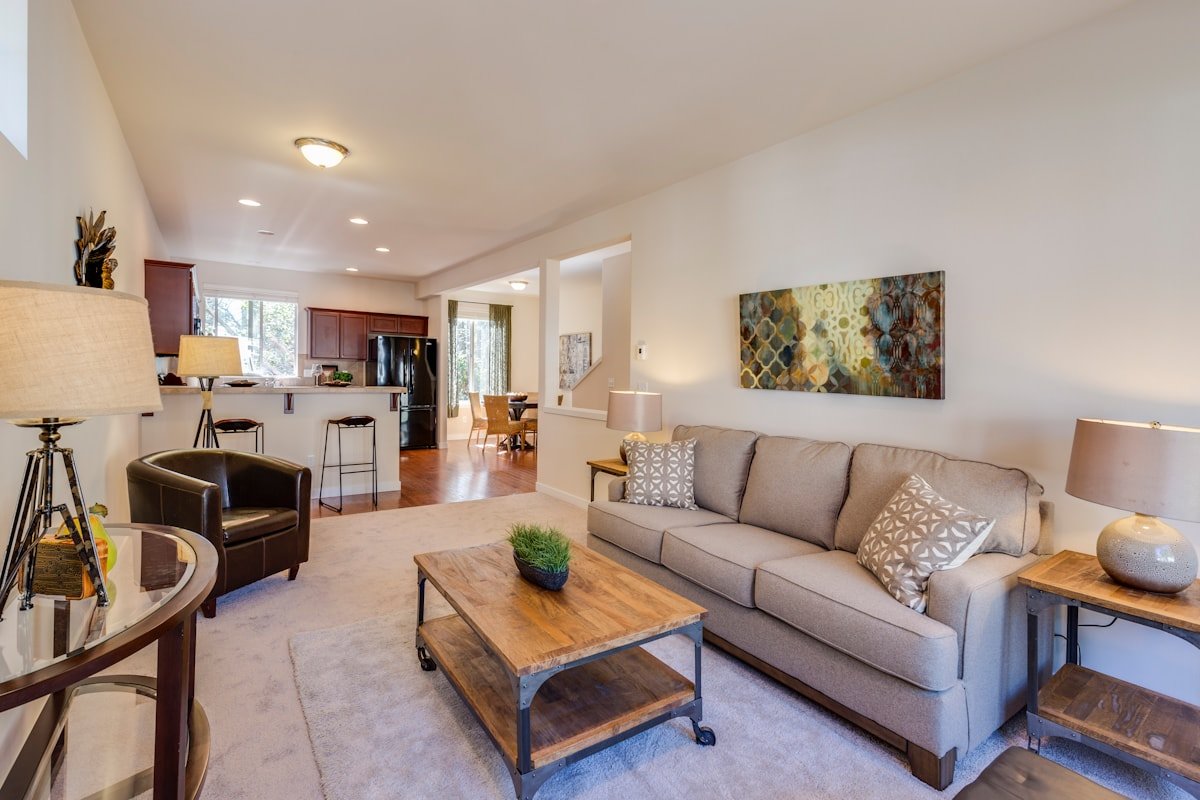
When floor space is limited, walls become valuable, but covering every wall with shelves can make the room feel more enclosed. Choose a few vertical elements that either provide real storage or create a clear visual purpose.
A tall narrow bookcase may hold more than several low units. Shelves above a desk or console can free the floor. Curtains hung higher than the window frame can emphasize ceiling height when the architecture and mounting method allow. One appropriately scaled artwork can also give a blank wall more presence than a cluster of unrelated small pieces.
If you cannot drill, use freestanding storage or wall systems specifically designed for the surface and load. Our renter-friendly wall decor guide covers safer no-drill options and where they are most useful.
8. Place Mirrors Where They Actually Help
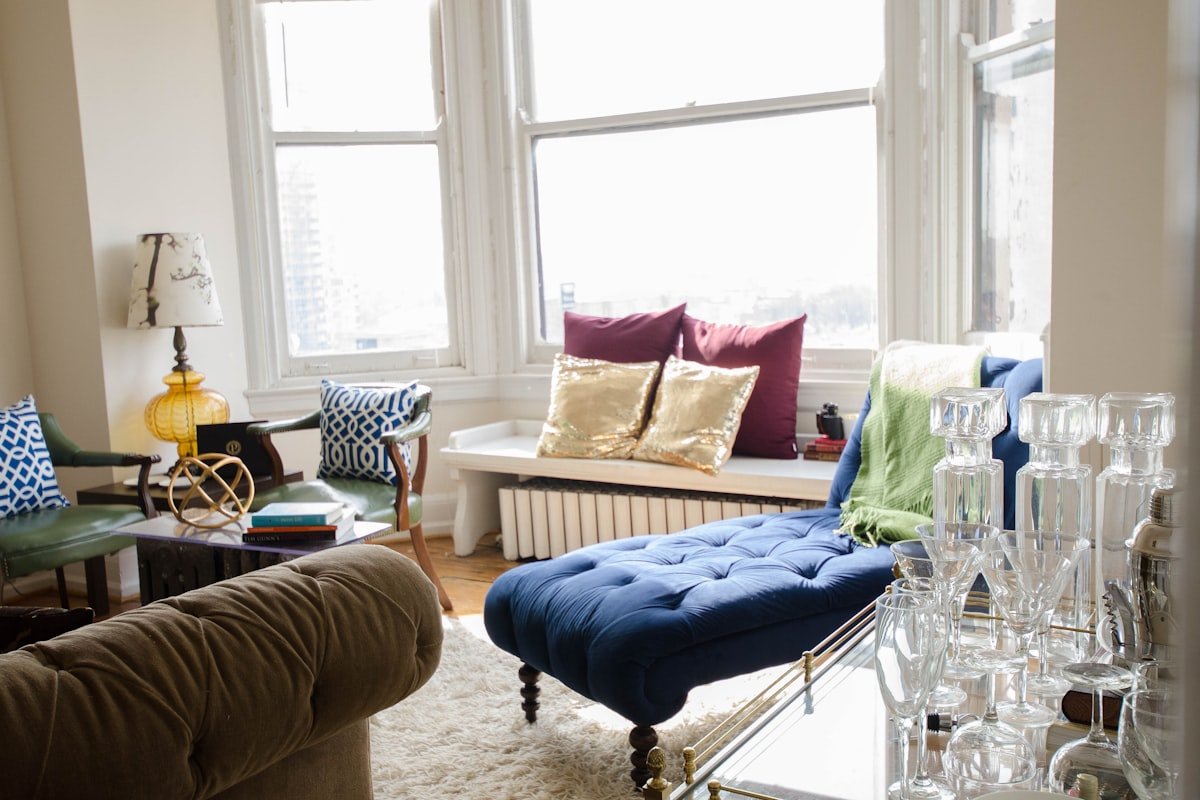
A mirror can make a compact living room feel brighter, but the result depends on what it reflects. Place it where it can catch daylight, a pleasant view, artwork, or a well-styled part of the room. A mirror that reflects an overflowing coat rack or cluttered kitchen counter simply duplicates the visual problem.
One larger mirror often looks calmer than several small mirrors scattered around the walls. Make sure the scale relates to the furniture below it, and use hardware rated for the mirror’s weight and your wall type. In a rental, heavy mirrors may require landlord-approved anchoring rather than adhesive strips.
9. Add Personality Without Filling Every Surface
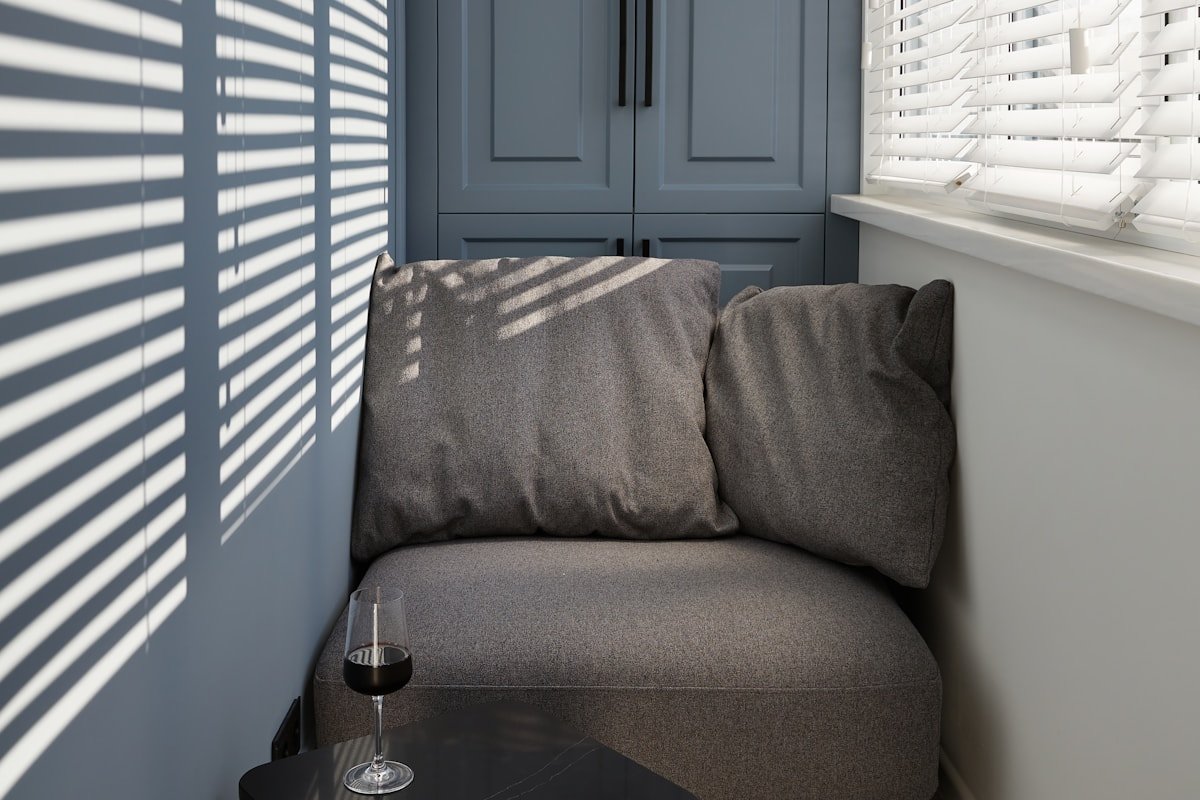
Modern does not have to mean generic. Books, photographs, art, ceramics, travel finds, inherited pieces, and favorite colors are what make an apartment feel like a home. The goal is to edit the display, not remove personality.
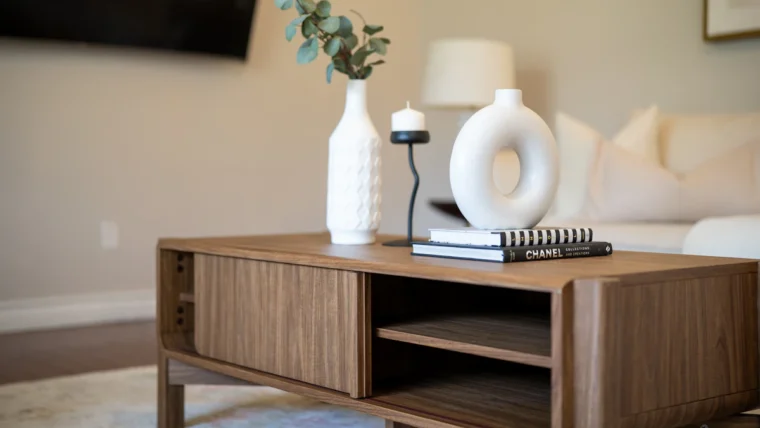
Group a few objects instead of spreading small accessories evenly across every surface. On a coffee table, for example, a tray or stack of books, one low decorative object, and enough empty space for a drink or laptop is usually more useful than a tightly styled arrangement that has to be moved every evening.
Repeat a material or color from elsewhere in the room. A walnut frame can echo the coffee table, while a muted green vase can repeat a pillow or artwork. Small connections make mixed pieces feel intentional.
10. Use Renter-Friendly Upgrades Carefully
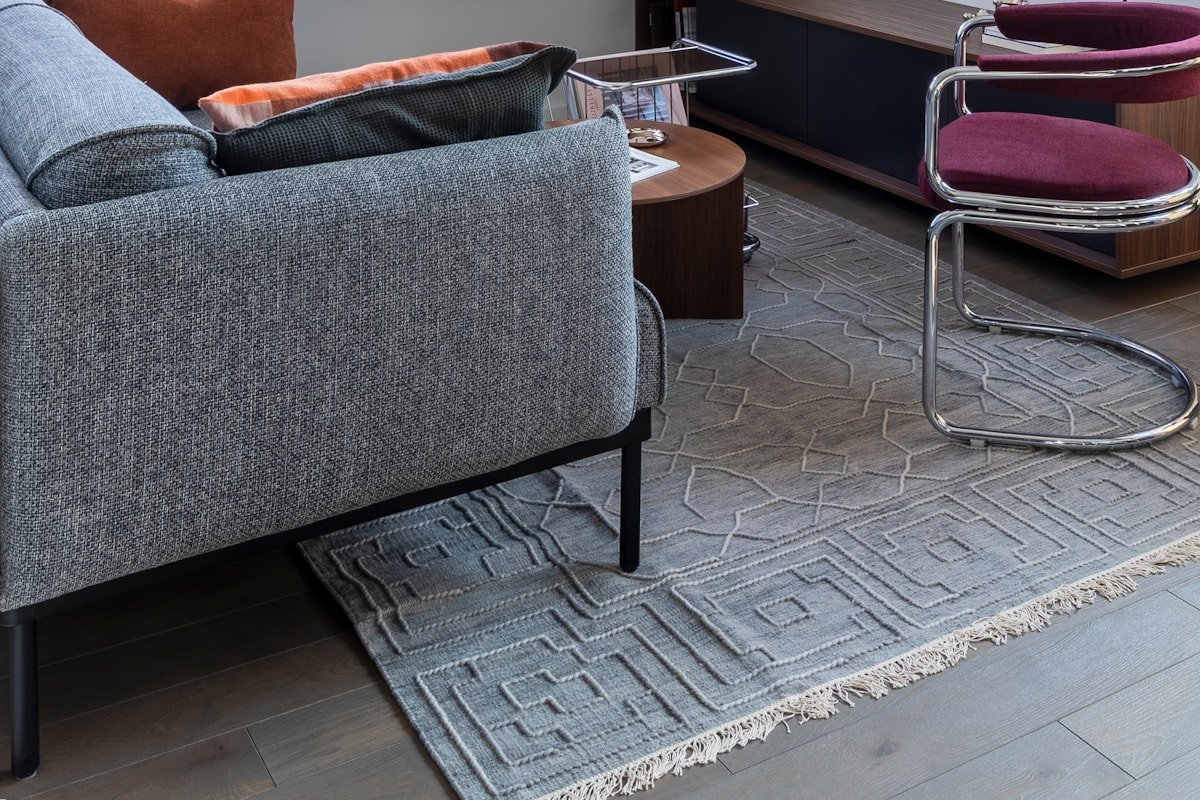
In a rental, focus first on changes you can take with you: curtains, rugs, plug-in lighting, art, textiles, freestanding storage, and furniture. These create most of the visual change without requiring a permanent alteration.
Check the lease before drilling, painting, replacing hardwired fixtures, or attaching anything heavy. Even products marketed as removable can damage fresh paint, weak paint, wallpaper, or textured surfaces. Test inconspicuously when practical and follow the manufacturer’s instructions.
If curtain mounting is the problem, our guide to hanging curtains without drilling compares tension rods, trim-mounted brackets, adhesive hardware, and magnetic options.
Common Apartment Living Room Mistakes
| Mistake | Better approach |
|---|---|
| Buying furniture before measuring | Mark the full footprint on the floor and test the walking route first. |
| Using several tiny furniture pieces because the room is small | Choose fewer pieces with useful seating and better proportions. |
| Using a rug that floats under the coffee table | Use a rug large enough to visually connect the main seating. |
| Depending on one overhead light | Add task and accent lamps at lower heights. |
| Filling open shelving with everyday clutter | Use closed storage for visually busy items and edit what remains visible. |
| Covering every wall | Leave negative space around selected art, shelving, and mirrors. |
| Making permanent changes without permission | Check the lease and prioritize reversible upgrades. |
Frequently Asked Questions
How can I make an apartment living room feel bigger?
Start with clear circulation, correctly scaled furniture, one connected rug, enough closed storage, and lighting that reaches the corners. A cohesive color palette and a well-placed mirror can reduce visual fragmentation without making every piece tiny.
Should a sofa be against the wall in a small apartment?
Not always. In a narrow room, wall placement may be practical. In an open-plan apartment, floating the sofa can define the living zone. Choose the arrangement that protects the main walkway and gives the room a clear focal point.
What colors work best in a small apartment living room?
Warm whites, beige, taupe, muted green, dusty blue, soft gray, and natural wood can all work. Cohesion and lighting usually matter more than choosing the lightest possible color.
How much furniture should be in a compact living room?
Use enough furniture to support the activities that actually happen there. A sofa, one additional seat, a coffee or side table, and useful storage may be enough. Add pieces only when they solve a real need.
How can I add storage without making the room look crowded?
Choose furniture that performs two jobs, such as a storage ottoman or media console with doors. Use vertical storage selectively and keep visually busy everyday items behind closed fronts.
What are the safest renter-friendly decorating changes?
Rugs, curtains, plug-in lamps, freestanding shelves, art displayed with approved methods, and removable textiles are usually the lowest-risk starting points. Always follow the lease and product instructions before attaching anything to a wall.
Make the Room Work Before You Decorate More
A cozy modern apartment living room comes from solving the practical problems first. Measure the room, protect the main route, choose furniture that earns its floor space, use a rug to connect the seating, and build in enough storage for everyday life. Then add lighting, art, textiles, mirrors, and personal objects in a way that supports the layout rather than competing with it.
You do not need to copy every small-space trick at once. Start with the change that will improve the room most—usually the layout, lighting, or storage—and build from there. A compact apartment can feel comfortable, polished, and distinctly yours when every major element has a clear purpose.

Share Your Thoughts