
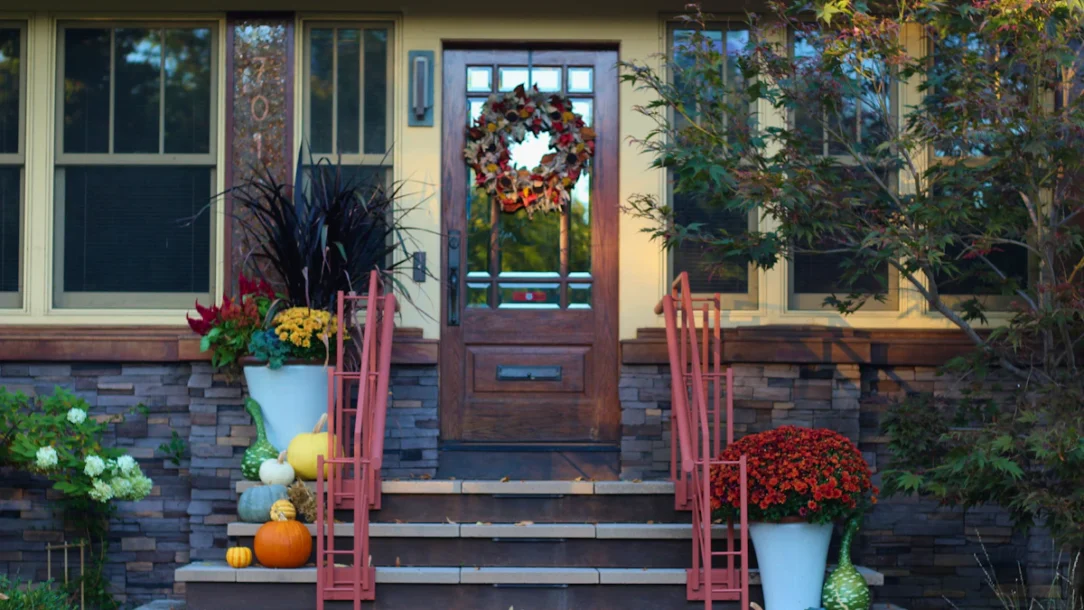
Good front porch decor should make the entry feel welcoming before it ever feels decorated. Fall makes it tempting to keep adding pumpkins, mums, lanterns, baskets, signs, and layered mats until the porch looks festive—but the front door still has to open, people still need a clear path inside, and steps still need room for safe footing.
The easiest way to get the balance right is to style the porch from the doorway outward. Protect the door swing and walking path first, then build one controlled seasonal composition around them. The result can still feel abundant and autumnal without turning the entrance into an obstacle course.
Table of Contents
Measure the Entry Before You Decorate
Before buying anything, open the front door fully and note exactly where it swings. Then walk from the first step or sidewalk to the door as if you were carrying groceries, a package, or a child. That path is the space your decor should not steal.
Pay attention to the landing in front of the door too. A deep planter can look perfect against the wall but become annoying if it crowds the area where someone naturally stands while unlocking the door.
If the exterior entrance is already compact, the same space-first thinking used in these very small entryway ideas applies outdoors too: protect function, then decorate the edges.
Choose One Main Side for the Seasonal Focal Point
On a narrow porch, asymmetry is often more useful than matching decor on both sides of the door. Pick one side for the fuller composition—a planter, pumpkins, lantern, and taller branch arrangement—then keep the opposite side much simpler.
This creates visual balance without using equal physical space. The eye reads the porch as styled, while the entry path stays open. A single fuller cluster can also look more intentional than several small objects spread across every corner.
Recent 2026 fall porch coverage from Martha Stewart shows that layered pumpkins, gourds, planters, and natural seasonal materials remain popular; the key for a working entry is editing that abundance to suit the actual porch width.
Style the Door Before Filling the Floor
If the entry also needs to welcome party guests, our Halloween party home decor ideas show how to carry one seasonal theme indoors. The front door gives you the most visual impact without using any floor space. Start there with a wreath, door basket, or simple hanging bundle of dried foliage. Once the door feels seasonal, you may discover that the porch needs far less decor than you expected.
Choose a wreath that leaves the handle, peephole, knocker, or smart doorbell easy to use. Avoid oversized pieces that scrape the frame every time the door opens.
For a polished look, connect the wreath to the colors you use inside. If your fall palette is olive, cream, and warm brown, repeat those tones outside rather than introducing a completely different orange-and-red scheme. The flow principles in this whole-home color palette guide are useful here.
Use One or Two Planters as the Main Anchors
A planter gives the porch height, color, and a strong base without requiring several separate decorations. Mums are classic, but ornamental grasses, kale, heuchera, small evergreens, or branches can create a more restrained look depending on climate and exposure.
Choose a planter with enough visual weight that it does not need three smaller pots around it. On a small porch, one substantial container often looks cleaner than a collection of mismatched pots.
Place the planter outside the main door swing and away from the narrowest part of the walkway. If you use two, keep them tight to the outer edges instead of pulling them inward toward the center path.
Cluster Pumpkins Low Instead of Scattering Them Everywhere
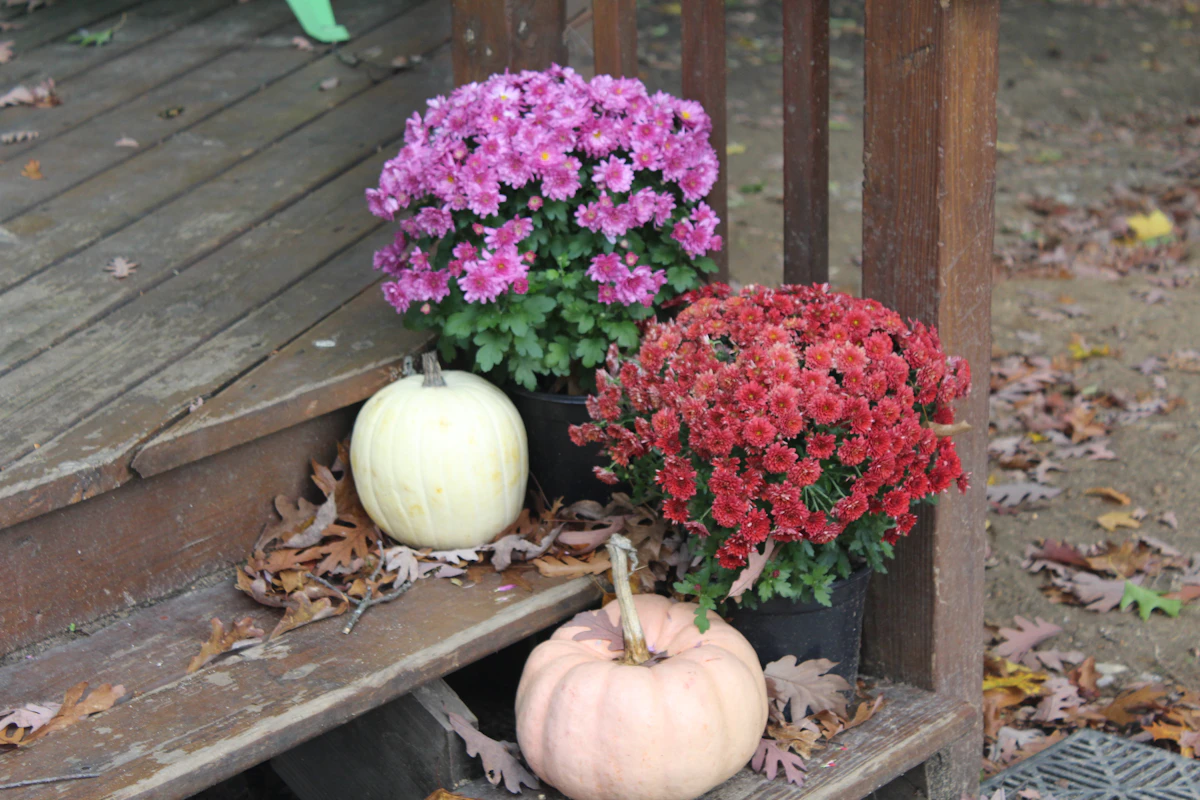
Pumpkins work best when they behave like one composition. Group three to five near the base of a planter or beside the wall, mixing two or three sizes rather than spreading individual pumpkins down the entire route to the door.
Use one dominant color family—traditional orange, pale cream, dusty green, or mixed earthy tones—so the cluster feels curated. A few pumpkins packed together also create more visual impact than the same number placed several feet apart.
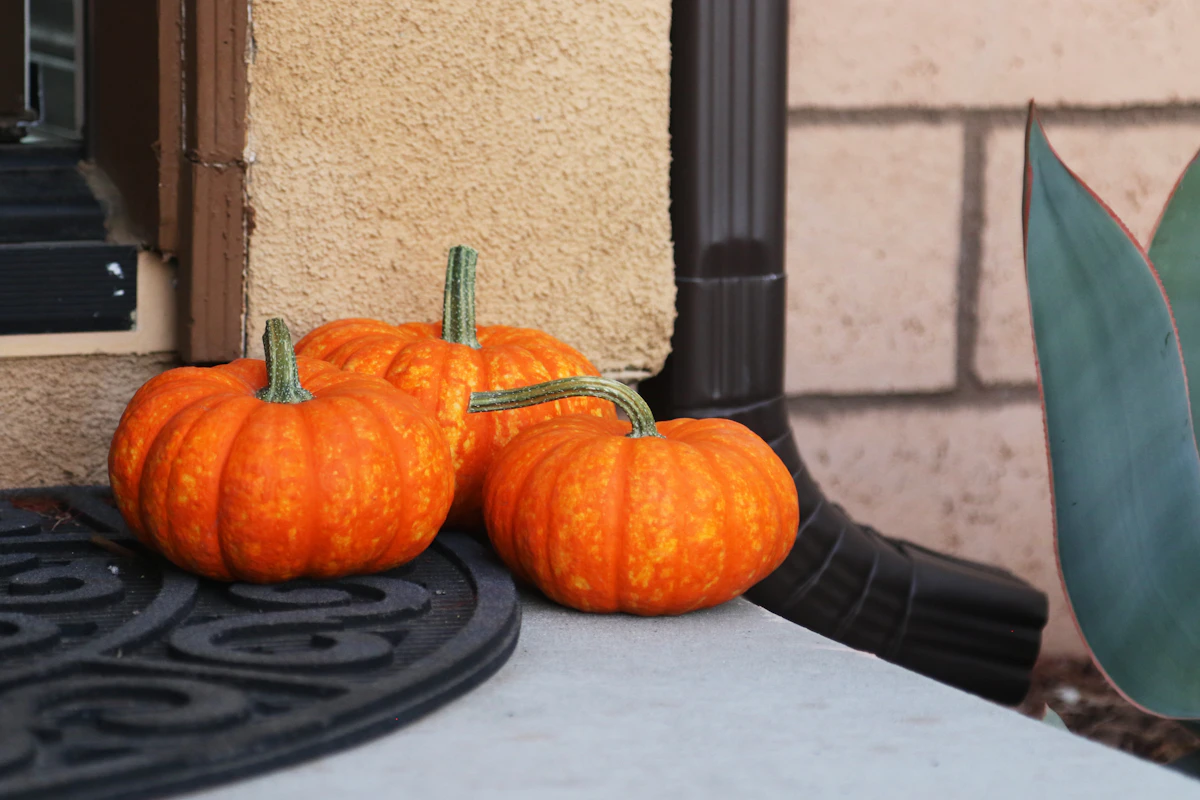
If the porch is extremely small, three pumpkins on one side of the threshold may be enough. The negative space around them is what keeps the styling from feeling crowded.
Decorate the Step Edges, Not the Center
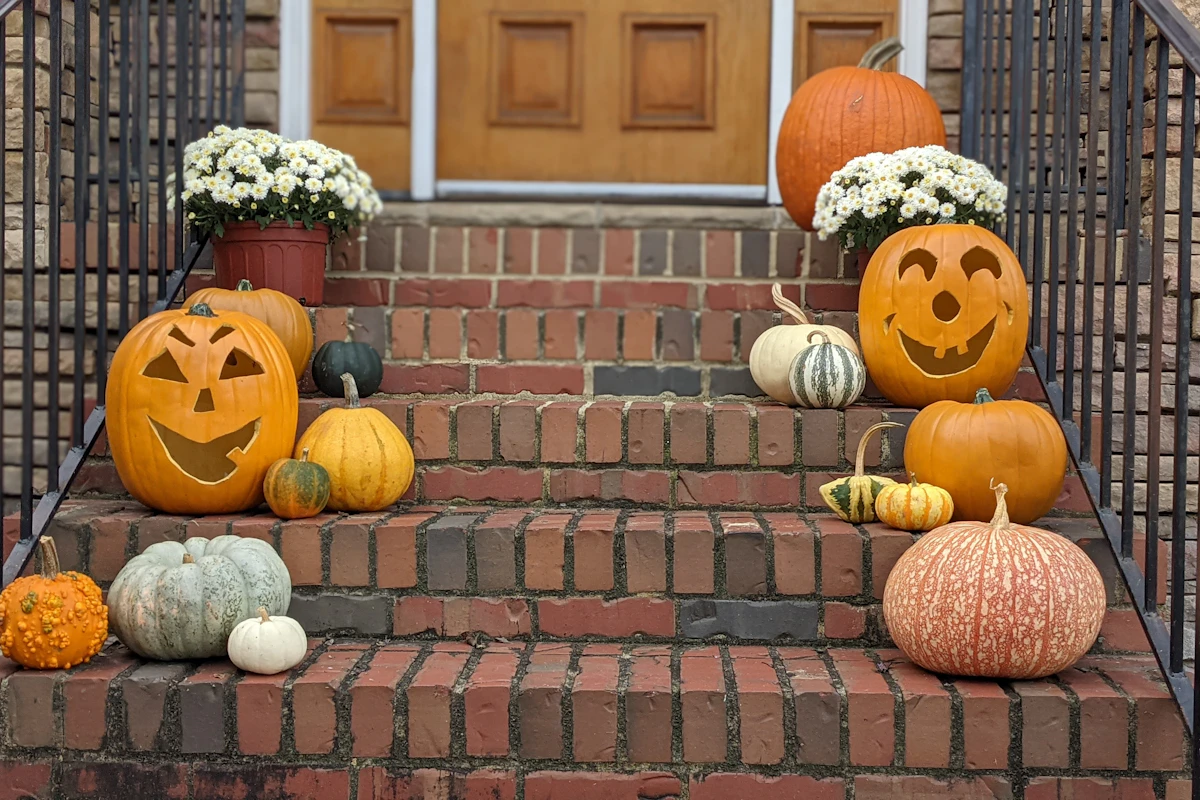
Front steps are often the easiest place to overdecorate because each level looks like another available shelf. Instead, keep the middle walking line completely clear and place decor only along the outside edges.
Repeat one element down the steps rather than introducing a new object at every level. For example, alternate pumpkins and small planters on one side, or use two low clusters at the bottom and top. This creates rhythm without narrowing every tread.
Avoid tall lanterns, baskets with loose handles, or unstable stacks on narrow steps. Anything placed on a tread should sit fully on a flat surface rather than hanging over an edge.
Add Height With Branches, Grasses, or Cornstalks
If everything on the porch sits below knee height, the arrangement can feel like clutter collecting on the ground. Add one vertical element to pull the eye upward: tall branches, ornamental grass, a slim bundle of cornstalks, or a narrow topiary.
Use height close to a wall, column, or railing where it feels anchored. Keep tall, loose material away from the door hardware and do not let it lean into the walkway, especially where wind can move it.
One vertical piece is usually enough on a small porch. The goal is to create shape, not build a wall of seasonal material around the entry.
Layer a Doormat Carefully
A layered rug-and-doormat look can add pattern without using vertical space, but it needs to stay flat and stable. Choose an outdoor rug only slightly wider than the doormat so it does not spread into the full landing.
Check the door clearance before committing. Thick layered mats can catch on an outward-swinging storm door, and curled corners can become trip points. If the mat shifts easily, skip the layered look and use one substantial outdoor doormat instead.
Only Add Seating if the Porch Can Handle It
A bench or chair can make a porch feel welcoming, but it should not be added just because styled porch photos often include seating. If the porch is mainly an entry rather than a place where you actually sit, the furniture may simply consume valuable circulation space.
For a separate backyard seating area near a pool, our pool house ideas explore shaded lounges and practical storage. On a wider porch, keep seating outside the direct line between the steps and the door. Add fall atmosphere with one weather-resistant cushion or throw rather than surrounding the chair with extra floor decor.
Use Warm Outdoor Lighting Without Adding Clutter
Lighting is one of the most effective ways to make fall decor feel finished after dark. Porch sconces, a small outdoor-rated lantern, or subtle string lights can create warmth without adding another visual layer during the day.
Use only lighting labeled for outdoor use. CPSC safety guidance advises checking light strings for damaged sockets, frayed or bare wires, and loose connections, and using extension cords rated for the intended use. Review CPSC’s outdoor decorating safety guidance.
If you want a softer seasonal glow without adding permanent wiring, adapt the plug-in and rechargeable strategies from these renter-friendly lighting ideas, but use products specifically rated for outdoor conditions.
For a Small Porch, Use the Three-Piece Rule
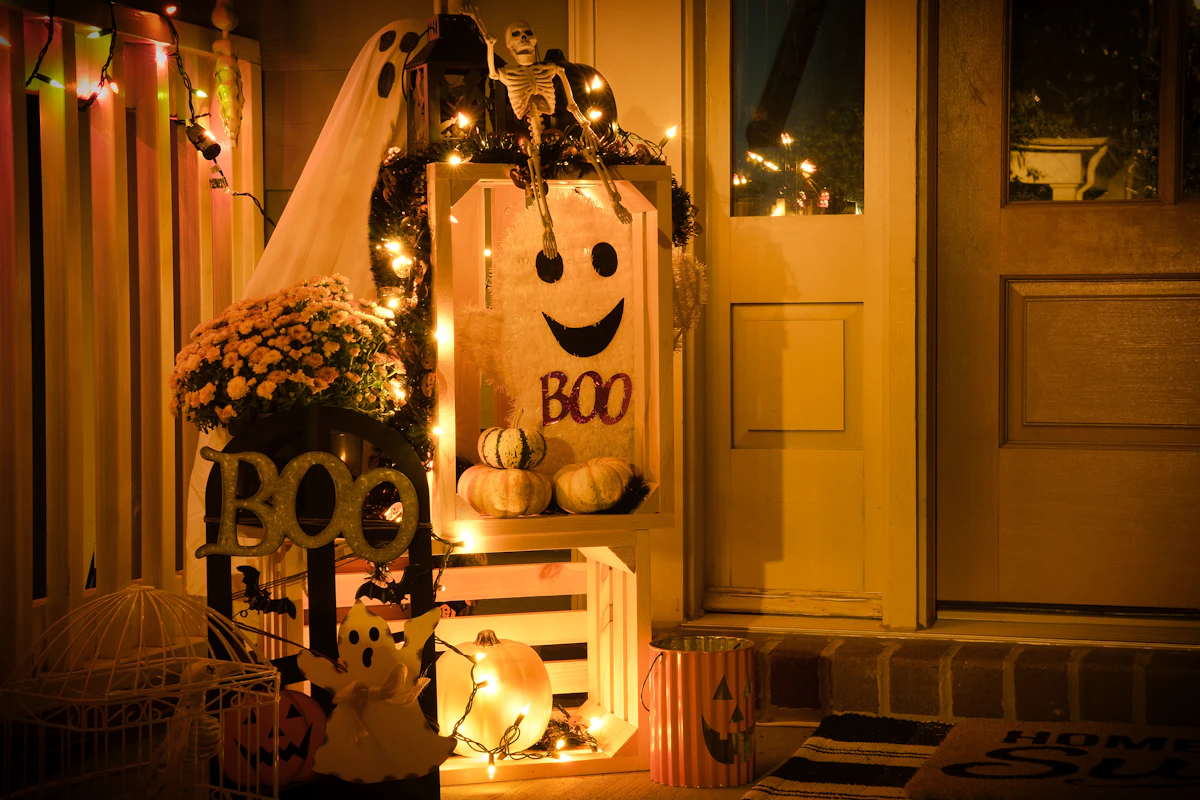
If the porch is little more than a doorstep, limit the setup to three categories: one door element, one vertical element, and one low seasonal cluster. For example: wreath, planter, and three pumpkins.
That combination gives you height, color, and an unmistakable fall cue without surrounding the doorway. Skip the bench, extra basket, stacked crates, and multiple lanterns unless the porch genuinely has room for them.
This is also where the broader ideas in the warm, natural fall decor guide are useful: texture, color, and natural material can create atmosphere without relying on a high object count.
Keep the Color Palette Tight
A crowded color palette can make a physically uncluttered porch still look busy. Choose two or three dominant tones that work with the house exterior. Cream and green feel quiet; orange and burgundy feel classic; brown, black, and muted ochre feel more architectural.
Let the front door color participate too. A navy or black door can handle warmer pumpkins and brass-toned lanterns. A red or terracotta door may look better with cream gourds, dark foliage, and green planters instead of more orange.
Choose Materials That Can Handle Outdoor Conditions
When you transition the entry into winter, our weather-smart outdoor Christmas decorating guide covers lighting, greenery, and keeping paths clear. Front porch decor is exposed to wind, moisture, sun, insects, and temperature swings. Outdoor-rated textiles, sturdy planters, weather-resistant baskets, and heavier lanterns generally survive the season better than delicate indoor accessories.
Secure lightweight wreaths and branches so they cannot blow across the steps. Avoid placing paper, untreated fabric, or fragile ceramics where rain can reach them. If you use dried natural materials, inspect them regularly because wind and moisture can make them loose or brittle.
Keep the Door, Walkway, and Escape Route Clear
The styling should never interfere with the entrance itself. The U.S. Fire Administration recommends keeping doors and windows clear as part of a home fire escape plan. See USFA’s current home fire escape guidance.
On the porch, that means no pumpkin stacks against the door, no planter blocking the handle side, and no lantern sitting where someone has to step around it to exit. Test the porch at night too, when shadows can make small objects harder to see.
If you use candles inside pumpkins or lanterns, battery-operated alternatives are safer around dried leaves, cornstalks, textiles, children, and pets. Keep any real flame well away from decorations and the walking route.
Common Fall Porch Styling Mistakes
Decorating both sides equally on a narrow porch. Symmetry can consume twice the floor space. One fuller side often works better.
Using every fall symbol at once. Pumpkins, hay bales, signs, lanterns, baskets, corn, mums, and wreaths do not all need to appear together.
Turning every step into a display shelf. Repetition along one edge looks cleaner and protects the center path.
Choosing decor before checking the door swing. The entrance must still work at full width.
Adding seating that nobody uses. A bench is not worth crowding the entry just for styling.
Ignoring nighttime visibility. Low pumpkins, dark planters, and cords are easier to miss after sunset, so keep the route obvious and well lit.
Frequently Asked Questions
How do I decorate a small front porch for fall without making it crowded?
Keep the center path clear and concentrate decor on one side of the door or along the outside edges of the steps. A wreath, one planter, and a small pumpkin cluster can be enough for a compact porch.
What are the best items for simple fall front porch decor?
A seasonal wreath, mums or another cool-weather planter, pumpkins or gourds, a doormat, one lantern, and natural branches or grasses are versatile choices. You do not need all of them at once.
How many pumpkins should I use on a front porch?
There is no fixed number. On a small porch, three to five pumpkins grouped tightly usually look more intentional than many individual pumpkins spread across the walkway. Larger porches can handle more if the door and steps stay clear.
Should fall porch decor be symmetrical?
Not necessarily. Symmetry can look formal, but an asymmetrical arrangement often works better on a tight porch because you can keep one side visually full while leaving the main entry path open.
What colors look best for grown-up fall porch decor?
Warm white, muted orange, olive, burgundy, brown, ochre, cream, deep green, black, and natural wood all work well. Limit the palette to two or three dominant tones so the porch feels intentional.
Are string lights safe for a fall porch?
Use only lighting specifically rated for outdoor use, inspect cords and sockets for damage, and use outdoor-rated extension cords when needed. Follow the manufacturer’s instructions and keep connections protected from moisture.
Make the Porch Feel Seasonal Without Making the Entry Harder to Use
The strongest fall front porch decor does not fill every empty spot. It frames the entrance. Protect the door swing and main walking line, then use a few high-impact elements—a wreath, a substantial planter, a tight pumpkin cluster, one vertical natural accent, and warm outdoor lighting.
When those pieces share a clear color palette and stay pushed to the edges of the entry, the porch can feel abundant, seasonal, and welcoming without becoming crowded. The best test is simple: if you can open the door, carry something inside, and walk the steps comfortably without thinking about the decor, the layout is working.

Share Your Thoughts