
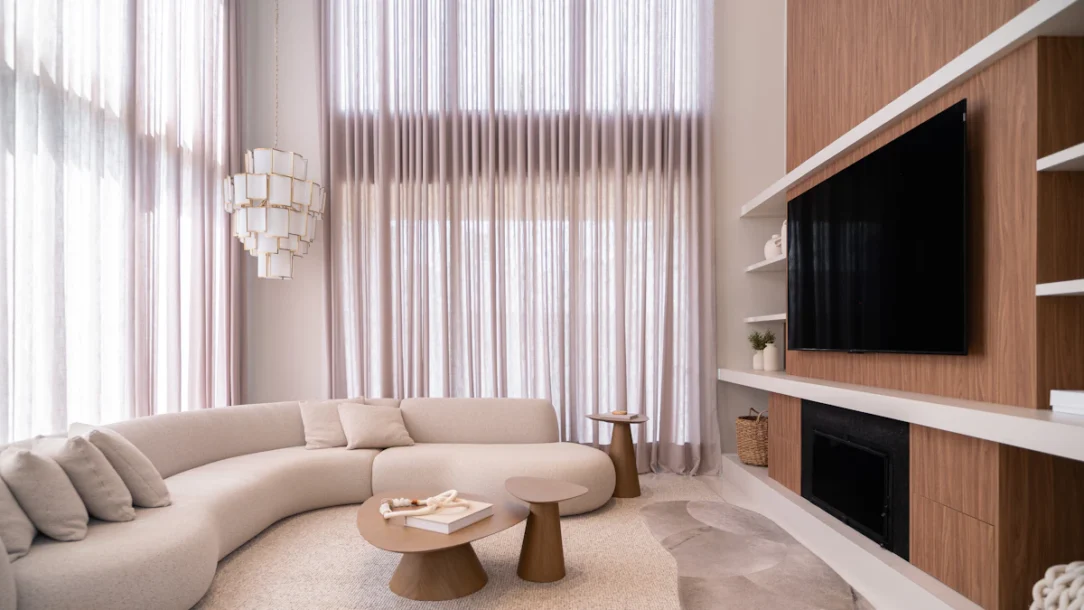
A fireplace gives a small living room instant character, but add a TV and the layout gets complicated fast. Both compete to be the focal point, both need clear sight lines, and neither should force the sofa into an awkward angle or block the only comfortable walkway. The best small living room with fireplace and TV layout ideas solve those conflicts before worrying about styling.
The right arrangement depends on where the fireplace sits, which walls can support a TV, how often you actually watch television, and whether the room needs to handle conversation, kids, guests, or an open path to another space. In a compact room, a successful layout is less about symmetry and more about making the two focal points cooperate.
Table of Contents
Start With the Two Focal Points, Not the Furniture
Before moving the sofa, mark the fireplace and the realistic TV locations. Then check the room from your main entry, the most-used seat, and any doorway that people cross regularly. If you are still working out the basic furniture plan, the principles in how to decorate a living room from start to finish will help you establish traffic flow before you solve the TV-and-fireplace problem.
Next, decide which focal point needs the best straight-on view. If TV is used every night, prioritize comfortable screen viewing and let the fireplace become the secondary visual anchor. If the fireplace is mostly decorative and the room is used for conversation, the seating can favor the hearth more strongly.
1. Mount the TV Above the Fireplace Only When Heat and Height Allow
Putting the TV above the fireplace is visually simple because it combines both focal points on one wall. That can be useful in a very small room with limited wall space, and it often leaves the other walls free for windows, doors, or storage.
The tradeoff is comfort and heat. Samsung’s current mounting guidance says it does not recommend mounting a TV above a fireplace, notes that the TV should not exceed 104°F, and points out that fireplace mounting often places the screen above seated eye level. Review Samsung’s current wall-mount guidance. Your own TV and fireplace manuals take priority because clearances and operating limits vary by model.
If this layout is allowed, keep the mantel visually light, use a mount that puts the screen as low as safely possible, and avoid stacking tall decor between the fireplace and TV. In rooms with low ceilings, compare this setup with the visual-height strategies in your low-ceiling living room guide before committing.
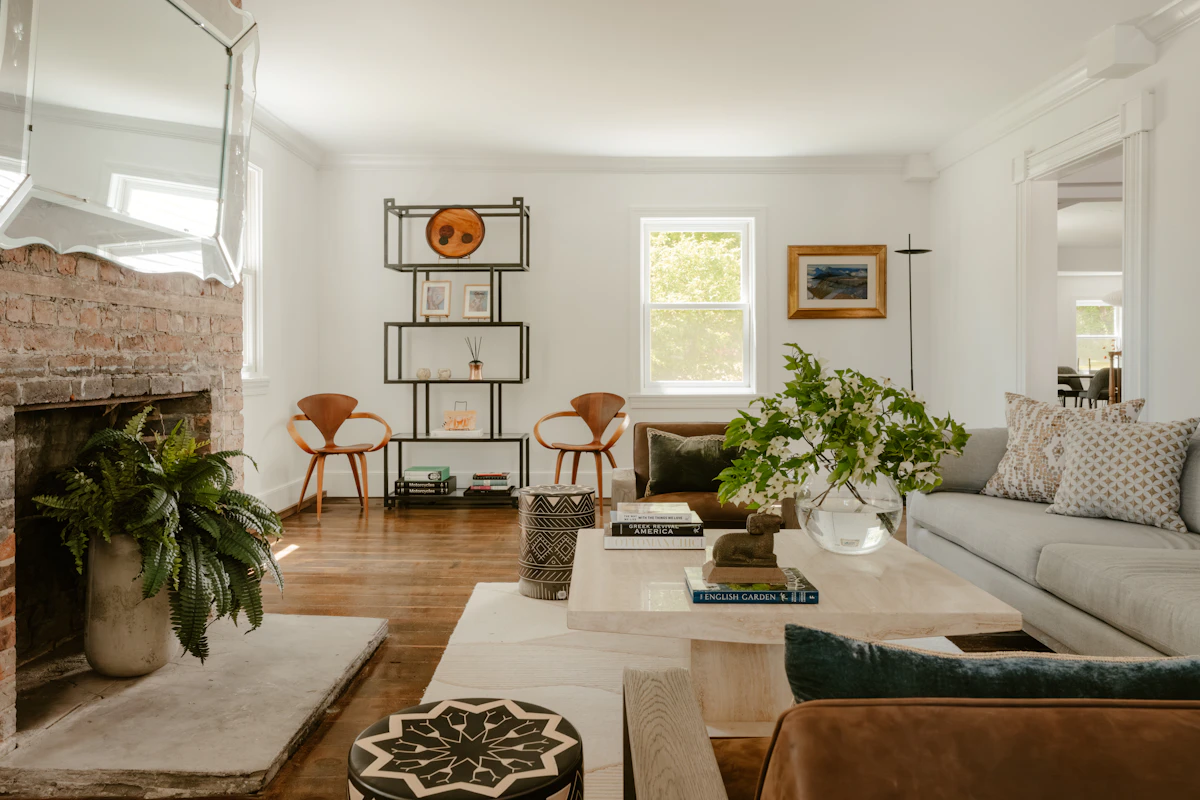
2. Put the TV on the Wall Next to the Fireplace
An adjacent-wall layout is often more comfortable because the TV can sit at a better viewing height while the fireplace keeps its architectural presence. Place the sofa so it faces somewhere between the two walls, then angle one chair toward the fireplace to soften the geometry.
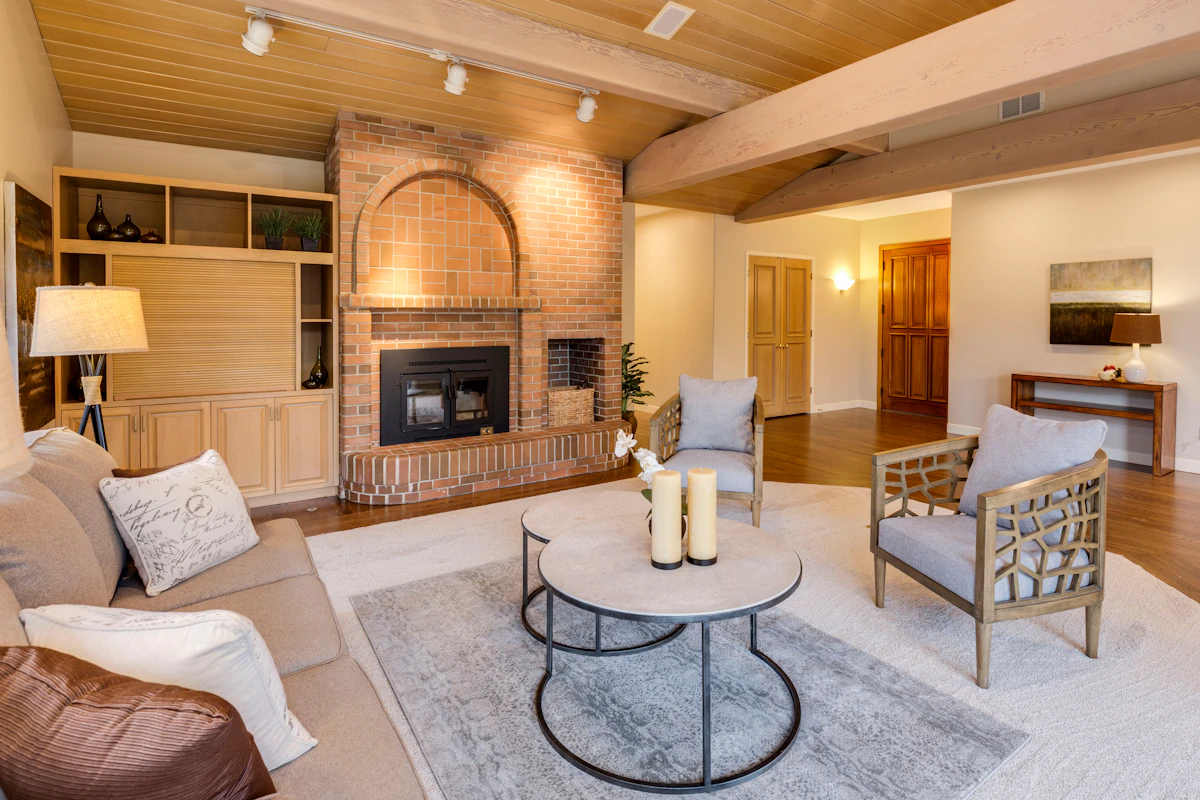
This works especially well when the fireplace wall has windows, built-ins, or a narrow chimney breast that makes a centered TV difficult. Keep the TV console shallow—often 14 to 18 inches deep is enough for many setups—so the media zone does not push too far into the room.
For more ideas on making the TV wall feel intentional without heavy cabinetry, see these TV wall ideas without built-ins.
3. Place the TV Beside the Fireplace on the Same Wall
If the fireplace is offset instead of centered, a TV can often sit beside it on the same wall. This creates one broad focal wall without forcing the screen above the fire. A low media console under the TV helps balance the vertical mass of the fireplace.
The key is to avoid making the two elements fight for perfect symmetry. Let the fireplace be taller and more architectural, while the TV zone stays lower and quieter. Repeat one material—wood, black metal, stone, or a paint color—across both sides to make the wall feel connected.
4. Float a Small Sectional Perpendicular to the Fireplace
A compact sectional can solve two focal points when one side faces the TV and the other turns toward the fireplace. Instead of pushing the sectional against every wall, float it just enough to create a defined seating zone and keep the main circulation path behind it.
Choose a sectional with a relatively slim arm and modest chaise depth. In a tight room, the chaise should not land in front of the fireplace opening or the route to a doorway. If you need help choosing pieces that work harder without adding bulk, your multifunctional furniture guide is a useful companion.
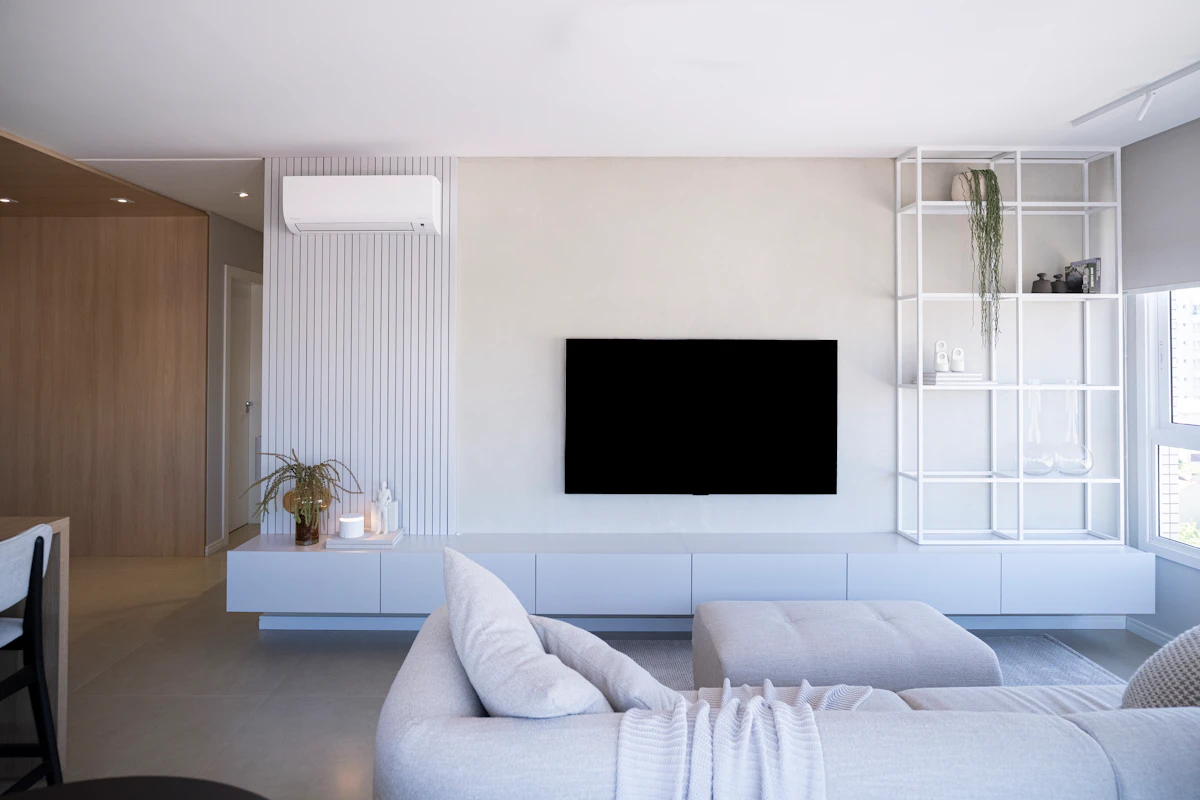
5. Let the Sofa Face the TV and Angle Chairs Toward the Fireplace
When television is the daily priority, let the sofa face it directly and use one or two lightweight chairs to connect the seating area to the fireplace. The chairs can angle inward for conversation and pivot slightly toward the fire when it is in use.
This layout feels more natural than twisting the sofa halfway between two walls. It also keeps the main seat comfortable for movie nights while the fireplace still participates in the room. Keep chair backs low enough that they do not block the fireplace from the sofa.
6. Use a Corner TV to Free the Fireplace Wall
A corner TV is not always the first choice, but it can be practical when every flat wall is interrupted by windows or doors. A small corner media unit or a carefully positioned wall mount can preserve the fireplace wall and improve circulation.
Use this only if the viewing angle remains comfortable from the main seats. The TV should not force everyone to look sharply to one side. Corner placement works best when the sofa sits slightly off-axis and the room is already asymmetrical.
If the corner itself is awkward, borrow the footprint-first approach from these awkward corner living room ideas.
7. Float the Sofa Between the Fireplace and TV Zones
In some small rooms, the best solution is to stop treating the walls as the only furniture locations. Float the sofa so its back defines a walkway or separates the living zone from an entry or dining area. The TV can sit on one wall while the fireplace stays visible at an angle.
This layout needs discipline: leave enough room behind the sofa for circulation and resist filling the new gap with another deep console unless there is truly space. A narrow shelf or no furniture at all may work better.
8. Keep the TV on a Low Console and Let the Fireplace Stay Visual
Not every TV needs to be mounted. A low console can keep the screen near seated eye level and make the media zone feel less permanent. This is useful when the fireplace is the room’s strongest architectural feature and you do not want a second tall visual element.
Choose furniture designed to support the TV’s size and weight. The U.S. Consumer Product Safety Commission recommends mounting flat-screen TVs or securing TVs and supporting furniture to reduce tip-over risk, and it advises using sturdy furniture intended to hold a television. See CPSC’s Anchor It! guidance.
9. Use Swivel Chairs to Serve Both the TV and Fireplace
Swivel chairs are especially useful when the TV and fireplace sit on different walls. One or two compact swivels can turn toward the screen, rotate toward the fire, or face the sofa for conversation without changing the whole room arrangement.
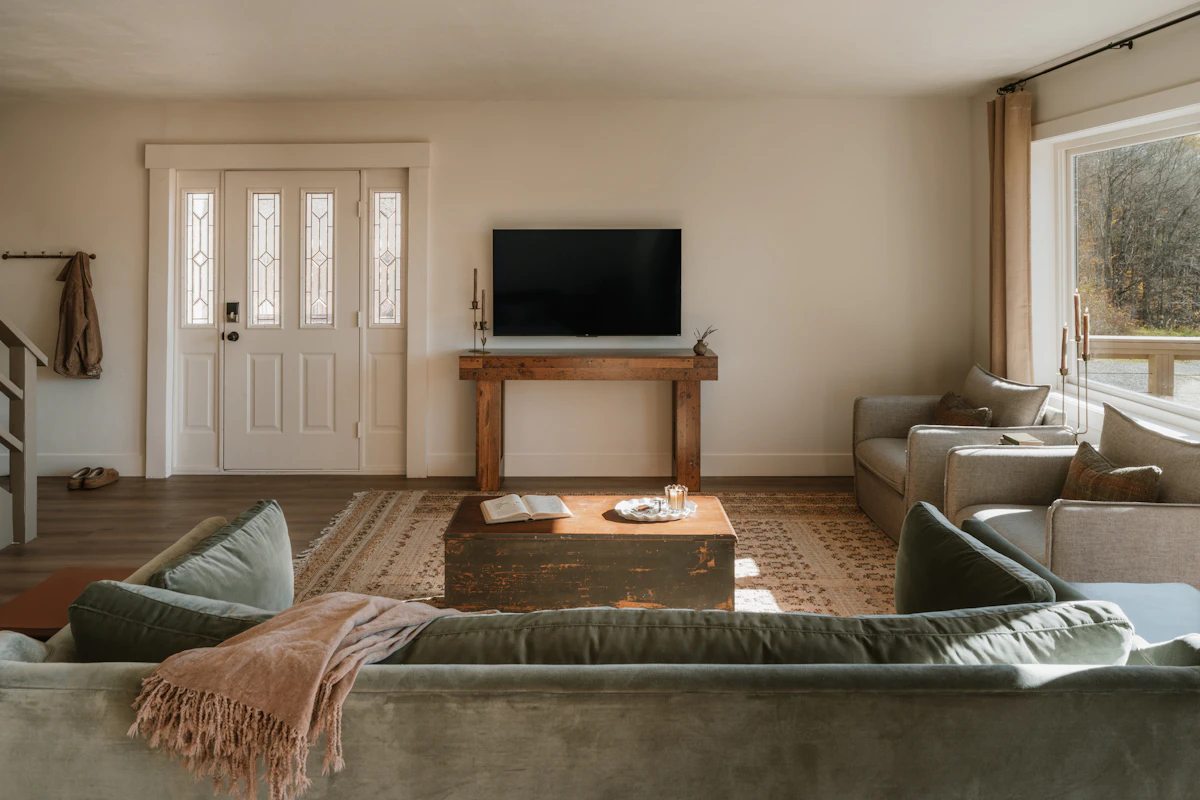
Look for a base that turns within the chair’s footprint rather than a very wide barrel shape that needs extra clearance. A pair of chairs can work opposite a sofa, or one swivel can replace a bulky accent chair in a narrow room.
10. Use an Articulating TV Mount for an Awkward Side Wall
An articulating mount can make a side-wall TV more usable when the room does not offer a straight-on media wall. The screen can sit flatter when not in use and angle toward the sofa for viewing.
Use a mount rated for the TV and the wall construction, and follow the TV manufacturer’s installation requirements. The mount should improve viewing, not compensate for a wall that cannot safely support the load. Cable slack also needs to accommodate the screen’s movement without rubbing against the fireplace or getting pinched.
Measure Before You Commit to a Layout
Tape the sofa, chairs, media console, and coffee table footprints on the floor before mounting anything. Then test the room as if it were already furnished: walk from the entry to the sofa, open nearby doors, sit where the TV will be viewed, and make sure fireplace access stays clear.
As a practical planning range, many small living rooms feel easier to move through with roughly 30 to 36 inches along a main walkway. Coffee tables often work best when they leave about 14 to 18 inches between the table edge and sofa, although your furniture depth, mobility needs, and room shape may require more.
Fireplace Heat, Mounting, and Cable Planning
Heat should decide the TV location before aesthetics do. Follow the fireplace manufacturer’s required clearances to combustibles and electronics, then follow the TV manufacturer’s temperature and ventilation requirements. If the two sets of instructions conflict, choose another TV location.
Plan power, streaming devices, consoles, and soundbars before drilling. Surface raceways can look cleaner than loose cables when properly rated and installed, while in-wall cable routing needs products approved for that use. Keep ordinary cords away from heat and do not hide them where you cannot inspect them.
Common Fireplace-and-TV Layout Mistakes
Forcing both focal points into perfect symmetry. Small rooms often look better when one element leads and the other supports it.
Mounting the TV too high just to clear the mantel. A technically centered screen can still be uncomfortable to watch.
Blocking the fireplace with furniture. Chairs, ottomans, and coffee tables should not crowd the hearth or interfere with manufacturer-required clearances.
Ignoring glare. Check daytime reflections from windows before choosing the TV wall.
Buying a sectional before testing the chaise. In a tight room, one wrong chaise direction can block the fireplace, TV sight line, or doorway.
Leaving cable planning until the end. Power and device placement should be solved before the TV goes on the wall.
Frequently Asked Questions
Where should a TV go in a small living room with a fireplace?
The best location is the one that gives you comfortable TV viewing without blocking the fireplace or a main walkway. In many small rooms, that means an adjacent wall, the same wall beside the fireplace, or above the fireplace only when the TV and fireplace manufacturers allow it.
Is it okay to mount a TV above a fireplace?
It can be possible, but heat and viewing height are the main concerns. Check both manufacturers’ instructions and measure the temperature at the planned TV location while the fireplace is operating. If the wall gets too hot or the screen would sit uncomfortably high, use another layout.
How do you arrange furniture when the TV and fireplace are on different walls?
Treat one as the primary viewing focal point and the other as a secondary focal point. A sofa can face the TV while one or two lightweight chairs angle toward the fireplace, or a sectional can sit perpendicular to one wall so both remain visible.
Should the sofa face the fireplace or the TV?
Base that decision on how the room is used most often. If television is part of daily life, make the primary sofa position comfortable for viewing and let chairs or an angled sectional connect the seating group to the fireplace.
What is a good walkway width in a small living room?
Around 30 to 36 inches is a useful planning range for many main walking paths, but your household and accessibility needs may require more. Tape the furniture footprints on the floor and test the route before buying or mounting anything.
How do I hide TV cables near a fireplace?
Plan power and device placement before mounting the TV. Use manufacturer-approved surface cable channels or properly installed in-wall-rated cable systems where appropriate. Never route ordinary power or signal cords where heat from the fireplace can damage them.
Choose the Layout That Works on an Ordinary Night
The strongest small living room with fireplace and TV layout is the one that makes your everyday seat comfortable, protects the fireplace area, and keeps people moving through the room without squeezing around furniture. Sometimes that means combining the TV and fireplace on one wall; other times it means letting them live on separate walls and using the seating to connect them.
Start with safety and viewing comfort, then solve the furniture plan, and only after that worry about styling. When the fireplace, TV, and seating each have a clear job, a small living room can feel balanced instead of crowded by competing focal points.

Share Your Thoughts