

Hanging curtains without drilling can work well in a rental, but the best method depends on the window frame, wall surface, curtain weight, and how often the curtains will be opened. A solution that looks fine in a photo can become frustrating if the rod slips, the panels are too heavy, or the hardware blocks the blinds you use every day.
Start by measuring the window and checking your lease. Then choose the least complicated no-drill method that can safely support the fabric you want. Tension rods, trim-mounted brackets, magnetic rods, and carefully rated adhesive systems all have a place, but none of them is right for every window.
Table of Contents
Measure Before Choosing a No-Drill Method
Measure the inside width of the window recess, the outside width including trim, and the distance from the top of the window to the floor. Also note handles, existing blinds, radiators, furniture, air vents, and anything else that could interfere with the curtain.
If you want a traditional full-length look, measure for panels that can reach close to the floor without dragging heavily. For an inside-mounted tension rod, measure the recess precisely because the rod needs two firm opposing surfaces. IKEA’s curtain measuring guide recommends allowing the rod to extend beyond the window when using conventional mounting and using generous fabric width so curtains do not look skimpy. You can apply the same proportion principles even when your hardware is no-drill.
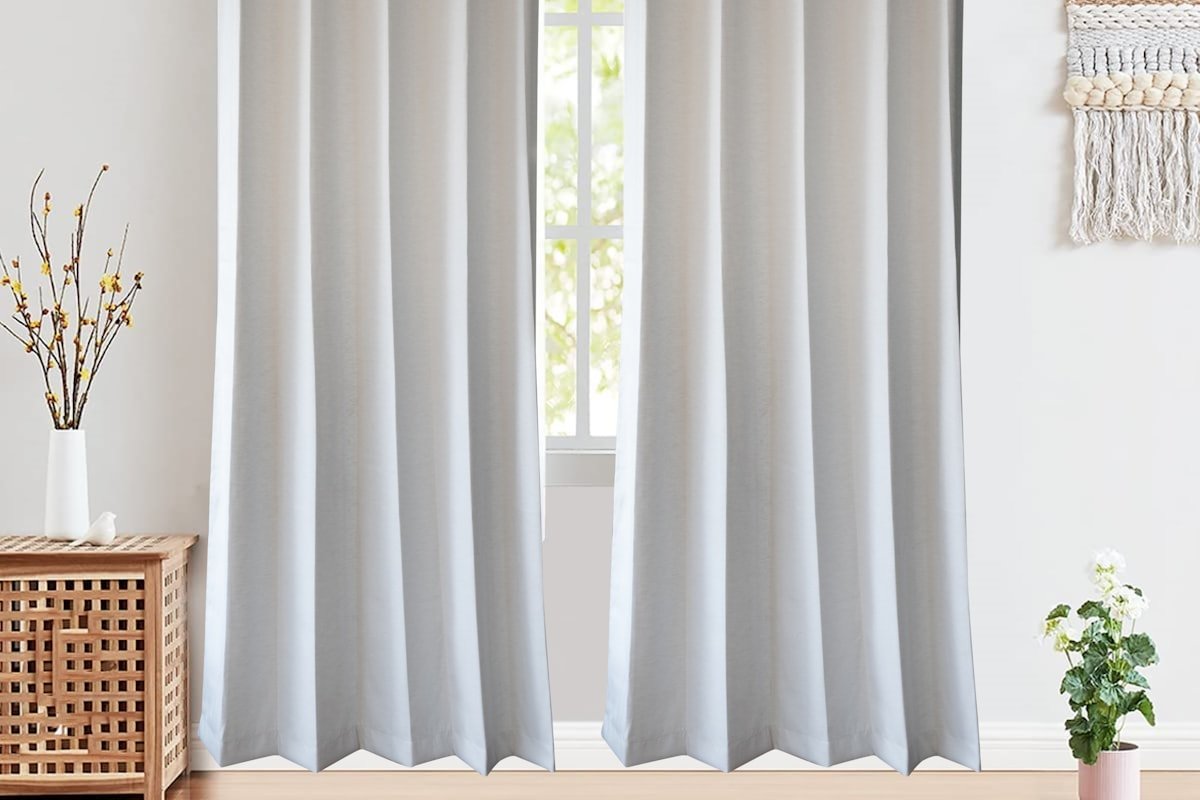
Finally, weigh or estimate the curtain load realistically. A sheer café panel and a lined blackout curtain are completely different jobs. Include the rod, rings, finials, and any hardware in the total load.
Method 1: Use a Tension Rod Inside the Window Recess
A tension rod is usually the simplest no-drill option because it presses between two opposing surfaces. It works best when the window recess is square, solid, and deep enough for the rod ends to sit securely.
Tension rods are particularly useful for café curtains, sheers, lightweight privacy panels, and short curtains. They are less convincing for heavy floor-length drapery because the rod may slip or bow, especially across a wide span.
- Choose a rod whose adjustment range comfortably includes your window width.
- Keep the rod level so the pressure is distributed evenly.
- Do not overtighten against delicate plaster, loose trim, or a soft finish.
- Use lightweight rings or a rod-pocket panel to reduce extra load.
- Check the rod after the first few days of regular opening and closing.
If the main goal is privacy rather than a dramatic curtain treatment, a tension rod can be a clean solution. If you want a taller, more architectural look, move to a method that can place the rod above the window.
Method 2: Use Trim-Mounted No-Drill Brackets
Some curtain brackets are designed to rest on, grip, or attach to existing window trim without screws. These can create a more conventional curtain position because the rod sits outside the recess rather than inside it.
The key word is compatibility. These systems depend on the shape, depth, and condition of the trim. A bracket designed for flat square casing may not work on ornate molding, narrow trim, or a window without a projecting casing.

Measure the casing before ordering and read the manufacturer’s installation requirements carefully. Do not force a bracket onto loose or fragile trim. If the trim already moves when you press it, it is not a good candidate for load-bearing hardware.
Method 3: Use Adhesive Curtain Hardware for Lightweight Setups
Adhesive hardware can work when the product is designed for the wall surface and the curtain load is comfortably below the stated limit. It should not be treated as a substitute for permanent hardware in every situation.
Wall condition matters. Old paint, fresh paint, wallpaper, textured finishes, dust, humidity, and poorly bonded paint can all reduce reliability or increase the chance of damage during removal. Command’s official picture-hanging instructions, for example, specify surface preparation, waiting periods after painting, product weight limits, and removal technique. Use the instructions for the exact adhesive product you buy rather than assuming all removable products behave the same way.
If you are using removable products elsewhere in the rental, our renter-friendly wall decor guide explains similar surface and weight considerations.
Method 4: Use Magnetic Rods on Compatible Metal Surfaces
A magnetic rod is a genuinely easy option on a steel door or other magnetic frame. It can be excellent for a small privacy curtain or lightweight panel because installation requires no adhesive and no compression against painted walls.
Test the exact surface with a magnet first. Some frames that look metallic are aluminum or are covered by nonmagnetic materials. Magnetic holding power also varies, so match the rod to the span and curtain weight instead of judging by appearance.
How to Make No-Drill Curtains Look Intentional
The hardware is only half the result. Proportion determines whether the finished window looks temporary or polished.
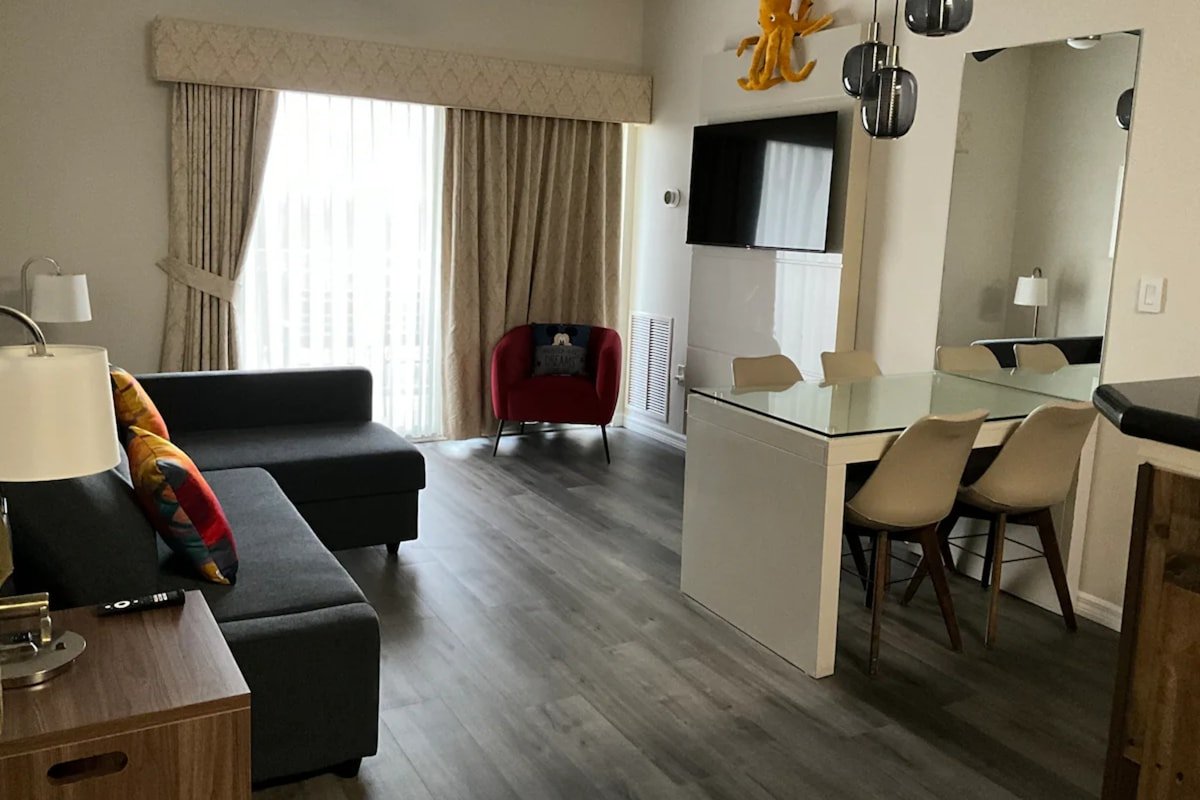
Use enough fabric
Panels that barely cover the glass look flat. More fabric creates fullness and softens the window. Exact fullness depends on the heading style and fabric, but a pair of panels should look generous when closed rather than stretched tight.
Choose the right length
For full-length curtains, panels that just meet or lightly skim the floor are easier to maintain than fabric that pools heavily. Café curtains should look intentionally short and usually cover only the portion of the window where privacy is needed.
Keep the rod visually simple
In a small apartment, a slim black, white, or metal-finish rod often disappears more gracefully than oversized decorative finials. Match or repeat the rod finish elsewhere in the room so it feels connected.
Good curtains can also improve the apparent proportions of a compact living room. See our apartment living room ideas for more ways to use vertical lines, lighting, rugs, and furniture scale together.
What to Avoid With No-Drill Curtain Setups
| Problem | Better approach |
|---|---|
| Heavy blackout curtains on a light-duty tension rod | Choose a stronger compatible system or lighter panels. |
| Adhesive on damaged or peeling paint | Repair the surface or use a non-adhesive method. |
| Rod mounted where it blocks blinds | Check blind operation before final installation. |
| Fabric sitting on a radiator or heater | Follow clearance and fire-safety guidance for the heating equipment. |
| Using a method only because it is “damage free” | Check product instructions, wall compatibility, and load rating. |
| Throwing away original rental hardware | Label and store anything you remove for move-out. |
If the window is in a bedroom, balance privacy with ventilation, window operation, and any required emergency egress. A curtain should never prevent a required exit window from opening quickly.
For other reversible upgrades, our renter-friendly bathroom upgrades guide uses the same basic principle: improve function first and preserve the original rental condition.
Frequently Asked Questions
What is the easiest way to hang curtains without drilling?
A tension rod is usually the simplest option when the window has a solid, square recess and the curtains are lightweight. It requires no adhesive and can be removed quickly.
Can tension rods hold blackout curtains?
Some heavy-duty rods may support certain blackout panels, but weight and span matter. Check the manufacturer’s load rating and use a more secure method if the rod bows or slips.
Do adhesive curtain hooks damage paint?
They can on incompatible, weak, fresh, textured, or poorly prepared surfaces. Follow the exact product instructions, surface requirements, waiting periods, weight limits, and removal method.
How high should renter-friendly curtains hang?
If your no-drill hardware allows outside mounting, positioning the rod above the window can make the room feel taller. Inside-mounted tension rods must sit within the window recess.
Can I use no-drill curtains over blinds?
Yes, if the rod and panels do not prevent the blinds from operating. Measure the blind depth, handles, and window trim before choosing hardware.
What curtain fabric works best with no-drill rods?
Lightweight cotton blends, sheers, linen-look fabrics, and lighter privacy panels are usually easier on no-drill hardware than heavy lined drapes. Always compare the actual weight with the hardware rating.
Choose Stability Before Styling
The best way to hang curtains without drilling is the method that safely fits your exact window, surface, and fabric. Measure first, keep the curtain load realistic, follow the hardware instructions, and make sure the window and blinds still work normally.
Once the support is dependable, improve the look with better proportion: enough fabric, a sensible length, and a simple rod finish. A renter-friendly setup can look polished without pretending temporary hardware has the same capacity as a permanently anchored system.




Share Your Thoughts