
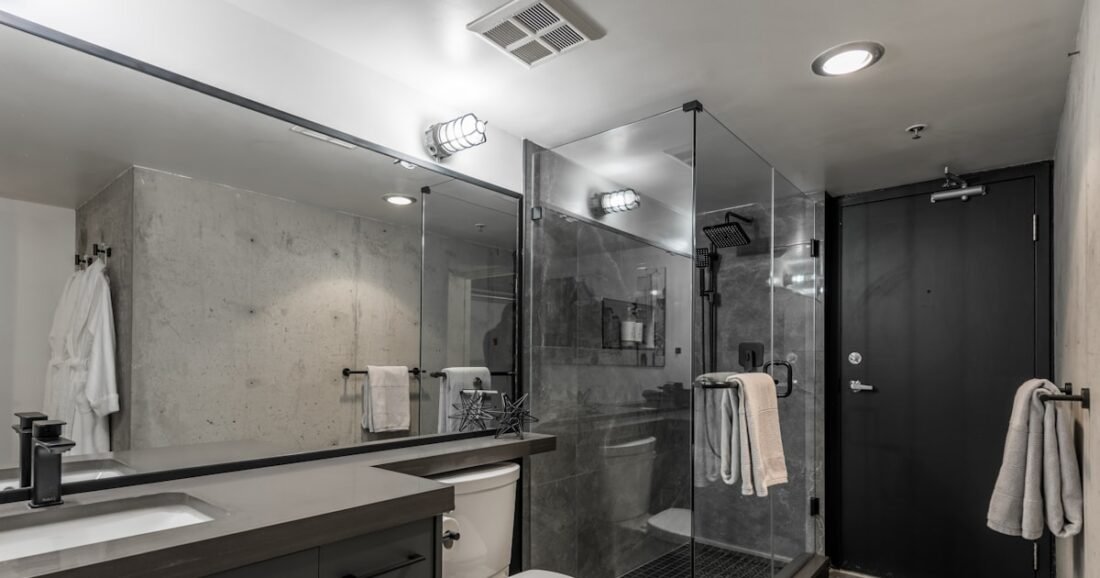
A rental bathroom can feel bland, poorly lit, and short on storage without needing a remodel. The safest upgrades are the ones that improve everyday function, photograph well, and can be reversed without leaving the landlord with damaged tile, mystery holes, or missing original hardware.
Before changing anything, read the lease and keep the original parts you remove. Then work in order: lighting and moisture first, storage second, textiles and color third, and decorative details last. That sequence prevents you from spending money on accessories while the room’s biggest problems are still unresolved.
Table of Contents
Start With the Lease and the Bathroom’s Real Problems
Before shopping, write down what actually bothers you. Is the counter cluttered? Is the room too dark? Does the shower curtain dominate the space? Are towels always damp? Is the vanity hardware dated? A rental bathroom becomes more polished when you solve two or three practical problems instead of adding ten decorative objects.
Keep a labeled storage box for the original knobs, showerhead, towel bar parts, or other removable items. Photograph the bathroom before changing anything. Those two habits make move-out easier and help you restore the room without guessing which screw belonged to which fixture.
1. Improve Lighting Without Rewiring
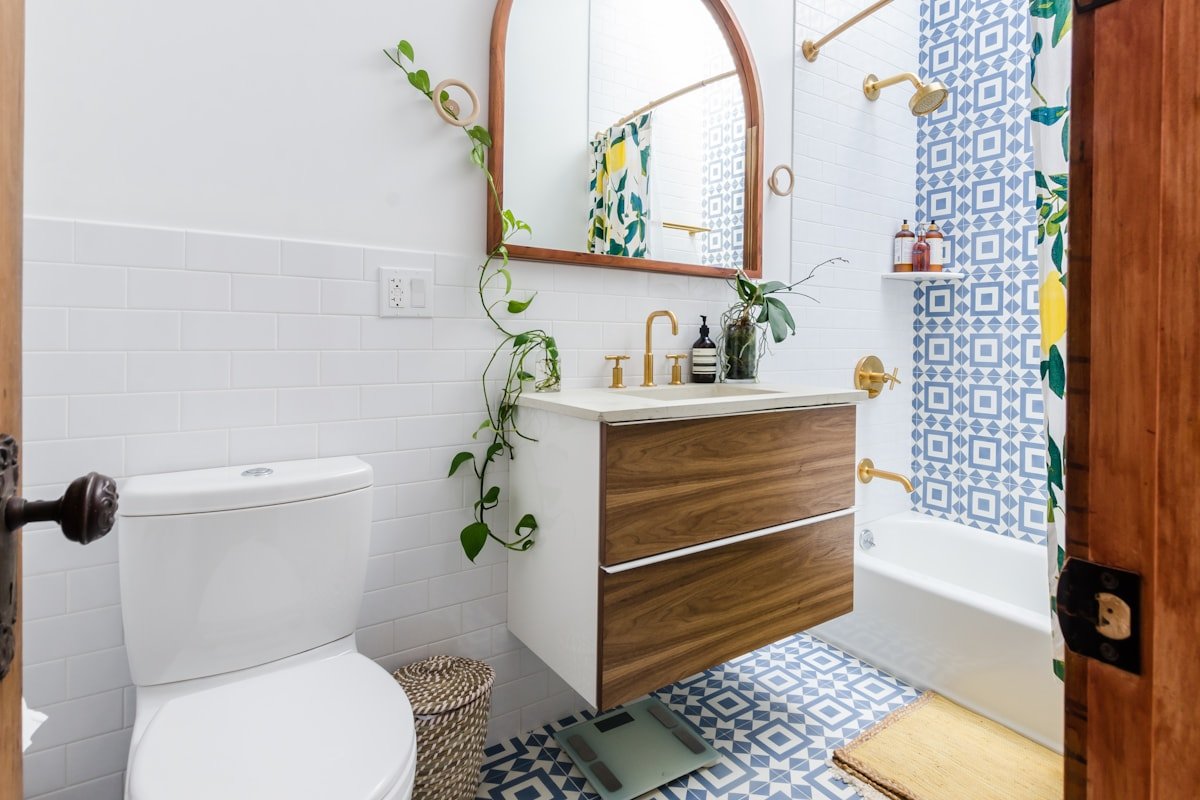
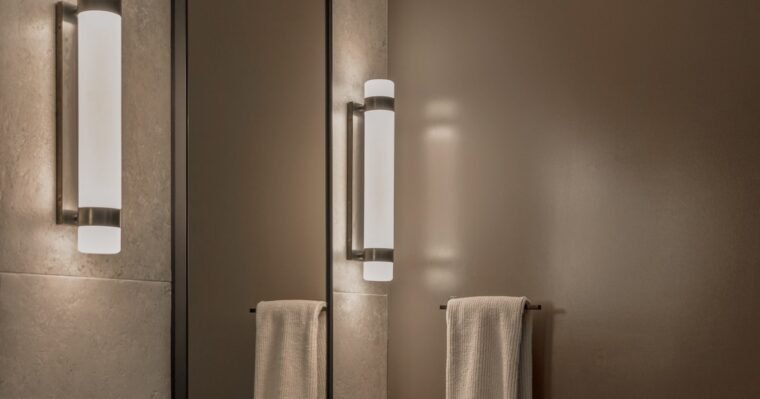
Lighting affects every finish in the room. Before replacing the fixture, check the bulb type, brightness, and color temperature allowed by the fixture. A compatible bulb with a more comfortable color can make tile, paint, skin tones, and towels look noticeably better.
If the bathroom is windowless, good ventilation and useful light matter more than decorative accessories. Our guide to decorating a bathroom with no windows explains how vanity light, mirror size, color, and reflective surfaces work together.
Hardwired lighting should not become a casual DIY project in a rental. Get written permission and use a qualified electrician where required. If the fixture stays, use the best compatible bulb setup and concentrate on reflective surfaces and lighter textiles instead.
2. Upgrade the Shower Curtain and Textiles
A shower curtain occupies a large vertical area, so changing it can alter the room more than several small accessories. Choose one that relates to the fixed tile and vanity rather than fighting them. Cream, warm white, muted green, soft blue, and restrained patterns are easy to coordinate.
If the rod position can be adjusted without violating the lease, a slightly higher curtain can make the enclosure feel taller. Make sure the liner still stays inside the tub or shower base and the rod remains stable. A styling choice is not worth creating a slip hazard or water problem.
Repeat one or two colors in the towels and bath mat. Avoid covering a small floor with several separate mats; one well-sized washable mat usually looks calmer and is easier to maintain.
3. Add Storage Without Damaging Tile
The fastest way to make a rental bathroom look better is often to remove visual clutter. Give daily toiletries a defined home and store backups somewhere else. If every bottle lives on the counter because the vanity is badly organized, address the storage before buying decor.
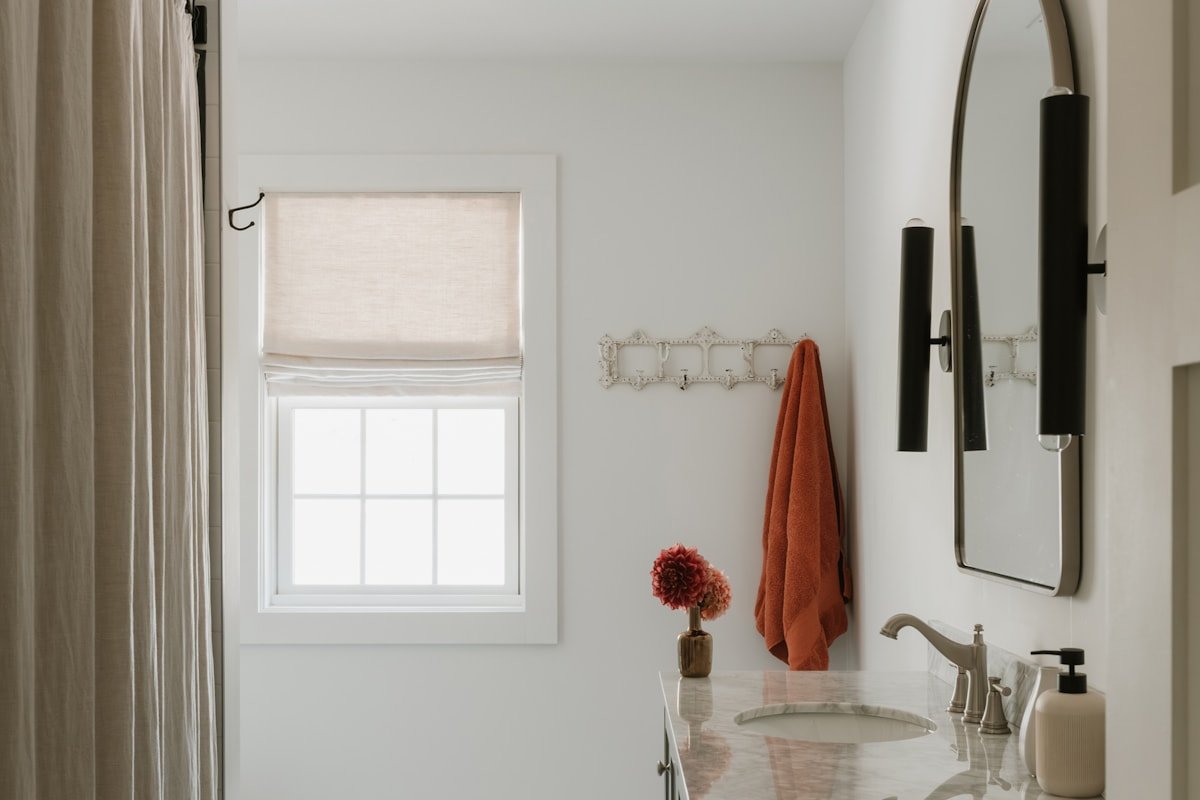
- Use drawer dividers inside the existing vanity.
- Add baskets or bins that fit existing cabinet shelves.
- Choose a slim freestanding cart only if it does not block the door or walkway.
- Use over-door storage where the door can still close normally.
- Consider a stable freestanding over-toilet unit instead of drilling tile.
- Use tension-based shower storage where the product is appropriate for the enclosure.
For a more detailed plan, see our small bathroom storage ideas, including vanity drawers, vertical space, shower storage, and ways to keep counters clear.
4. Refresh Hardware Carefully
Swapping vanity knobs or pulls is one of the easiest reversible changes when the landlord permits it. Measure the existing hole spacing so the replacement fits without drilling. Store the originals in the labeled move-out box.
A showerhead may also be replaceable with permission, but save every original washer and fitting, use the correct installation method, and check carefully for leaks. If the connection is corroded, damaged, or unclear, stop and ask the property owner or a plumber rather than forcing it.
Do not try to make every metal finish match exactly. A bathroom can comfortably combine two finishes when one is dominant and the second is repeated. For example, existing chrome plumbing can coexist with a black mirror frame and black cabinet knobs.
5. Use Removable Wall Decor Selectively
Small artwork can make a bathroom feel less generic, but humidity complicates adhesive products and paper-based decor. Place art away from direct water and heavy steam, and use hanging products that are designed for the surface and weight.
Command’s official picture-hanging instructions include specific surface preparation, waiting periods, weight limits, and removal steps. Those details matter more than a generic “damage-free” label.
For more options, our renter-friendly wall decor guide covers leaning art, lightweight gallery walls, removable hanging methods, and common mistakes.
6. Build a Better Color Plan Around What You Cannot Change
Rental bathrooms often contain beige tile, gray flooring, white fixtures, or a wood-tone vanity you cannot replace. Instead of pretending those finishes are not there, use them to choose the removable colors.
| Fixed finish | Easy removable palette |
|---|---|
| Warm beige tile | Cream, olive, muted terracotta, natural wood |
| Cool gray tile | Soft white, dusty blue, charcoal, pale wood |
| Dark vanity | Warm white, oatmeal, muted green, brushed metal |
| All-white bathroom | Terracotta, sage, blue-gray, walnut or black accents |
If two neutrals keep clashing, identify their undertones before buying more textiles. Our guide to warm and cool neutrals explains how lighting and fixed finishes change the way beige, gray, white, and greige behave.
7. Make the Vanity Look More Intentional
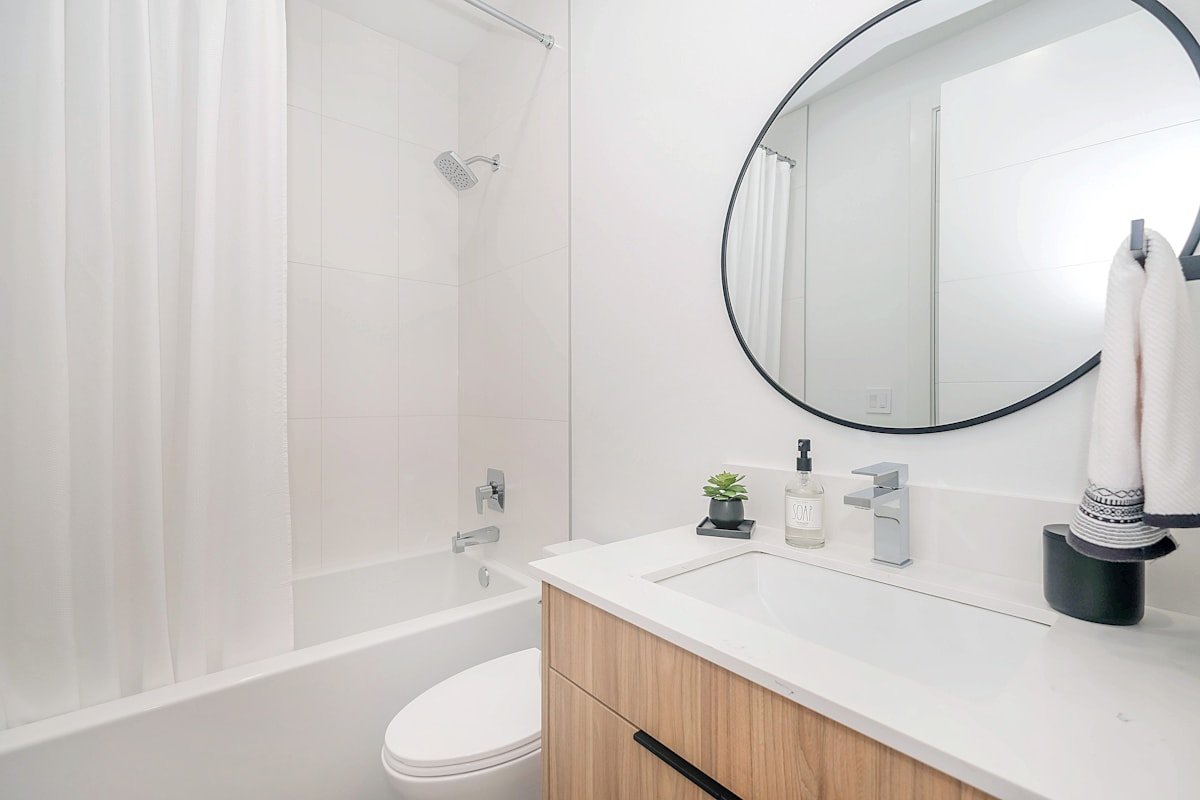
A tray does not create storage, but it can organize the items that genuinely need to stay out. Keep the daily soap, toothbrush holder, and perhaps one skincare item visible; put backups, hair tools, cleaning supplies, and rarely used products in drawers or cabinets.
If you want a decorative element, use one: a small vase, framed print, or well-chosen container. A small bathroom usually looks more polished when the counter retains visible empty space.
What Not to Change in a Rental Bathroom
- Do not drill tile without explicit permission and the correct method.
- Do not paint cabinetry or tile unless the landlord approves the permanent change in writing.
- Do not place a heavy mirror on light-duty adhesive just to avoid a small wall hole.
- Do not modify hardwired electrical fixtures without permission and qualified help.
- Do not hide mold, leaks, or water damage behind removable wallpaper or storage.
- Do not discard original hardware or plumbing parts.
Moisture deserves particular attention. The U.S. Environmental Protection Agency recommends bathroom exhaust ventilation to help remove moisture and notes that exhaust should vent outdoors rather than into an attic or other enclosed space. See the EPA’s indoor air quality guidance. If the fan is missing or ineffective, report the maintenance issue instead of masking the symptoms with fragrance or decor.
Move-Out Checklist
- Reinstall original knobs, showerhead, and approved removable hardware.
- Remove adhesive products exactly as the manufacturer directs.
- Clean residue with a method safe for the underlying finish.
- Remove freestanding storage, art, curtains, and personal accessories.
- Check plumbing connections for leaks.
- Take clear photos after restoring the bathroom.
Frequently Asked Questions
What is the easiest renter-friendly bathroom upgrade?
Start with textiles and organization. A better shower curtain, coordinated towels, a washable bath mat, and a clearer vanity can change the room without altering permanent surfaces.
Can renters replace bathroom cabinet knobs?
Often yes if the lease allows it and the new hardware uses the existing holes. Save the original knobs in a labeled bag so they can be reinstalled before move-out.
Are peel-and-stick products safe in rental bathrooms?
Not on every surface. Humidity, paint condition, tile texture, heat, and removal method all matter. Test the product and follow its surface instructions before covering a large area.
Can I change the showerhead in a rental?
Possibly, with permission. Save the original showerhead and fittings, use the correct installation method, and check for leaks after the replacement is installed.
How can I make a rental bathroom look less cheap?
Improve lighting, clear the counter, coordinate the textiles, repeat a simple color palette, choose one or two useful accessories, and avoid overcrowding the room with small decor.
Should I use removable wallpaper in a humid bathroom?
Only if the product is approved for the surface and environment. Avoid damaged paint and constantly wet areas, and test removal before committing to a large wall.
Make Reversible Changes Do More Work
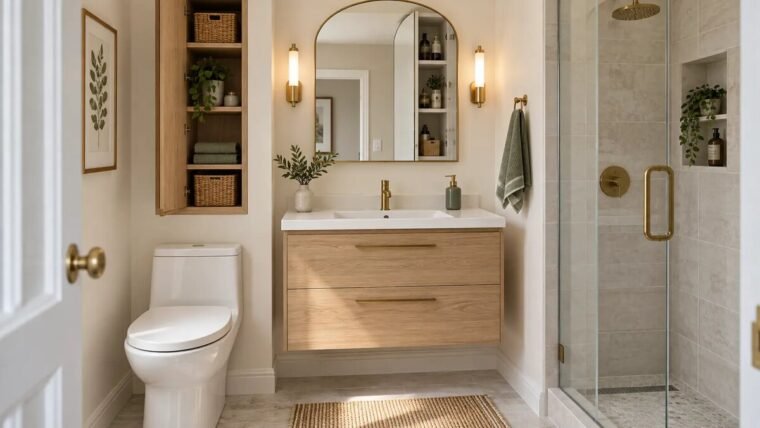
Renter-friendly bathroom upgrades are most effective when they improve function and appearance at the same time. Better lighting makes the finishes look better. Better storage clears the counter. A coordinated shower curtain and towels add color without touching the tile. New knobs can refresh a vanity without changing the cabinet itself.
Choose a few improvements that solve the room’s actual problems, keep the original parts, and resist the urge to cover every surface. A rental bathroom can feel thoughtful and personal while remaining straightforward to restore before you move out.

Share Your Thoughts