
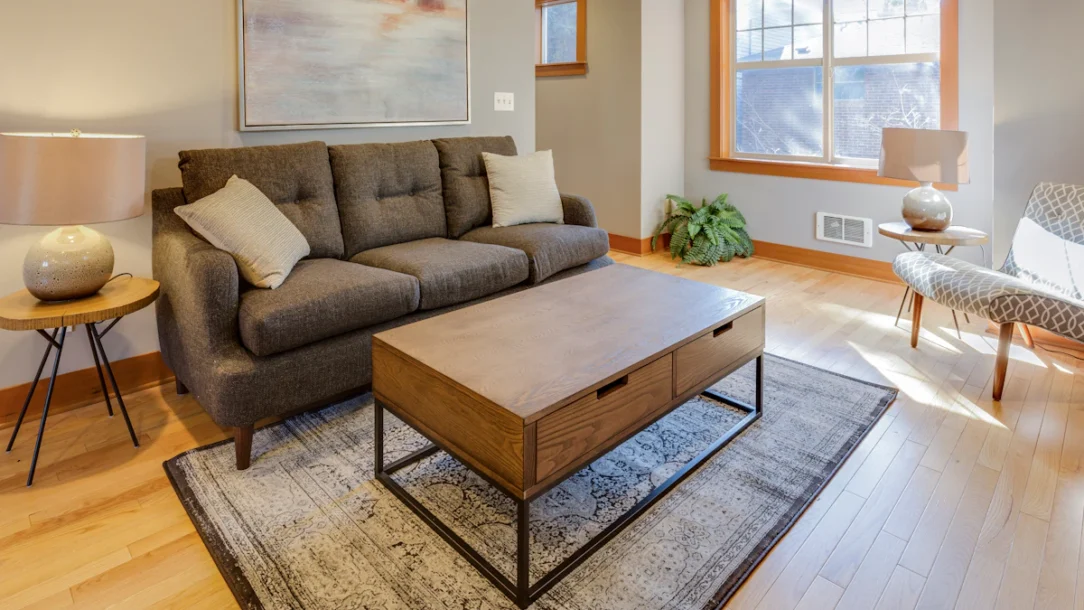
The wrong rug can make a perfectly good living room look unfinished. A rug that sits only under the coffee table, stops short of every sofa leg, or leaves awkward strips of floor around the seating group creates the classic “floating rug” look. The best living room rugs do the opposite: they connect the sofa, chairs, and coffee table so the seating area reads as one intentional zone.
The key is not memorizing one rug size for every room. It is understanding the relationship between the rug, the furniture, and the visible floor around them. This guide explains when to use front-legs-on placement, when all the furniture should sit on the rug, how common rug sizes work, and how to test the footprint before you order.
Table of Contents
Why the Floating Rug Look Happens
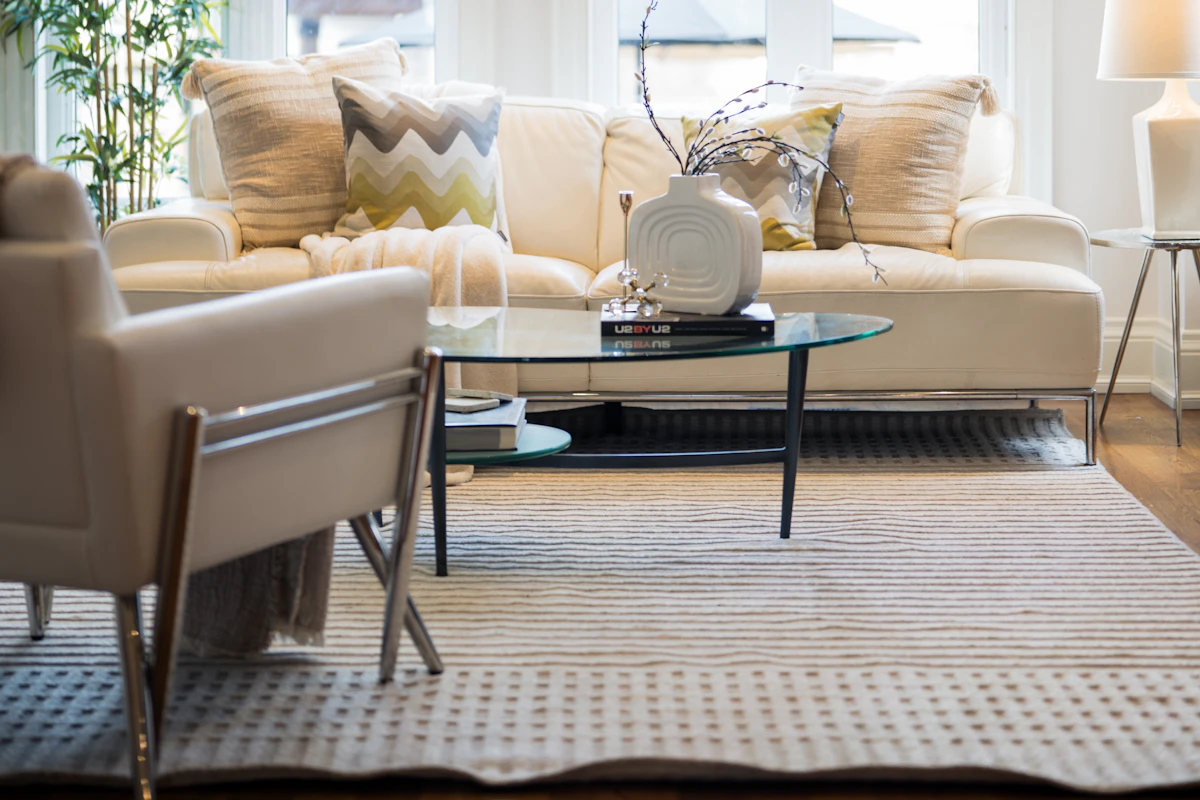
The floating-rug look usually happens when the rug is treated as decoration for the coffee table instead of as an anchor for the seating group. The coffee table sits on the rug, but the sofa and chairs sit several inches or even a foot away from it. Visually, the rug becomes an island in the middle of the room.
The fix is almost always scale or placement. Either choose a larger rug so at least the front legs of the seating touch it, or intentionally reduce the rug and create enough space around it that the smaller footprint looks deliberate rather than accidental. For most everyday living rooms, the front-legs-on approach is the easiest and most forgiving.
Measure the Seating Zone, Not Just the Room
Do not start by asking, “What rug fits a 12-by-14-foot room?” Start by measuring the furniture group. Measure from the outside edge of one chair or sofa to the outside edge of the opposite piece, then decide how far under each item you want the rug to extend.
This matters because two rooms with the same dimensions can need completely different rugs. One may have a compact sofa and two chairs; another may have a deep sectional. If the furniture layout is still unsettled, use these apartment living room ideas to establish the seating zone before you buy the rug.
Choose Between All-Legs-On, Front-Legs-On and No-Legs-On
All legs on the rug: this creates the most unified look and works well in larger rooms where the rug can sit comfortably beneath the entire seating group without running into the walls.
Front legs on the rug: this is the best default for most living rooms. The sofa and chairs visually connect to the rug while the room still shows a useful border of flooring. Crate & Barrel’s current sizing guidance also recommends having at least the front legs of the sofa and chairs on the rug. See its living room rug placement guide.
No legs on the rug: this can work when the rug is intentionally small and clearly separated from the furniture, but it is the easiest arrangement to get wrong. If the rug barely extends beyond the coffee table, it often reads as undersized rather than intentional.
Living Room Rug Size Guide: 5×8, 6×9, 8×10, 9×12 and 10×14
5×8: best for very compact rooms, loveseats, or accent-chair groupings. It is often too small for a full sofa-and-chairs layout unless the seating is unusually tight.
6×9: a useful small-room size when you can get the sofa’s front legs and at least part of the chairs onto the rug. Room & Board’s current guide notes that a 6×9 can work well when the front legs of the sofa and chairs sit on it. See Room & Board’s rug-size guide.
8×10: one of the most versatile sizes for a medium living room. It often gives enough width to extend past a standard sofa and enough depth to catch the front legs of chairs opposite it.
9×12: strong for larger sofas, sectionals, or a full conversation grouping. This size makes it easier to place all front legs—or sometimes all furniture legs—on the rug.
10×14: best for generous rooms where the rug needs to sit beneath most or all of a large seating arrangement while still leaving a visible floor border around the perimeter.
How Far Should the Rug Extend Past the Sofa?
The rug should look wider than the sofa, not exactly the same width and definitely not narrower. As a practical starting point, aim for roughly 8 to 12 inches of rug extending beyond each side of a standard sofa when the room allows it. Room & Board uses a similar proportion for a 5×8 rug in a compact room.
You can go wider in a large room. What matters is that the rug feels like the base of the seating composition rather than a strip tucked beneath one piece of furniture.
Rug Placement With a Sectional
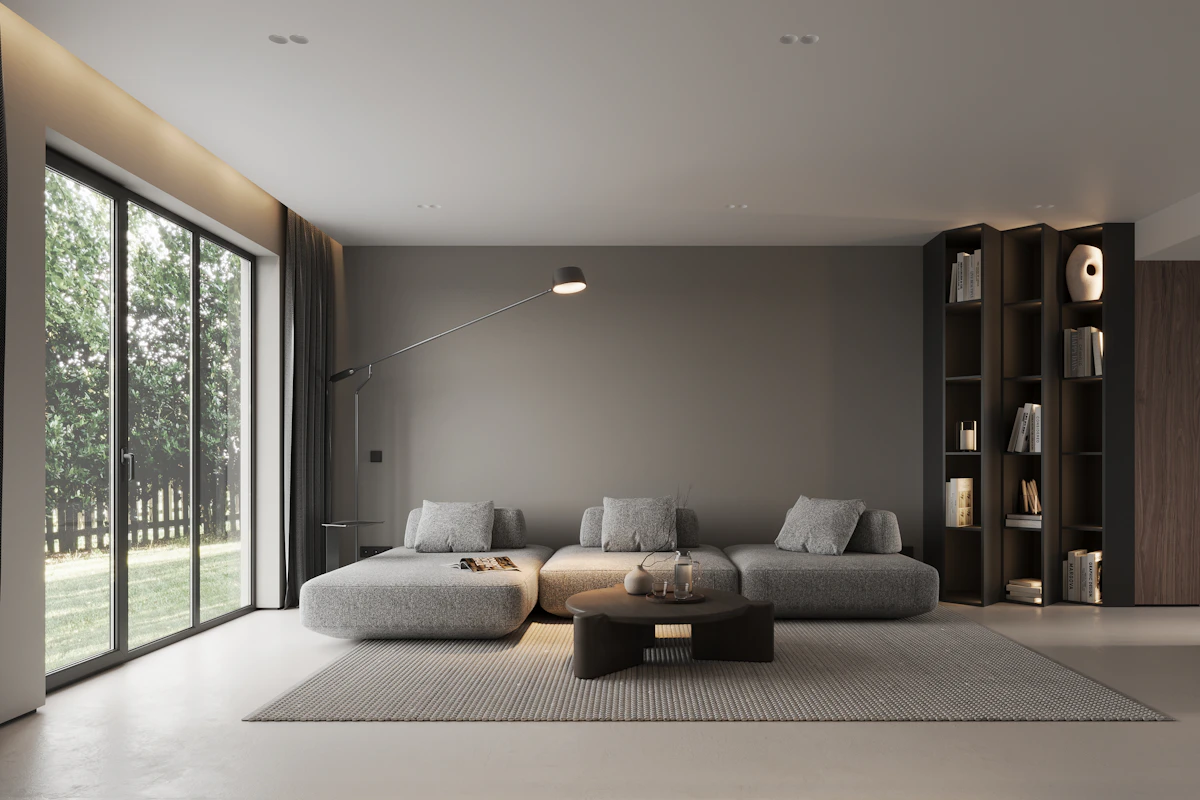
Sectionals need rugs with enough width to support the long horizontal line of the sofa. A rug that sits only under the coffee table can look especially undersized because the sectional creates such a large visual mass around it.
For most sectionals, place the rug so the front legs of both the long side and chaise side sit on it. In a larger room, choose a 9×12 or 10×14 so the whole sectional can sit comfortably on the rug. Keep the placement aligned with the seating group rather than with the nearest wall.
Rug Placement With Two Sofas or a Sofa and Chairs
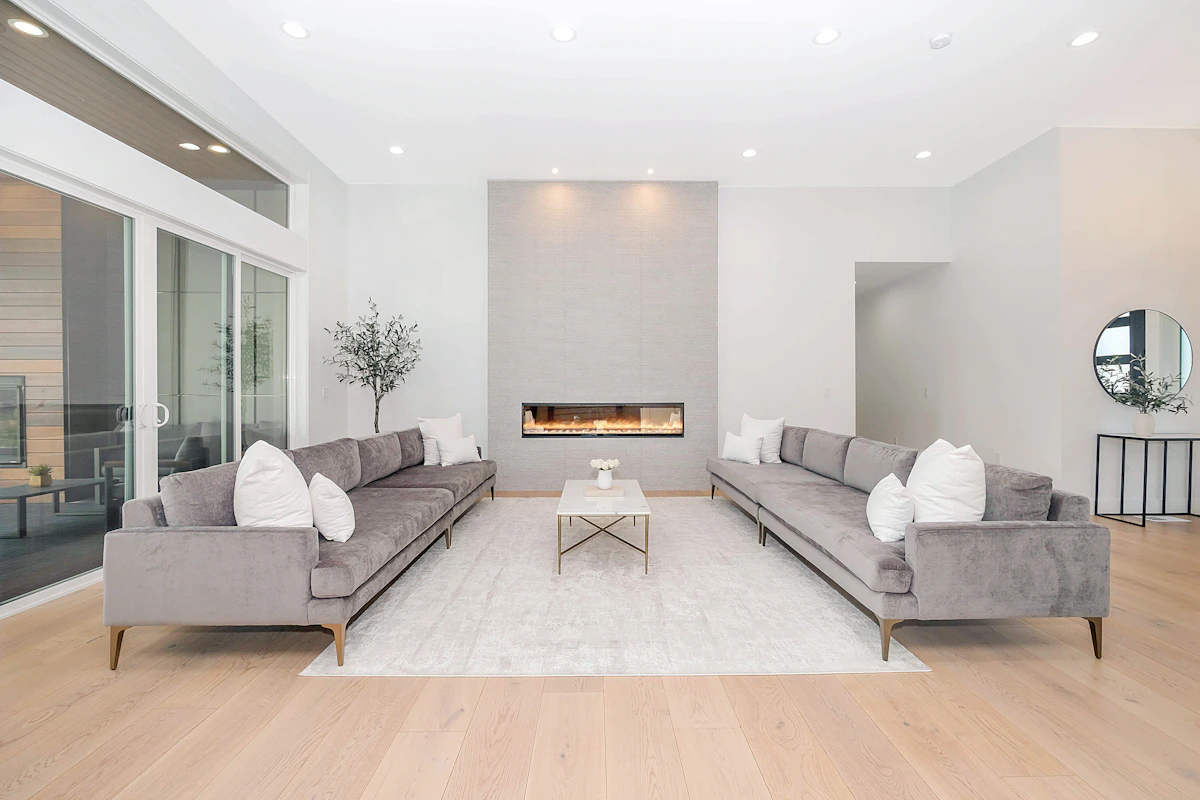
When two sofas face each other, the rug should bridge them. Ideally, both sofas have at least their front legs on the rug. If the rug sits only between them, the furniture can feel pushed to the perimeter while the rug floats in the center.
For a sofa and two chairs, make sure all three seating elements relate to the rug in the same way. Do not put the sofa front legs on while the chairs sit completely off unless the asymmetry is clearly intentional. A larger rug that catches the front legs of every seat usually creates the strongest conversation zone.
Small Living Rooms: Size Up Carefully Instead of Defaulting to Tiny
A common instinct is to buy a tiny rug because the room is small. That can backfire. A small rug breaks the floor into several visual zones and can make the furniture look farther apart. A slightly larger rug often makes the room feel more coherent.
If an 8×10 lets the sofa and chairs share one rug while a 5×8 leaves every seat disconnected, the larger rug may actually make the room feel calmer. In very tight rooms, protect circulation first; these low-ceiling living room ideas and awkward-corner layout ideas use the same principle of making the room read as one clear volume rather than many small fragments.
Open-Plan Living Rooms: Let the Rug Define the Zone
In an open-plan room, the rug has another job: it tells the eye where the living area stops and the dining or kitchen zone begins. Choose a rug large enough to contain the entire conversation area, then keep the dining rug—or bare floor beyond it—visually separate.
Do not stretch one undersized rug halfway between two zones. A living rug should belong clearly to the living furniture. If you also have a compact dining area nearby, the zoning logic in these small apartment dining space ideas can help the two areas feel distinct without walls.
Center the Rug on the Seating Group, Not Necessarily the Room
A fireplace, off-center window, doorway, or TV wall can make the seating group sit away from the architectural center of the room. In that case, center the rug under the furniture, not under the ceiling or the full floor plan.
This is especially important when the fireplace and TV are on different walls. The rug should support the actual furniture layout you use every day. If that layout is difficult, start with these small living room fireplace and TV layouts.
Keep a Consistent Border of Bare Floor
A rug should anchor the seating area without looking wall-to-wall unless that is the deliberate effect. Current Crate & Barrel guidance suggests leaving roughly 12 to 18 inches of visible floor between the rug and the wall, while Room & Board uses about 18 inches as a useful large-room reference.
In a small room, the border can be narrower. The important part is consistency. A rug that nearly touches one wall but leaves three feet of floor on another side usually looks misaligned unless the furniture layout explains the offset.
Match the Rug Shape to the Furniture Layout
Rectangular rugs suit most sofa-and-chair layouts because the furniture group is usually wider than it is deep. A square rug can work with a square conversation grouping or four-chair setup. Round rugs are useful when the seating arrangement itself curves around a circular coffee table or a compact architectural feature.
Do not choose a round rug only because you want to soften a rectangular room. If the furniture still forms a long rectangle, the rug may fight the seating geometry instead of supporting it.
Check the Coffee Table Relationship
The coffee table should sit comfortably inside the rug, but it should not be the only furniture item connected to it. Leave enough rug visible around the coffee table that the surface reads as part of a larger seating zone.
Once the rug placement is right, keep the tabletop styling visually lighter so the rug, furniture, and table do not all compete. The principles in Coffee Table Decor That Still Leaves Room to Live work especially well in small rooms.
Use a Rug Pad for Stability and a Cleaner Edge
A rug pad helps keep the rug from shifting, adds a little cushioning, and can make the edges lie more cleanly. Choose a pad designed for both the rug material and the floor below it, and trim it so it sits fully inside the rug perimeter instead of showing at the edges.
Ruggable’s current size guide also recommends choosing the rug around the furniture relationship and offers rug pads as part of the setup. See Ruggable’s rug-size guidance.
Tape the Rug Size on the Floor Before Ordering
Painter’s tape is the easiest way to catch a sizing mistake before it becomes an expensive return. Mark the exact outside dimensions of the rug on the floor, then put the sofa, chairs, and coffee table in their normal positions.
Walk through the room. Check door swings, circulation, floor vents, fireplace hearths, and side-table access. Sit in every seat. If the taped rug looks like a small island in the middle of the furniture, size up. If it nearly becomes wall-to-wall carpet, size down.
Common Living Room Rug Mistakes
Buying for the coffee table instead of the seating group. This is the fastest route to the floating-rug look.
Choosing the smallest size because the room is small. A slightly larger rug can make the seating area feel more unified and therefore visually calmer.
Ending the rug exactly at the sofa width. The rug should usually extend beyond the sofa sides so it feels like a base rather than a strip.
Letting only one chair touch the rug. Keep the furniture relationship consistent across the seating group whenever possible.
Centering the rug on the room instead of the furniture. The rug should support the real seating layout, even if the room itself is asymmetrical.
Skipping the tape test. Rug dimensions are difficult to visualize accurately from a product page, especially in a furnished room.
Frequently Asked Questions
What size rug is best for a living room?
For many medium living rooms, 8×10 is a versatile starting point. Small rooms may work with 6×9, while sectionals and larger conversation areas often need 9×12 or 10×14. The furniture footprint matters more than the room size alone.
Should sofa legs be on the rug?
Usually, yes. Having at least the front sofa legs on the rug is one of the easiest ways to visually connect the seating group and avoid a floating-rug look.
Is a 5×8 rug too small for a living room?
It can be too small for a full sofa-and-chairs arrangement, but it can work in a compact room with a loveseat or small seating group. Test whether the rug meaningfully connects the furniture rather than sitting only under the coffee table.
How far should a rug extend beyond the sofa?
A useful starting point is roughly 8 to 12 inches beyond each side of a standard sofa, with more extension possible in a larger room. The rug should look visibly wider than the sofa.
What rug size works best with a sectional?
Many sectionals need at least an 8×10, while larger sectionals often look better with a 9×12 or 10×14. Aim to get the front legs of both the main sofa section and the chaise onto the rug.
How much floor should show around a living room rug?
Around 12 to 18 inches of visible floor is a common starting point in medium and large rooms, but smaller rooms can use a narrower border. Consistency around the rug matters more than one exact number.
The Right Rug Should Make the Furniture Feel Connected
The best living room rugs do not simply fill empty floor. They define the seating area, connect the sofa and chairs, and make the furniture look like one composition instead of separate pieces arranged around a small rectangle.
Measure the furniture group, choose a consistent leg-placement strategy, leave a controlled border of bare floor, and tape the rug dimensions before you buy. If the sofa, chairs, coffee table, and rug all feel visually connected when you stand at the doorway, you have solved the floating-rug problem.

Share Your Thoughts