
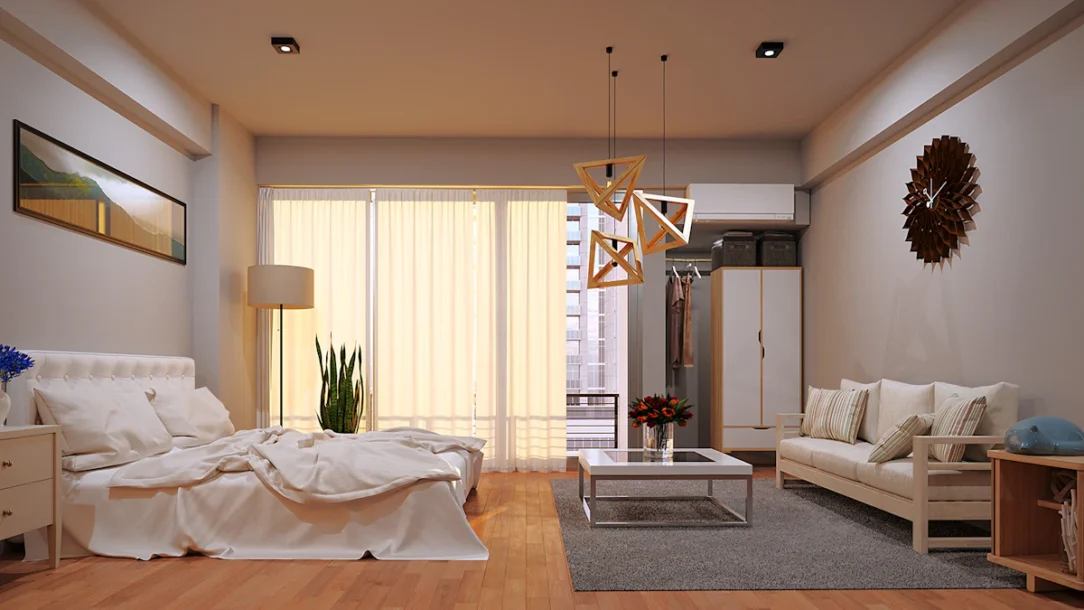
A studio apartment can feel surprisingly comfortable until the bed becomes the first thing you see from the sofa, kitchen, and front door. The best studio apartment bedroom divider ideas do more than hide the mattress—they create a real sleeping zone without making one small room feel chopped into two even smaller rooms.
The goal is not always full privacy. In many studios, a lighter divider works better because it marks where the bedroom begins while still allowing daylight, airflow, and sight lines to move through the apartment. Curtains, open shelves, slatted screens, wardrobes, and even furniture placement can all create that sense of separation without building a permanent wall.
Table of Contents
Plan the Sleeping Zone Before Choosing the Divider
Start with the bed, not the divider. Place the bed where it interferes least with the apartment’s main route, then decide which side actually needs screening. A divider across the entire width of the studio may be unnecessary if a shorter panel can block the bed from the entry or living area.
If the living room and sleeping area share the same footprint, use the zoning principles from these apartment living room ideas: keep the circulation path obvious, let each zone have one primary function, and avoid filling every edge with furniture.
Also check where the natural light comes from. If the studio has one main window, do not place a solid floor-to-ceiling divider where it will turn the living side into a dark interior room.
1. Hang a Ceiling-Track Curtain Around the Bed
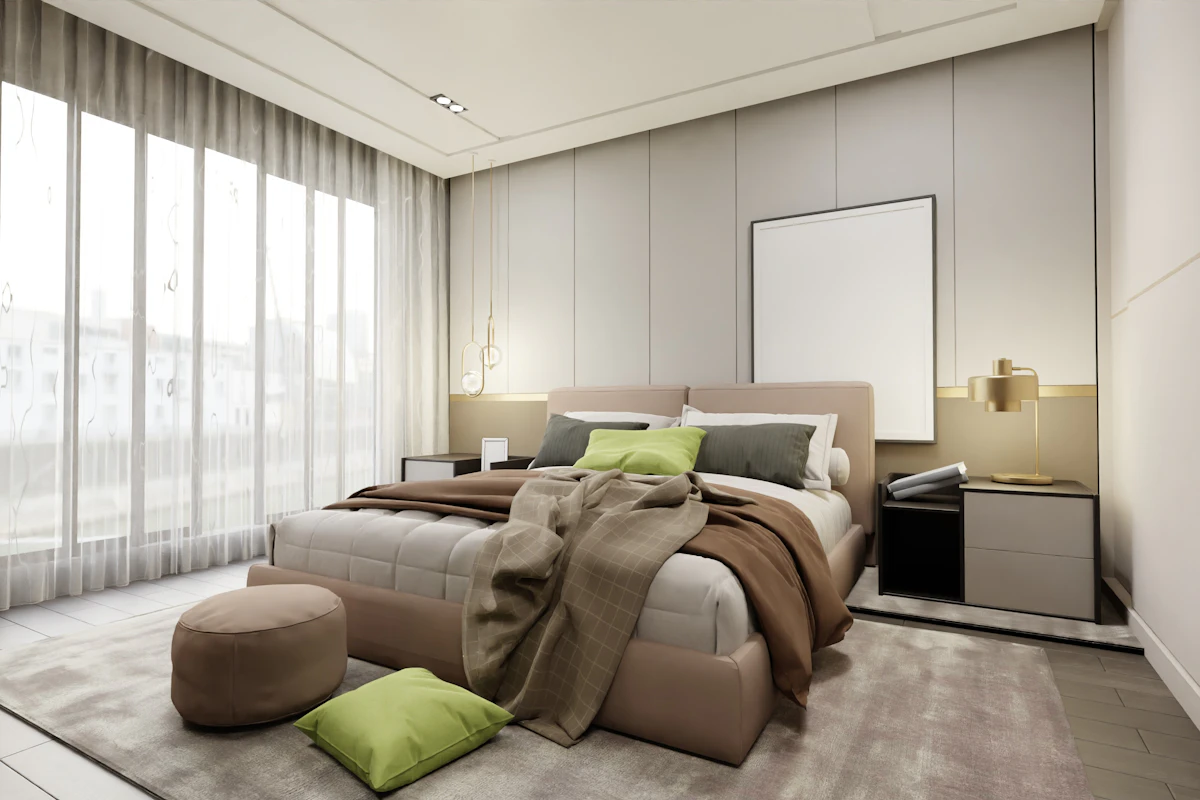
A ceiling-track curtain is one of the strongest ways to make a studio bed feel like a separate bedroom because the fabric can close completely at night and disappear to one side during the day. It uses almost no floor space, which makes it especially useful in narrow studios.
Choose fabric based on how much separation you actually need. A linen-look curtain softens the bed without making the room heavy. A lined curtain gives more privacy and blocks more visual clutter, but it can also reduce daylight. Mount the track only where the ceiling construction and lease rules allow it.
For a more polished effect, run the curtain several inches wider than the bed instead of wrapping it tightly around the mattress. The small buffer makes the sleeping zone feel intentional rather than improvised.
2. Use a No-Drill Tension Curtain for a Rental
If drilling is not allowed, a tension-mounted curtain can create a softer bedroom boundary between two opposing walls or inside a shallow alcove. This works best where the span is within the product’s rated width and the surfaces are strong enough for the tension pressure.
Do not improvise with an undersized rod or overload it with very heavy fabric. A lightweight curtain and properly sized system are more reliable. If you want additional renter-safe mounting options, see the methods in this no-drill curtain guide.
3. Divide the Studio With an Open Bookcase
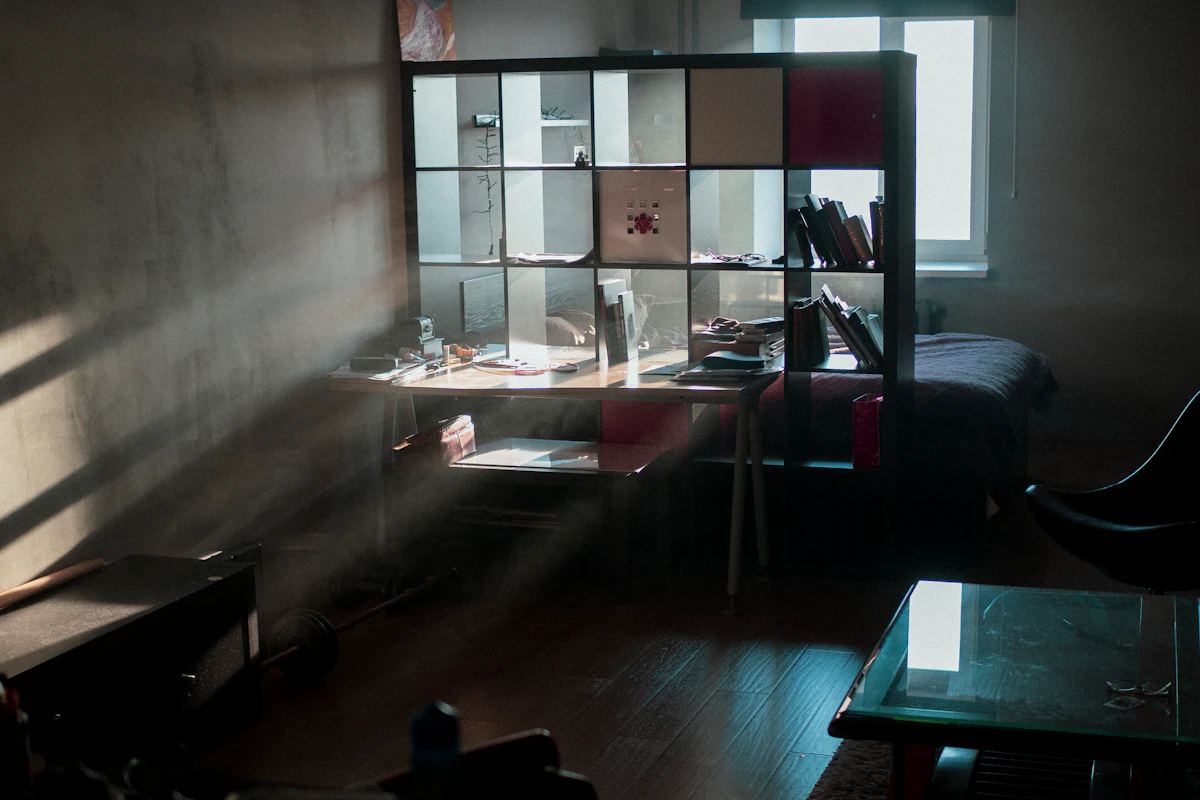
An open bookcase can separate the bed from the living area while adding storage on both sides. The openings allow light to pass through, so the divider feels less like a wall than a solid cabinet. Use some shelves for books or baskets and leave others partially empty to preserve the open effect.
The best placement is usually perpendicular to a wall, with the bed on one side and the living zone on the other. Keep the deepest furniture out of the remaining walkway so the bookcase does not turn the studio into a narrow corridor.
Tall shelving should be treated as furniture, not architecture. Follow the manufacturer’s stability and anchoring instructions rather than assuming a freestanding unit is safe just because it feels heavy.
4. Use a Wood Slat Screen to Keep Light Moving
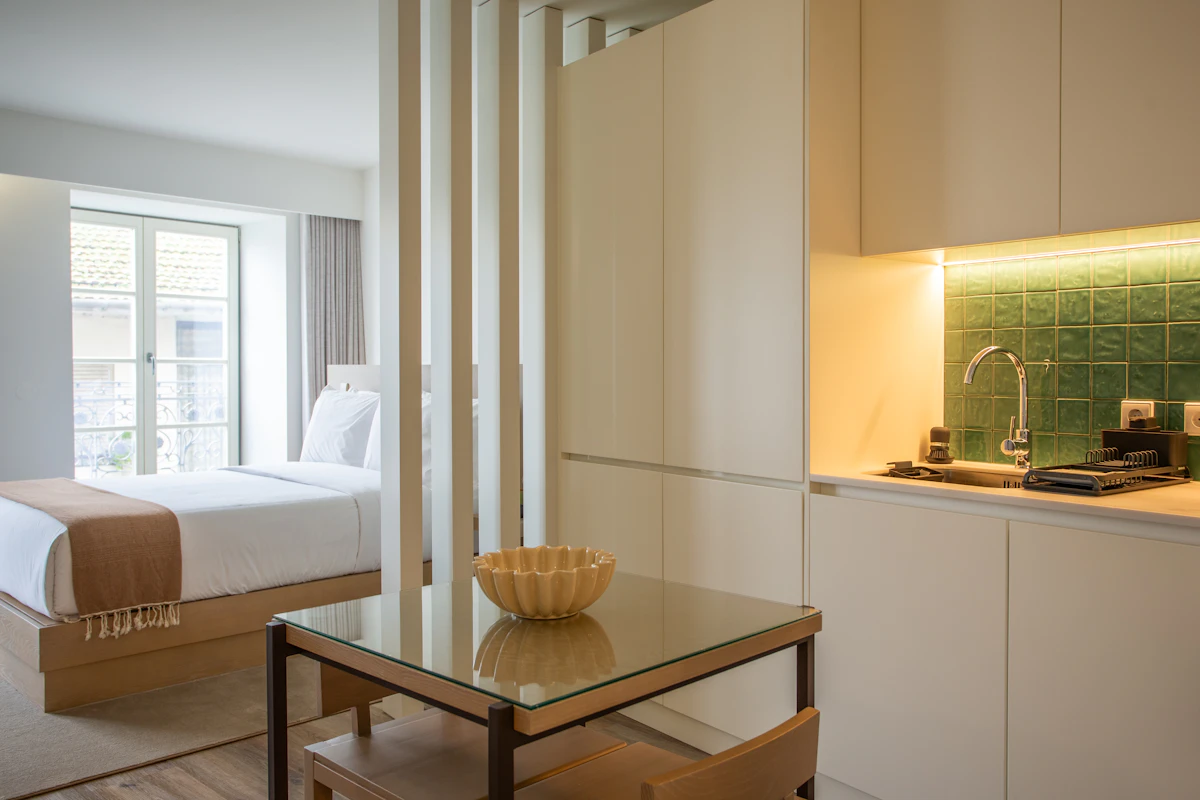
Vertical wood slats create a clear psychological boundary while still letting light and air pass through. They are especially effective when the bed is near the living room but you do not need complete visual privacy.
A permanent slatted divider may require landlord approval, but freestanding or pressure-mounted versions can achieve a similar effect with less alteration. Keep the slats visually narrow and use a finish that repeats another material in the studio—such as the dining table, floor, or shelving—so the divider looks integrated rather than added later.
5. Add a Folding Screen You Can Reposition
A folding screen is one of the simplest options because it requires no installation and can move whenever the apartment layout changes. Position it to hide the head of the bed from the entry, screen the side of the bed from the sofa, or temporarily close the sleeping area when guests visit.
Choose a screen wide enough to stand with a slight zigzag. A fully stretched screen is less stable and often looks flat. Woven cane, fabric panels, translucent paper, or open lattice usually feel lighter in a small studio than a dark solid screen.
6. Turn a Wardrobe Into a Privacy Wall
A wardrobe can do two jobs at once: provide clothing storage and block the bed from the rest of the apartment. This is especially useful when the studio has little or no built-in closet space.
Place the finished back toward the living room if possible. If the back is unfinished, use a removable decorative panel, large artwork, or a thin fabric treatment so the living side looks intentional. Keep the wardrobe away from windows and vents, and do not create a tight dead-end passage beside the bed.
For a sleeping zone that also needs more clothing storage, combine this idea with the strategies in bedroom-without-closet storage ideas.
7. Use a Low Storage Unit to Mark the Bedroom Edge
A divider does not have to reach eye level. A low cabinet, dresser, or cube unit at the foot or side of the bed can define the sleeping zone while preserving the studio’s full ceiling height and daylight.
This is a good choice when you mainly want the bed to feel anchored rather than hidden. Keep the unit lower than the sight line from the sofa so the room still reads as one generous volume. Closed storage also helps reduce visual clutter, which makes the sleeping area feel calmer.
8. Let a Tall Headboard Act as the Divider
If the bed floats away from the wall, a tall upholstered or wood headboard can act as a partial screen. Position the living area behind it and use the headboard to create a clear “back” to the sleeping zone.
This arrangement works best when the studio has enough depth to keep a usable walkway on both sides. A headboard with built-in shelves or a narrow console attached to the back can make the footprint work harder, following the same space-saving logic used in these multifunctional furniture ideas.
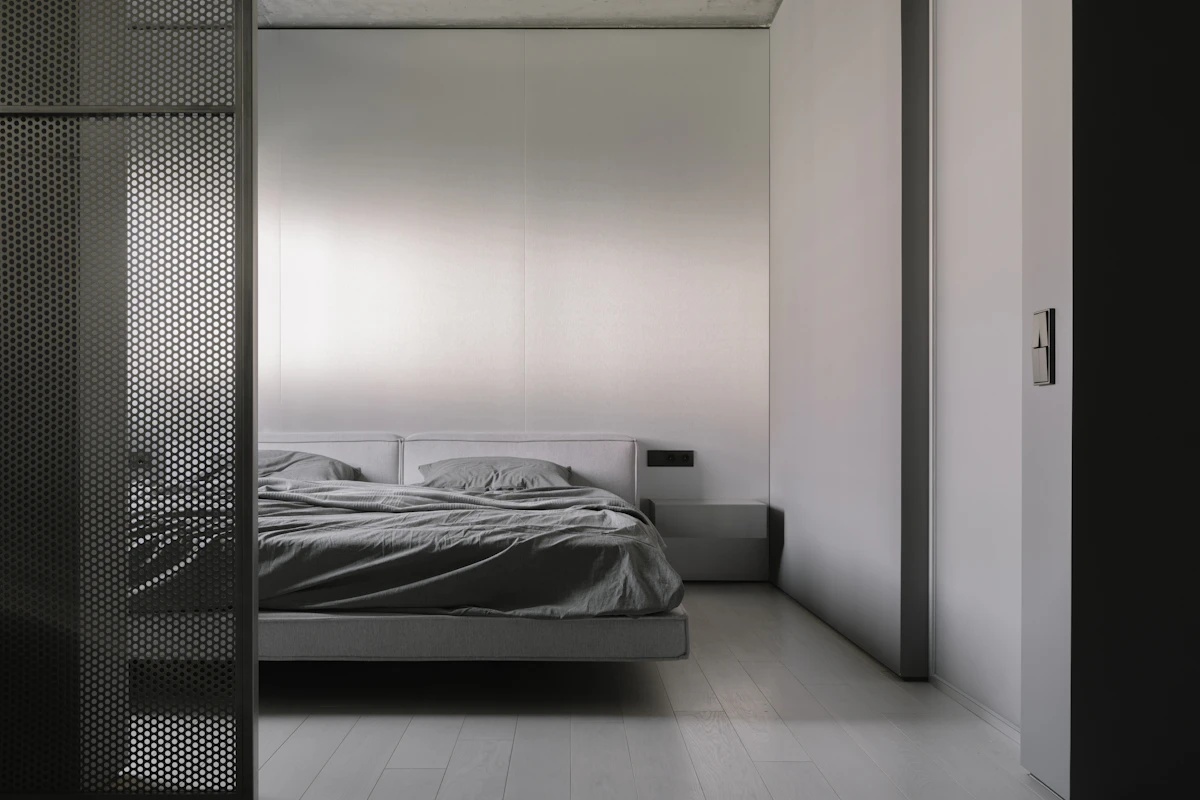
9. Create a Glass-Look Partition Without Building a Wall
A true glass wall can be expensive and often requires permission, but a lightweight translucent or clear-panel divider can create a similar sense of separation. Frosted acrylic, polycarbonate, or framed translucent panels can define the bed while borrowing light from the rest of the studio.
Use materials designed for interior divider applications and follow the manufacturer’s mounting instructions. In a rental, a freestanding framed panel is usually easier to reverse than a floor-to-ceiling installation. Avoid fragile improvised glass panels in circulation areas.
10. Build a Soft Divider With Tall Plants
Plants can create separation without making the room feel enclosed. Line up two or three tall plants on stands or use a narrow open plant shelf between the bed and living area. The irregular shapes soften the view of the bed while allowing plenty of light through.
Choose plants for the actual light conditions rather than appearance alone. Keep planters stable, use waterproof saucers, and avoid placing large pots where someone can trip over them at night.
11. Use the Back of the Sofa to Define the Bedroom
Sometimes the best divider is already in the apartment. Float the sofa with its back toward the bed so the living area faces away from the sleeping zone. The sofa creates a low visual wall and tells the eye where one function ends and the other begins.
A narrow console behind the sofa can strengthen the division, but only add one if the walkway remains comfortable. In a very small studio, the sofa alone may be enough.
This is especially useful when you want a no-install solution that can change later. It also pairs well with the compact circulation principles in these very small entryway ideas.
12. Combine Two Light Dividers Instead of One Heavy Wall
A studio often feels better with two subtle cues than one full-height barrier. For example, use the back of the sofa to mark the living room and a short curtain panel to hide the side of the bed. Or combine a low dresser with a slatted screen above it.
This layered approach gives the sleeping zone more privacy without cutting the apartment in half. It also lets you solve different problems separately: storage at the bottom, visual screening in the middle, and open space near the ceiling for light and airflow.
Balance Privacy With Light and Airflow
The best divider does not automatically provide the most privacy. In a one-window studio, a fully opaque floor-to-ceiling wall may make the living area darker and the sleeping area feel stuffy. Start with the minimum amount of screening that makes the bed feel separate, then add more only if needed.
Sheer or medium-weight curtains, open shelves, slats, and partial-height dividers usually work well because they create enough visual separation without blocking the entire room. Portable lighting can also help reinforce the bedroom zone; the plug-in and rechargeable options in these renter-friendly apartment lighting ideas are useful when the divider changes how light reaches the bed.
Keep the Divider Stable and the Exit Path Clear
A room divider should never make the studio harder to exit. The U.S. Fire Administration recommends identifying two ways out of every room where possible and making sure doors and windows are not blocked. Review USFA home fire escape guidance. Before placing a screen, wardrobe, or shelving unit, walk the route from the bed to the apartment door and make sure the divider does not create a tight dead end.
Tall storage used as a divider also needs stability. CPSC’s Anchor It! guidance emphasizes securing top-heavy furniture to reduce tip-over risk. See CPSC’s Anchor It! guidance. Follow the specific manufacturer’s instructions for the furniture and wall type rather than improvising an anchoring method.
Common Studio Bedroom Divider Mistakes
Blocking the only source of daylight. A divider that looks private at night may make the apartment gloomy all day.
Using a divider that is too deep. A thick wardrobe or bookcase can consume more floor space than the privacy is worth.
Creating a narrow corridor around the bed. The sleeping zone should still be easy to enter, make the bed, and clean.
Choosing full privacy when partial screening would work. In a small studio, a low or open divider usually keeps the apartment feeling larger.
Ignoring stability. Tall freestanding shelves and wardrobes need to be used and anchored according to their instructions.
Forgetting the view from the front door. The divider should hide the bed from the most exposed angle, not necessarily surround it on every side.
Frequently Asked Questions
How do you divide a studio apartment bedroom without building a wall?
Use a removable divider such as curtains, an open bookcase, a folding screen, a wardrobe, a slatted partition, or the back of the sofa. The best option creates privacy while preserving light, airflow, and a clear route through the apartment.
What is the best divider for a small studio apartment?
Curtains and open shelving are two of the most flexible choices. Curtains use almost no floor space, while an open bookcase can add storage and visual separation without creating a completely solid wall.
Can renters install a bedroom divider?
Yes, but the method should match the lease. Freestanding screens, shelving, wardrobes, tension-mounted curtains, and furniture-based dividers usually involve less permanent work than framed partitions. Get landlord approval before drilling into walls or ceilings.
How do I keep a studio bedroom divider from making the apartment dark?
Use partial-height dividers, open shelves, slatted screens, light-colored curtains, frosted or translucent panels, and gaps near the ceiling. Place the sleeping zone so the divider does not cut the only window off from the living area.
Can a bookcase be used as a room divider?
Yes, especially an open-back or open-cubby bookcase. Use a unit designed to be stable in that orientation and follow the manufacturer’s anchoring instructions for tall furniture. Do not place heavy objects high on an unsecured divider.
How much space should I leave around a studio bed?
Leave enough room to get in and out of bed and to keep the main walking route clear. Exact dimensions depend on the bed size, doors, and accessibility needs, so tape the divider and furniture footprints on the floor before committing.
Create a Bedroom Zone Without Making the Studio Feel Smaller
The most effective studio apartment bedroom divider ideas create enough separation to make the bed feel private without sacrificing the qualities that make a studio livable: daylight, airflow, flexibility, and easy movement.
Start with the view you most want to block, then choose the lightest solution that solves it. A curtain may be all you need. In another apartment, an open bookcase or wardrobe may earn its footprint by adding storage too. When the divider supports both privacy and circulation, the sleeping zone starts to feel like a real bedroom instead of a bed placed in the middle of one big room.

Share Your Thoughts