
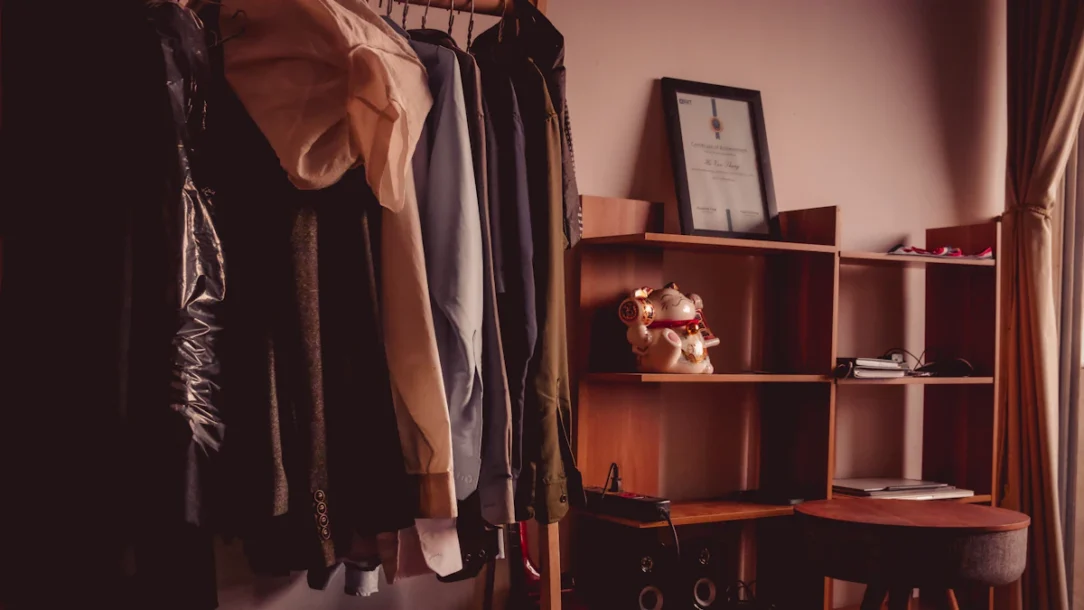
A bedroom without a closet can feel like an organizing problem before you even unpack. Hanging clothes need a home, folded pieces need drawers or shelves, shoes migrate to the floor, and seasonal items can quickly turn into visible clutter. The smartest approach to bedroom without closet storage is not to recreate a huge built-in wardrobe. It is to replace the specific jobs a closet normally handles, using only as much furniture as the room can comfortably support.
Start by separating what you own into four groups: clothes that must hang, clothes that fold, items you use every day, and pieces you only need seasonally. That simple inventory tells you whether you need a garment rack, a dresser, under-bed storage, or a combination of smaller solutions. If the bed, nightstands, and storage already compete for the same floor area, review our small bedroom layout guide first so the storage plan protects your walking paths instead of squeezing them.
Table of Contents
Think in Closet Functions, Not Closet Furniture
A typical closet does several jobs at once: it provides a hanging rail, shelves, drawers or bins, shoe storage, and a place to hide less-attractive items. Without one, trying to force all those functions into a single piece of furniture can create an oversized wardrobe that dominates the room. A better plan is modular. Give hanging clothes one zone, folded clothes another, and seasonal items the least accessible space.
Put the things you touch every morning between roughly knee and shoulder height. Reserve the top shelf, deep under-bed containers, and harder-to-reach baskets for spare bedding and off-season clothing. This keeps the bedroom practical even if the total storage volume is modest.
1. Use a Freestanding Wardrobe for a True Closet Substitute
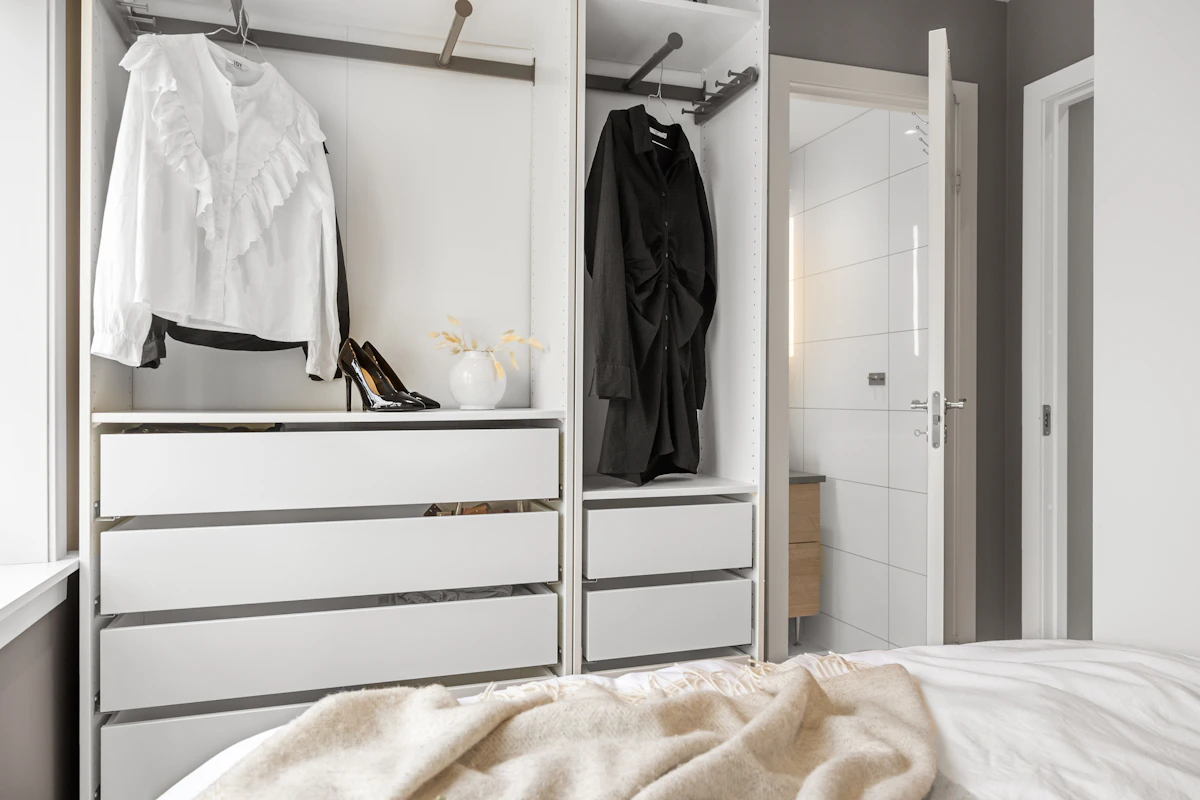
A freestanding wardrobe is the closest replacement for a built-in closet because doors hide visual clutter and protect clothes from dust. It makes the most sense when you own many dresses, jackets, shirts, or trousers that need hanging space. Look for a model that combines a rail with at least one shelf or drawer so it can handle more than one clothing category.
Depth matters more than width in a small bedroom. Many hanging garments need a cabinet around 20 to 24 inches deep, so tape that footprint on the floor before buying. If the wardrobe narrows the route around the bed below what feels comfortable, a shallower open rack plus separate folded storage may work better.
2. Build an Open Garment-Rack Zone That Still Looks Calm
A simple garment rack is useful when the room is too narrow for wardrobe doors or when you rent and want something easy to move. Choose a rack with a lower shelf so shoes, baskets, or folded jeans occupy the same footprint. A top shelf is even better for hats, bags, or matching boxes.
The visual challenge is that every shirt becomes part of the room. Keep the rack to the clothes you wear most, use one hanger style, and group colors loosely from light to dark. Do not pack the rail so tightly that garments become hard to remove; a little breathing room is what makes open storage feel curated instead of temporary.
3. Choose a Wide Low Dresser Instead of Several Small Drawer Units
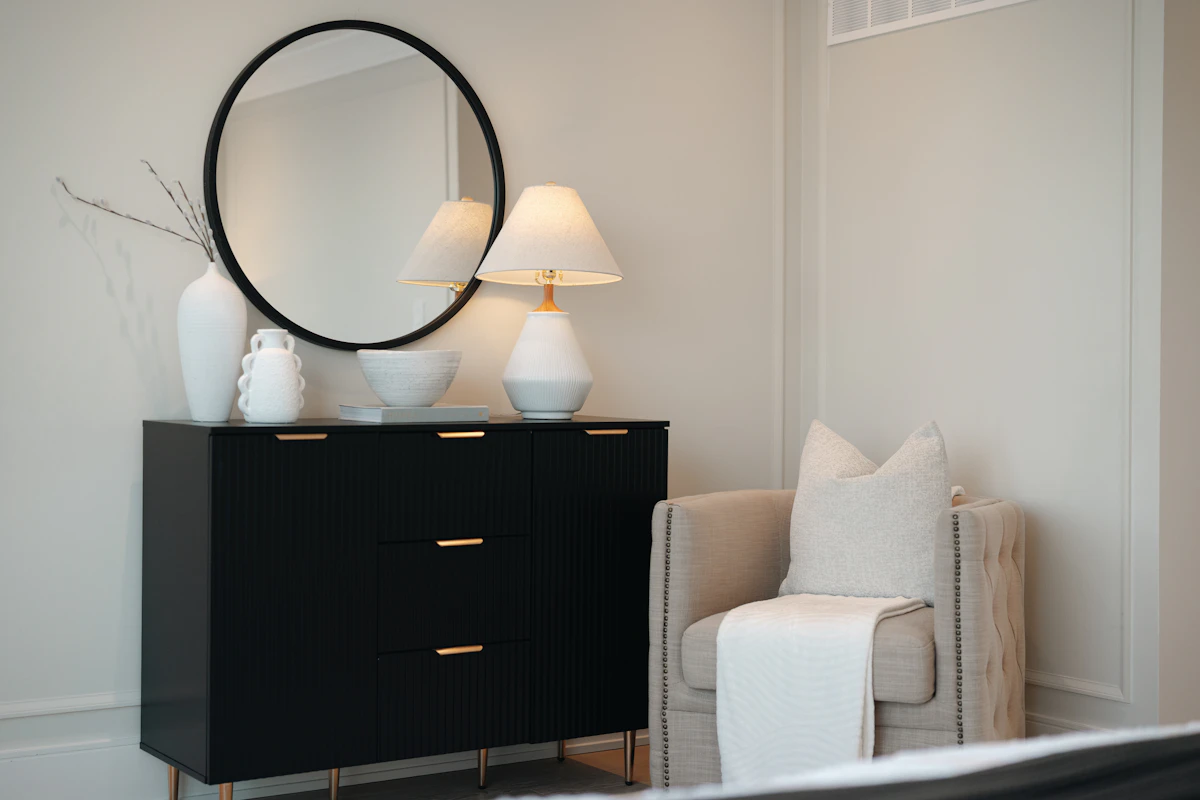
For T-shirts, underwear, sleepwear, workout clothes, and knitwear, drawers are usually easier to maintain than open shelves. One wide dresser often looks calmer than two or three mismatched drawer towers because it creates a single horizontal line and one surface to style.
Use shallow top drawers for small items and deeper lower drawers for bulkier clothes. Fold vertically where it helps you see the full drawer at once. If you are trying to make functional storage feel more polished, the principles in our guide to making a bedroom look more expensive on a budget apply here too: fewer finishes, better proportions, and restrained styling usually beat adding more decor.
4. Turn the Space Under the Bed Into Seasonal Clothing Storage
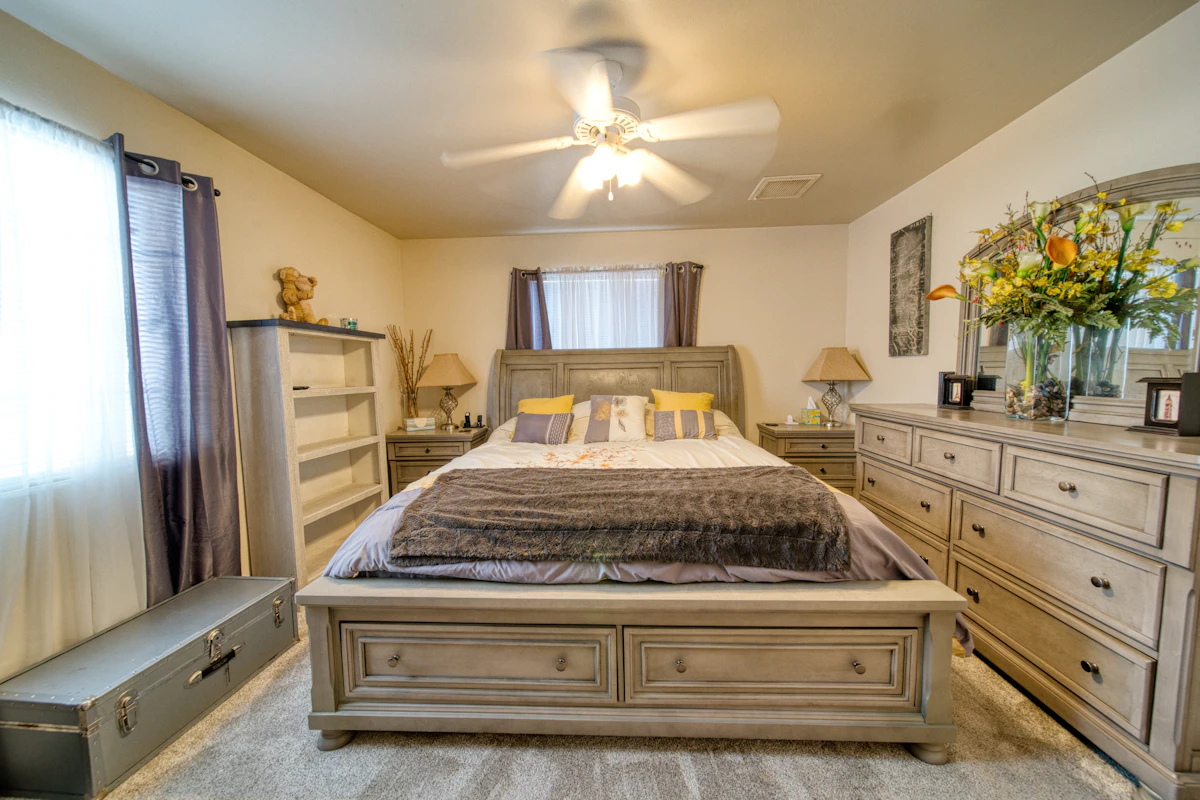
The footprint beneath the mattress is too valuable to waste when there is no closet. Low lidded bins are ideal for sweaters, extra jeans, off-season clothes, and spare bedding. Measure the actual clearance from floor to bed frame before ordering containers; wheels and handles can add an inch or two that makes an otherwise suitable bin impossible to slide underneath.
Keep everyday clothes elsewhere. Crawling under the bed every morning creates friction, and storage systems fail when the most-used items are the hardest to reach. Label the short end of each bin so you can identify the contents without pulling everything out.
5. Let a Storage Bed Replace a Separate Case Piece
If you are replacing the bed anyway, a storage frame can be more efficient than adding another dresser. Drawer beds work well when there is enough clearance on one or both sides. Lift-up platforms use almost the entire mattress footprint and are better for bulky seasonal clothing, luggage, or bedding.
Check the bed in its fully open position, not just its closed dimensions. Side drawers need room to extend, and a lift-up mattress needs enough clearance above it to operate comfortably. This is a good example of multifunctional furniture earning its footprint: the bed is doing a second job that would otherwise require another piece of furniture.
6. Use Tall Shelving With Baskets for Folded Clothes
A narrow bookcase or cube unit can turn vertical wall space into clothing storage without the depth of a wardrobe. Use opaque or woven baskets for underwear, socks, gym clothes, and accessories, then reserve one or two open shelves for folded denim or attractive boxes.
Do not stack small loose items directly on high shelves; the system becomes messy as soon as you pull one piece from the middle. Containers let each shelf behave like a drawer. Keep heavier items low and lighter seasonal pieces higher so the unit is easier to use and more stable.
7. Add a Curtain to Soften an Open Clothing Wall
If you have an alcove, recessed wall, or a straight run of garment storage, a curtain can hide the clothes without the depth and swing clearance of wardrobe doors. Linen-look fabric, cotton canvas, or another matte textile makes the storage read more like part of the room than a freestanding rack.
In a rental, use a properly rated tension system only where the span and load are suitable; otherwise follow the landlord’s rules for mounting. Keep the curtain clear of heaters and make sure it does not block a window, door, or necessary airflow. For more low-commitment wall solutions, see our renter-friendly wall decor guide.
8. Replace a Nightstand With a Small Chest of Drawers
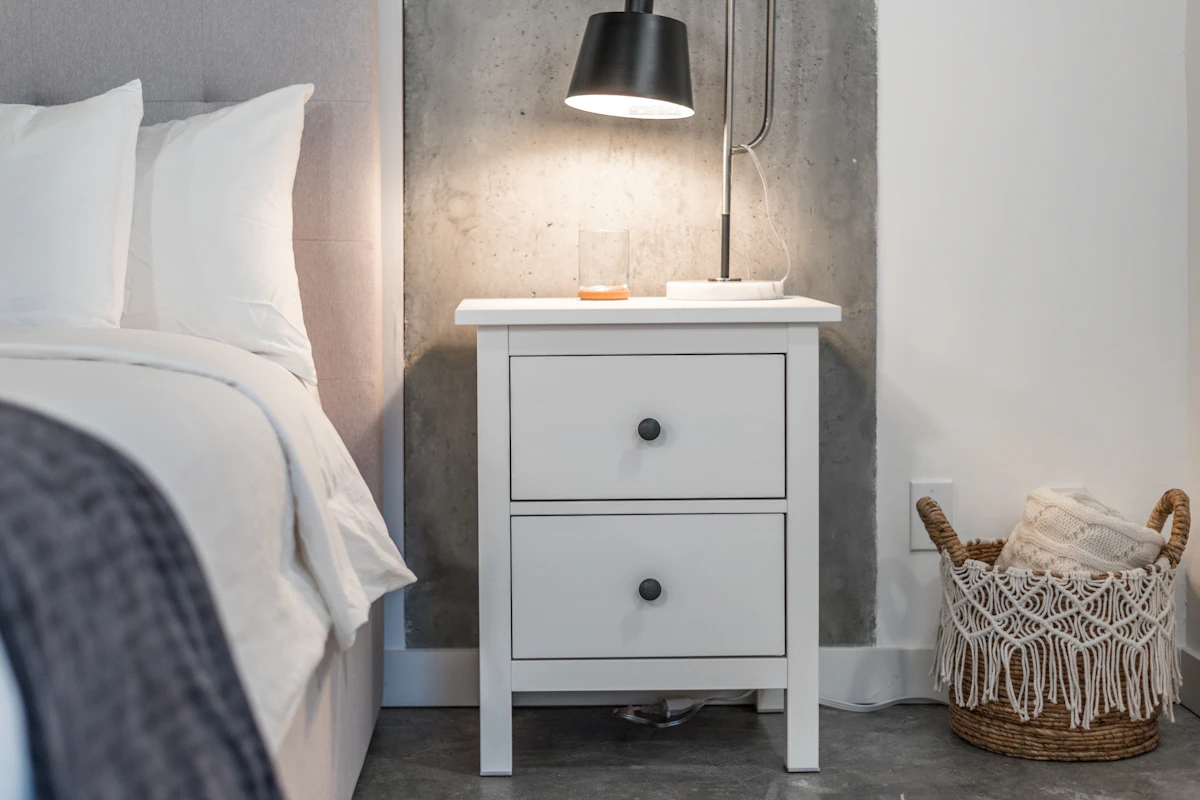
A tiny nightstand with one shallow drawer may be wasting valuable bedside space. If the room allows it, replace one nightstand with a compact three-drawer chest at roughly mattress height. The top still holds a lamp, phone, and water glass, while the drawers can absorb folded shirts, underwear, or sleepwear.
This works especially well when only one side of the bed has enough clearance for substantial furniture. You do not need matching nightstands; repeat the same wood tone, hardware finish, or lamp style on both sides so the asymmetry looks intentional.
9. Give Daily-Wear Clothes a Small Dedicated Landing Spot
The chair covered in clothes usually exists because the room has no legitimate place for items that are clean enough to wear again but not ready to go back into a drawer. Solve that specific problem with one valet hook, a short peg rail, or a single section of the garment rack.
Limit the landing spot to a few pieces. If it becomes a second wardrobe, edit it at the end of the week. A controlled intermediate zone keeps jeans, a robe, and tomorrow’s outfit off the floor without creating another large piece of furniture.
10. Store Shoes Vertically Instead of Along the Floor
Shoes lined around the perimeter make a bedroom feel smaller because they visually occupy the entire floor edge. Use a narrow shoe tower, stackable boxes, or the lower shelves of a garment rack instead. Everyday shoes should be easiest to reach; formal and seasonal pairs can move higher or under the bed.
Measure your largest shoes before buying a shallow cabinet. Some compact organizers are designed for low sneakers and cannot comfortably hold boots or larger footwear. A storage solution only saves space if the things you actually own fit inside it.
11. Rotate Seasonal Clothing Instead of Storing Everything at Eye Level
Without a closet, prime storage should go to the current season. Heavy coats, thick sweaters, or warm-weather clothing can move into labeled under-bed containers, the top of a wardrobe, or lidded boxes during the months you do not use them.
Wash and fully dry clothing before long-term storage, and avoid compressing delicate garments that can crease or lose shape. A twice-yearly rotation keeps the garment rack lighter and makes the dresser easier to maintain because you are not navigating around clothing that will not be worn for months.
12. Make Open Storage Look Intentional With a Limited Palette
When clothing storage is visible, the containers and furniture become part of the bedroom design. Choose one dominant wood or painted finish, one metal finish, and one basket family instead of collecting unrelated organizers. Warm oak with cream canvas, walnut with black metal, or painted off-white with natural woven baskets are easy combinations to repeat.
Matching hangers also reduce visual noise because they create one clean line across the rack. Leave some negative space above dressers and shelves rather than filling every surface. A bedroom without a closet should still look like a bedroom, not a storage room with a bed in the middle.
Measure Before You Add Another Storage Piece
Measure the room with drawers, doors, and bins fully open. A 20-inch-deep dresser may need another 18 to 24 inches in front of it for the drawers and your body. A wardrobe with hinged doors requires clear swing space. Under-bed drawers can conflict with a nightstand or wall even when the bed frame itself fits perfectly.
Protect the main route from the bedroom door to the bed and any window or other exit. Do not solve a storage shortage by creating a daily obstacle course. If two pieces perform the same job, keep the one with better capacity and remove the other rather than filling every available gap.
Keep Freestanding Clothing Storage Stable and Safe
Tall dressers, wardrobes, and shelving need more attention than low baskets and under-bed boxes. Follow the manufacturer’s assembly and anchoring instructions, especially in homes where children live or visit. The U.S. Consumer Product Safety Commission’s current clothing storage unit guidance explains the federal stability requirements that apply to qualifying dressers and related storage furniture.
CPSC’s Anchor It! guidance also recommends securing top-heavy furniture and installing anti-tip devices according to the instructions. Put heavier items in lower drawers or shelves, avoid using a tall unit as a climbing aid, and do not assume a heavy piece is automatically stable.
Frequently Asked Questions
How do you store clothes in a bedroom with no closet?
Split the job into hanging, folded, daily-use, and seasonal storage. A garment rack or wardrobe can handle hanging clothes, a dresser or basket shelving can handle folded pieces, and under-bed storage can hold off-season items.
Is a wardrobe better than a garment rack?
A wardrobe hides clutter and protects clothes from dust, but it is deeper and visually heavier. A garment rack uses less depth and is easier to move, but it works best when the clothing collection is edited and visually organized.
What is the best clothing storage for a very small bedroom?
Use furniture that replaces another function: a storage bed, a drawer chest as a nightstand, a garment rack with shoe shelves, or a narrow shelving unit with baskets. The best choice depends on whether hanging or folded clothes take up more space.
How can I hide clothes when I do not have a closet?
Closed wardrobes and dressers hide clothes completely. For open racks, use matching hangers, baskets for small items, and—where suitable—a curtain across an alcove or storage wall to reduce visual clutter.
Where should seasonal clothes go in a room without a closet?
Store clean, fully dry off-season clothing in labeled under-bed bins, high wardrobe shelves, or lidded boxes. Keep current-season clothes in the easiest-to-reach storage so the everyday system stays simple.
Do dressers and wardrobes need to be anchored?
Follow the manufacturer’s instructions for the specific furniture. CPSC recommends securing top-heavy furniture and using the anti-tip hardware supplied with applicable storage units, especially where children live or visit.
A Bedroom Without a Closet Can Still Feel Uncluttered
The best bedroom without closet storage plan is not the one with the most bins, racks, and cabinets. It is the one that gives each clothing category an obvious home while protecting the room’s open floor area. Hanging clothes may need a slim wardrobe or rail, folded clothes may need one good dresser, and seasonal pieces can disappear beneath the bed instead of occupying prime space all year.
Begin with the clothes you actually wear, measure every storage piece in its open position, and keep the visible materials consistent. Once the storage system is easier to use than the floor or the back of a chair, keeping the bedroom organized becomes much less dependent on constant tidying.

Share Your Thoughts