
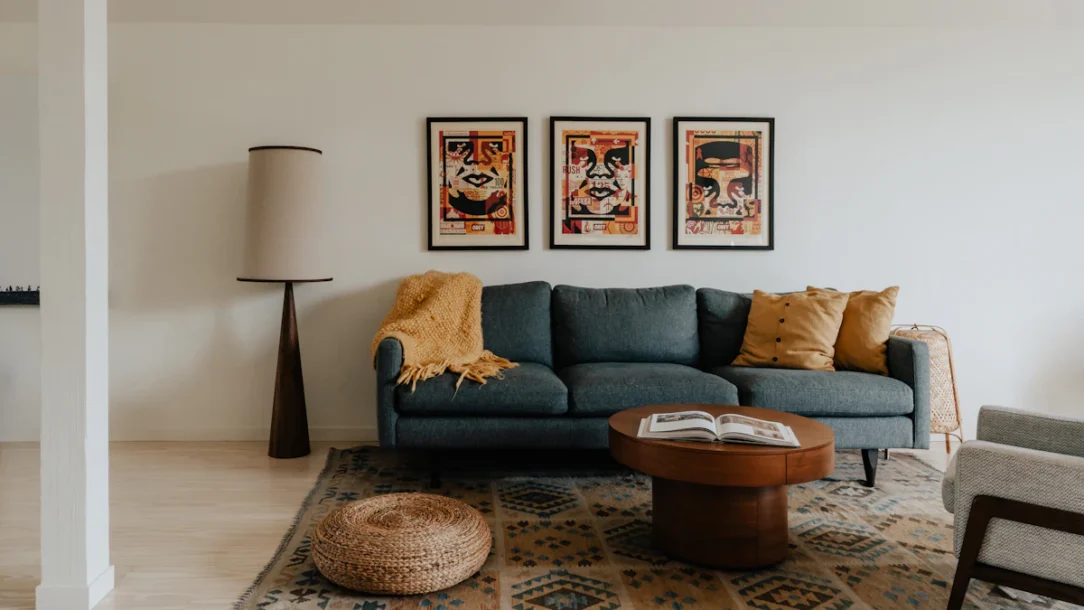
Wall decor can finish a room beautifully—or make it feel strangely off even when every individual piece is attractive. The difference is usually scale, placement, and purpose. Art should relate to the furniture below it. Mirrors should reflect something worth seeing and help the room, not simply fill a blank. Shelves should earn their depth by adding storage or display space without making the wall feel heavy.
The easiest way to decorate walls well is to stop treating every empty surface as a problem. Some walls need a large piece of art. Some need a mirror. Some need shelving. Others should stay quiet so the room has visual breathing space. This guide walks through how to choose among those options, size them correctly, and make the whole room feel balanced.
Table of Contents
Start With the Wall’s Job, Not the Decoration
Before choosing a frame, mirror, or shelf, decide what the wall needs to do. A wall behind a sofa usually needs to visually anchor a large piece of furniture. A wall in a dark entry may benefit from a mirror. A wall above a desk may need storage. A long hallway may need rhythm more than one giant statement piece.
Also ask whether the wall already has a job. A fireplace, built-in shelves, strong wallpaper, television, or architectural paneling may already provide enough visual weight. In that case, adding more wall decor can make the room busier rather than better. The same principle is important when deciding whether a feature wall is needed at all; the decision framework in this accent wall guide applies here too.
Choose Art When the Room Needs Color, Story or a Focal Point
Art is the strongest choice when the wall needs personality rather than function. A single large piece can introduce color, soften a furniture-heavy room, create contrast against neutral walls, or give the eye a place to rest.
Do not assume several small frames are safer than one large piece. On a wide wall, small art can look visually stranded. One generous canvas or framed print often makes the room feel calmer because the scale matches the furniture and architecture.
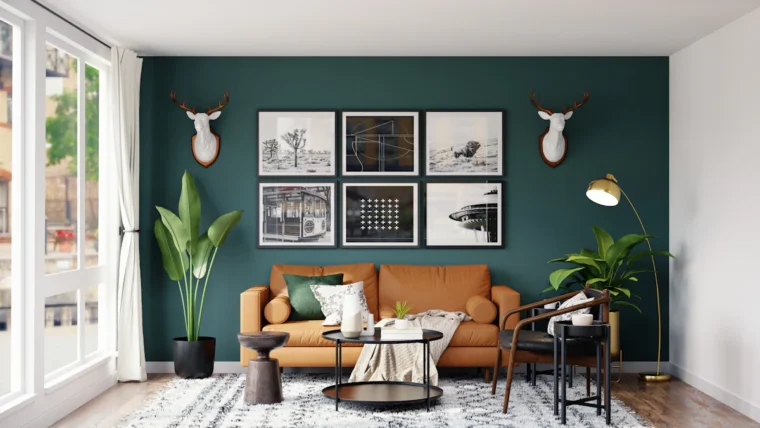
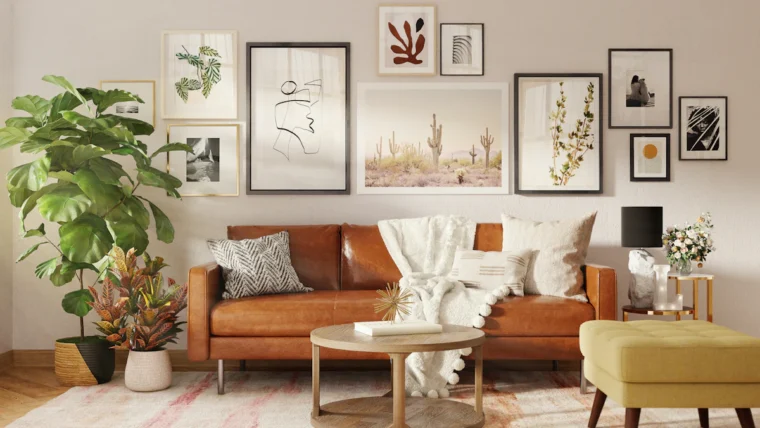
If you prefer multiple pieces, build them as a collection rather than scattering them. The layout method in this balanced gallery wall guide shows how to use an anchor piece, repeated colors, controlled spacing, and personal art without making the arrangement feel random.
Choose a Mirror When the Room Needs Light, Depth or Function
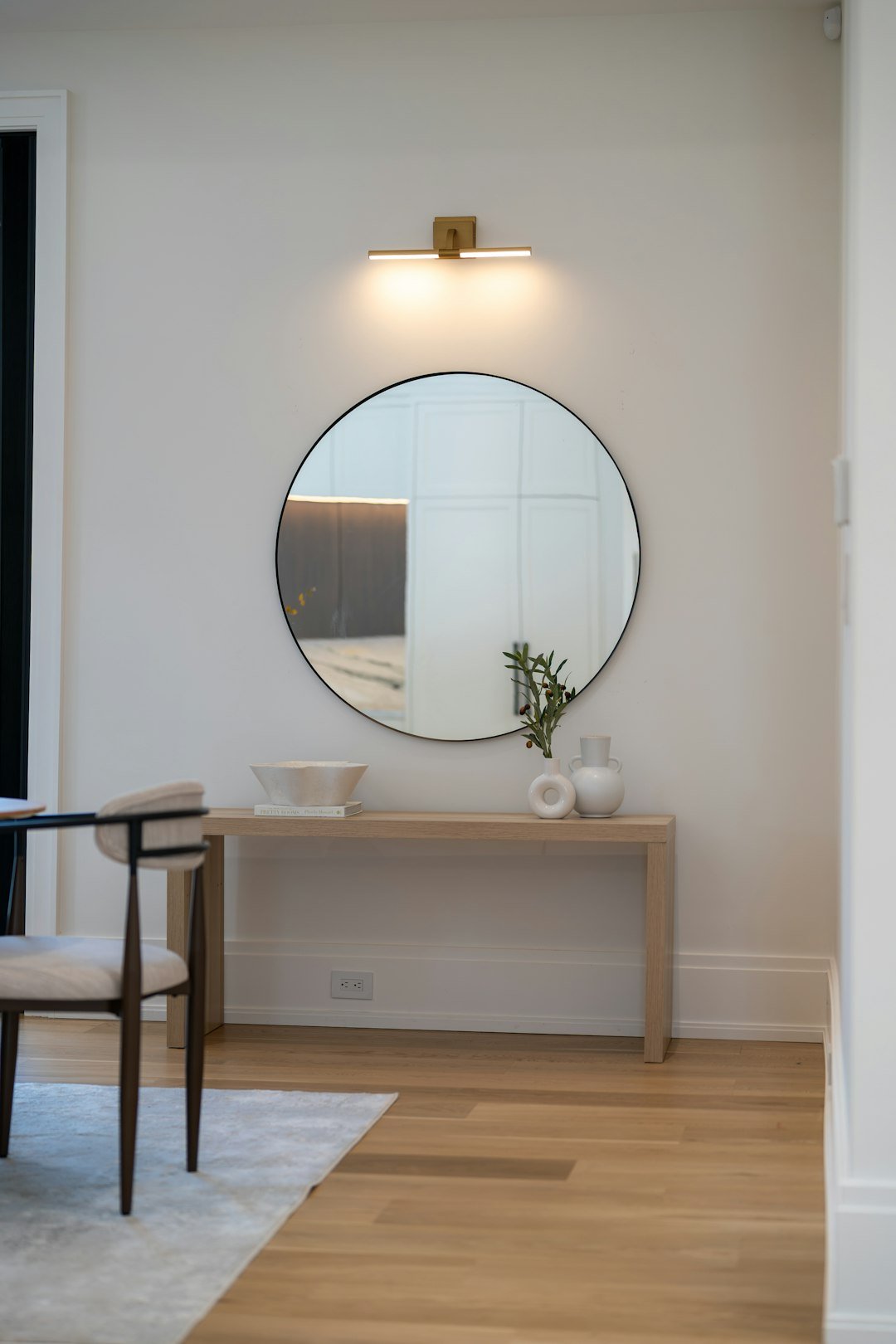
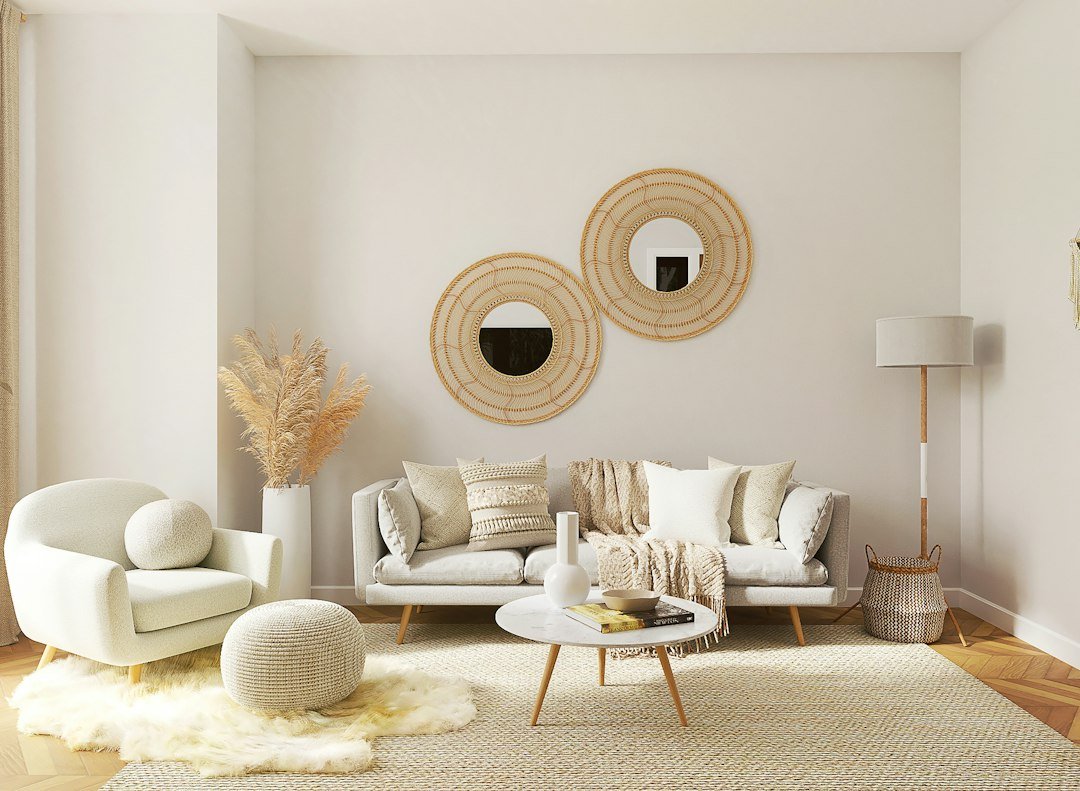
A mirror is useful wall decor because it changes the room as well as decorating it. It can reflect daylight, brighten a darker zone, create a stronger sense of depth, and give an entryway or bedroom a practical last-look function.
What the mirror reflects matters. Before mounting it, stand where the mirror will hang and look at the opposite view. A mirror that reflects a window, artwork, greenery, or a clean sight line adds something to the space. A mirror that reflects clutter, a television, or an awkward doorway can double the visual noise instead.
Architectural Digest notes that mirrors can help rooms feel brighter and more expansive because they bounce light and create visual depth. That makes them especially useful in entries, small living rooms, dining rooms, and window-light-limited spaces. See the mirror-placement examples.
Choose Shelves When the Wall Needs Storage as Well as Style
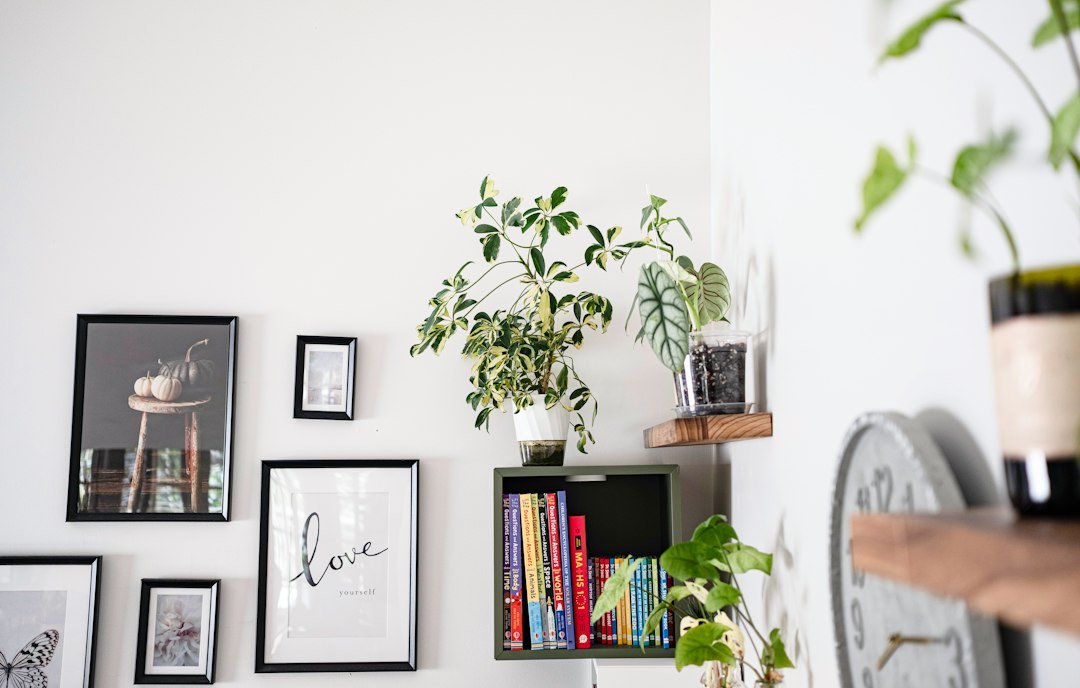
Shelves make sense when the wall needs to work harder. A shallow floating shelf above a desk can hold books and small objects. Picture ledges can display art without committing to one fixed layout. In a kitchen or bathroom, shelves can add useful storage where floor space is limited.
But shelving has more visual weight than flat art. Every shelf creates a horizontal line, and every object placed on it adds another shape. Two well-spaced shelves with edited objects usually feel more intentional than five shelves filled edge to edge.
Use Furniture to Set the Scale
The easiest way to size wall decor is to relate it to the furniture below. Above a sofa, bed, console, dresser, or sideboard, the wall piece should feel connected to the furniture rather than floating as a tiny object in the middle of a large wall.
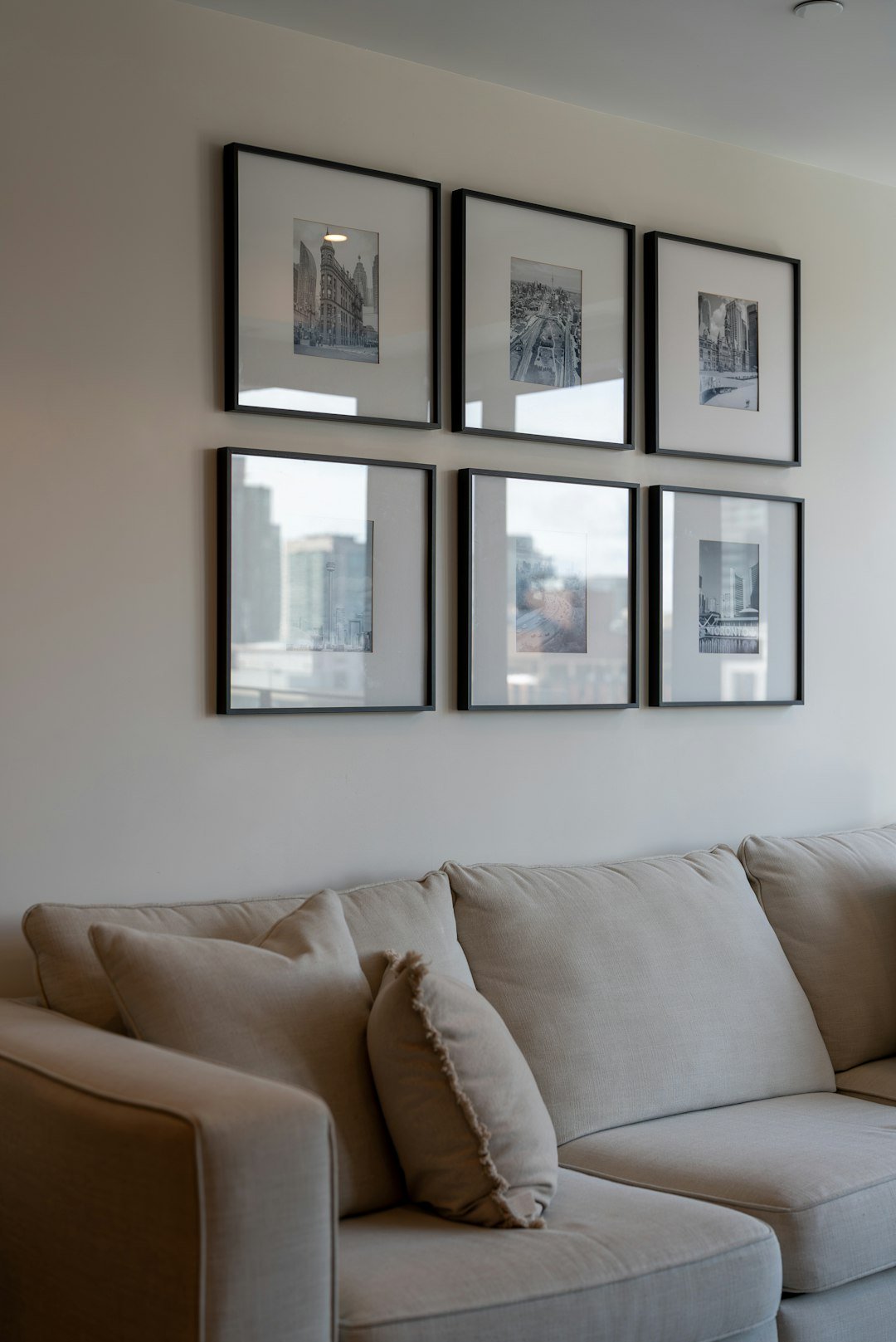
A useful starting range is roughly two-thirds to three-quarters of the width of the furniture below. Framebridge suggests gallery walls around two-thirds the width of a sofa or bed, while Architectural Digest cites designers who often aim for roughly 60 to 75 percent of the furniture width for art or mirrors. These are starting points, not laws—the frame shape, furniture height, wall width, and surrounding objects can shift the proportion. See Framebridge’s furniture-relative scale guidance.
For example, a 90-inch sofa often looks more balanced with a 55- to 70-inch-wide art composition than with a single 24-inch print. That width can come from one large artwork, a diptych, or a gallery wall that reads as one unit.
Get the Hanging Height Right
Art that is too high is one of the fastest ways to make wall decor feel disconnected. On an open wall with no furniture below, a common gallery guideline is to place the visual center of the artwork or grouping around 57 inches from the floor. Framebridge uses that as a practical eye-level starting point for single pieces and multi-frame arrangements. See its hanging-height guide.
Above furniture, the relationship changes. Framebridge suggests keeping the lowest edge of art roughly 7 to 10 inches above the furniture in many situations. The exact gap depends on the headboard, sofa back, lamps, and overall composition, but the important principle is visual connection: the wall decor and furniture should read as one zone.
Treat a Gallery Wall as One Large Composition
A gallery wall should be sized and positioned like one large piece of art. Measure the outer footprint of the full arrangement, not each frame individually. Keep the spacing between frames consistent enough that the eye understands the pieces belong together.
Framebridge recommends about 2 to 3 inches between frames as a useful starting point. An organic gallery wall can vary frame sizes, styles, and orientations, but repeated spacing, color, or frame finish gives the collection structure.
Scale Mirrors to What They Sit Above
A mirror over a console or dresser should feel anchored to that furniture. A mirror much narrower than the console can look undersized, while one wider than the furniture may feel top-heavy unless the arrangement is intentionally asymmetrical.
The same two-thirds-to-three-quarters guideline that works for art is a useful starting point for mirrors. A round mirror can be somewhat narrower because its shape carries visual weight differently than a rectangle. Leave enough gap between the furniture and mirror for lamps, branches, or objects to breathe without colliding with the frame.
In a very small entry, the mirror should support circulation rather than make the wall busier. The console-and-walkway planning in these very small entryway ideas can help you decide whether a mirror, hooks, or storage deserves the wall space most.
Size and Style Shelves Without Making the Wall Feel Heavy
Shelves should relate to the width of the furniture or work zone below, but they do not need to span the entire wall. A shelf that is slightly narrower than a desk, console, or cabinet often looks cleaner than a shelf that stretches from corner to corner.
Think about depth too. A picture ledge can stay shallow because it only needs to hold frames. A shelf for books, plants, or storage baskets needs more depth and stronger hardware. Follow the shelf manufacturer’s weight and mounting instructions, and use the anchor or stud method appropriate for the wall construction. Decorative adhesive strips are not a substitute for shelf hardware; 3M’s current Command picture-hanging guidance specifically notes that its picture hanging strips are not recommended for mounting shelves. Review the current 3M hanging guidance.
Decorate a Blank Wall With No Furniture Below It
A blank wall without furniture gives you more freedom, but it can also tempt you to fill too much. First decide whether the wall should be a focal point or a quiet transition. A large artwork or tapestry can make an empty wall intentional. A vertical mirror can add function near an entry or bedroom. A narrow stack of frames can work in a hallway.
If the wall is very wide, one tiny object in the center will emphasize how empty it is. Either go larger or create a grouped composition. If the wall is already surrounded by windows, doors, and furniture, leaving part of it blank may be the most balanced choice.
Adjust the Formula for Small Rooms and Narrow Walls
Small rooms do not automatically need small wall decor. In fact, one medium-to-large piece can make a compact space feel calmer because it reduces the number of visual fragments. Several tiny frames, signs, shelves, and decorative objects can create more clutter than one strong focal piece.
For narrow walls, think vertically. A tall mirror, stacked pair of art prints, or slim column of frames can work better than a wide horizontal composition. In low-ceiling rooms, avoid pushing decor too close to the ceiling just because wall space exists; the visual-height strategies in this low-ceiling living room guide can help keep the proportions believable.
Use Renter-Friendly Mounting Carefully
Removable picture-hanging products can be useful for renters, but they still have surface, size, and weight limits. Use the exact product rated for the frame you are hanging, follow the preparation and cure-time instructions, and do not assume every adhesive product works on wallpaper, textured walls, or newly painted surfaces.
3M’s current picture-hanging guidance, for example, gives different weight limits by strip size, advises waiting after painting for certain products, and identifies surfaces or uses that are not appropriate. For a broader set of no-drill options, see these renter-friendly wall decor ideas.
Room-by-Room Wall Decor Ideas
Living room: Use the sofa, fireplace, or media wall to establish the main visual anchor. One large artwork, a well-scaled gallery wall, or a mirror can finish the seating zone. If the TV wall already carries a lot of visual weight, the simplified styling ideas in these TV wall ideas without built-ins can keep art and shelving from competing with the screen.
Bedroom: Above the headboard, art should relate to the width of the bed and stay visually connected to it. A pair or triptych can feel calmer than many small frames. A mirror is usually more useful on a side wall, dresser wall, or vanity zone where it can actually be used.
Dining room: A large artwork or mirror above a sideboard can anchor the room without competing with the table centerpiece. If the dining room is narrow, one large piece often feels cleaner than several small shelves.
Entryway: Prioritize function. A mirror, hooks, shallow shelf, or art should support the way the entry is used. Do not fill the wall so completely that bags, coats, keys, or the door swing become awkward.
Home office: Keep the wall behind a monitor relatively calm. One shelf, a pinboard, or a small group of art can provide personality without creating visual distraction. The work-zone planning in these small apartment home office ideas is useful when wall storage is doing double duty.
Common Wall Decor Mistakes
Choosing pieces one at a time without considering the whole wall. A beautiful frame can still look wrong if it is much too small for the furniture below it.
Hanging everything too high. Wall decor should relate to people and furniture, not drift toward the ceiling.
Decorating every wall. Negative space gives the eye somewhere to rest and makes the decorated walls feel more important.
Using shelves where art would be calmer. Shelving adds depth and objects; if the room is already visually busy, a flat artwork may be the better choice.
Using a mirror only because the wall is empty. Check the reflection first. A mirror should improve the room, not duplicate clutter.
Guessing at hardware. Heavy mirrors, shelves, and large frames need mounting systems rated for their weight and compatible with the wall construction.
Frequently Asked Questions
How big should wall decor be above a sofa?
A useful starting point is for the art, mirror, or full gallery-wall composition to span roughly two-thirds to three-quarters of the sofa width. Adjust for the frame shape, wall size, lamps, windows, and the overall furniture arrangement.
How high should I hang wall art?
On an open wall, placing the visual center around 57 inches from the floor is a common starting point. Above furniture, keep the art visually connected to the piece below; a gap around 7 to 10 inches often works, but the furniture height and art size can change that relationship.
Should I choose art or a mirror for a blank wall?
Choose art when the room needs color, personality, or a focal point. Choose a mirror when reflecting light, creating depth, or adding a practical viewing surface would improve the space. Always check what the mirror will reflect before mounting it.
How many floating shelves should I put on one wall?
There is no fixed number, but fewer well-spaced shelves usually look calmer than many shelves packed with objects. Let the width of the furniture or work zone below guide the shelf width, and follow the shelf manufacturer’s mounting and weight instructions.
Can large wall decor work in a small room?
Yes. One larger artwork or mirror can make a small room feel calmer than many tiny pieces because it reduces visual fragmentation. The key is leaving enough negative space around it and relating the scale to the furniture.
Do I need to decorate every wall in a room?
No. Leaving some walls quiet helps the eye rest and makes the decorated walls feel more intentional. Focus on the walls connected to the room’s main furniture, focal points, and useful functions.
Let Scale Do the Work
The most successful wall decor is not the decoration that fills the most space. It is the choice that fits the wall’s role, relates to the furniture, and leaves enough room around it to feel intentional.
Use art when the room needs story and color, a mirror when light or depth would help, and shelves when the wall needs to work harder. Then let scale connect the wall to the rest of the room. When those relationships are right, even simple pieces can look considered and expensive.

Share Your Thoughts