
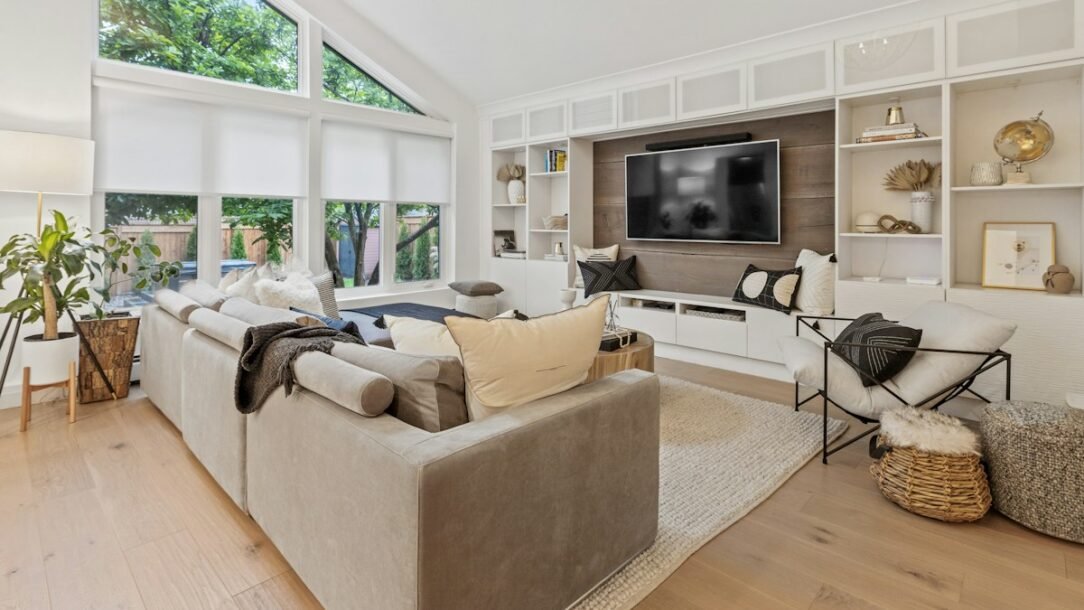
A television can make a living room feel finished—or make the whole wall look like an afterthought. The problem is rarely the screen itself. It is usually the empty space around it, a console that is too small, visible cords, or decor that competes with the TV instead of helping it belong in the room.
The best TV wall ideas without built ins solve those issues with proportion, texture, lighting, and a few intentional pieces rather than expensive custom cabinetry. You can create a polished media wall with a freestanding console, paint, wood slats, art, shelves, or renter-friendly surface treatments—as long as the TV height and cable plan are worked out before the styling begins.
Table of Contents
Plan the TV Height and Furniture Before Styling the Wall
Before choosing paint or shelves, sit where you normally watch TV and decide where the screen should actually be. Samsung’s current mounting guidance notes that the center of the TV should generally align near seated eye level and gives about 42 inches from the floor to the screen center as a starting point for an average viewer on a standard sofa. It also notes that furniture below the TV may require adjusting that height. Treat those numbers as a starting point, not a rule, and check the instructions for your specific television and mount. See Samsung’s current TV wall-mount guidance.
Then measure the full wall, the TV width, and the furniture underneath it. A TV wall feels intentional when the screen and console read as one composition rather than two unrelated rectangles. If you are still arranging the whole space, our living room decorating guide from start to finish is useful for setting the sofa, rug, and traffic flow before you commit to the media wall.
1. Start With a Long, Low Media Console
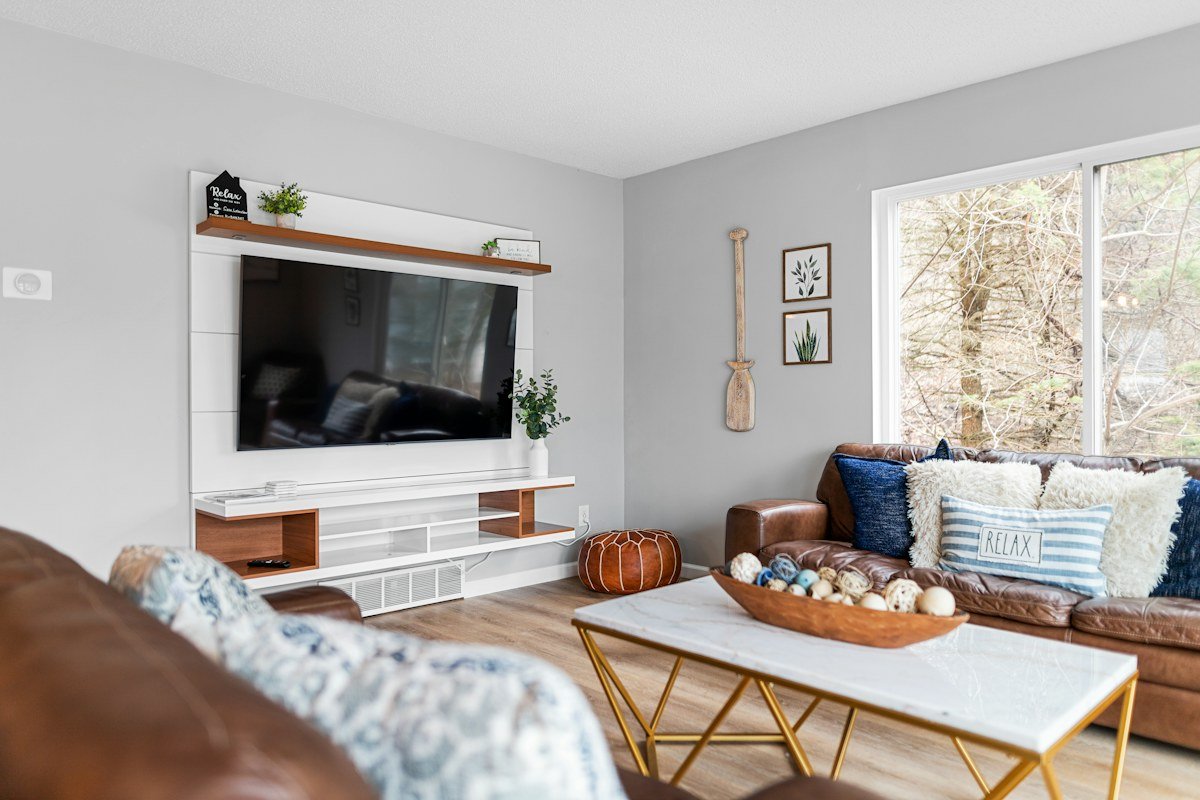
If you only change one thing, change the furniture under the screen. A low console that extends beyond the TV on both sides makes the arrangement look grounded. In an average living room, aim for enough extra width to hold a lamp, books, or a ceramic object without crowding the screen. If space allows, roughly 8 to 16 inches of visible console on each side is a useful visual range, but the room’s wall width matters more than a fixed formula.
Closed doors are especially helpful because they hide game controllers, routers, remotes, and charging cables. A piece on legs feels lighter in a small room; a wall-hung console creates more visible floor and works well in contemporary spaces. If the console also needs to store books, blankets, or work gear, borrow the same principle from our multifunctional furniture ideas for small homes: make every piece earn its footprint.
2. Paint the TV Wall One Confident Color
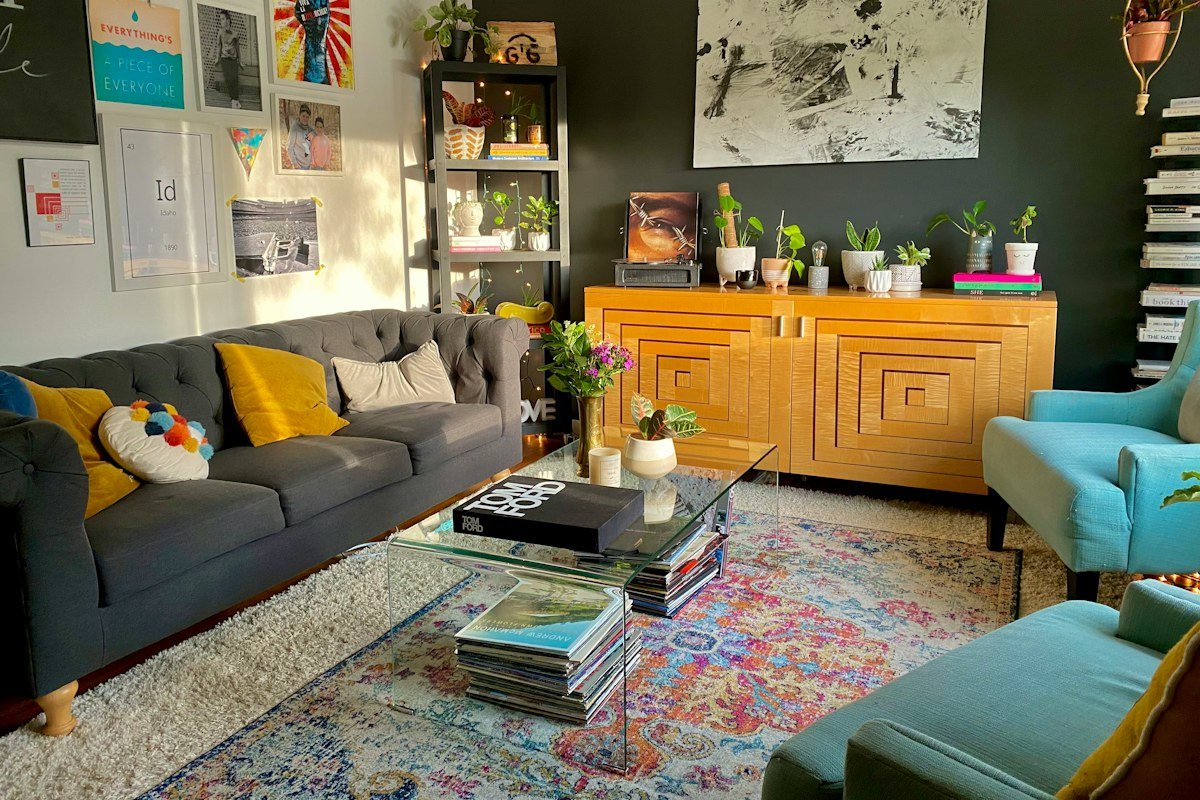
Paint is the simplest way to make a TV wall look deliberate. Deep olive, charcoal, muted navy, warm taupe, or earthy brown can reduce the contrast between a black screen and a pale wall. If you prefer a lighter room, use a mid-tone color rather than automatically choosing the darkest option.
The most polished version is usually restrained: one wall color, one console finish, and two or three supporting materials such as oak, linen, black metal, or brass. Do not add a bold paint color, patterned wallpaper, slatted wood, and a gallery wall all at once. The TV wall already contains a strong visual rectangle, so it benefits from one dominant idea.
3. Add a Vertical Wood-Slat Panel
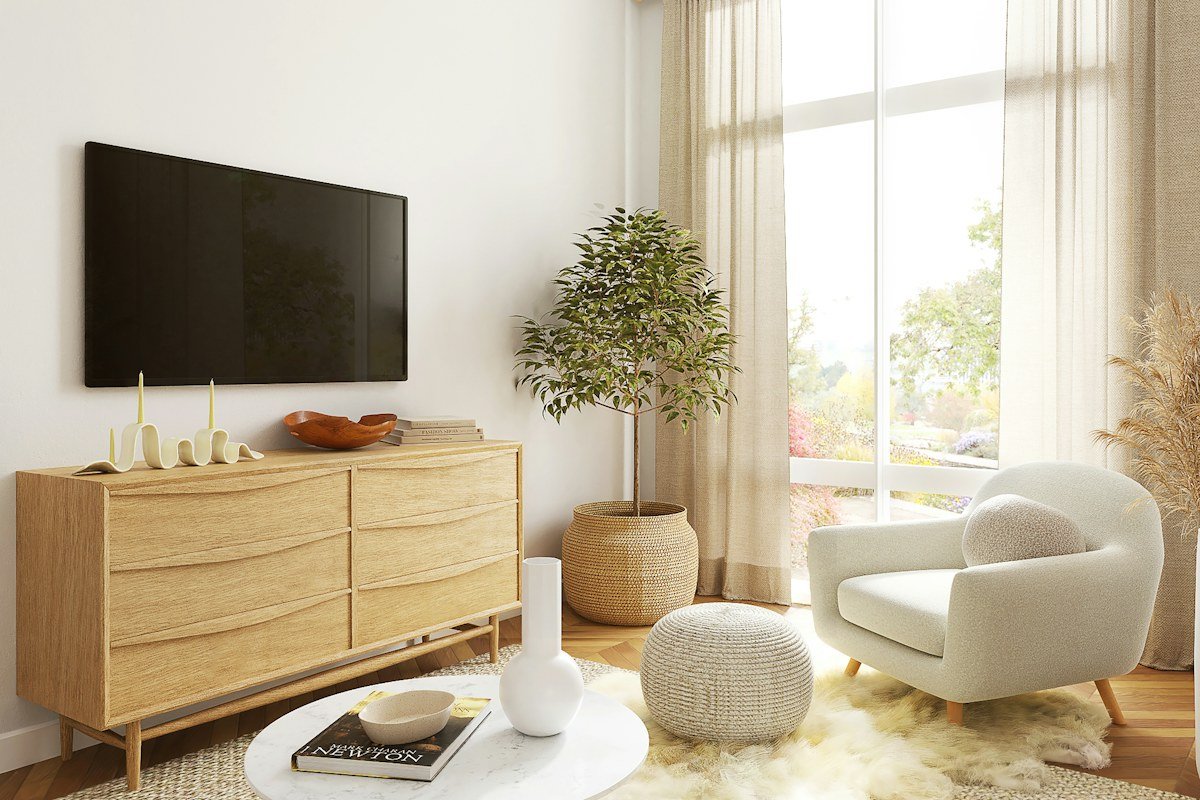
Wood slats add the architectural feeling people often want from a built-in, but they can be limited to a single panel behind the television. Vertical lines are especially useful on a wall that feels short or wide because they draw the eye upward. Natural oak is easy to pair with cream, olive, black, and warm gray; walnut gives the room a moodier, more tailored look.
Keep the panel proportionate. It can be slightly wider than the TV and console grouping rather than covering the entire wall. In a small living room, that controlled panel reads as a focal point without making the room feel like a showroom. If your ceiling is already low, vertical slats can support the same visual-height strategy used in our low-ceiling living room ideas.
4. Use One Oversized Panel Behind the TV
A single large panel can create a clean architectural backdrop without shelves or cabinets. Think stained plywood, veneered MDF, large-format stone-look porcelain, a microcement-style board, or a carefully finished plaster panel. The panel can run from console height to near the ceiling, or from floor to ceiling in one narrow section.
This idea works best when the material has a believable surface. Avoid thin faux-marble sheets with repetitive veins or glossy plastic finishes that compete with the television. If you rent, do not assume a heavy panel is removable; the substrate, fixings, and wall condition matter. A painted rectangle or removable wallcovering is often a safer low-commitment interpretation.
5. Balance the TV With Asymmetrical Shelves and Art
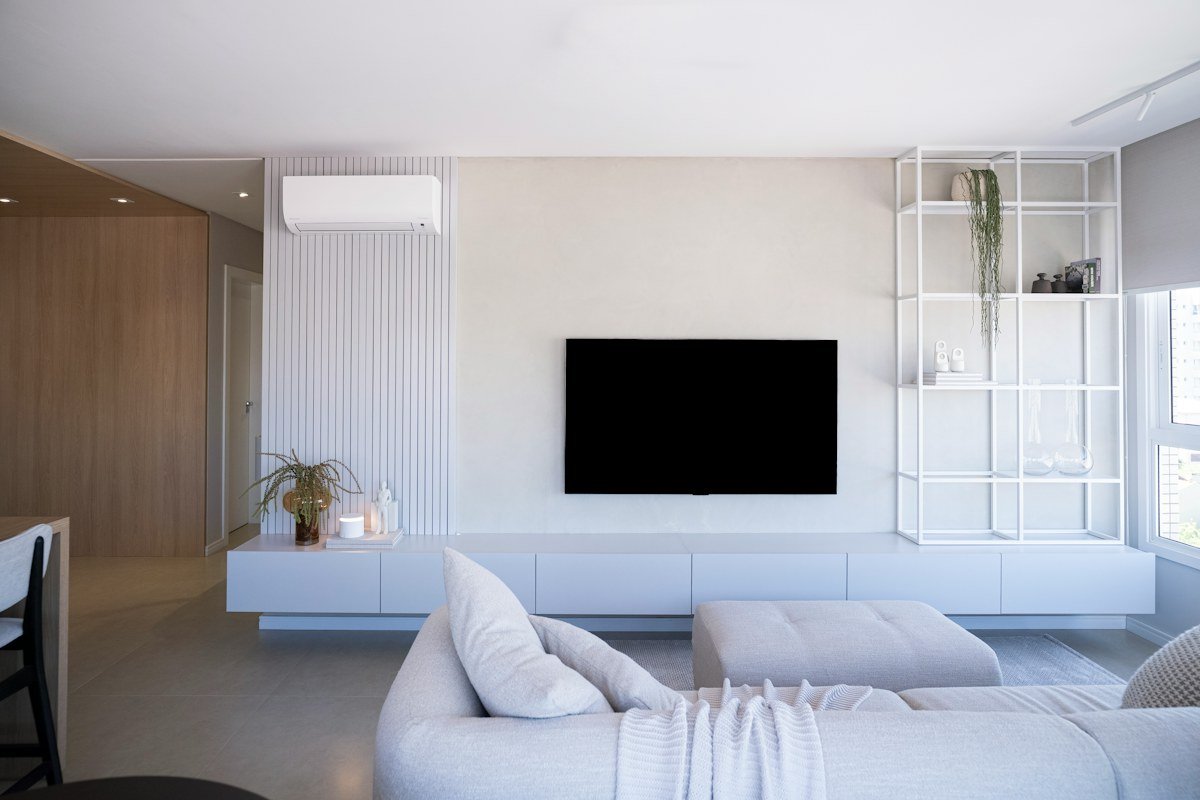
You do not need matching towers on both sides of the TV. A pair of slim floating shelves on one side and one large artwork or wall light on the other can feel more contemporary and less furniture-heavy. The important part is visual weight: if one side has several small objects, the opposite side needs something with enough scale to balance them.
Leave breathing room around the television. Shelves that nearly touch the screen make the wall feel cramped and can make future TV upgrades difficult. In compact rooms, fewer larger objects usually look calmer than many small frames. Our small living room decorating guide uses the same principle of editing visual clutter before adding more storage or decor.
6. Build a Gallery Wall That Includes the Screen
A gallery wall is useful when you do not want the TV to be the only dark rectangle in the room. Mix the screen with framed art in a limited palette—black, walnut, brass, or warm white frames—and vary the artwork sizes so the arrangement does not look like a rigid grid around the TV.
Start with the television as the largest shape, then add two or three medium pieces before filling smaller gaps. Keep delicate artwork away from vents or heat-producing electronics. This treatment works especially well in apartments where the TV shares a wall with the dining or work area because it makes the wall feel decorative even when the screen is off. For more apartment-scale composition ideas, see our apartment living room ideas.
7. Add a Slim Picture Ledge for a Layered Look
A single picture ledge is a lighter alternative to multiple shelves. Mount it beside or above the television—not so close that frames overlap the screen—and layer two or three pieces of art against the wall. Because the ledge is shallow, it adds depth without creating the boxy appearance of a wall cabinet.
Repeat one finish from the console so the wall feels connected. A walnut ledge over a walnut media unit, for example, creates a simple horizontal relationship. If the television sits low on the wall, keep the ledge higher and off-center rather than compressing everything into one band.
8. Use a Floor Lamp and Tall Plant to Soften the Edges
Sometimes the wall does not need more construction at all. A tall plant on one side and a sculptural floor lamp on the other can soften the hard edges of the screen and console. This is particularly effective when the TV wall sits in a corner or when drilling for shelves is not practical.
Choose shapes that reach upward without becoming bulky. A narrow tree, olive-style plant, or upright floor lamp adds height while keeping the floor visible. Avoid placing large leafy plants directly in front of speakers, vents, or the screen. The goal is to frame the composition, not obstruct it.
9. Try a Renter-Friendly Wallpaper or Surface Treatment
If you cannot build or permanently panel the wall, use a removable finish to define the media zone. A grasscloth-look wallpaper, subtle linen texture, muted geometric print, or a solid peel-and-stick color can give the TV a backdrop without adding bulky furniture.
Test the material on the actual wall first. Removable does not mean every adhesive is harmless to every paint finish, especially on recently painted or weak surfaces. If mounting the TV itself is also restricted by your lease, a properly sized TV stand on a stable media console may be more appropriate than improvising a wall mount.
10. Make the TV Visually Recede Instead of Decorating Around It
Not every TV wall needs more objects. If the room already has art, books, rugs, and patterned textiles, the best approach may be to simplify the media wall. Paint it a deeper color, use a minimal console, hide the cables, and let the screen visually recede into the background.
If your television has an art-display or ambient mode, choose artwork with colors that already exist in the room rather than bright digital images that become another focal point. Keep the screen brightness appropriate for the space. The finished effect should support the living room, not make the TV the decorative centerpiece at every hour of the day.
Cable Management Is What Makes a TV Wall Look Finished
Beautiful paint and furniture cannot hide a tangle of power, HDMI, speaker, and charging cables. Before mounting the screen, decide where the outlet, streaming devices, soundbar, game console, and router will live. Use manufacturer-approved cable routes and code-compliant solutions; if power needs to be relocated or concealed inside a wall, use an appropriate in-wall system or a qualified electrician rather than improvising with ordinary cords.
Safety matters too. The U.S. Consumer Product Safety Commission’s 2026 guidance recommends anchoring TVs and heavy furniture securely and keeping cords out of children’s reach. Wall-mounted TVs should use a mount appropriate for the television and wall construction, while TVs sitting on furniture should be placed on a sturdy low base and secured as directed. See the current CPSC TV and furniture safety guidance.
Common TV Wall Mistakes to Avoid
The most common mistake is mounting the television too high because the wall looks empty while standing. Make the decision from the seating position. Another is using a console that is visibly narrower than the television, which can make the screen feel top-heavy. A third is filling every gap with shelves, signs, baskets, plants, and small decor until the media wall becomes the busiest part of the room.
Also think about glare before drilling. Bright windows directly opposite the screen can make daytime viewing frustrating. Rearranging the seating or adding adjustable window treatments may solve more than an elaborate TV-wall makeover. In a narrow room, keep the media furniture shallow enough to preserve a comfortable traffic path rather than choosing a deep cabinet simply because it provides more storage.
Frequently Asked Questions
How do you make a TV wall look finished without built-ins?
Use one strong base element such as a long media console, then add one supporting treatment: paint, wood slats, a panel, art, or a few shelves. Hide cables and keep enough empty wall around the screen so the composition does not feel crowded.
How wide should a TV console be compared with the TV?
A console usually looks more balanced when it is wider than the television rather than narrower. If the wall allows it, several inches of visible console on each side gives room for decor and makes the screen feel grounded, but the exact width should suit the room.
What color should I paint the wall behind a TV?
Charcoal, olive, muted navy, taupe, warm brown, and other mid-to-deep tones can reduce the contrast of a black screen. Lighter neutral walls also work when the rest of the wall treatment is simple and the room needs brightness.
Can I decorate around a TV with artwork?
Yes. Use the television as the largest rectangle in the arrangement and balance it with a few medium and smaller frames. Keep the frame palette limited and leave breathing room so the art does not crowd the screen.
How high should a living room TV be mounted?
The center of the screen should generally sit near seated eye level, but sofa height, viewer height, TV size, and furniture below the screen all affect the final position. Measure from your actual seating position and follow the TV and mount manufacturer’s instructions.
What is the easiest renter-friendly TV wall idea?
A freestanding low media console paired with removable wallcovering, art leaning on the console, or a floor lamp and tall plant creates a finished look without permanent cabinetry. Check lease rules before mounting the TV or applying adhesive materials.
A Finished TV Wall Does Not Need to Be a Built-In
The strongest TV wall ideas without built ins are usually the ones with the clearest hierarchy: the screen at a comfortable height, a console that is wide enough to ground it, cables that disappear, and one decorative treatment that supports the room. Paint can be enough. So can a wood panel, a small gallery arrangement, or one good floor lamp and plant.
Choose the solution that fits your wall, viewing habits, storage needs, lease restrictions, and budget. When the TV wall feels connected to the sofa, rug, lighting, and color palette, it stops looking like a technology zone and starts reading as part of the living room design.

Share Your Thoughts