
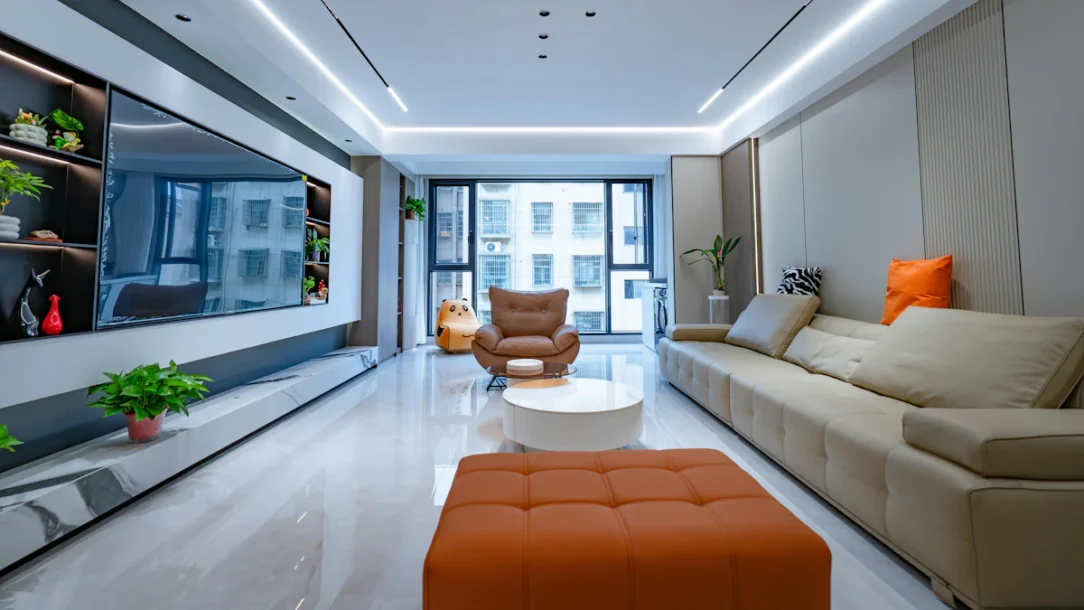
A low ceiling can make an otherwise comfortable living room feel compressed, especially when the room also has bulky furniture, short curtains, or a large light fixture hanging into the sightline. The good news is that most low ceiling living room problems are visual rather than structural. You can change the way the room reads without raising the roof or starting a major renovation.
The most effective approach is to create longer vertical lines, reduce visual weight near the ceiling, and keep the eye moving upward instead of stopping at a series of horizontal breaks. That means looking at paint, window treatments, furniture height, lighting, and wall styling as one connected system. If your living room is small as well as low, our guide to decorating a small living room beautifully and functionally can help with the wider layout decisions.
Table of Contents
First, Identify What Is Making the Ceiling Feel Low
Measure the ceiling before you buy anything. An 8-foot ceiling can feel perfectly comfortable when the furniture and window treatments are proportioned well, while a taller room can still feel squat if it is filled with heavy horizontal furniture and low-mounted curtain rods. Also note soffits, beams, ceiling fans, crown molding, and where the top of each doorway and window lands.
Then stand at the main entrance to the room and notice where your eye stops. If it lands on a dark ceiling line, a chandelier, the top of a tall sofa, or a curtain rod only a few inches above the window frame, that element may be shortening the room visually. Fix the biggest interruption first rather than adding decorative tricks everywhere.
1. Keep the Ceiling Light and Visually Quiet
A lighter ceiling is one of the simplest ways to create the impression of more height. Sherwin-Williams notes that light ceiling colors can make ceilings appear higher, while Benjamin Moore similarly recommends lighter ceiling colors for visually opening low-ceiling spaces. A warm white, soft ivory, very pale greige, or a lighter version of the wall color is usually easier to live with than a harsh blue-white.
For a current manufacturer explanation of the effect, see Sherwin-Williams’ ceiling color guidance. If your walls are already light, you do not need a dramatic ceiling contrast. A ceiling just one step lighter than the walls can preserve continuity while still keeping the upper plane bright.
Keep the finish restrained too. Flat ceiling paint is forgiving because it does not spotlight every patch, roller mark, or slight wave in the drywall. In a low room, an imperfect glossy ceiling can become a focal point for the wrong reason. If you are choosing new wall colors at the same time, our guide to warm versus cool neutral undertones can help you avoid a ceiling white that fights the rest of the palette.
2. Hang Curtains Close to the Ceiling
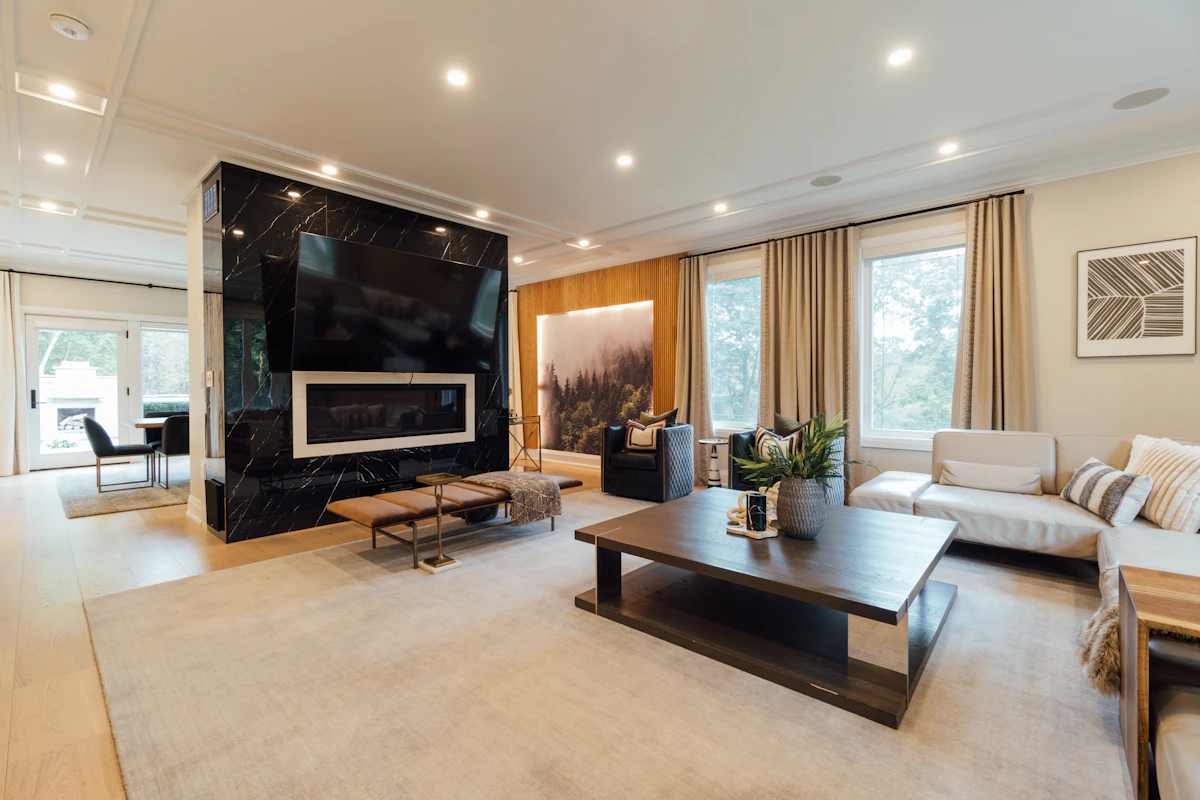
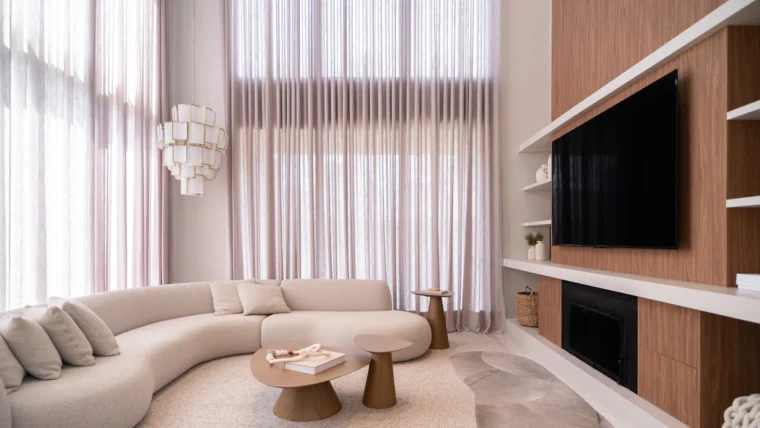
Short curtains visually divide the wall into horizontal sections: floor, window, wall above the window, then ceiling. In a low-ceiling room, that stack of bands makes the height easier to notice. Mounting the rod close to the ceiling—or using a ceiling-mounted track where appropriate—turns the window treatment into one long vertical element.
Let the panels finish at the floor instead of stopping several inches above it. A clean break or a slight kiss at the floor generally looks more deliberate than a long puddle in a compact living room. Extend the rod beyond the window frame when wall space allows so the open curtains sit mostly beside the glass; that exposes more daylight and makes the window feel broader without shortening it.
If you rent and cannot drill freely, use the method that suits your wall and window construction rather than forcing a heavy rod into an unsuitable adhesive hook. Our renter-friendly curtain hanging guide covers reversible options and their limitations.
3. Choose Lower Furniture Without Making Everything Tiny
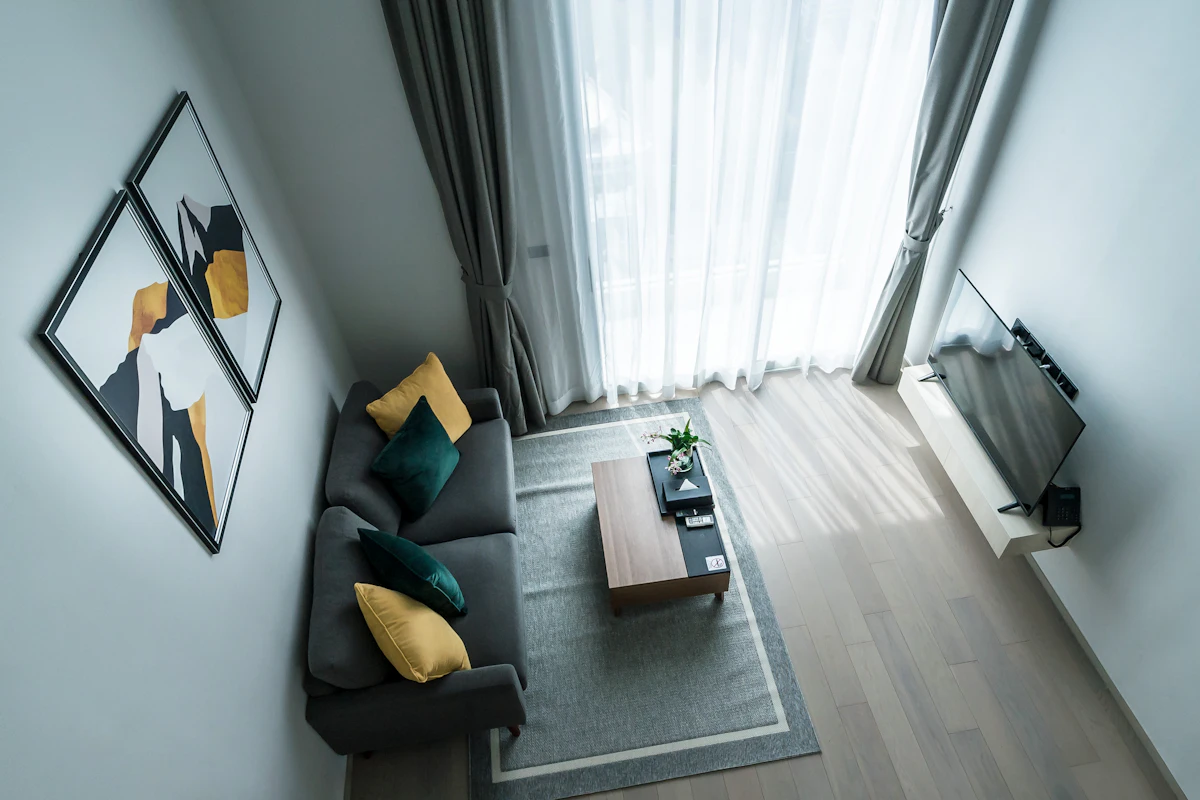
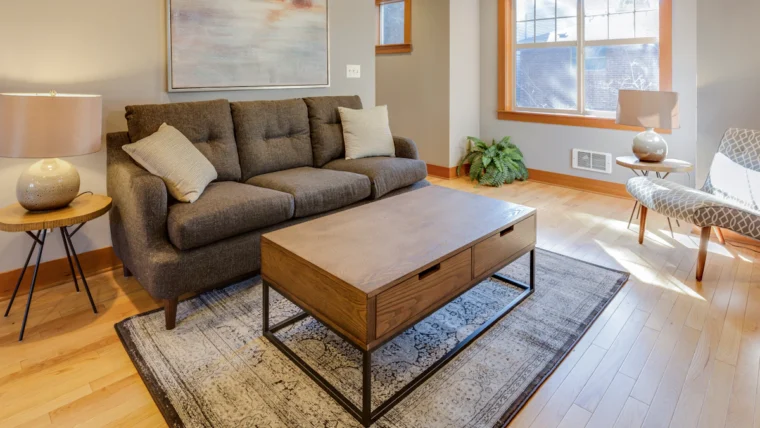
A low-backed sofa is useful because it leaves a larger area of uninterrupted wall above the seating. You do not need furniture that sits on the floor or feels undersized. Look instead for a sofa with a modest back height, a visually light base, and arms that are not excessively tall. Chairs with open legs and a coffee table with a slim frame can reinforce the same sense of breathing room.
Scale still matters. A tiny sofa in a 14-by-18-foot living room can make the room look awkward rather than tall. The better strategy is to keep the major pieces appropriately wide while reducing unnecessary vertical bulk. If you need storage too, choose pieces that do two jobs instead of surrounding the room with tall cabinets; the principles in our multifunctional furniture guide are particularly useful here.
4. Replace One Heavy Ceiling Fixture With Layered Lighting
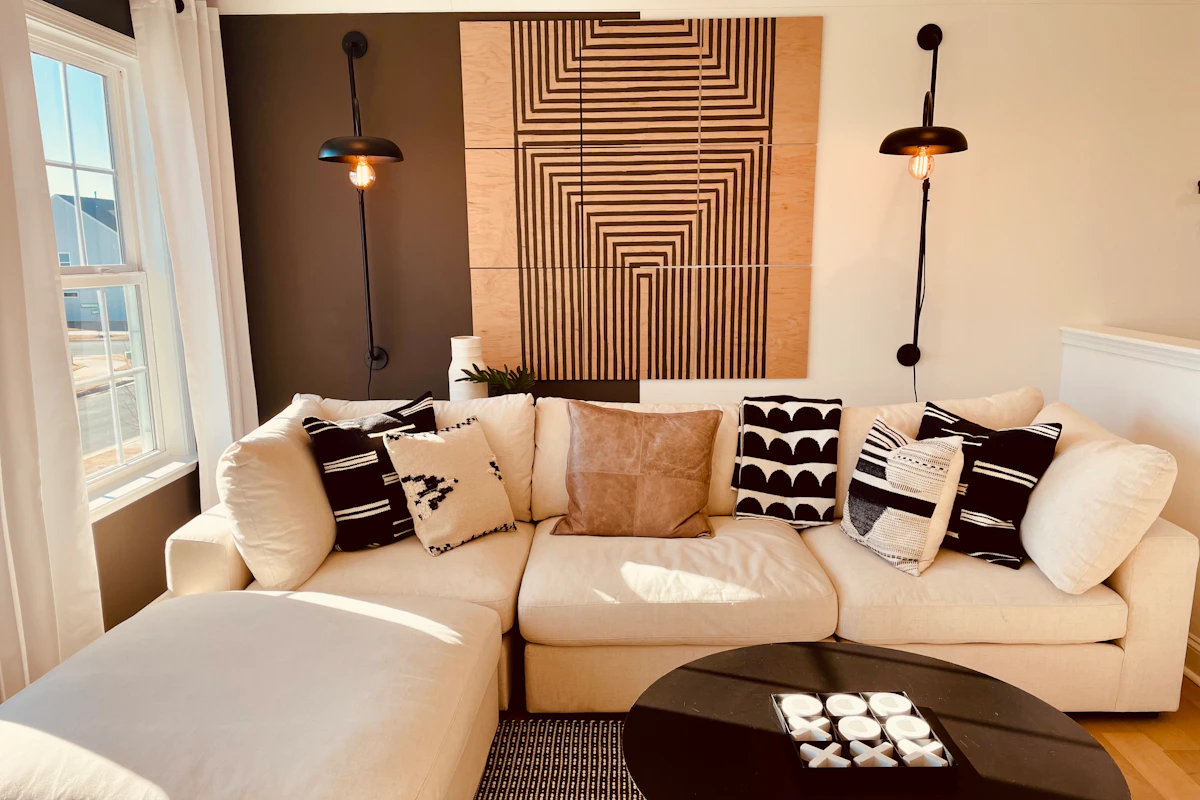
A chandelier or pendant that hangs deep into the room can turn a low ceiling into the main visual story. Where the electrical setup allows, a compact flush-mount or semi-flush fixture keeps more headroom. Then layer in floor lamps, table lamps, and wall lights so the room is not dependent on one bright ceiling source.
Wall sconces can be especially effective because they place light on the vertical plane. An uplight or a shaded floor lamp that softly brightens the wall and ceiling junction can also reduce the dark shadow line that makes a ceiling feel heavy. Avoid scattering too many tiny light sources around the room; two or three purposeful layers usually look calmer.
If you need a ceiling fan, choose it for clearance before style. Hunter Fan’s guidance calls for at least 7 feet between the floor and the fan blades. A low-profile or “hugger” model can suit a low ceiling only if its installed dimensions preserve the required clearance. If the room cannot meet the manufacturer’s clearance and local requirements, use another cooling option. Check the exact product dimensions and installation requirements before buying; see Hunter’s low-profile fan guidance.
5. Use Vertical Wall Styling to Pull the Eye Up
One tall mirror, a narrow piece of art, or a vertical pair of frames can do more for a low room than a wide gallery wall that stops halfway up the wall. The goal is not to hang art uncomfortably high. It is to create at least one composition that reads from lower furniture toward the ceiling instead of stretching only sideways.
A mirror works particularly well opposite or adjacent to a window because it repeats light and gives the wall more depth. Choose a simple frame and enough height to feel architectural. In a narrow room, a tall mirror leaning behind a console can be effective, but secure it according to the manufacturer’s instructions rather than relying on the wall for support accidentally.
Bookshelves can help too when their vertical supports are visually clear, but avoid filling every shelf to the top. Leave some open space, vary object heights, and keep the heaviest items lower. The upper third of the wall should feel lighter than the furniture zone below it.
6. Reduce Visual Weight in the Top Third of the Room
Heavy crown molding, dark beams, thick valances, and a strong contrasting paint stripe at the ceiling line all tell the eye exactly where the room stops. If you love traditional trim, you do not have to remove it. Painting the trim close to the ceiling or wall color can make the transition quieter while preserving the detail.
This does not mean every low room must be white. You can use olive, terracotta, muted blue, or charcoal lower in the room through upholstery, art, rugs, and furniture. Keep the upper plane comparatively calm. Sherwin-Williams also recommends lighter ceiling color for creating the impression of height, while darker ceilings are generally used when a more intimate, enclosed effect is desired.
7. Keep the Floor Plan Open Enough to See the Full Height
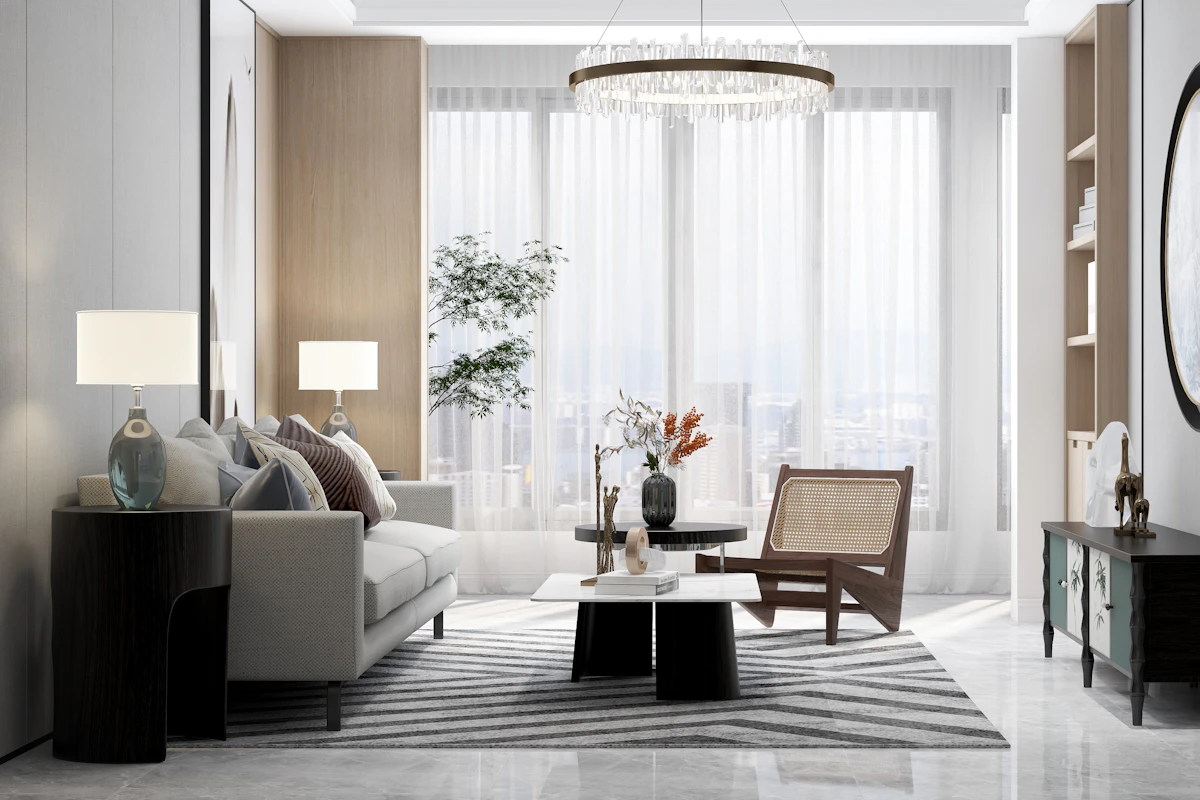
A room feels lower when every wall is occupied by a cabinet and every walkway is narrowed by furniture. Leave at least one clear sightline from the entry toward a window or the main seating area. In many living rooms, that means floating the sofa slightly away from the wall, using one substantial storage piece instead of several small ones, and keeping the coffee table proportionate to the seating rather than oversized.
Leggy furniture can reveal more floor, but do not turn the room into a collection of spindly pieces. Balance one grounded sofa with lighter side chairs or tables. A large rug that reaches under the front legs of the seating can unify the floor plane and reduce the patchwork effect created by several small rugs.
The same principle applies to styling. Fewer, larger objects usually create a calmer room than dozens of small accessories sitting at different heights. For a complete furniture-placement framework, see our living room decorating guide from start to finish.
Common Low-Ceiling Decorating Mistakes
The most common mistake is trying every “make it look taller” trick at once. Floor-to-ceiling curtains, vertical striped wallpaper, tall mirrors, narrow art, uplights, and very low furniture in the same room can feel theatrical. Pick two or three strong moves and let the rest of the room stay natural.
Another mistake is buying furniture by height alone. Comfort and proportion still come first. A sofa that is too low for the people using it, a coffee table that no longer relates to the seat height, or a tiny media console under a large television will make the room feel poorly scaled. Use visual height as a filter after basic function is solved.
Finally, do not assume a dark color is automatically wrong. Dark walls can look sophisticated in a low room when the ceiling stays visually light and the lighting is layered. The issue is usually not darkness by itself; it is a heavy horizontal boundary at the top of the walls combined with insufficient light below it.
Frequently Asked Questions
What color makes a low ceiling look higher?
Light ceiling colors such as soft white, ivory, pale greige, or a lighter version of the wall color generally make the upper plane feel more open. The best shade should also work with the room’s natural light and wall undertones.
Should low ceilings and walls be the same color?
They can be. A low-contrast wall-and-ceiling scheme reduces the hard boundary where the wall stops, while a slightly lighter ceiling can create a little more visual lift. Test both approaches in the actual room before committing.
How high should curtains be in a low-ceiling living room?
Mount the rod or track close to the ceiling rather than immediately above the window frame when the construction allows it, and use panels that reach the floor. The uninterrupted vertical line makes the window and wall feel taller.
What lighting is best for a low ceiling living room?
Use a compact flush or semi-flush ceiling fixture if overhead lighting is needed, then add floor lamps, table lamps, or wall sconces. Layered light prevents one large hanging fixture from visually lowering the center of the room.
Can I use a ceiling fan with a low ceiling?
Use only a fan that meets the required clearances for your ceiling height and room. Hunter Fan recommends low-profile or hugger fans for ceilings under 8 feet and says blades should remain at least 7 feet above the floor. Follow the exact manufacturer’s installation requirements.
Does low furniture really make a ceiling look taller?
It can help because more wall remains visible above the furniture, which changes the room’s proportions. The furniture still needs to be comfortable and correctly scaled, so choose moderately lower pieces rather than making everything unusually small.
Make the Room Feel Taller by Removing Visual Stops
The best low ceiling living room ideas are not about disguising the architecture completely. They are about removing the visual stops that make the ceiling feel closer than it is. A lighter upper plane, full-height curtains, proportionate low furniture, layered lighting, and one or two vertical wall elements can change the room’s balance without making it feel staged.
Start with the element that creates the strongest horizontal interruption, fix that first, and then reassess the room. Often the ceiling feels noticeably less dominant once the eye has a clearer path from floor to window, wall, and ceiling.

Share Your Thoughts