
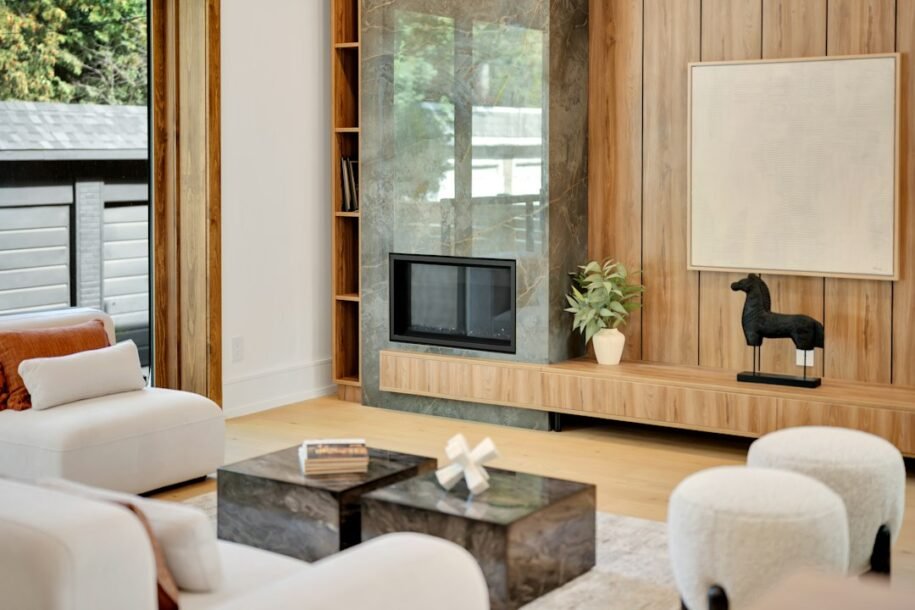
A well-designed media wall can make a living room feel more intentional by bringing the television, storage, lighting, and decorative finishes together in one coordinated feature. Instead of treating the TV as a screen mounted on an empty wall, the design gives it a place within the room’s architecture—whether that means a simple floating console, a wall of built-in cabinets, or a dramatic fireplace combination.
The best media wall ideas are not necessarily the biggest or most expensive. They balance the screen with the room’s proportions, provide a practical way to manage cables and devices, and use finishes that complement the rest of your home. Below, you’ll find 25 styles for different budgets, room sizes, and decorating preferences, plus planning tips to help you choose a look that works in real life.
25 Media Wall Ideas to Transform Your Living Room
1. Floor-to-Ceiling Built-In Media Wall
Make the most of a large, uninterrupted wall by running cabinetry and shelving from floor to ceiling. A central TV zone keeps the screen easy to find, while closed cupboards below and display shelves above provide a home for games, books, baskets, and accessories. For a calmer look, repeat one cabinet color throughout and leave some shelves open rather than filling every section.
2. Warm Oak Slat Media Wall
Vertical oak-look slats add natural texture and help the TV wall feel warmer than a plain painted surface. Use slats across the central TV panel or extend them to one side for a lighter, more contemporary effect. Pair the wood with a simple floating cabinet, soft neutral walls, and restrained decor so the pattern remains the main feature.
3. Media Wall With a Linear Electric Fireplace
A long electric fireplace below the television creates a strong horizontal line and gives the wall a cozy focal point. Keep the fire and screen aligned, and choose a surround that ties them together visually. Before building, check both appliance manuals for clearances, ventilation, mounting requirements, and heat limits; never assume every TV can sit directly above every fireplace.
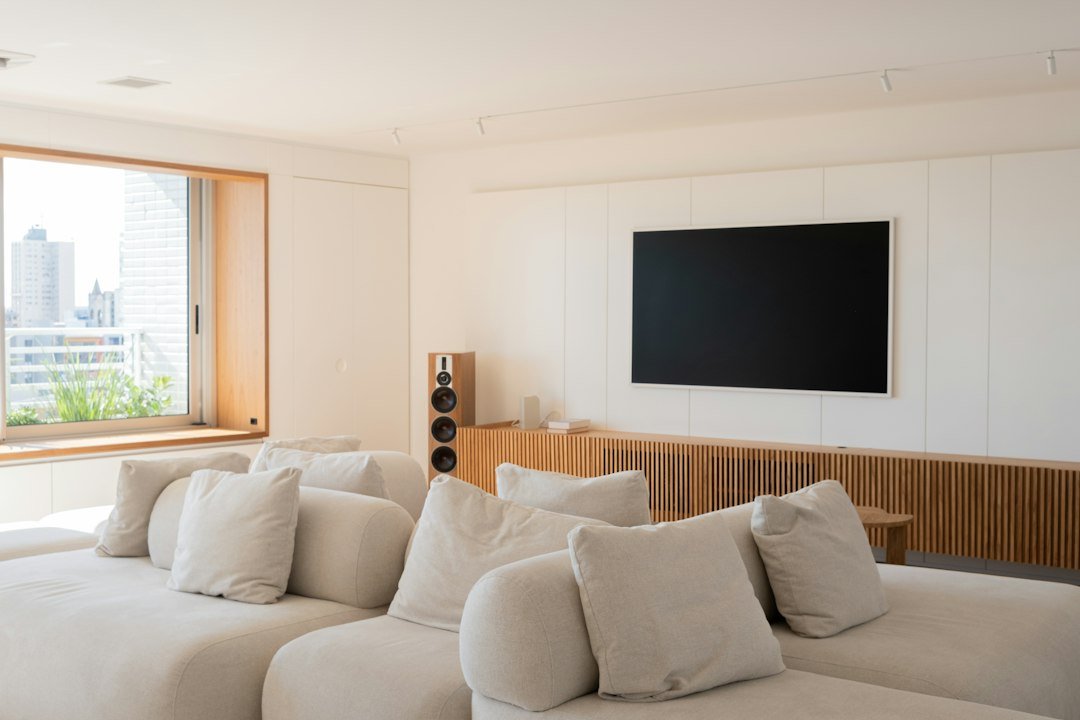
4. Minimal Floating Media Console
If you prefer a clean, open room, mount a long floating cabinet beneath the TV and keep the wall finish simple. The gap between the cabinet and floor makes the room feel less crowded and leaves the flooring visible. Choose a cabinet with doors or drawers to hide remotes, controllers, and other everyday clutter.
5. Marble-Look Feature Panel
A large porcelain, sintered-stone, or quality marble-look panel gives the TV wall a polished, architectural finish. Veining adds visual movement, so keep nearby shelves and accessories relatively quiet. If you use real stone or a heavy slab, have a qualified installer check the wall structure and mounting system rather than treating it like lightweight decorative cladding.
6. Soft Greige Built-In With Closed Storage
Painted cabinetry in warm greige, mushroom, or putty creates a subtle backdrop that feels softer than bright white. Use a continuous base cabinet and a recessed or framed TV area to create a cohesive composition. This style suits transitional interiors, especially when the cabinet hardware and wall paint are kept in the same warm color family.
7. Media Wall With Lit Display Niches
Recessed niches with gentle LED lighting can highlight a few favorite books, ceramics, or framed pieces. Plan the niche sizes before construction so they look intentional rather than like leftover gaps around the TV. Choose dimmable, warm-toned lighting and conceal the strips or fixtures to reduce glare on the screen.
8. Dark Charcoal TV Wall
A deep charcoal, espresso, or soft black backdrop lets the television visually recede when it is switched off. Add a wood console or a few lighter objects to stop the wall from feeling flat. This approach works especially well in rooms with adequate natural light, but in a smaller or darker room, consider using the dark color only behind the screen instead of across the entire wall.
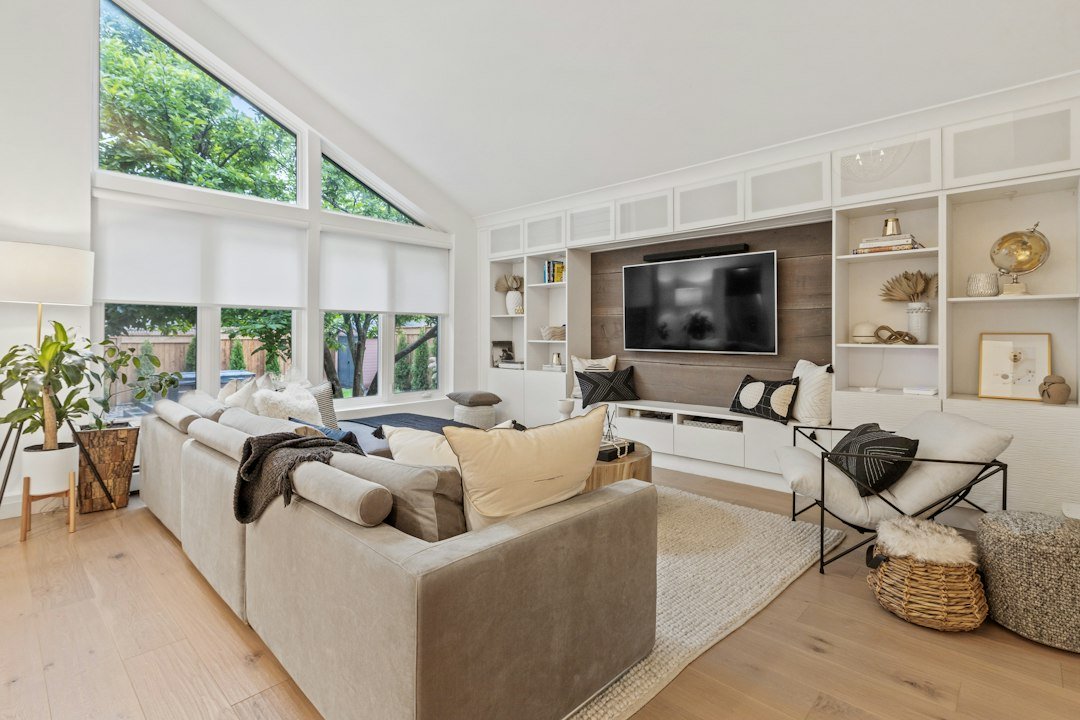
9. Built-In Shelving on Both Sides
Frame the TV with two shelving towers for a balanced, symmetrical look. Closed storage at the bottom keeps the arrangement practical, while open shelves above can display books and a small number of decorative objects. Match the shelf depth and spacing on both sides, but do not feel compelled to fill every shelf; negative space helps the whole wall feel more refined.
10. Asymmetrical Media Wall
For a more relaxed and custom look, place a tall cabinet or shelving column on one side of the TV and leave the other side more open. A long low console can connect the elements and keep the composition grounded. Repeat one material or color in both zones so the asymmetry looks planned rather than unbalanced.
11. Vertical Fluted Panel Media Wall
Fluted MDF panels or narrow vertical battens create shadow and texture without requiring a bold color. Use them behind the TV and continue the same finish onto a cabinet front for a connected look. Keep the grooves easy to dust and plan around outlets, brackets, and cable routes before attaching the panels.
12. Two-Tone Media Wall
Combine a painted wall with a contrasting wood, stone-look, or darker TV panel. For example, a cream wall with a walnut center creates warmth without making the entire room dark. Limit the composition to two main finishes and one small accent to avoid a patchwork effect.
13. Media Wall With Hidden Cable Management
A beautiful wall can quickly look messy when power cords and device cables hang below the screen. Plan a cable route and accessible equipment storage before mounting the TV. Use approved in-wall cable management products and follow local electrical codes; ordinary extension cords should not be concealed inside walls. Keep connections accessible for troubleshooting and future upgrades.
14. Low, Wide Media Wall for a Relaxed Look
Instead of building upward, use a long low cabinet and a broad panel behind the screen. This horizontal layout works well in rooms with lower ceilings or a long sofa wall because it emphasizes width rather than height. Leave enough clear wall above the TV to avoid squeezing the screen between the cabinet and ceiling.
15. Media Wall With a Wood-and-White Combination
Pair white or warm ivory cabinetry with a natural oak or walnut TV panel for an easy-to-live-with mix. The light cabinetry keeps the overall look airy, while the wood adds depth and warmth. Repeat the wood tone in a coffee table, picture frames, or a nearby shelf so the finish feels connected to the rest of the room.
16. Compact Media Wall for a Small Living Room
In a small space, a full built-in can overwhelm the room. Choose a shallow console, one slim vertical shelf, and a simple TV panel instead. Measure the available wall width and preserve walking space around the furniture. For more layout inspiration, see our guide to small living room layouts with a fireplace and TV.
17. Media Wall With a Concealed TV
If you dislike seeing a black screen when the TV is off, consider a cabinet with sliding or folding doors, a retractable mechanism, or artwork designed to cover the screen. The cabinet must allow safe ventilation for electronics and provide enough clearance for the screen and moving hardware. Confirm dimensions and access needs with the installer before ordering a custom unit.
18. Built-In Media Wall With a Reading Corner
Extend the shelving or cabinetry into a small reading nook at one end of the wall. A compact chair, wall light, and a few shelves make the feature useful beyond watching television. Keep the chair outside the main traffic route and use a separate lighting circuit if possible, so the reading area can be used without brightening the entire room.
19. Color-Drenched Media Wall
Paint the wall, shelving, and cabinets in one color to create a seamless, built-in appearance. Sage green, muted blue, warm taupe, and earthy olive can all work, depending on the rest of your palette. Repeating the same color across different surfaces helps a large media unit feel cohesive, while varied textures keep it from looking flat.
20. Media Wall With Open Cubby Storage
Open cubbies are useful for consoles, streaming boxes, baskets, and frequently used items. Vary the cubby sizes to suit what you actually store, and include ventilation and cable access for electronic equipment. If you want the wall to look tidy with minimal effort, combine a few open compartments with closed doors for the less attractive essentials.

21. Classic Panel Molding Media Wall
Traditional wall molding can make a TV area feel more finished in a classic or transitional home. Plan the panels around the screen rather than adding trim afterward, and leave a clean margin so the TV does not appear crammed into a frame. Paint the molding and wall the same color for subtle detail, or use a slightly deeper tone for contrast.
22. Media Wall With Stone Texture
Stone-look porcelain, textured plaster, or a lightweight decorative panel can bring depth to a contemporary living room. Use a single continuous surface behind the screen and keep the console understated. If choosing natural stone or a heavy finish, confirm load requirements, attachment methods, and heat clearances with qualified tradespeople.
23. Media Wall With Floating Shelves
Two or three floating shelves can create a media wall without the cost or visual weight of full-height cabinets. Arrange the shelves to one side or above a low console, and style them with books, small art, and a plant that will not trail across the screen. Keep decorative objects away from ventilation openings and leave enough empty space for the wall to breathe.
24. Family-Friendly Media Wall With Toy and Game Storage
For a busy household, prioritize durable finishes and storage that is easy to use. Deep drawers or cupboards can hide controllers, board games, chargers, and children’s toys, while a few open baskets make everyday cleanup quicker. Secure tall cabinetry to the wall, manage cables safely, and avoid placing fragile decor on shelves within easy reach.
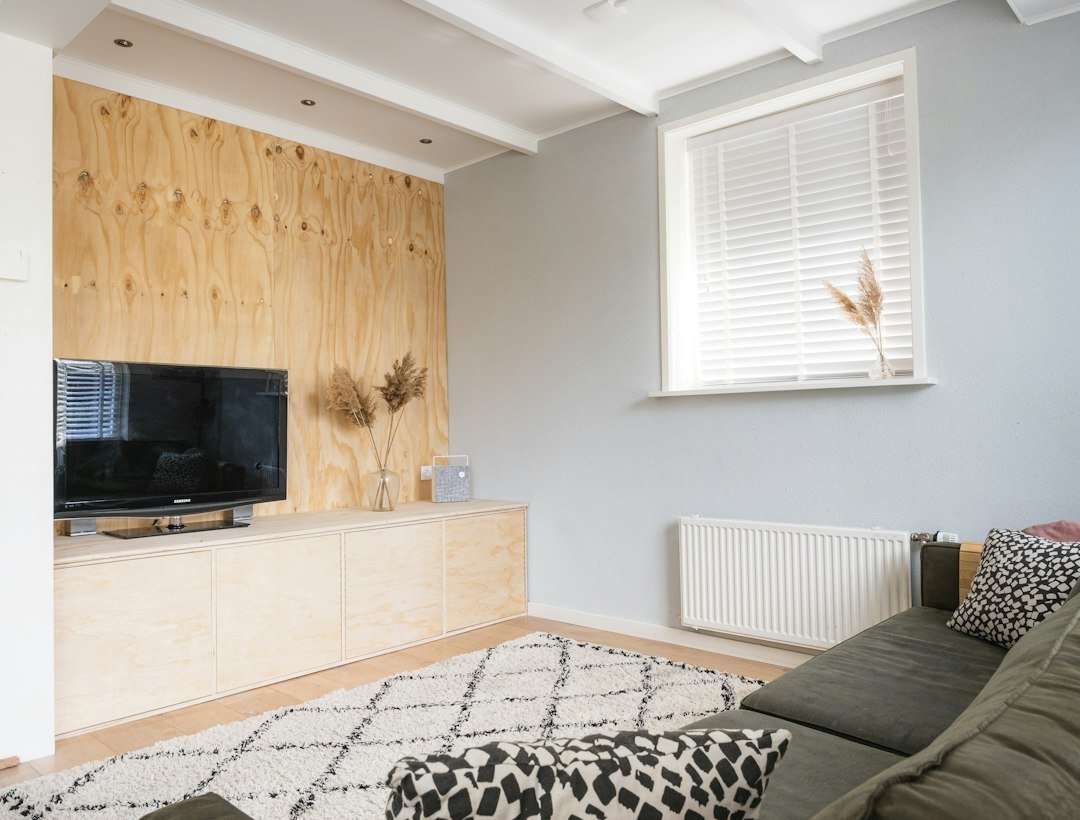
25. Budget-Friendly DIY Media Wall
You can create a coordinated media feature without commissioning a full custom installation. Start with a well-sized console, paint the TV wall, add a simple panel or removable slats, and use a pair of shelves to finish the composition. Price materials and tools before beginning, and leave electrical work, heavy mounting, and fireplace installation to qualified professionals where required. Our guide to TV wall ideas without built-ins has more options for a simpler setup.
How to Choose the Right Media Wall for Your Living Room
Start with the room and viewing position
Measure the wall, the sofa-to-screen distance, ceiling height, and nearby doors or windows before settling on a design. The TV should be comfortable to watch from your normal seating position, not simply centered at a height that looks good in a photo. Avoid blocking natural light, heating vents, or access to sockets and service panels.
Decide what needs to be stored
Make a quick list of devices and accessories: streaming boxes, game consoles, controllers, soundbars, remotes, books, and decor. That list helps you choose between mostly closed cabinets, open shelving, or a mix of both. Electronics need adequate airflow, and equipment that requires a remote signal should not be hidden behind an unsuitable solid door.
Choose a finish that fits your home
Look at existing flooring, furniture, wall colors, and metal finishes before choosing slats, paint, stone, or cabinetry. If you want the wall to blend in, use a similar tone to the surrounding room. If you want it to stand out, introduce one clear contrast rather than mixing several unrelated patterns and materials. Our accent wall guide can help you decide how much contrast your room needs.
Plan lighting and reflections
Integrated LEDs can highlight shelving and add atmosphere, but bright strips directly around the screen may cause distracting glare. Choose dimmable lighting, conceal the light source where possible, and test the effect at night. If your room has large windows, consider how daylight reflects on the TV before finalizing the wall’s position and finish.
Set a realistic budget
A simple painted feature and ready-made console usually cost less than custom cabinetry, heavy panels, integrated lighting, and an electric fireplace. Include hardware, cable management, wall repairs, installation, and any electrical work in your budget. A phased approach can work well: begin with the console and wall finish, then add shelving or lighting when funds allow.
Media Wall Mistakes to Avoid
- Making the TV too high: prioritize a comfortable viewing position from the sofa.
- Ignoring ventilation: do not seal electronics into tight, unventilated cupboards.
- Adding too many finishes: two or three coordinated materials often look more deliberate than a mix of competing textures.
- Forgetting access: plan for cable changes, device upgrades, and maintenance before the wall is closed.
- Using fireplace heat without checking clearances: follow the exact fireplace and TV manufacturers’ instructions.
- Overstyling shelves: leave open space so books and decor do not compete with the screen.
- Starting construction before measuring: confirm the screen, soundbar, cabinet, outlets, and seating dimensions first.
Frequently Asked Questions
What should a media wall include?
A media wall commonly includes a TV, a console or built-in cabinet, cable management, and optional shelving, lighting, or a fireplace. Choose features based on how you use the room rather than adding every element at once.
Are media walls a good idea for small living rooms?
Yes, if the design is scaled to the room. A shallow floating console, a simple panel, and limited shelving can make a small room feel organized without taking up much floor space. Avoid deep cabinets and oversized decorative surrounds.
Does a media wall need a fireplace?
No. A fireplace is optional. A media wall can look complete with cabinetry, slat panels, stone-look finishes, painted molding, or shelves alone. Leaving out the fireplace can simplify planning and create more flexibility around the TV.
What is the best color for a media wall?
There is no single best color. Warm white, greige, oak, charcoal, sage, and muted blue can all work. Match the choice to your room’s natural light, flooring, furniture, and the amount of contrast you want around the screen.
How do you hide wires on a media wall?
Plan cable routes before mounting the TV and use approved cable-management systems. In-wall power and electrical work should comply with local codes and be handled by a qualified professional when required. Keep connections accessible for future changes.
Can I build a media wall myself?
A simple painted wall, console, or lightweight decorative panel may be suitable for a confident DIYer. Heavy cabinetry, wall-mounted screens, stone panels, electrical work, and fireplaces can require specialist skills. Check wall structure and product instructions before starting.
How do I keep a media wall from looking cluttered?
Use closed storage for remotes, cables, and small devices; repeat a limited palette of finishes; and leave some shelves empty. Hide wires, keep decor scaled to the shelf, and avoid placing too many objects around the screen.
Final Thoughts
The most successful media wall is one that suits your room, your storage needs, and the way your household relaxes. Whether you prefer warm wood slats, a built-in fireplace, colorful cabinetry, or a simple floating console, start with accurate measurements and a clear plan for cables, ventilation, lighting, and access. A few well-chosen materials and thoughtful proportions can make the living room feel polished without making the wall unnecessarily complicated.
Planning note: Always follow the TV, mount, cabinetry, and fireplace manufacturers’ installation instructions. Requirements vary by product and wall construction.

Share Your Thoughts