
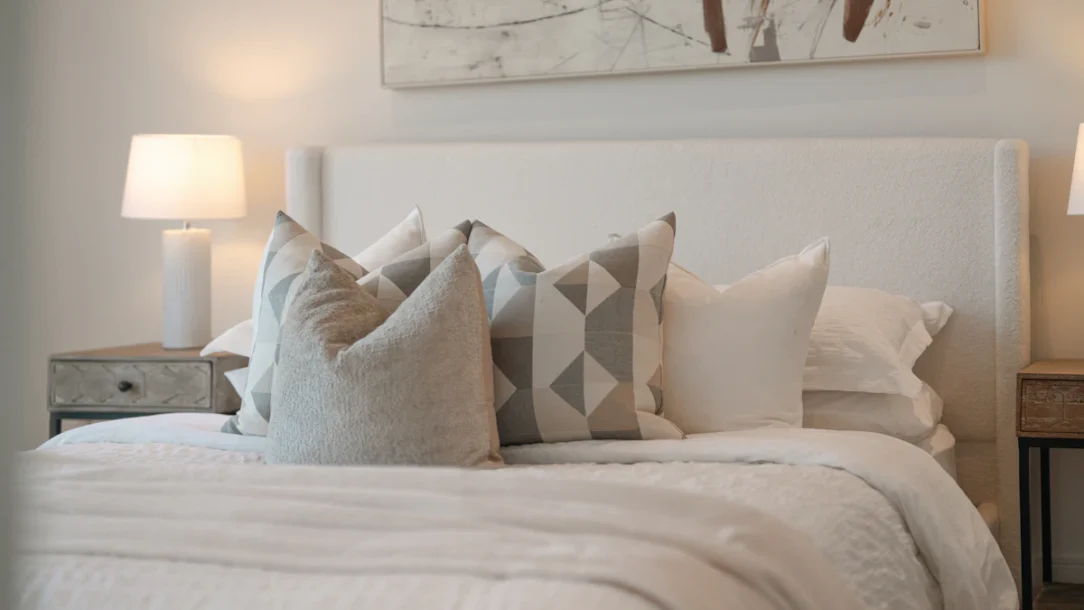
Bedroom wall decor should make the room feel calmer, more personal and more complete without turning every blank surface into a project. The most important walls usually sit above the bed, over a dresser and opposite or beside the bed, yet each one needs a different approach to scale, height and visual weight.
This guide shows how to choose art, mirrors, shelves, sconces, textiles and gallery arrangements for those spaces, how to size them to the furniture below, and when leaving a wall mostly blank is actually the better design decision.
Table of Contents
Start With the Bed Wall Because It Sets the Visual Hierarchy
The bed is usually the largest object in a bedroom, so the wall behind it naturally carries the most visual weight. Decide what happens there before decorating smaller walls. If you start by filling every empty corner with frames, the room can feel busy before the main focal point is resolved.
Stand in the doorway and look at the room as one composition. If the headboard already has strong height, color or texture, you may need only one quiet piece of art—or nothing at all—above it. If the headboard is low and plain, the wall can carry more of the personality. The same idea applies when planning a small bedroom layout: solve the large visual and functional pieces first, then add decorative layers.
What to Put Above the Bed
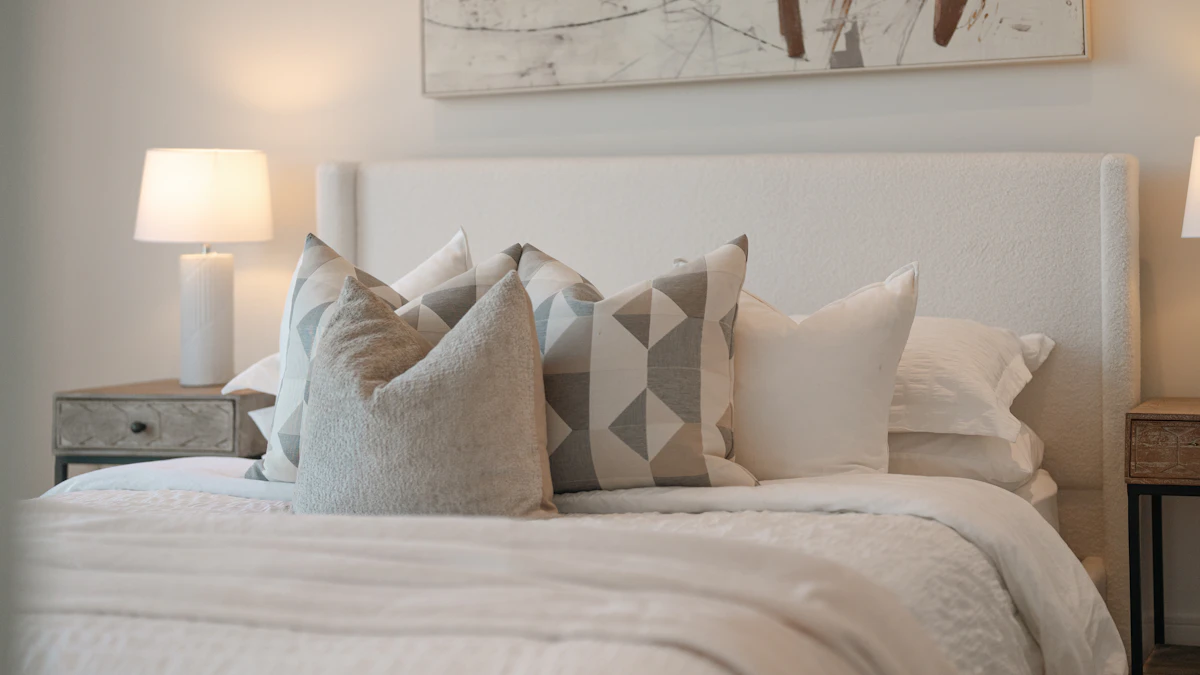
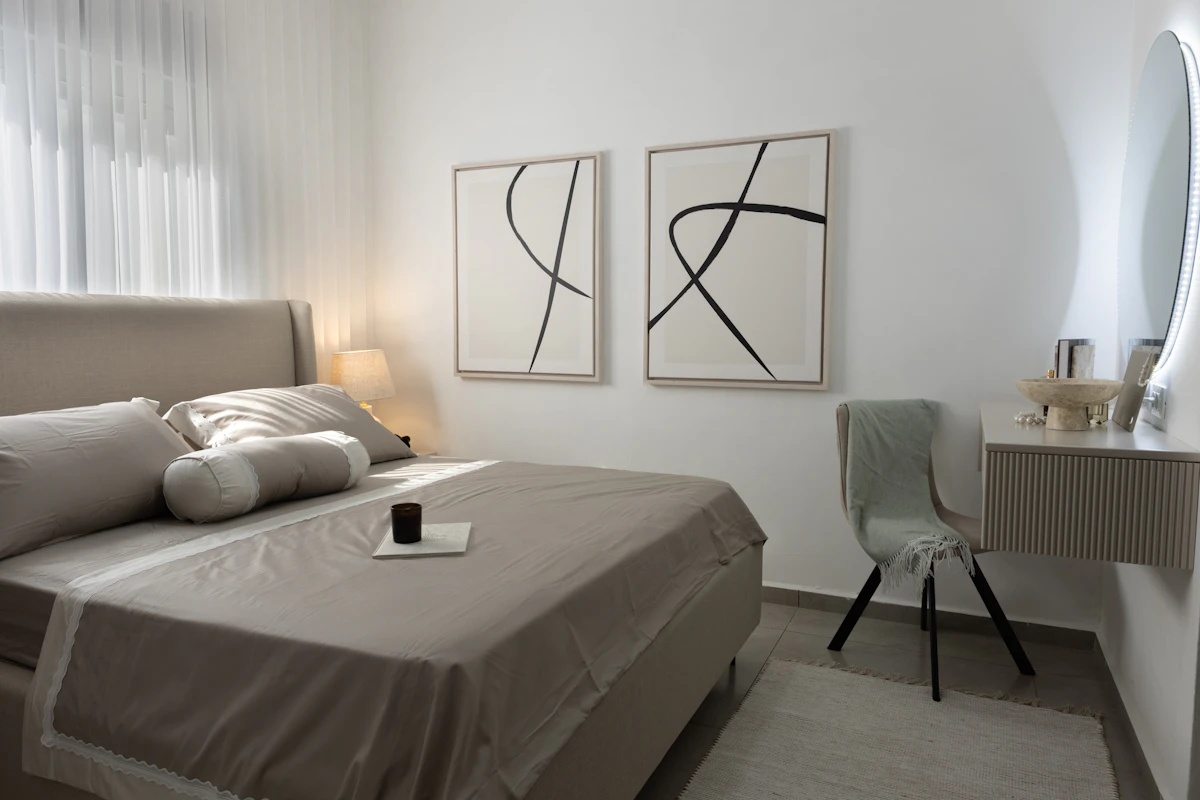
The strongest above-bed choices are usually simple: one large horizontal artwork, a pair of matching prints, a three-piece set, a shallow textile, or a tightly edited gallery arrangement. The goal is to visually connect the decor to the bed instead of making it look like an unrelated object floating near the ceiling.
Choose the format based on the mood of the room. One oversized piece feels calm and modern. A pair feels symmetrical and polished. A triptych adds rhythm without the visual complexity of a gallery wall. A textile softens a hard room with many straight lines. Crate & Barrel’s above-bed decor guide also treats the bed wall as an opportunity for art, lighting and personal pieces rather than one fixed formula.
How Wide Should Art Above the Bed Be?
A useful starting point is to make the artwork or grouped arrangement roughly two-thirds the width of the furniture below it. Pottery Barn uses a similar two-thirds guideline for art over furniture and recommends keeping the bottom of artwork only a few inches above the furniture rather than pushing it toward the ceiling. See the hanging-art guidance.
For a bed, treat the headboard as the visual furniture line. The decor should feel comfortably narrower than the headboard, not wider than it. If you have a queen bed with a substantial headboard, a tiny 16-inch print usually looks underscaled even if it is attractive on its own.
Before making holes, cut kraft paper or painter’s tape to the proposed dimensions and leave it on the wall for a day. Check it from the doorway, from the side of the room and while sitting on the bed. This catches scale problems that are hard to see while holding a frame in your hands.
Choose One Large Piece When You Want the Calmest Look
One large artwork is the easiest choice when the bedding already has pattern, the nightstands hold several objects, or the room has strong lighting fixtures. It gives the bed wall a clear focal point without adding many frame edges and visual interruptions.
Horizontal landscapes, abstract work, photography and large textural pieces tend to sit naturally over a wide headboard. Match the visual weight to the room: a thin black frame can sharpen a soft neutral bedroom, while a pale wood frame can warm a cooler palette. If you are refining the whole room rather than only the wall, these ideas for making a bedroom look expensive on a budget use the same principle of fewer, better-scaled focal pieces.
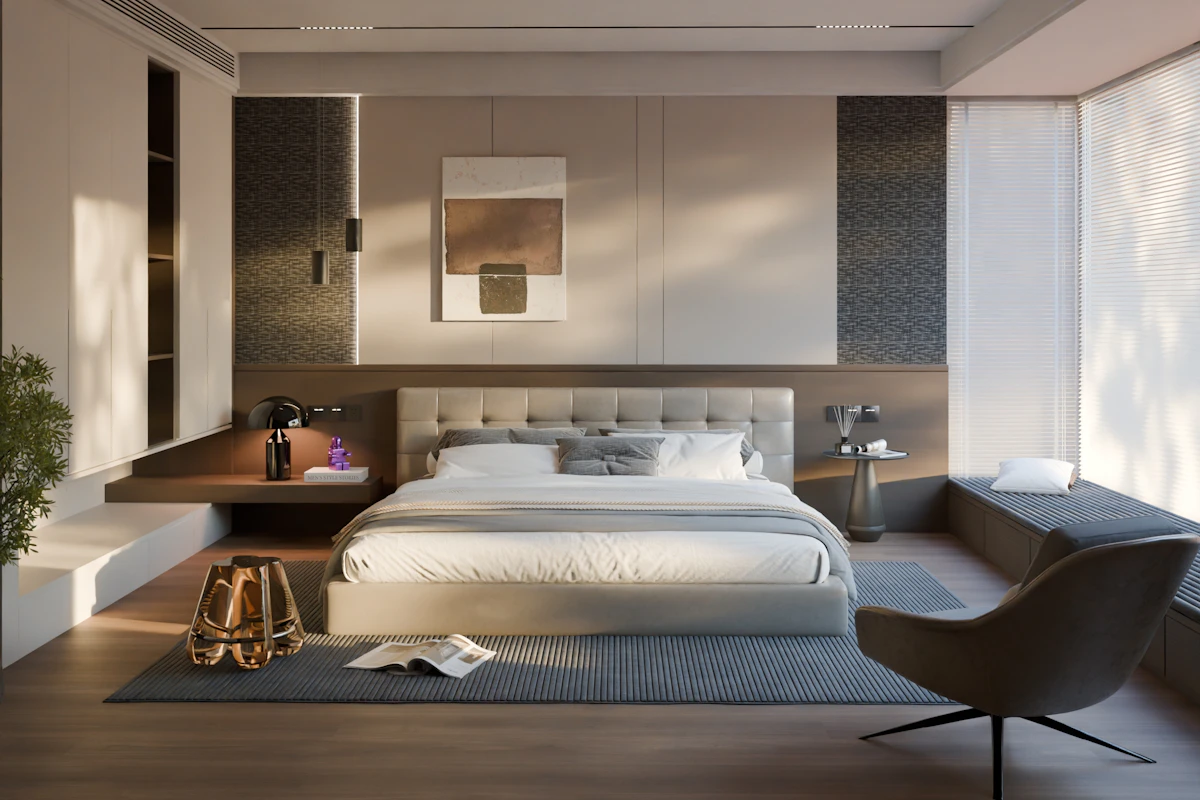
Use a Pair or Triptych for More Structure
A pair of same-size frames works well in bedrooms because beds are naturally symmetrical. Center the combined width over the headboard and keep the gap between the frames relatively tight so the pair reads as one unit.
A triptych gives you more movement while still feeling orderly. The three pieces do not need identical images, but they should share a clear connection such as the same frame finish, color family, photography style or subject. Avoid mixing three unrelated pieces simply because they fit the available width.
Build a Gallery Wall Above the Bed Carefully
A bedroom gallery wall can feel personal, but it needs more restraint than a hallway gallery because you see it every day from close range. Keep the overall footprint contained within the width of the headboard, use consistent spacing, and limit the number of frame finishes.
For a more detailed layout process, use the measurements and floor-planning method in our gallery wall guide. In a bedroom, an orderly grid or a loose arrangement with one dominant center piece is usually easier to live with than a sprawling salon-style collection.
When a Mirror Works Above the Bed—and When It Does Not
A mirror can brighten a dark bedroom and reflect a pleasant view, but above the bed it deserves extra thought. A large, heavy mirror introduces both visual weight and mounting concerns directly over a sleeping area. If you like the reflective effect, a lighter framed mirror or a mirror placed above a dresser is often the more practical choice.
Whatever you hang overhead should use hardware appropriate to its weight and wall type, following the manufacturer’s installation instructions. If the wall is difficult to anchor securely—or you live in an area where movement or vibration is a concern—choose lightweight art or leave the space open instead of forcing a heavy object above the bed.
What to Hang Above a Dresser
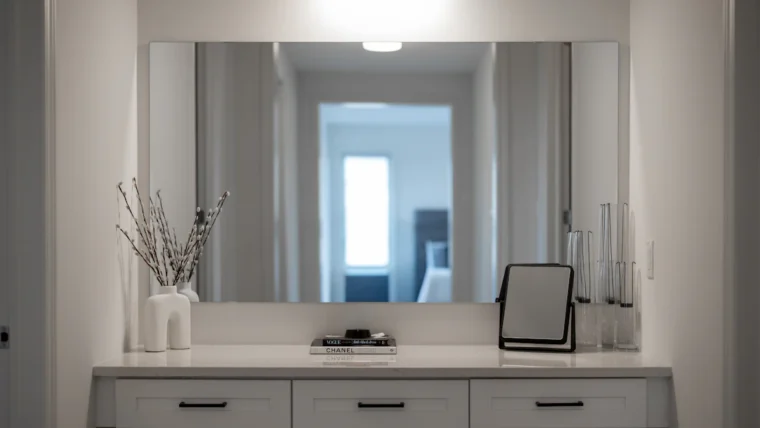
The dresser wall is usually the best place for a mirror because the surface below gives it a functional relationship and a visual anchor. A round mirror softens a boxy dresser, while a rectangular mirror echoes its shape and feels more architectural.
Keep the mirror or artwork narrower than the dresser and visually connected to it. Pottery Barn suggests leaving roughly 4–6 inches between art and the furniture below; Crate & Barrel gives a similarly close range rather than hanging art high on the wall. Treat those numbers as starting points, then adjust for your mirror shape, dresser height and ceiling.
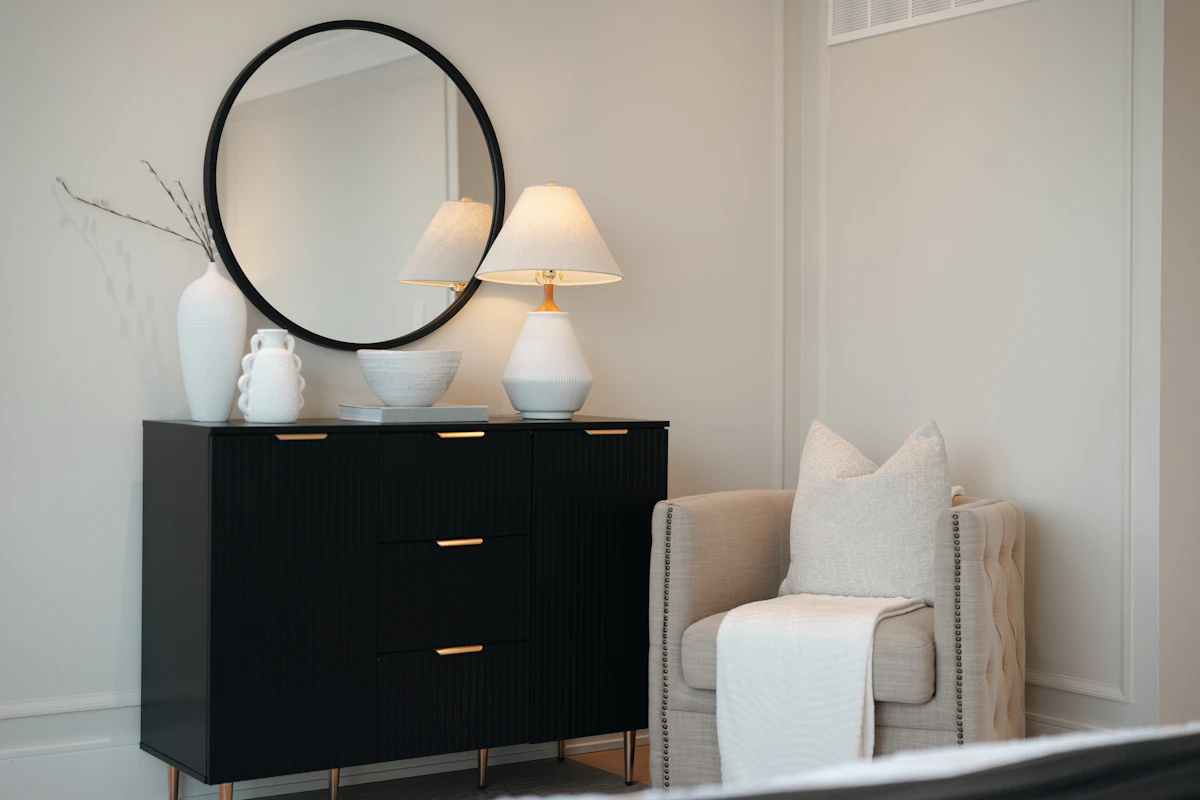
If the dresser itself is tall, skip the mirror and use a smaller piece of art beside it instead. Also keep safety in mind with dressers, especially in homes with children. The U.S. Consumer Product Safety Commission’s Anchor It! guidance recommends securing top-heavy furniture such as dressers to the wall.
How to Decorate an Empty Bedroom Wall
Not every empty wall needs another framed picture. First ask what the room is missing. If you need function, the answer might be a mirror, peg rail, wall-mounted light or slim shelf. If you need softness, it might be a textile. If you need personality, it might be art or photographs. If the room already feels visually complete, the answer may be nothing.
On a long wall opposite the bed, one medium-to-large piece often works better than several small objects. On a narrow wall beside a closet or door, use a vertical artwork, narrow mirror or a short stack of two frames. Match the orientation of the decor to the available wall shape instead of trying to force a wide arrangement into a thin space.
If the empty wall is actually revealing a layout problem, fix that first. A narrow vanity, compact desk or storage piece may solve the space more effectively than decor alone. Our small bedroom vanity ideas show how a wall can become useful without feeling crowded.
Use Shelves Only When You Can Keep Them Visually Quiet
Picture ledges and shallow shelves work well for renters or people who like to rotate art, but they can become clutter magnets. Keep the display shallow and edited: a few overlapping frames, one small object and perhaps a trailing plant are usually enough.
Avoid deep shelves directly above pillows unless they are securely installed and you are comfortable with the objects stored there. Above a dresser, desk or empty side wall is generally a more practical location for display shelving.
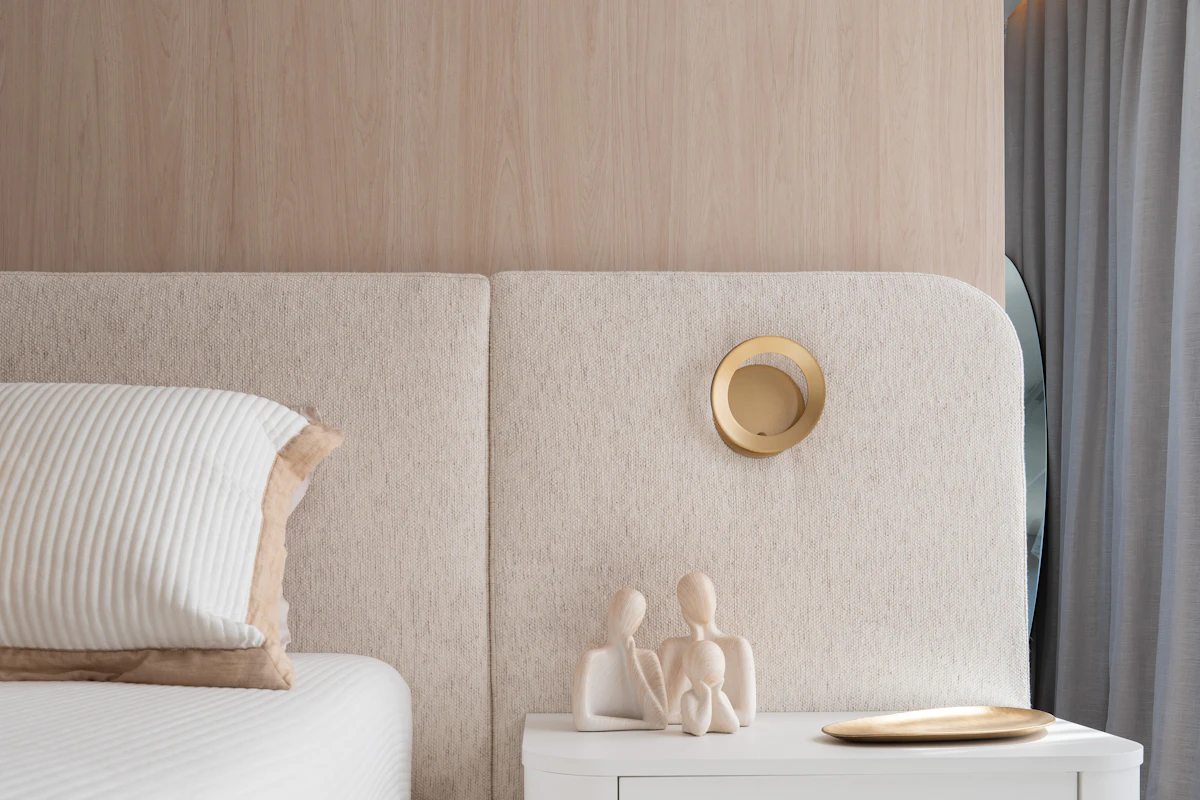
Add Wall Sconces When the Room Needs Function as Well as Decor
Wall sconces can frame a bed and free up nightstand space, especially in a compact bedroom. Plug-in or rechargeable sconces are useful when you do not want new wiring. Place them according to how you actually read in bed, not only where perfect symmetry looks good in a photo.
If the bed wall already has art, treat the sconces and artwork as one composition. Keep enough breathing room between them so the wall does not feel compressed. For renters, the no-rewiring approaches in our renter-friendly lighting guide can help.
Use Textiles for Softness and Better Acoustics
A woven wall hanging, quilt, fabric panel or lightweight tapestry can soften a bedroom that has hard flooring, minimal window treatments or many straight-edged furniture pieces. Textiles also add visual texture without introducing another reflective or glass surface.
Choose a piece that looks intentional rather than like temporary fabric pinned to the wall. A clean hanging rod, stitched sleeve or purpose-made textile hanger gives it the same finished status as framed art.
Do Not Decorate Every Wall
Negative space matters more in a bedroom than in many other rooms because the room should settle visually at the end of the day. If the bed wall is strong and the dresser wall has a mirror, the third major wall may not need anything beyond a lamp, curtain or plant.
Before buying another frame, remove everything from one wall for a week. If the room feels calmer rather than unfinished, keep the wall simple. If the blank area makes the room feel lopsided, add one purposeful piece instead of several small fillers. The broader scale rules in our wall decor guide can help you decide which surfaces deserve emphasis.
Common Bedroom Wall Decor Mistakes
Hanging everything too high. Art above furniture should relate to the furniture below it, not float halfway to the ceiling.
Choosing pieces that are too small. Tiny art over a wide queen or king bed can make the wall feel emptier instead of finished.
Using a heavy object above the bed without confident mounting. If secure installation is uncertain, choose lightweight decor or move the heavy piece to another wall.
Making every wall a focal point. A bedroom needs hierarchy. Let the bed wall lead and keep secondary walls quieter.
Ignoring the furniture below. A dresser, vanity or headboard should visually connect to the decor above it in width and spacing.
Buying before testing scale. Painter’s tape or paper templates can reveal an undersized or oversized arrangement before you spend money or make holes.
Using wall decor to solve a color problem. If the room still feels flat, the better fix may be an accent wall, richer bedding or better lighting rather than another collection of small frames.
Frequently Asked Questions
What should I put on the wall above my bed?
Good options include one large artwork, a pair of matching prints, a triptych, a lightweight textile or a tightly edited gallery wall. Choose the format that matches the visual weight of the headboard and the rest of the room.
How big should wall art be above a bed?
A useful starting point is for the artwork or grouped arrangement to span roughly two-thirds of the width of the headboard or furniture below it. Test the exact dimensions with painter’s tape or paper before hanging.
How high should art hang above a headboard?
Keep the art visually connected to the headboard rather than near the ceiling. A gap of several inches often works, but the right distance depends on headboard height, frame size and ceiling height.
Should I put a mirror above a dresser?
A mirror above a dresser is both functional and visually balanced. Keep it narrower than the dresser and hang it close enough to read as one composition with the furniture below.
What can I put on a narrow empty bedroom wall?
Try one vertical artwork, a narrow mirror, two stacked frames, a slim peg rail or a compact wall light. Match the orientation of the decor to the narrow shape of the wall.
Is it okay to leave a bedroom wall blank?
Yes. If the bed wall and dresser wall already provide enough visual interest, a blank wall can create useful negative space and make the bedroom feel calmer.
The Best Bedroom Walls Feel Edited, Not Filled
Good bedroom wall decor is less about filling blank space and more about deciding which walls deserve attention. Let the bed wall establish the focal point, use the dresser wall for a mirror or art that relates to the furniture below, and treat secondary walls according to what the room actually needs.
Test scale before hanging, keep groupings visually connected to the furniture beneath them, mount heavy pieces securely, and leave some negative space. A bedroom feels finished when every wall has a reason—not when every wall has an object.

Share Your Thoughts