
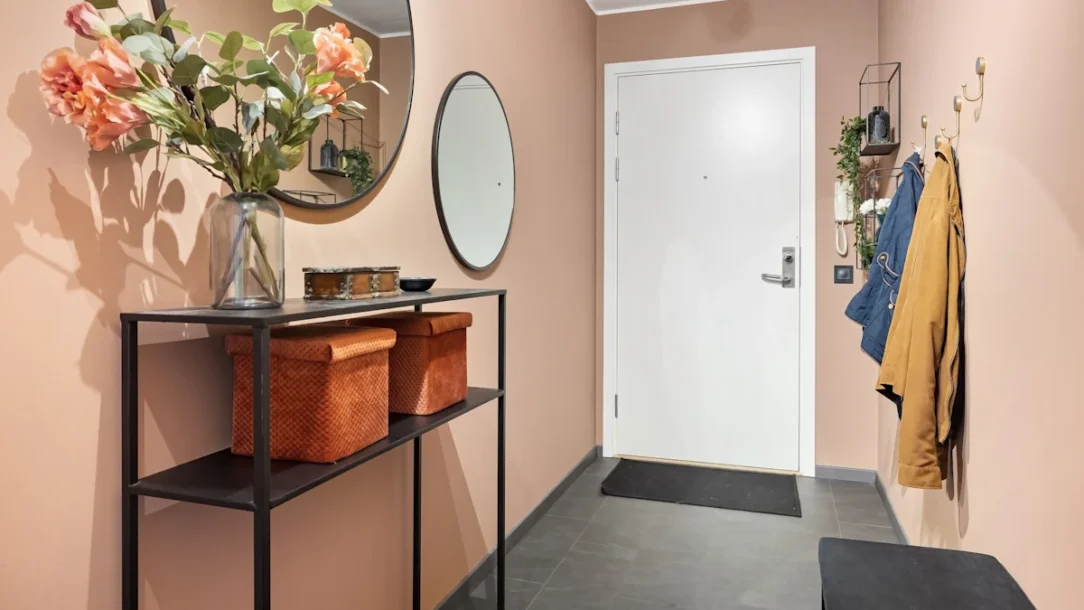
A tiny entryway has to work harder than almost any other few square feet in the home. It catches shoes, keys, bags, coats, mail, umbrellas, and the mess of coming and going—often while the front door is swinging through the same space. The best very small entryway ideas do not try to fit a full mudroom into a narrow hall. They decide what truly belongs by the door and give each item a compact, easy-to-use home.
Start with the traffic pattern, not the furniture. Open the front door fully, check nearby closet doors, and walk the route you actually use while carrying groceries or a bag. Then add storage in the leftover inches. A shallow shelf, a row of hooks, or a closed shoe cabinet can be more useful than a larger bench if it keeps the path comfortable and the door completely usable.
Table of Contents
Before These Very Small Entryway Ideas, Measure the Door Swing
The most important dimension is the space that remains after the door is open, not the empty floor you see when it is closed. Tape the door arc on the floor, then measure the narrowest part of the walking route. Also check a nearby closet door, radiator, electrical panel, return vent, and any switches you need to reach.
When space is genuinely tight, preserve movement first. A six- or eight-inch-deep landing shelf can be more useful than a twelve-inch console if the deeper piece makes people turn sideways. The same function-first logic appears in our guide to multifunctional furniture for small homes: the best piece is the one that improves daily routines without stealing more usable space than it returns.
1. Replace a Console With a Floating Landing Shelf
If a console table feels too deep, mount a shallow shelf near the door for the few things that need a landing place: keys, sunglasses, a small tray, and perhaps a compact lamp if there is an outlet nearby. A shelf around 6 to 10 inches deep can provide the function of a table while leaving the floor visually open.
Keep the surface intentionally small. A wide shelf becomes a mail pile; a narrow one forces the entry to stay edited. If drilling is not allowed, use a slim freestanding piece instead and borrow ideas from our renter-friendly wall decor guide for lightweight wall treatments that do not depend on permanent anchors.
2. Build a Vertical Hook Zone Instead of a Coat Pile
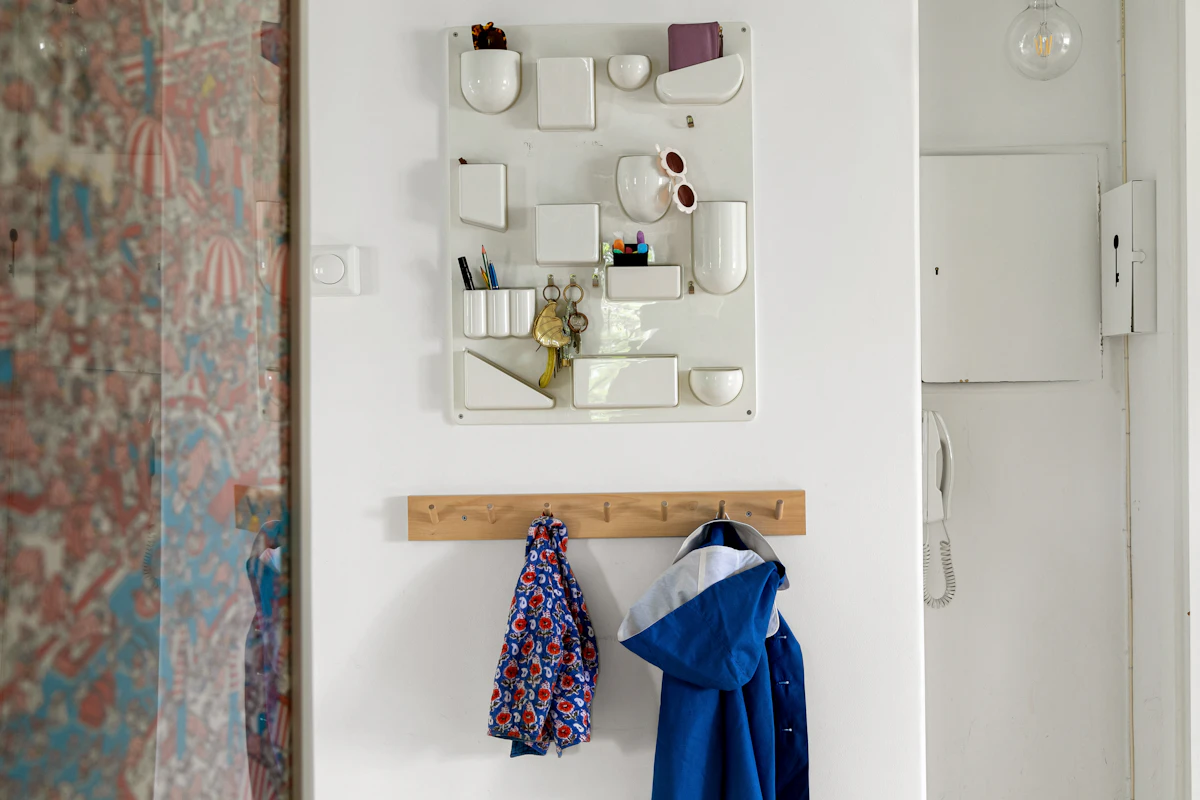
Hooks are especially effective when the entry has wall space but almost no floor depth. Use enough for the items that arrive every day, not every coat you own. One hook for a daily jacket, one for a bag, and a smaller spot for a leash or umbrella is usually more manageable than a crowded rail.
Spacing matters. Leave enough room for bulky coats so they do not hide every hook behind them. If children use the entry, add a lower row for backpacks and jackets rather than making one high rail do everything. The visual payoff is immediate: bags stop migrating to chairs and the floor stays easier to clean.
3. Choose a Tilt-Out Shoe Cabinet for a Narrow Hall
A shallow tilt-out cabinet can hide shoes in a depth that a traditional shoe rack cannot. This is useful when the hallway is narrow but you have a clean stretch of wall. Measure the cabinet both closed and open, because the front panel will project into the walking path while someone is using it.
Check your actual footwear before buying. Bulky sneakers, boots, and large sizes may fit differently than low-profile shoes shown in product photos. A cabinet that stores fewer pairs comfortably is better than one that technically holds more but requires forcing the door shut.
4. Use a Slim Bench Only If Sitting Down Solves a Real Problem
A bench earns its footprint when someone genuinely needs a place to sit while putting on shoes, or when the bench replaces separate shoe storage. In a hallway that is already tight, a decorative bench can become an obstacle. Test the depth with painter’s tape and sit on a chair placed at the same distance from the wall before buying.
For very small entries, a narrow perch, compact stool, or bench with open shoe space underneath often works better than a deep upholstered piece. If the entry is part of the living room, choose a finish that relates to the nearby furniture so the bench feels like part of the room rather than a utility station pushed against the door.
5. Let a Mirror Do More Than Decorate
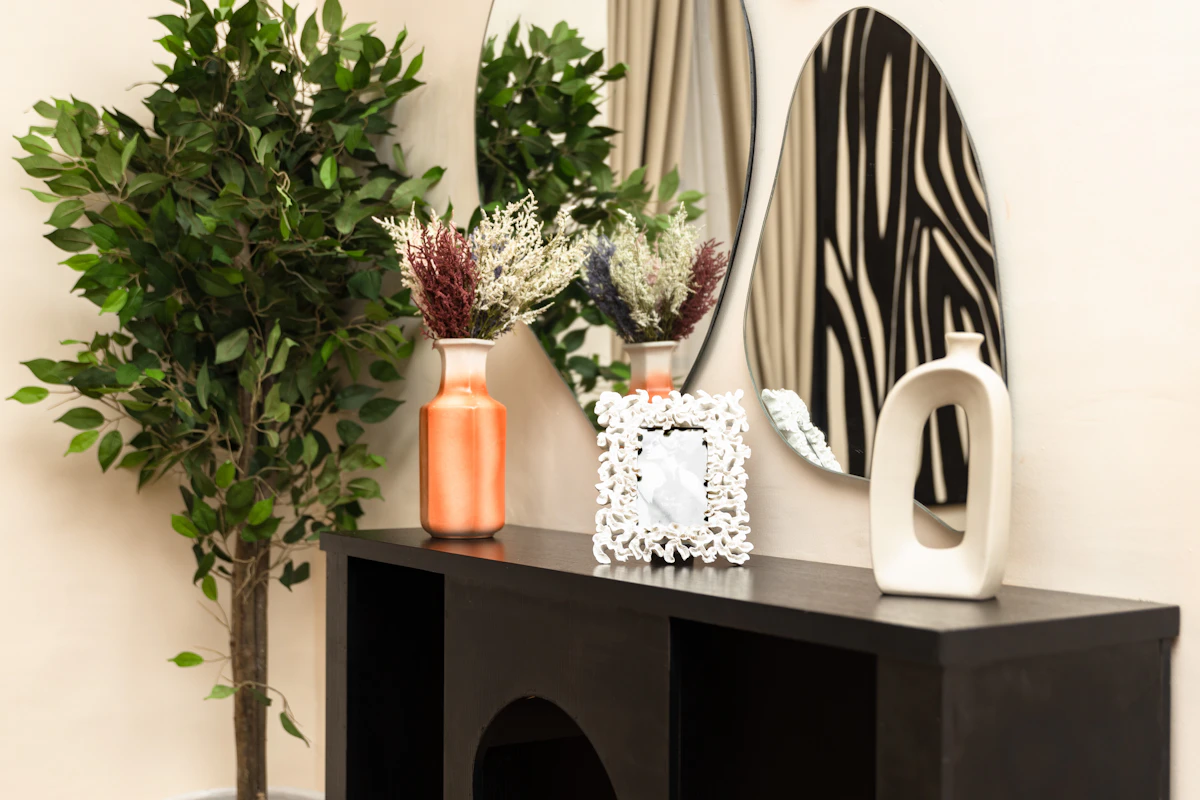
A mirror makes sense in a tiny entry because it provides a last look before leaving and can bounce light into a darker hall. Choose one that fits the wall rather than automatically going oversized. A tall narrow mirror can emphasize ceiling height, while a wider mirror above a slim shelf can make the entry feel more connected to the adjacent room.
Keep the frame simple if the entry already has several hooks, baskets, and doors. If the space is visually quiet, a warm wood or aged-brass frame can become the decorative focal point instead of adding separate wall art.
6. Borrow the Back of the Door
The back of the front door can hold lightweight items when wall space is scarce. A slim over-door organizer, removable hook, or narrow hanging pocket can corral scarves, hats, dog-walking supplies, or reusable shopping bags. The key is keeping the added depth low enough that the door still opens fully and does not hit nearby trim or furniture.
This idea is best for soft, light items. Heavy bags can pull on hardware, make the door noisy, or interfere with its operation. If the door has a closer, security hardware, glass panel, or unusual construction, avoid adding anything that affects how it closes and latches.
7. Create One Small Drop Zone for Keys and Mail
Keys and mail create clutter because they need a decision the moment you walk in. Give each a precise destination: a small tray for keys and earbuds, plus one upright slot or wall pocket for mail that still needs attention. Avoid a large bowl that becomes storage for batteries, receipts, coins, and everything else in the house.
Place the drop zone on the side you naturally reach after closing the door. Convenience matters more than symmetry. A beautifully styled tray on the wrong wall will be ignored, while a plain one beside the lock will actually keep the entry clear.
8. Use Closed Baskets for the Messiest Category
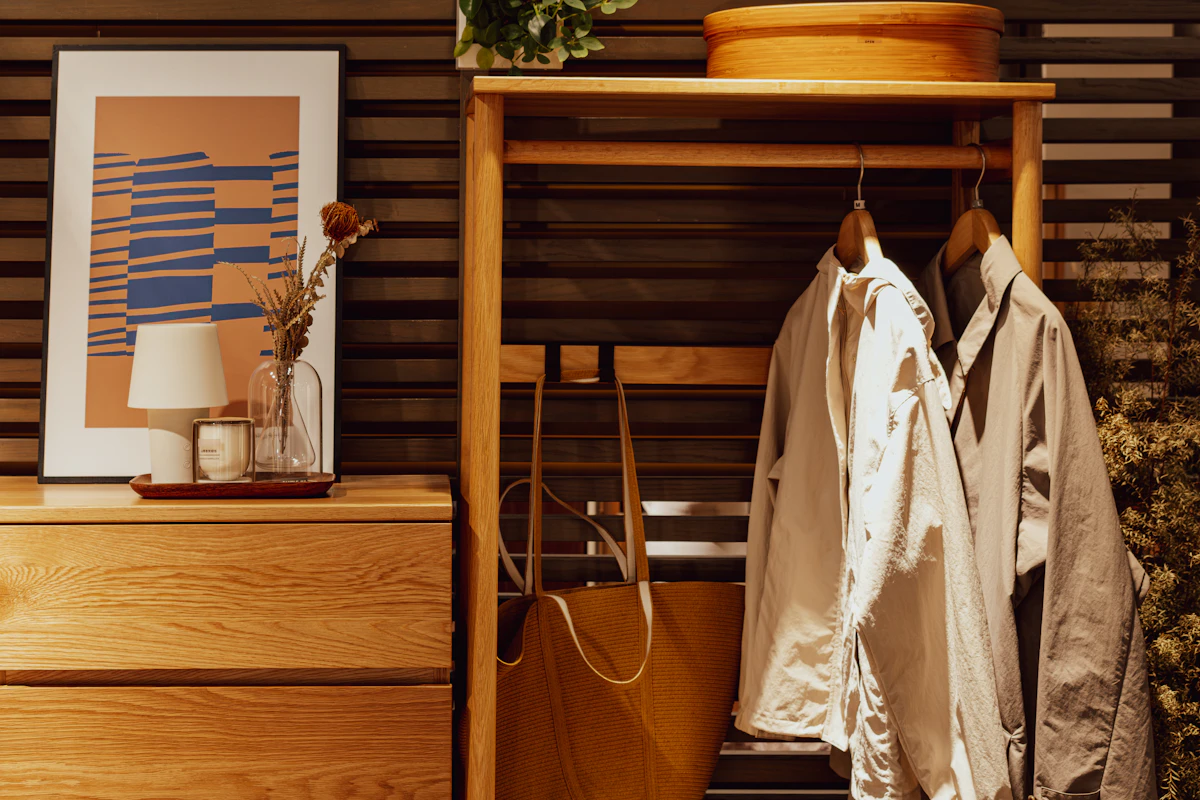
Not every entry item deserves to be displayed. A lidded basket or closed bin is useful for the category that always looks messy—winter accessories, pet gear, reusable bags, or children’s outdoor items. One contained basket can make the whole zone feel calmer because the visual clutter disappears at once.
Do not create a separate container for every tiny category. In a small entry, too many bins become clutter of their own. One basket for seasonal soft goods and one clearly defined shoe area are often enough.
9. Turn an Awkward Corner Into a Micro Entry Station
If the straight wall beside the door is unusable, look at the corner just beyond the swing. A small triangular shelf, narrow wall-mounted ledge, or compact corner stool can create a landing point without projecting far into the hall. A hook placed on the adjacent wall can finish the station.
This works best when the corner is outside the main route. Do not force storage into the inside corner of a tight turn where coats and bags will brush against people. The goal is to use dead space, not convert circulation space into storage.
10. Define an Entryway When the Door Opens Into the Living Room
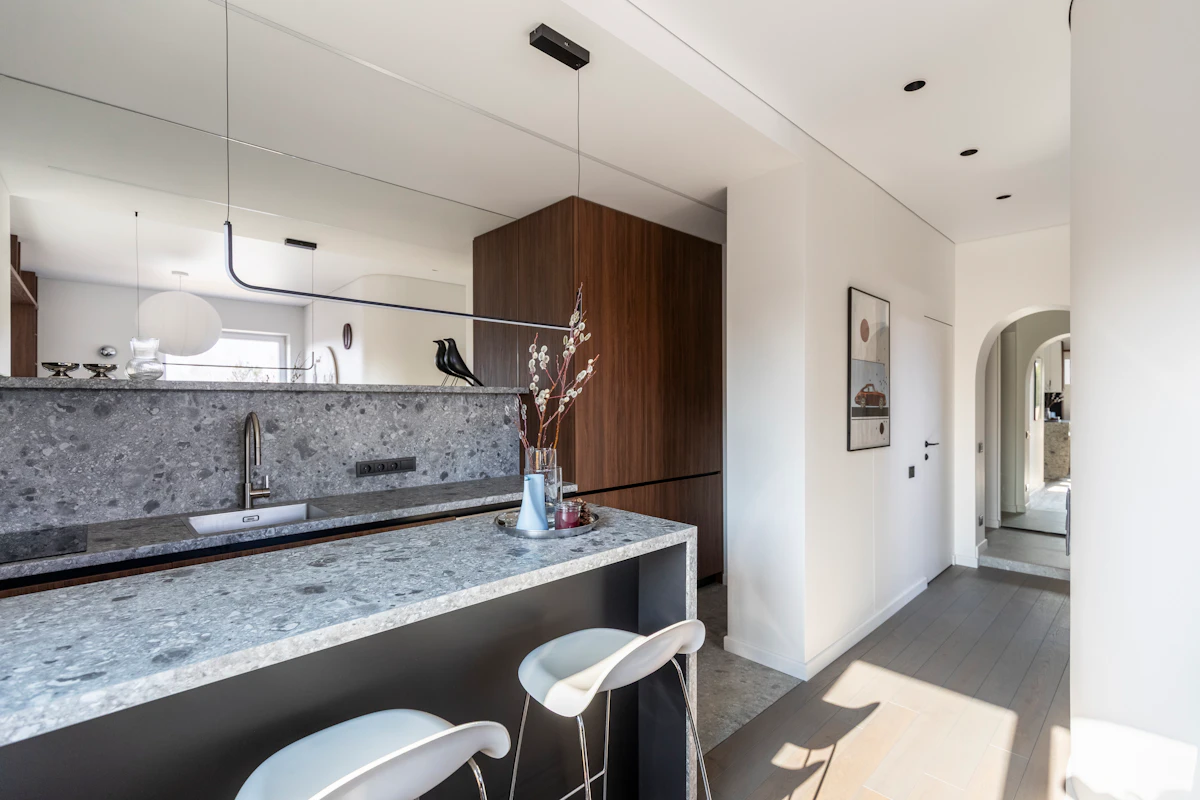
Some apartments have no foyer at all. The front door opens straight into the living room, so the entry needs to be created visually rather than built physically. A runner or durable mat, one mirror, and a compact hook-and-shelf zone can signal where the entrance begins and ends without adding a divider.
Repeat materials from the living room so the transition feels intentional. If the room already uses warm oak and cream, carry one of those finishes into the entry rather than introducing a completely different storage system. Our apartment living room ideas offer more ways to zone an open-plan space without making it feel chopped up.
11. Keep Only Current-Season Shoes by the Door
No organizer can make a very small entry feel spacious if every pair of shoes in the household lives there. Keep the pairs used most often near the door and move special-occasion, off-season, and rarely worn shoes to bedroom or closet storage. This simple rotation often creates more usable space than buying another rack.
Use a boot tray or washable mat for wet footwear, especially in rainy or snowy seasons. A defined wet zone protects the floor and keeps damp shoes from spreading into the walking path.
12. Use Color and Materials to Make Tiny Storage Feel Intentional
A tiny entry can handle personality, but too many small finishes make it feel busier. Choose two or three materials and repeat them: light oak with black hooks and cream baskets, walnut with aged brass and warm white walls, or painted cabinetry with a natural-fiber runner. A restrained palette helps practical storage read as part of the design.
Match the undertone of the entry to the room it connects to. If the adjacent space leans warm, a cold gray cabinet may look disconnected even if the size is perfect. The principles in our guide to warm and cool neutrals can help you coordinate wood, paint, baskets, and metal finishes in a small area where every choice is visible.
Keep the Entryway Safe and Easy to Exit
An entryway is first a route in and out of the home. The U.S. Fire Administration advises keeping doors and windows clear as part of home fire escape planning, so avoid storage that blocks the front door, narrows access to another exit, or creates a pile that can be tripped over in low light. See the USFA home fire escape guidance.
Tall, narrow cabinets also need stability. The U.S. Consumer Product Safety Commission recommends securing top-heavy furniture according to the manufacturer’s instructions, especially in homes where children live or visit. Its Anchor It! guidance covers furniture tip-over prevention. In a rental, confirm what anchoring methods your lease allows before buying a tall unit that depends on wall attachment.
Frequently Asked Questions
What should I put in a very small entryway?
Start with the items you use every day: a place for keys, a few current shoes, one or two coats or bags, and a mirror if useful. Anything that is not part of the daily arrival or departure routine can usually live elsewhere.
How do I make an entryway when the front door opens into the living room?
Define a small zone rather than building a wall. A durable mat or runner, a mirror, a shallow shelf, and a compact row of hooks can create a visual entry while keeping the living room open.
What is the best shoe storage for a narrow entryway?
A shallow tilt-out cabinet works well when wall width is available but floor depth is limited. In extremely tight entries, a boot tray or a strict rotation of only the most-worn pairs may work better than any cabinet.
Should a tiny entryway have a bench?
Only if sitting down is genuinely useful and the bench does not constrict the main path. A narrow stool, small perch, or bench with shoe storage underneath can be a better fit than a deep upholstered bench.
How can renters add entryway storage without drilling?
Use freestanding shallow furniture, over-door organizers, removable hooks rated for the surface and load, baskets, a floor mirror, and a defined shoe tray. Always follow the product instructions and lease rules.
How do I stop a tiny entryway from looking cluttered?
Limit what lives by the door, choose one closed-storage category, repeat a small material palette, and leave some wall and floor area visible. In a very small space, editing usually has more impact than adding another organizer.
A Tiny Entryway Needs Fewer, Better Decisions
The strongest very small entryway ideas protect the door swing, keep the floor easy to move through, and make daily items simple to put away. Start with the category creating the most friction—shoes, coats, keys, or bags—and solve that one first. Then stop before the entry becomes another storage wall.
A shallow shelf, a few well-placed hooks, edited shoe storage, and one clear visual focal point can be enough. When the entry feels connected to the rest of the home rather than packed with organizers, even a tiny threshold can look calm, deliberate, and ready for real life.

Share Your Thoughts