
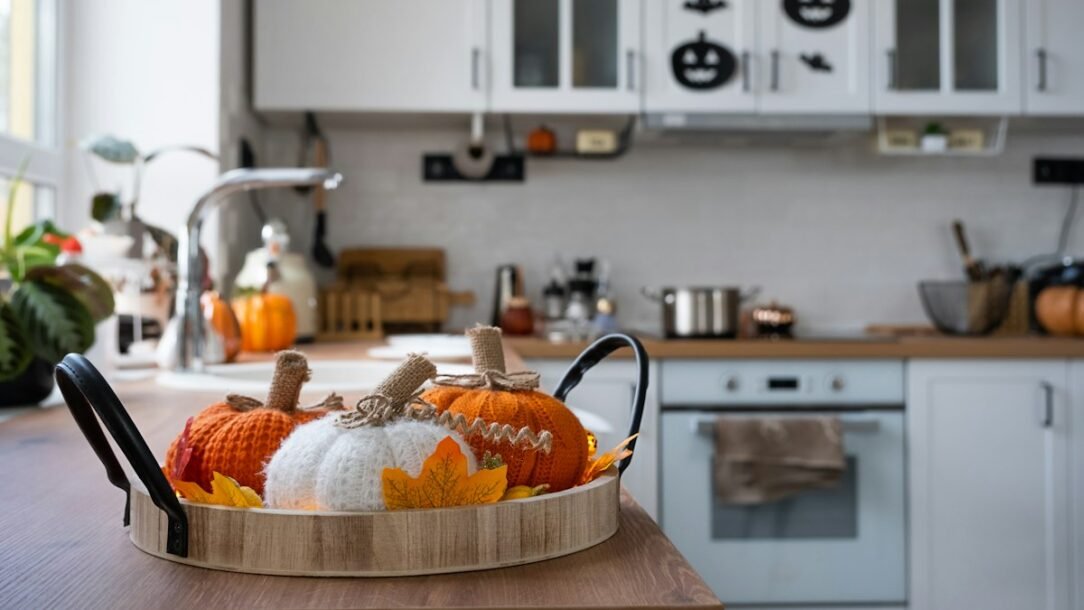
Halloween party home decor works best when the room feels festive without becoming visually chaotic. You do not need to cover every surface with plastic spiders or fill the house with bright orange accessories. A few well-planned focal points, layered lighting, and a controlled color palette can make an ordinary living room, dining room, or entryway feel ready for a party while still looking polished.
The five ideas below are designed for real homes, including small spaces and rooms you still need to use during the party. Each one focuses on a different zone so you can decorate the whole house or choose only the areas guests will actually see. If you already enjoy seasonal styling, the same approach used in a whole-home color palette works here too: repeat a few colors and materials from room to room instead of introducing a new theme in every space.
Table of Contents
Choose a Halloween Color Story First
Before buying decorations, choose three main colors and one supporting material. Classic black and orange can feel sophisticated when you soften them with cream, warm wood, aged brass, or natural greenery. For a moodier look, try black, deep burgundy, and antique gold. For a lighter family-friendly party, use white pumpkins, muted orange, soft beige, and a small amount of black for contrast.
Keeping the palette tight makes inexpensive decor look more intentional. It also helps existing furniture stay part of the room instead of fighting with the Halloween theme. If your home already leans warm and earthy, the same undertone principles explained in our guide to warm and cool neutrals can help you choose pumpkins, textiles, and metallic accents that work with the room rather than against it.
1. Create a Pumpkin-Lit Welcome Zone
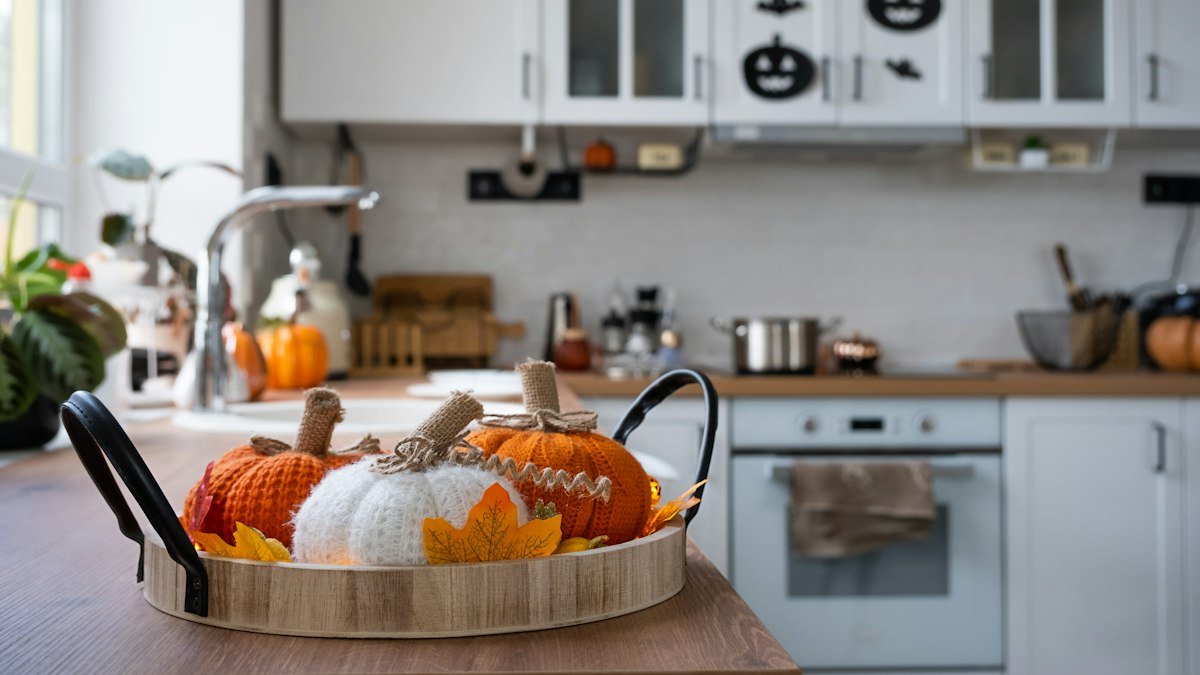
The first area guests see sets the mood for the entire party, so give the entryway, front hall, or first visible corner a clear Halloween moment. Cluster pumpkins in different sizes rather than lining them up evenly. Mixing real pumpkins with a few reusable faux versions adds variation while keeping the setup affordable year after year.
Add a small lamp, battery-operated lanterns, or flameless candles to create a glow at eye level and near the floor. A black ribbon on a mirror, a branch arrangement in a tall vase, or a simple paper-bat composition on one wall can add height without taking up walking space. In a small home, this single zone can carry most of the theme and save you from overdecorating the rest of the room.
2. Turn the Fireplace or Console Into a Moody Focal Point
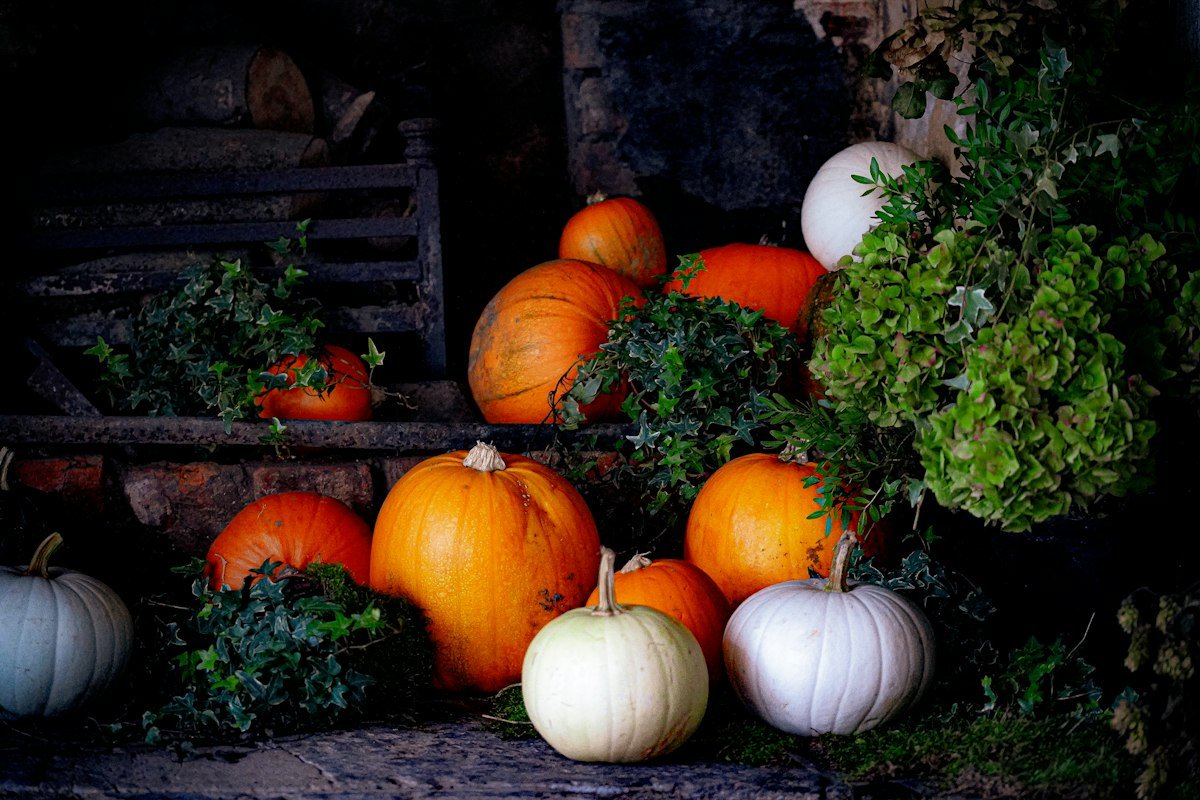
A fireplace mantel is an obvious party focal point, but the same styling formula works on a console table, sideboard, media cabinet, or wide shelf. Start with one larger anchor such as a framed vintage-style print, an oversized mirror, a dark wreath, or a group of tall branches. Then build asymmetrically around it with pumpkins, candleholders, books, and one or two playful Halloween objects.
The easiest way to keep this area sophisticated is to use different heights and leave visible gaps between objects. A mantel packed edge to edge reads as storage; a mantel with negative space reads as styling. Black taper holders, aged brass, dark wood, amber glass, and textured ceramics all bring a Halloween mood without relying on novelty decor.
If the room feels crowded once the focal point is finished, remove decorations from nearby surfaces. This is especially useful in apartments, where visual breathing room matters. The same principle is helpful when arranging a compact living room; see our apartment living room ideas for ways to keep a small space cozy without filling every corner.
3. Style a Halloween Party Table That Still Feels Elegant
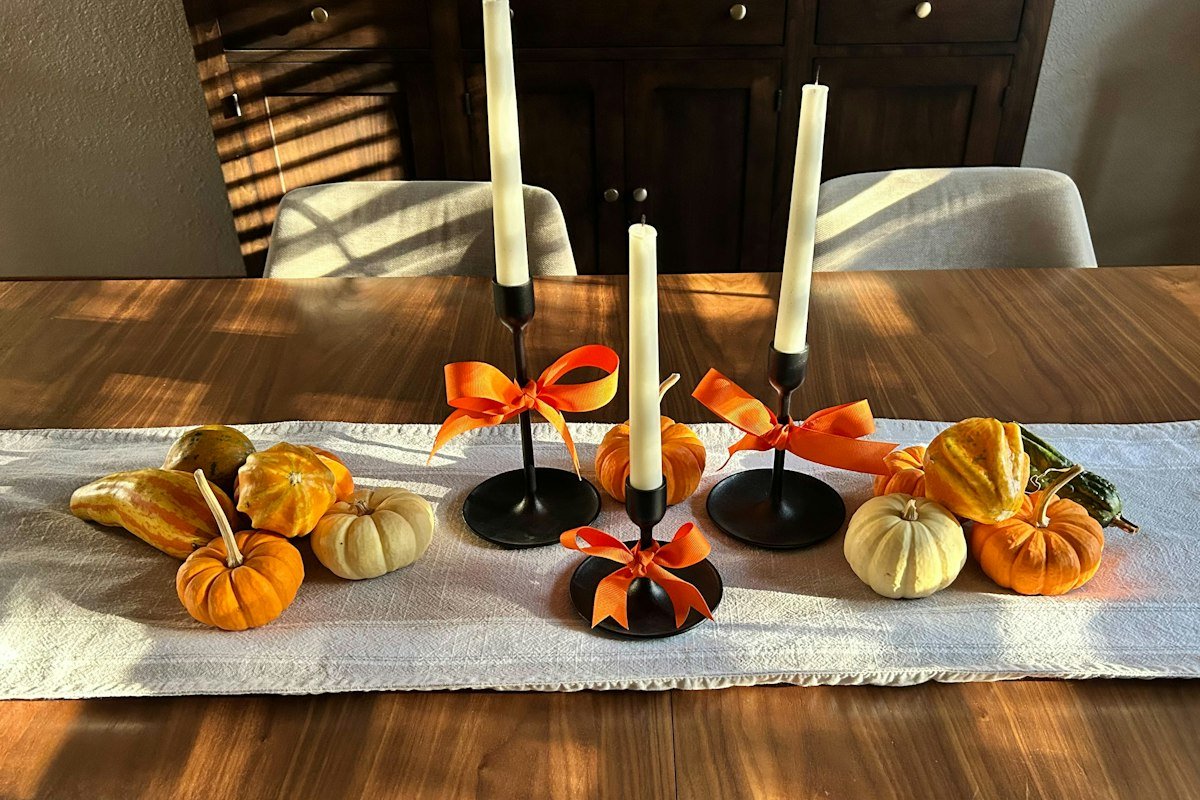
For a dinner party, buffet, or snack table, keep the centerpiece low enough that guests can see across it. Start with a runner in charcoal, deep brown, black, or muted rust. Add mini pumpkins, dark foliage, gourds, or dried branches down the center, then introduce candleholders in two or three heights.
You do not need themed plates to make the table feel like Halloween. Neutral dinnerware looks more polished and gives you more freedom with napkins, glassware, place cards, and centerpiece details. A black napkin with a small paper name tag, a cinnamon stick, or a tiny decorative pumpkin can feel seasonal without being disposable after one night.
If the table is mostly for snacks, treat food as part of the styling. Use cake stands, wood boards, bowls, and trays at different heights so the spread has shape. Leave enough empty surface for guests to set down a glass or plate; a beautiful buffet that cannot actually be used becomes frustrating once the party starts.
4. Use Lighting to Make the Whole Room Feel Spooky
Lighting has more impact on atmosphere than another bag of decorations. Turn off harsh overhead lights where practical and build the room from smaller sources: table lamps, floor lamps, string lights, lanterns, and battery-operated candles. Warm light makes orange pumpkins and wood tones glow, while small pockets of shadow give ordinary corners a more dramatic Halloween feel.
Place light behind or beside decor instead of pointing it straight at everything. A lamp behind a branch arrangement creates larger shadows on the wall, and a small uplight behind a pumpkin cluster can make it feel more theatrical. If you use colored bulbs, limit them to one or two areas so the room does not look like a nightclub. Amber, deep red, or a subtle purple accent is usually enough.
For homes with layered everyday lighting, this is simply a seasonal version of the same strategy: one ambient source, one task source near food or drinks, and one decorative glow near the party focal point. Guests should still be able to move safely, read labels, and see steps clearly.
5. Build One Photo-Ready Halloween Moment
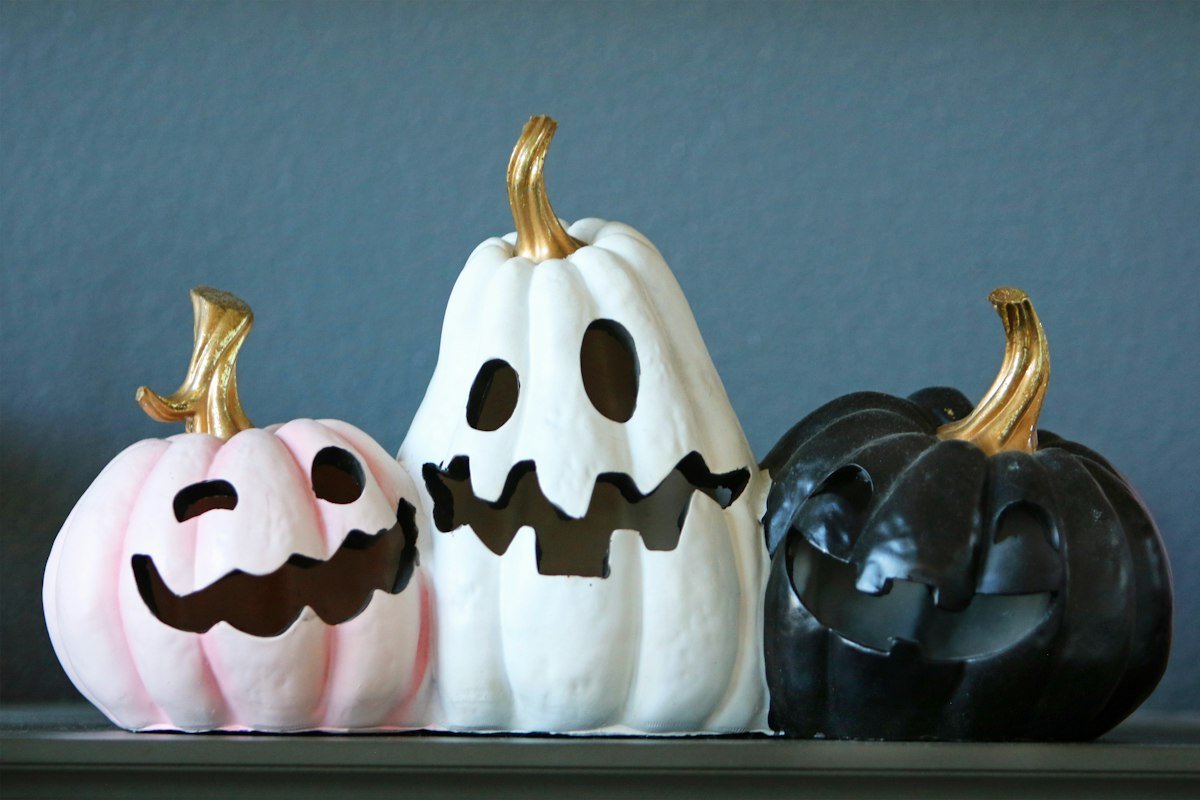
Instead of trying to make every wall Instagram-ready, build one deliberate photo spot. Choose a wall, doorway, staircase landing, empty corner, or area behind the sofa. Use one large element such as a fabric backdrop, oversized paper moon, branch installation, or grouped wall bats, then add a few dimensional objects at floor level.
Keep the center of the frame relatively open so people, costumes, and groups can fit without covering the entire setup. Side lighting is often more flattering than a bright ceiling fixture. If the backdrop includes text, keep it short and large enough to read in a phone photo from several feet away.
This is also where you can use the most playful part of your theme. Skeletons, oversized spiders, ghosts, or dramatic jack-o-lanterns feel intentional when they are concentrated in one scene instead of scattered randomly through the house.
How to Keep Halloween Decor From Looking Cluttered
A useful rule is to decorate in zones and leave the spaces between them calmer. For example, style the entry, the fireplace, and the dining table, but leave one side table and part of the kitchen counter almost bare. The eye needs quiet areas to appreciate the decorated ones.
Repeat materials instead of buying more themes. If you use black metal candleholders on the table, echo black metal in the entry. If you use white pumpkins near the fireplace, repeat two or three near the buffet. This repetition makes separate rooms feel connected and reduces the amount of decor you need.
Finally, edit after setup. Take one phone photo from the doorway. Photos make clutter easier to spot than standing in the room does. Remove anything that blocks a walkway, competes with the main focal point, hides useful surfaces, or introduces a color that appears nowhere else.
Halloween Decorating Safety
Party decor should never make the home harder to move through. Keep stairs, doorways, paths, and exits clear, especially when lighting is intentionally dim. Secure cords where guests will not catch a shoe or costume on them, and avoid hanging decorations at face level in narrow passages.
For pumpkins and lanterns, flameless battery-operated lights are the easiest option around children, pets, fabric, and crowded party areas. The U.S. Consumer Product Safety Commission recommends keeping burning candles and jack-o-lanterns away from curtains, decorations, and places where costumes could brush against them, and it advises checking decorative light strings for damaged sockets, frayed wires, or loose connections. See the CPSC Halloween safety guidance for additional details.
If you do use real candles, keep them on stable, heat-resistant surfaces and never leave them unattended. Keep lightweight paper bats, faux cobwebs, dried foliage, and fabric well away from flames and hot bulbs.
Frequently Asked Questions
What colors work best for a Halloween party at home?
Black and orange are classic, but they look more polished when balanced with cream, wood, brass, brown, or greenery. Moody combinations such as black, burgundy, and antique gold also work well for adult gatherings, while white pumpkins and muted orange create a softer family-friendly look.
How can I decorate for Halloween without making the house look cheap?
Use fewer pieces at a larger scale, repeat a limited palette, mix seasonal items with your existing lamps and furniture, and leave negative space around focal points. Natural materials such as pumpkins, branches, wood, linen, and dried foliage can make inexpensive Halloween accents feel more grounded.
What is the easiest room to decorate for a Halloween party?
The living or dining room is usually easiest because guests naturally gather there and the space often has an obvious focal point such as a fireplace, dining table, media console, or large wall. Decorating one main gathering room well is more effective than spreading a small amount of decor through every room.
Can Halloween decor work in a small apartment?
Yes. Focus on vertical surfaces, lighting, the entry area, and one tabletop rather than adding floor decor that steals walking space. Paper wall decorations, a styled shelf, a compact pumpkin cluster, and a single photo backdrop can create a strong party atmosphere with a small footprint.
How early should I decorate for a Halloween party?
Reusable decor can go up one to three weeks before the party if you enjoy having it around. Save carved pumpkins, fresh greenery, food styling, and other short-lived elements for the final day or two so they still look fresh when guests arrive.
Start With One Strong Halloween Focal Point
If balloons are part of the plan, our ceiling balloon decoration guide explains installation choices, clearances, and cleanup; adapt its birthday palettes to your Halloween scheme. The easiest way to decorate for a Halloween party is to start with the area guests will notice first, finish it completely, and then decide whether the room actually needs more. A pumpkin-lit entry, dramatic fireplace, layered party table, moody lighting plan, or photo-ready wall can each carry the theme on its own. When the colors repeat and the practical surfaces stay usable, the home feels festive, comfortable, and intentionally styled instead of simply filled with decorations.

Share Your Thoughts