
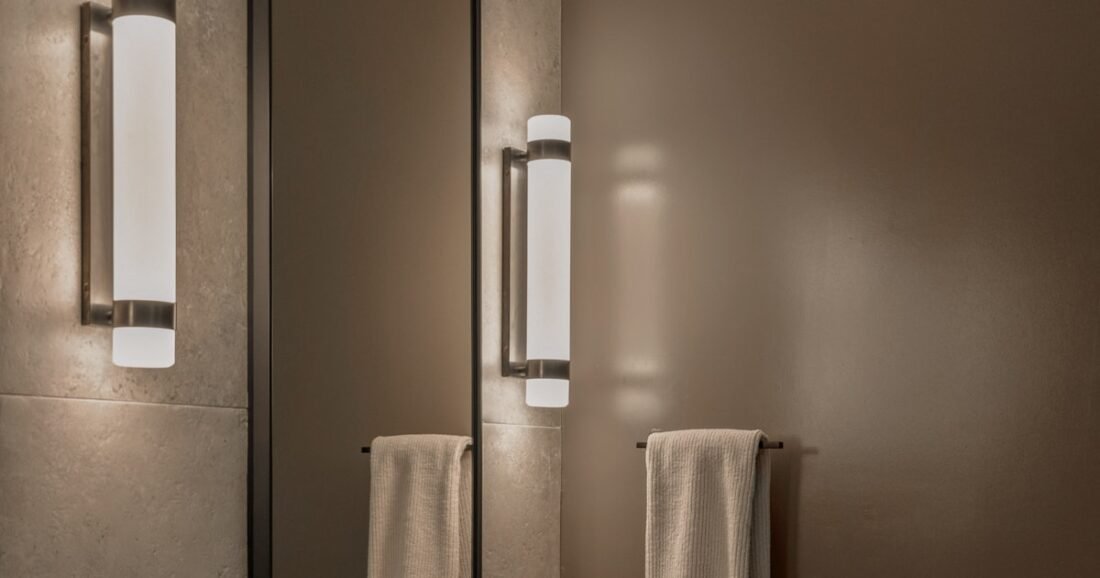
A bathroom with no windows does not need to feel dim, flat, or clinical. The room simply depends more heavily on mechanical ventilation, artificial lighting, reflective surfaces, and a controlled color palette because it cannot borrow daylight or natural airflow from a window.
Start with the practical issues before decorating. Make sure moisture is being removed effectively, improve the light around the vanity and shower, then choose colors and finishes under the bulbs you actually use. Once those basics are right, mirrors, storage, textiles, and a few warm materials can make a windowless bathroom feel much more comfortable.
Table of Contents
Fix Ventilation Before Decorating
A windowless bathroom has no natural opening for steam to escape, so the exhaust system matters more than the paint color. The U.S. Environmental Protection Agency recommends effective bathroom exhaust ventilation and notes that bathroom air should be exhausted directly outdoors rather than into an attic or another enclosed area. Its bathroom ventilation guidance also emphasizes fixing leaks and moisture problems instead of covering them with new finishes.
If the fan runs but the room stays damp for a long time after showers, the system may need cleaning, repair, or professional evaluation. Do not assume noise means the fan is moving enough air. In a rental, report inadequate ventilation to the property owner rather than altering the exhaust system yourself.
- Run the bathroom exhaust fan during showers and afterward as appropriate for the system.
- Dry standing water instead of leaving wet surfaces to air-dry slowly.
- Keep fan grilles free of heavy dust buildup.
- Repair or report leaks promptly.
- Do not hide mold or water damage behind peel-and-stick products, artwork, or new paint.
Layer the Lighting Instead of Using One Ceiling Fixture
One bright ceiling fixture can leave the bathroom technically illuminated while still creating shadows around the face, shower, and corners. A better plan combines general light with more focused vanity light.
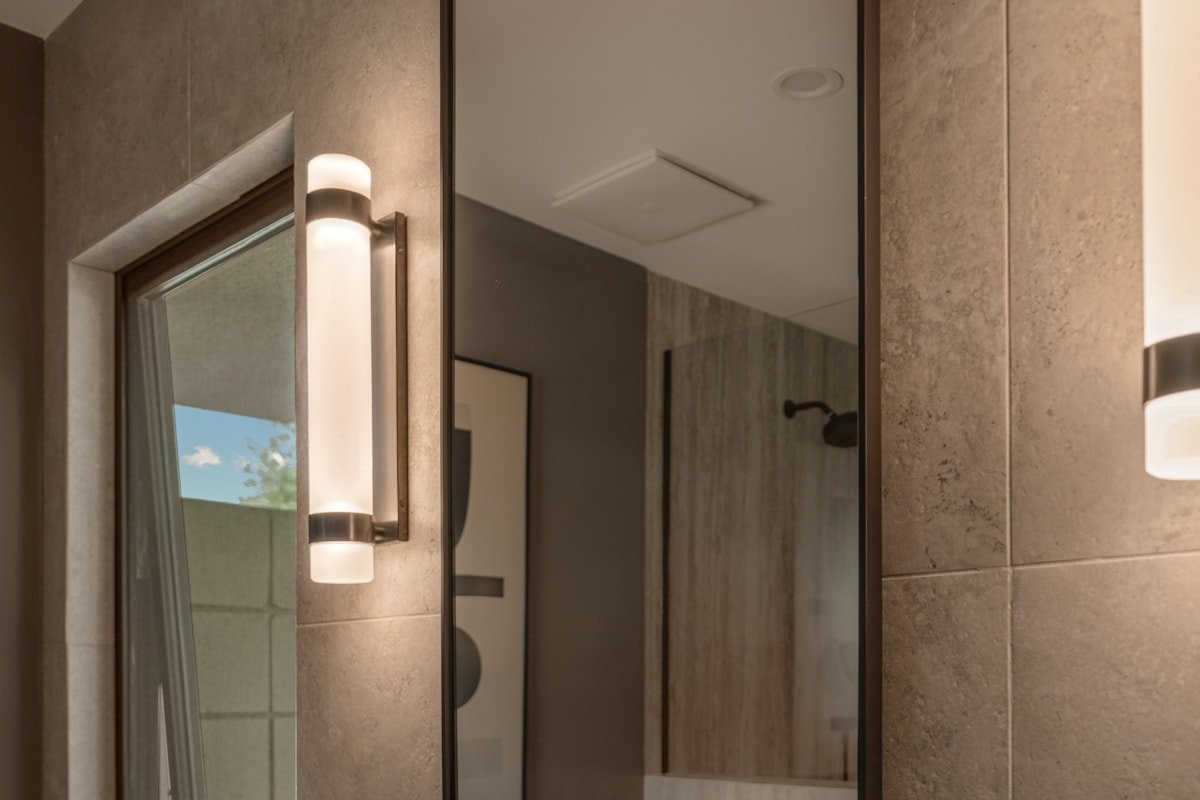
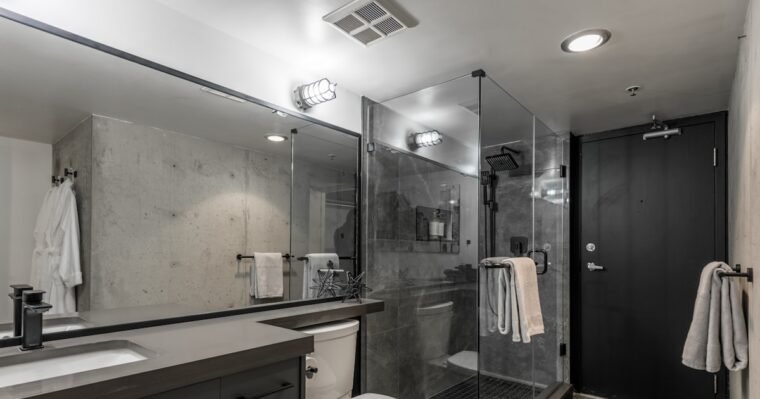
At the mirror, lighting from the sides or an evenly illuminated mirror can reduce the deep shadows created by a single light directly overhead. In a larger bathroom, a second ceiling or shower-area fixture may make the room feel more balanced. Any hardwired fixture must be appropriate for the bathroom location and installed according to electrical requirements.
If you rent, start with the bulbs already permitted by the fixtures. A simple bulb change can improve color and comfort without rewiring. For more reversible ideas, see our renter-friendly bathroom upgrades.
Choose the Right Light Color
Light color influences how tile, paint, skin tones, wood, and metals appear. The U.S. Department of Energy describes 2700K as warm and 3000K as a warm, pleasing light, while higher Kelvin values appear progressively cooler. Its lighting guidance explains correlated color temperature in more detail.
For many home bathrooms, a consistent 2700K–3000K appearance feels comfortable while still providing useful light, but personal preference and the finishes matter. A crisp modern bathroom may tolerate slightly cooler light; a beige-and-wood bathroom often looks better under a warmer source.
Avoid mixing noticeably different bulb colors within the same small room. One blue-white ceiling lamp and one yellow vanity lamp can make paint and tile appear inconsistent.
Use a Large Mirror Strategically
Without a window, a mirror cannot reflect daylight, but it can still multiply the artificial light already in the room and reduce the visual weight of a solid wall. A mirror that spans most of the vanity often feels calmer and more useful than several small mirrors.
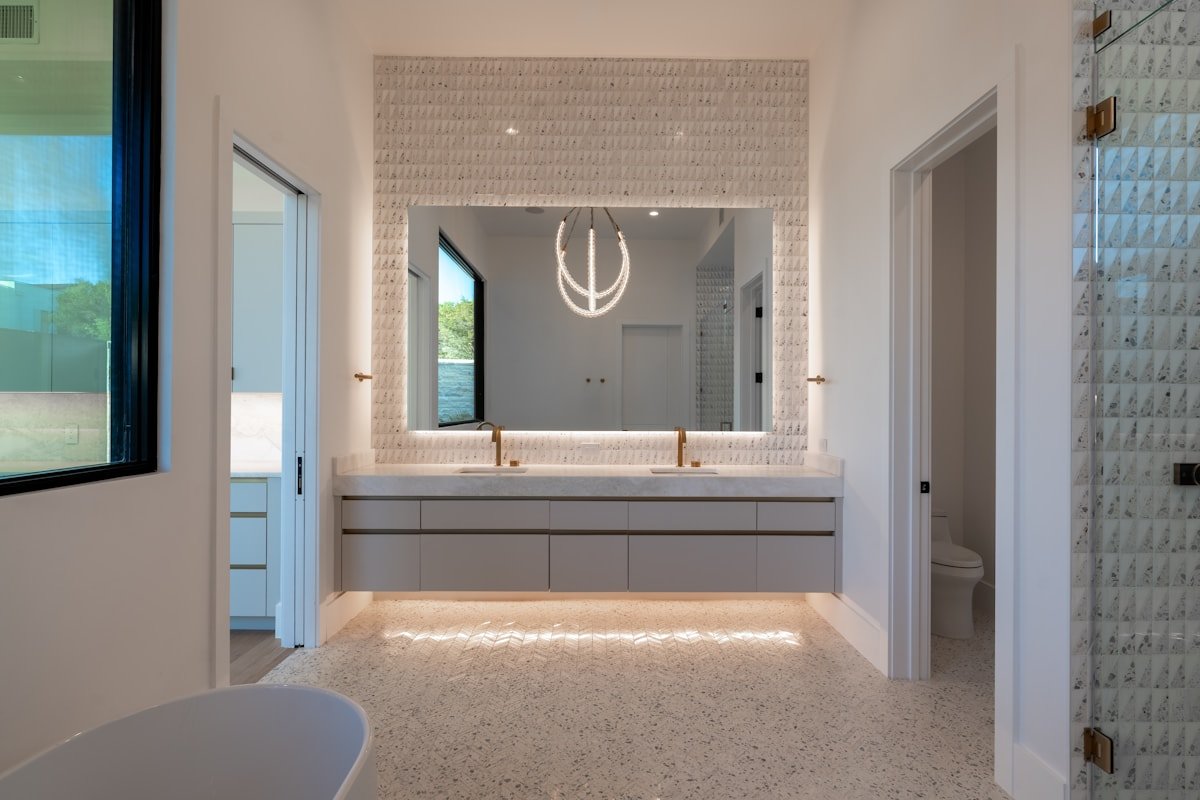
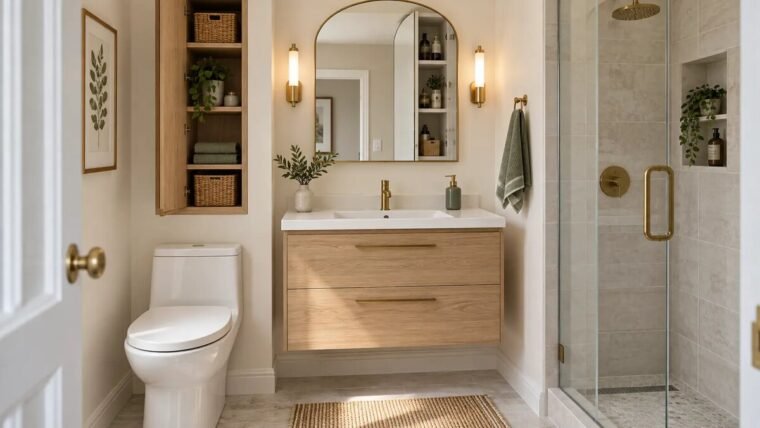
Choose the mirror in proportion to the vanity and lighting. An oversized mirror that collides with sconces, faucets, or cabinet doors is not an improvement. A slim frame can feel visually light, while an arched or rounded mirror can soften a room filled with rectangular tile and cabinetry.
Choose Color Under Artificial Light
In a windowless bathroom, the paint will be viewed almost entirely under artificial light. Test samples in the room rather than carrying a store swatch from one lighting environment to another.
Warm white, soft cream, pale greige, mushroom, muted sage, dusty blue, and other low-contrast colors can all work. Pure white is not mandatory. In fact, a very cool white under cold lighting can make a small bathroom feel harsher.
Check the undertones beside the existing tile, floor, counter, and vanity. If you are unsure why one neutral looks pink, yellow, blue, or green beside another, our guide to warm and cool neutral undertones can help.
Balance Reflective and Matte Surfaces
Glass, polished metal, a mirror, and a glossy backsplash can bounce light around the room, but using high shine everywhere can produce glare and make the bathroom feel commercial. Mix reflective materials with quieter surfaces.
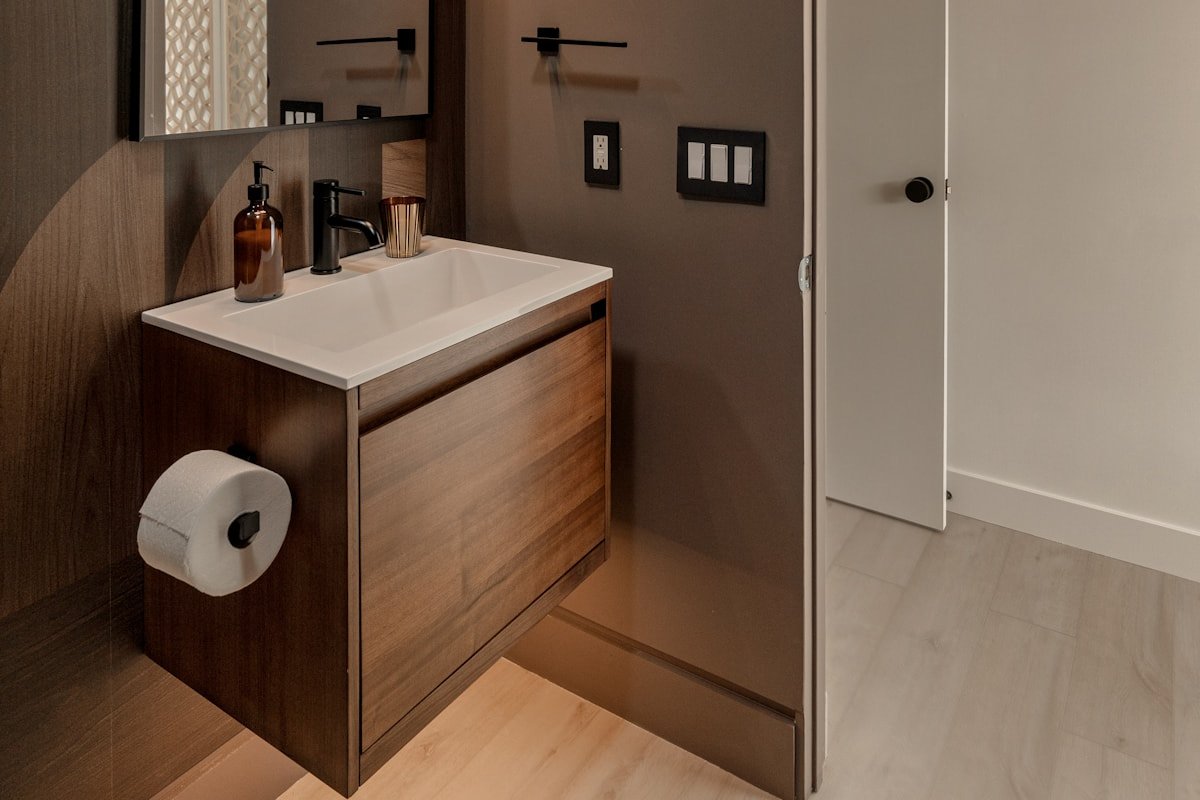
- Pair a glossy tile backsplash with a lower-sheen wall.
- Combine a polished faucet with a wood-tone or painted vanity.
- Use clear glass at the shower where privacy and layout allow.
- Let one large mirror provide most of the reflectivity instead of adding many mirrored accessories.
- Use textured towels and a bath mat to soften hard surfaces.
Keep the Room Visually Open and Uncluttered
Clutter becomes more noticeable in a small enclosed bathroom because there is little visual distance between you and the surfaces. Keep daily essentials accessible but give backups, hair tools, cleaning products, and miscellaneous bottles closed storage.
Use a tray only for the few items that truly need to remain on the counter. For a deeper plan, our small bathroom storage guide covers vanity drawers, vertical storage, shower niches, and ways to keep counters clear.
At the shower, a clear glass panel or a curtain that can be pulled completely aside may keep sightlines more open. Do not sacrifice water control, privacy, or safe installation for the sake of appearance.
Add Warmth With Texture
A windowless bathroom can feel clinical when every surface is pale and smooth. Add warmth through texture rather than filling the room with objects. A woven-look bath mat, substantial towels, a wood-tone vanity, ceramic accessories, or one piece of moisture-appropriate artwork can make the room feel more residential.
Be realistic about plants. “Low light” does not mean no light. Most real plants still need usable light, so an artificial plant is often the more honest decorative choice in a bathroom with no natural light unless you provide appropriate plant lighting.
Common Windowless Bathroom Mistakes
| Mistake | Better approach |
|---|---|
| Ignoring ventilation | Address moisture removal before decorative upgrades. |
| Using one harsh ceiling light | Add useful vanity lighting and consistent light color where possible. |
| Painting everything stark white automatically | Test several compatible neutrals under the actual bulbs. |
| Using glossy finishes everywhere | Balance reflection with matte and textured surfaces. |
| Choosing a tiny mirror | Use a mirror scaled appropriately to the vanity and wall. |
| Leaving toiletries across the counter | Prioritize closed storage and a small edited display. |
| Adding a real plant with no usable light | Use artificial greenery or appropriate plant lighting. |
Frequently Asked Questions
What color is best for a bathroom with no windows?
There is no single best color. Warm white, cream, greige, muted green, and soft blue can all work. Test the color under the bathroom’s actual lighting beside the existing tile, floor, and vanity.
How do I make a windowless bathroom feel brighter?
Improve the vanity and general lighting first, then use a larger mirror, a cohesive light-to-mid-tone palette, controlled reflective surfaces, and clear counters.
Should a windowless bathroom be painted white?
Not necessarily. White can work, but a warm off-white, soft greige, or muted color may feel more comfortable and coordinate better with existing finishes.
What light color works well in a bathroom with no windows?
Many homes find 2700K to 3000K comfortable, but the best choice depends on the finishes and your preference. Keep visible light sources reasonably consistent so colors do not shift from one area to another.
Can I keep real plants in a bathroom with no windows?
Most real plants still require usable light. If the bathroom has no natural light, use artificial greenery or provide suitable plant lighting for a species you know how to care for.
What is the most important improvement in a windowless bathroom?
Ventilation and lighting come first. Moisture control protects the room, while good lighting determines how functional and comfortable the space feels every day.
Solve Moisture and Light First
The most successful windowless bathrooms solve the invisible problems before the decorative ones. Make sure moisture can leave the room, create useful light around the mirror and shower, and test colors under the actual bulbs before investing in paint or accessories.
After that, a larger mirror, controlled reflectivity, clear storage, warm texture, and a limited palette can make the room feel intentional rather than compromised. A bathroom does not need a window to feel polished; it needs a lighting and moisture strategy designed for the room it actually is.

Share Your Thoughts