
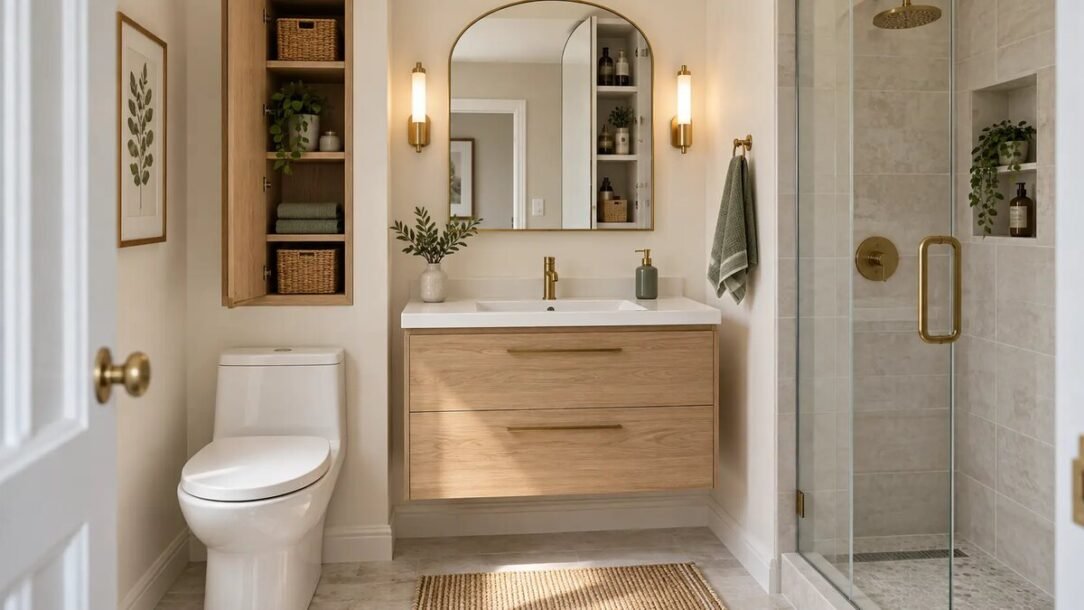
A small bathroom does not need dozens of organizers. It needs a clear plan for the few square feet that already exist. The most effective small bathroom storage ideas move everyday products off the counter, keep backups out of sight, and make the items you reach for each morning easy to return.
The goal is not to hide every object. It is to reduce visual noise and give each category a sensible home. When storage follows your routine, the bathroom stays orderly without a long reset at the end of the week.
Below, you will find practical options for homeowners and renters, including no-remodel upgrades, built-in solutions, moisture-conscious storage, and a simple budget plan. Choose the ideas that solve your actual clutter rather than trying to fit every possible organizer into the room.
Start With a 15-Minute Counter Reset
Before buying a shelf or basket, remove everything from the vanity top. Sort it into four groups: daily-use items, occasional products, backups, and things that belong elsewhere. Dispose of empty or expired products as appropriate, then wipe the counter and measure the usable storage you already have.
This first edit matters because storage cannot fix excess inventory. The same visual-breathing-room principle used when you decorate a small living room to be beautiful and functional works here too: protect open surfaces and use the room’s vertical space deliberately.
Table of Contents
- Build Storage Around Your Routine
- Use the Mirror Wall for Hidden Storage
- Make Vanity Drawers and the Sink Cabinet Work Harder
- Use Vertical Space Without Crowding the Room
- Control Shower-Bottle Clutter
- Try Renter-Friendly Storage
- Balance Open and Closed Storage
- Create a Clear-Counter Rule
- Choose Upgrades by Budget
- Keep Bathroom Storage Moisture-Safe
- Avoid Common Storage Mistakes
- Frequently Asked Questions
Build Small Bathroom Storage Around Your Routine
A useful bathroom is organized by point of use. Store toothbrushes and face products near the sink, shower products inside the wet zone, toilet paper within reach of the toilet, and cleaning supplies where they can be accessed without moving five other things.
Give the most convenient space to what you use every day. Occasional tools can live lower or higher, while bulk refills can move to a hall closet or laundry area. The National Kitchen & Bath Association’s bath planning guidance also emphasizes adequate, accessible storage at the point of use—an especially helpful principle in a compact room.
Create four simple zones
- Morning zone: toothbrushes, facial care, deodorant, and daily grooming tools.
- Bathing zone: shampoo, soap, razors, washcloths, and a squeegee.
- Paper and linen zone: toilet paper, hand towels, and one spare bath towel.
- Cleaning zone: a small caddy with only bathroom-specific supplies.
A small bathroom storage plan built on zones reduces searching and makes it obvious when something has been put in the wrong place. They also reveal whether a new wall cabinet will solve a real problem or simply create space for more products.
Use the Mirror Wall for Hidden Storage
For many homes, small bathroom storage begins on the mirror wall. If a flat mirror occupies the most useful wall in the room, replacing it with a mirrored cabinet can add storage without consuming floor space. A surface-mounted cabinet is the easier option for many homes and rentals with permission. A recessed cabinet sits partly inside the wall for a cleaner profile, but installation requires checking for studs, pipes, wiring, and vents.
Inside the cabinet, adjust shelves around the height of your products instead of accepting large empty gaps. Use shallow cups for small grooming tools and a low tray for items that may drip. Keep frequently used products near eye level; reserve the top shelf for occasional items.
A recessed model is not a casual cut-and-fit project. The wall cavity must be inspected before cutting, and the cabinet needs secure framing. This medicine cabinet installation overview from This Old House shows why wires, plumbing, wall depth, and framing must be considered before work begins.
Important: the familiar name “medicine cabinet” does not mean every medicine belongs in a humid bathroom. MedlinePlus advises that heat, air, light, and moisture can damage medicines and recommends a cool, dry storage location unless the product label says otherwise. Follow the instructions for each medication and keep it safely away from children.
Make Vanity Drawers and the Sink Cabinet Work Harder
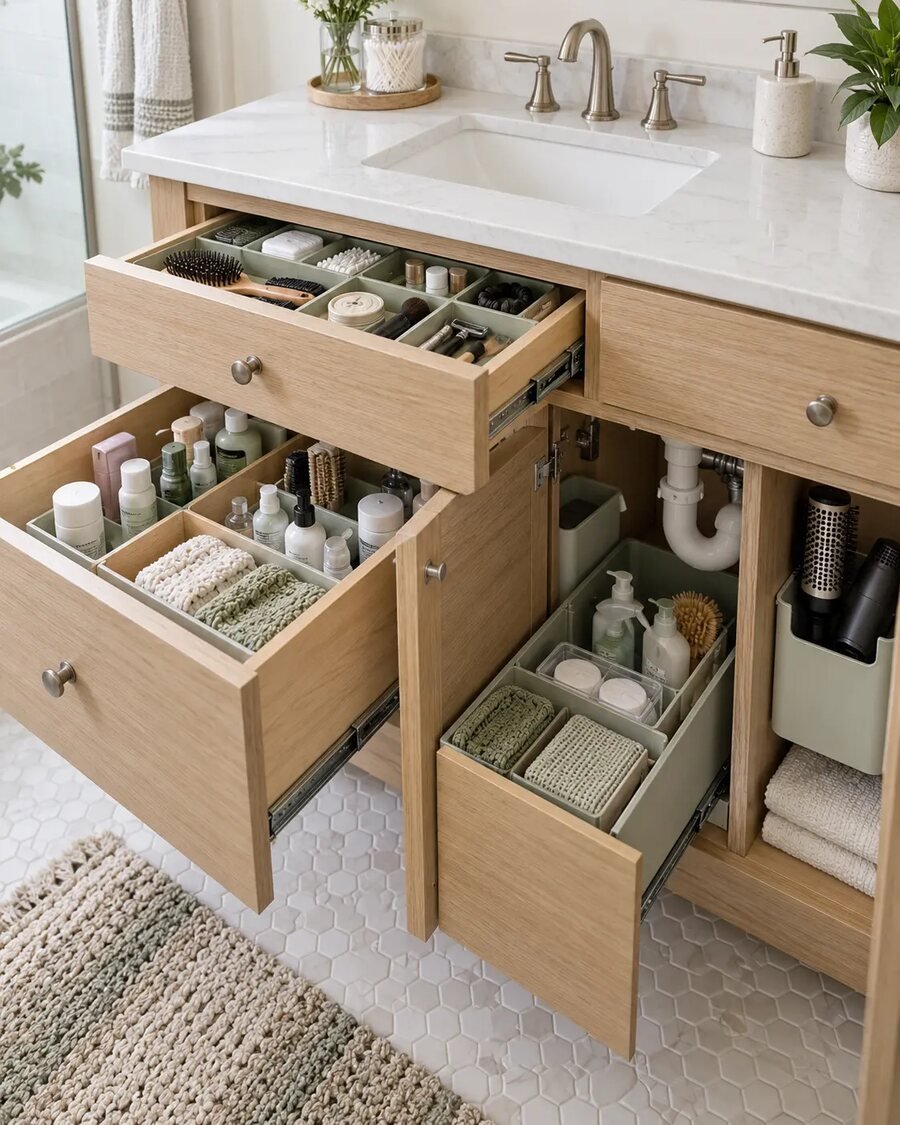
A practical small bathroom storage system depends on using the vanity well. Deep cabinets often look spacious but waste volume because the plumbing divides the interior. Instead of filling the base with loose bottles, work around the pipes with removable pull-out bins, narrow drawers, or two handled caddies. One caddy can hold cleaning supplies; the other can hold refills.
Choose drawers when possible
Drawers let you see products from above, so small items do not disappear behind tall bottles. Use shallow dividers for makeup, shaving items, hair accessories, and skincare. A deeper drawer can hold bottles upright. Measure the inside width, depth, and height before ordering inserts—cabinet face dimensions are not enough.
The same low-cost thinking used in these affordable kitchen cabinet styling ideas applies to a bathroom vanity: organizers, updated hardware, and a disciplined edit can make basic cabinetry feel intentional without replacing it.
Use the inside of doors carefully
Adhesive cups or slim racks can hold lightweight items on a cabinet door, but check that they clear shelves and plumbing when the door closes. Avoid overloading hinges. Store hot styling tools only after they are fully cool, or use a purpose-made heat-resistant holder installed according to its directions.
Use Vertical Space Without Crowding the Room
Vertical small bathroom storage works best on an underused wall above a toilet, beside a mirror, or behind a door. The key is choosing shallow storage that does not project into headroom or the walkway.
Add closed storage above the toilet
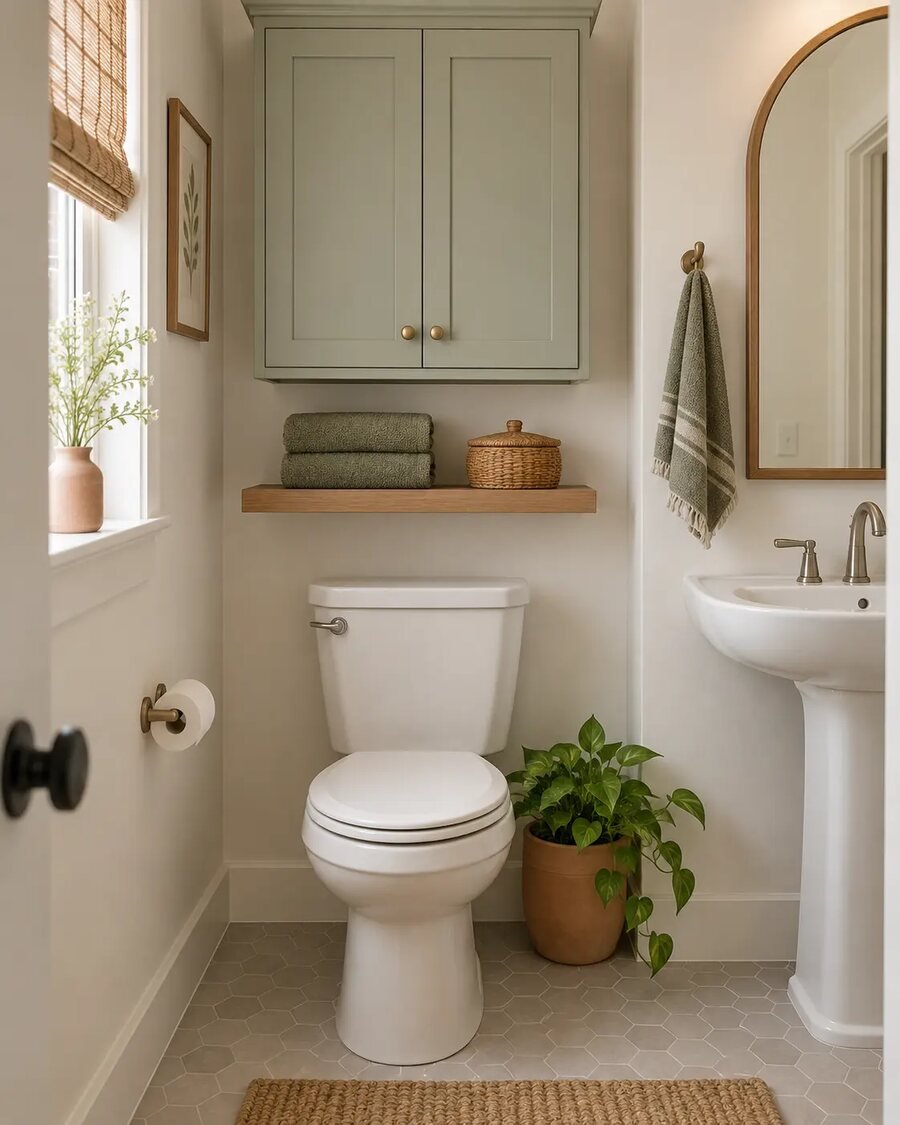
A wall-mounted cabinet conceals extra toilet paper, cleaning refills, and personal items. Install it high enough for comfortable use of the toilet and anchor it into appropriate wall structure. A narrow shelf below can hold a lidded basket or two folded towels, but leave some empty space so the wall does not feel top-heavy.
Fit a slim cabinet into a dead strip of wall
A shallow tower can work beside a vanity or just inside the doorway. Look for a depth that preserves the walking path and a door style that will not collide with the bathroom door. Wall-mounted designs keep more floor visible, which helps a small room feel less crowded.
Store towels on hooks, not bulky bars
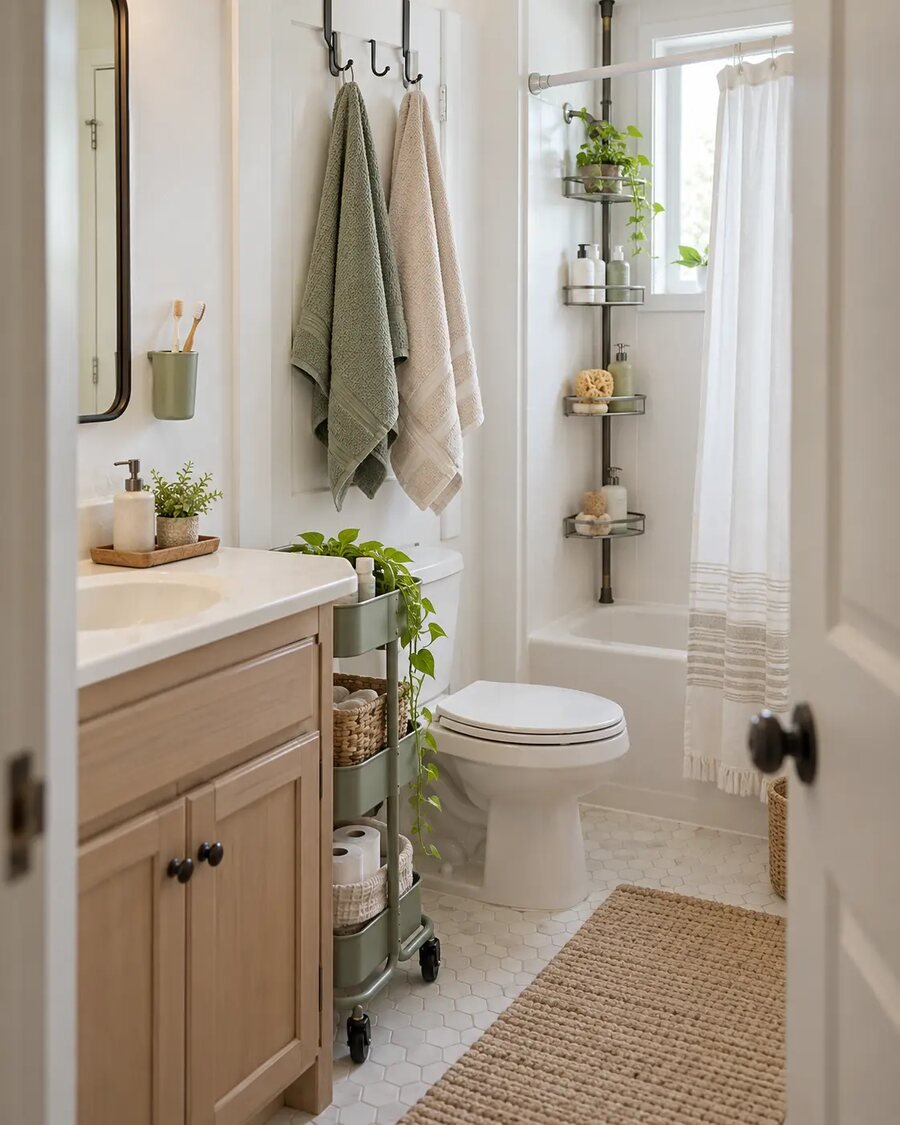
Two or three hooks can fit where a long towel bar cannot. Space them so damp towels do not overlap, and give each regular user a dedicated hook. A short rail with S-hooks can also hold lightweight baskets, though it should stay outside splash zones unless the hardware is suited to the location.
Control Shower-Bottle Clutter
Shower ledges become crowded when every bottle is treated as a daily essential. Keep only the products currently in use inside the shower and move backups elsewhere. This one rule instantly makes the bathing area easier to clean.
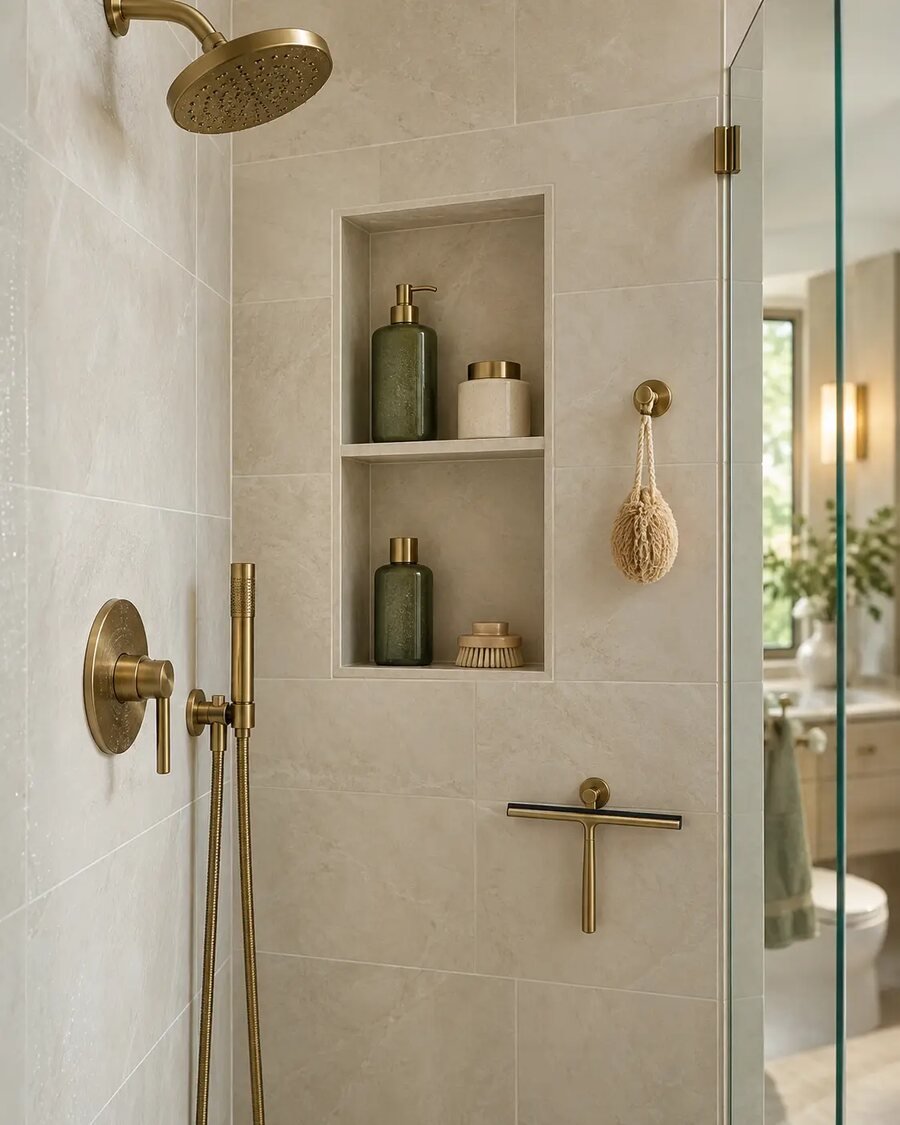
During a remodel, a properly planned recessed niche gives bottles a home without taking shoulder space. Its shelves and waterproofing must be integrated into the wall assembly, so this is work for a qualified installer when you are not experienced with wet-area construction. For an existing shower, choose a rust-resistant corner caddy, a secure over-the-showerhead organizer, or a tension-pole unit that fits the enclosure.
Allow space between bottles for air movement, wipe away pooled water, and clean the organizer regularly. A small hook for a washcloth and a nearby squeegee keep the shower functional without turning the niche into a product display.
Try Renter-Friendly Small Bathroom Storage
Renter-friendly small bathroom storage can be effective without opening a wall. Always check the lease and product instructions, and test removable adhesives in an inconspicuous spot because some finishes are easier to damage than others.
- Over-door hooks: useful for robes and towels when the door closes freely.
- A slim rolling cart: best in a genuine gap where it will not narrow the walkway.
- Tension-pole shower storage: adds tiers without drilling through tile.
- Adhesive cups or lightweight shelves: practical for toothbrushes and small items when rated for humid rooms.
- Stackable bins under the sink: easy to remove when you move and flexible around plumbing.
A cart should not become a second counter. Assign each tier a category, use a lidded container for visually busy items, and keep the top nearly empty. If the cart blocks a cabinet door or cleaning path, it is not the right solution for that room.
Balance Open and Closed Storage
Balanced small bathroom storage uses both open and closed pieces. Open shelves are convenient, but they place every shape, label, and color on display. Closed cabinetry creates visual calm and protects items from splashes. In most small bathrooms, the strongest mix is mostly closed storage with one small open area for towels or a decorative object.
Use matching containers selectively rather than decanting everything. A pair of lidded baskets can unify spare paper and washcloths, while original packaging is safer for products that need directions, ingredients, expiration dates, or child-resistant closures.
If you want the room to feel more polished, repeat one finish—such as pale wood, warm brass, or muted green—in two or three places. This controlled repetition creates the same elevated effect discussed in how to make a bedroom look expensive on a budget: consistency matters more than filling the space with extra decor.
Create a Clear-Counter Rule You Can Maintain
A completely empty counter is not necessary for every household. A realistic rule is to allow one small tray containing two or three true daily-use items, such as hand soap, moisturizer, and a cup. Everything else should have a home behind a door, in a drawer, or on a dedicated wall fixture.
The tray sets a physical limit. If items begin spilling beyond it, return them during a one-minute evening reset. Choose a washable tray with a slightly raised edge, and avoid crowding the area around the faucet where standing water can collect.
Choose Bathroom Storage Upgrades by Budget
| Budget level | Best starting upgrades | Ideal for |
|---|---|---|
| Low | Decluttering, drawer trays, handled bins, hooks, one counter tray | Renters and quick weekend resets |
| Moderate | Slim cart, over-toilet cabinet, wall shelves, better shower caddy | Rooms with unused wall space |
| Higher | Drawer vanity, recessed medicine cabinet, built-in linen tower | Homeowners planning a renovation |
| Remodel | Custom drawers around plumbing, recessed niche, between-stud storage | Bathrooms already being opened and waterproofed |
Your small bathroom storage budget should start with the least expensive change that addresses the bottleneck. If toiletries cover the counter, add drawer or mirror storage before buying towel shelves. If paper goods occupy the vanity, move them to the toilet wall before replacing cabinetry.
Measure first and map door swings, drawer clearance, toilet access, and the walking path. A narrow solution that fits the room is more valuable than a large cabinet that makes daily movement awkward.
Keep Bathroom Storage Moisture-Safe
Bathrooms are humid, so materials and habits matter. Use finishes suitable for bathrooms, keep baskets away from direct splashes, repair plumbing leaks promptly, and avoid packing cabinets so tightly that damp items cannot dry.
The U.S. Environmental Protection Agency explains that moisture control is central to mold prevention and recommends running the bathroom fan or opening a window when showering. Its guide to mold and moisture at home also notes that recurring bathroom mold can often be reduced with better ventilation and more frequent cleaning.
- Do not store damp towels folded inside a closed cabinet.
- Choose washable bins for spill-prone toiletries.
- Keep paper goods away from leaks and shower spray.
- Leave ventilation grilles and fan paths unobstructed.
- Dry cabinet interiors promptly after a leak or spill.
Common Small Bathroom Storage Mistakes
Buying organizers before measuring
A bin that wastes two inches on each side can erase much of a small cabinet’s capacity. Measure interior dimensions, pipes, hinges, and door clearance, then write the numbers in your phone before shopping.
Using every wall
Not every empty surface needs a shelf. Visual space is part of the design. Concentrate storage on one or two hard-working walls and leave the others quiet.
Keeping too many backups in the bathroom
Compact bathrooms work best as point-of-use spaces, not bulk warehouses. Keep one replacement nearby and store the rest in a drier, less valuable storage area.
Choosing open shelves for messy categories
Hair tools, refills, cleaning products, and packages usually look calmer behind a door. Reserve open storage for uniform towels, one lidded basket, or a small decorative accent.
Ignoring cleaning access
If an organizer is difficult to move, dust and moisture collect around it. Favor removable bins, wipeable surfaces, and wall-mounted pieces that leave the floor accessible.
Frequently Asked Questions
How do I add storage to a very small bathroom?
Start by editing what you own, then use hidden and vertical areas: a mirrored cabinet, organized vanity drawers, shallow storage above the toilet, hooks behind the door, and a compact shower caddy. Protect the walkway and keep the counter mostly clear.
What should stay on a bathroom counter?
Keep only items used every day, ideally contained on one washable tray. Hand soap, a toothbrush cup, or one moisturizer may earn counter space. Store makeup, backups, hair tools, and cleaning products in drawers or cabinets.
How can I organize under a bathroom sink with pipes?
Measure the plumbing and use two narrow pull-out bins, handled caddies, or a U-shaped shelf designed around the pipe. Keep leak-prone bottles in washable trays and make sure shutoff valves remain accessible.
Are open shelves good for a small bathroom?
Open shelves work best in moderation. Use them for folded towels or one lidded basket, while storing visually busy toiletries behind doors. Too many exposed products can make a compact room feel cluttered even when everything is technically organized.
Where should extra toilet paper go in a small bathroom?
Keep a few rolls in a closed cabinet above the toilet, a lidded basket on a stable shelf, or a dry section of the vanity. Store bulk packages outside the bathroom so they do not consume prime daily-use space.
What is the best renter-friendly bathroom storage?
Over-door hooks, a narrow rolling cart, removable drawer bins, a tension-pole shower caddy, and moisture-rated adhesive cups are flexible choices. Confirm lease rules and weight limits, and do not place anything where it obstructs doors or walking space.
A Calmer Bathroom Starts With Fewer Decisions
The best small bathroom storage is not the solution that holds the most—it is the one that makes everyday items easy to use, easy to return, and easy to clean around. Begin with a counter reset, organize by routine, and add capacity only where the room genuinely needs it.
A mirrored cabinet, well-divided vanity, one focused vertical-storage wall, and a restrained shower setup can transform a compact bathroom without overwhelming it. Keep the system simple enough to maintain, and clutter will stay under control long after the initial organizing session.

1 Comment