
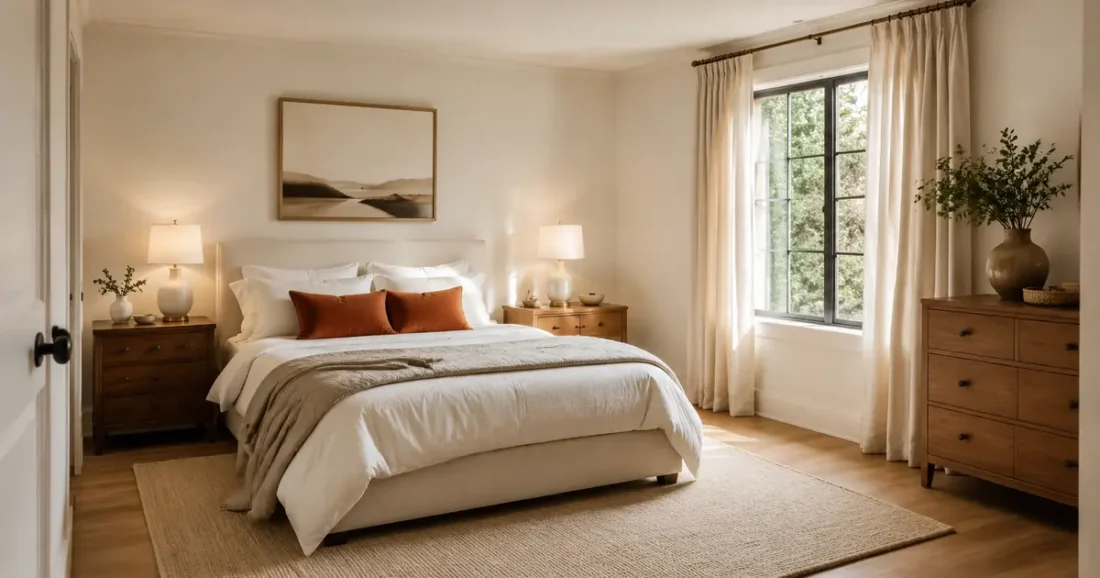
An expensive-looking bedroom is rarely defined by the price of one lamp, duvet, or nightstand. What makes the room feel special is the way everything relates: the bed has visual weight, the lighting is soft but useful, the window treatments look generous, and the surfaces are edited instead of empty or crowded. Those decisions can make modest pieces look considered—and expensive pieces look disappointing when the proportions are wrong.
That is good news when your budget is limited. You do not need to replace every piece of furniture or chase a showroom-perfect look. Start with the details that affect the whole room, reuse what already works, and spend only where the upgrade will be noticed every day. The following plan works whether you are refreshing a rental, decorating a small bedroom, or giving an older furniture set a more current finish.
Table of Contents
Start With an Edit, Not a Shopping List
The fastest no-cost improvement is to remove the visual noise that prevents your best pieces from being noticed. Clear clothing from chairs, move charging cables out of sight, reduce the number of items on the nightstands, and take anything off the dresser that does not serve a purpose or contribute to the composition. This is not about making the bedroom look unoccupied. A book, small dish, framed photograph, or branch in a vase adds personality; a scattered collection of unrelated objects makes the same surface feel unfinished.
Next, study the room from the doorway. The bed should normally be the first clear focal point. If a laundry basket, television cord, crowded open rack, or undersized artwork claims more attention, rearrange or conceal it before buying decor. Try moving an existing mirror opposite or beside a window, centering the rug more deliberately under the bed, and aligning the lamps with the edges of the headboard. Small corrections to placement often create more polish than another accessory.
Choose a Tight, Restful Color Palette
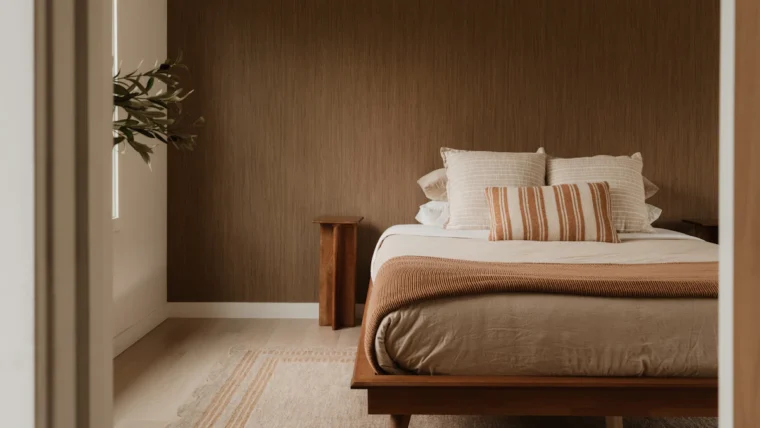
A room looks more intentional when its colors appear to belong to the same story. Choose one main neutral, one supporting tone, and one restrained accent. A warm white room, for example, could combine oatmeal textiles, medium walnut, and a small amount of rust or olive. A cooler scheme might use soft gray, dusty blue, charcoal, and brushed nickel. You do not need every finish to match, but repeating each important color two or three times creates continuity.
Begin with what is expensive or impractical to replace—the flooring, bed frame, large dresser, and wall color. Build the palette around those fixed elements. If the carpet has a warm beige cast, icy white bedding may look disconnected; ivory or flax will usually bridge the difference more gracefully. If the bed is black metal, repeat black once in a picture frame or lamp base so it appears deliberate rather than isolated.
For more current palette inspiration, the site’s guide to home decor trends for 2026 explains how warm neutrals and earthy accents can be used without making a room feel dated. Trends should be treated as optional accents, however, not a reason to replace everything you own.
If repainting is part of the plan, test a sample in morning, afternoon, and evening light. A low-sheen wall finish tends to feel softer and is more forgiving of minor imperfections, while satin or semi-gloss can give smooth trim subtle contrast. Benjamin Moore’s guide to interior paint finishes explains the practical differences.
Make the Bed the Visual Anchor
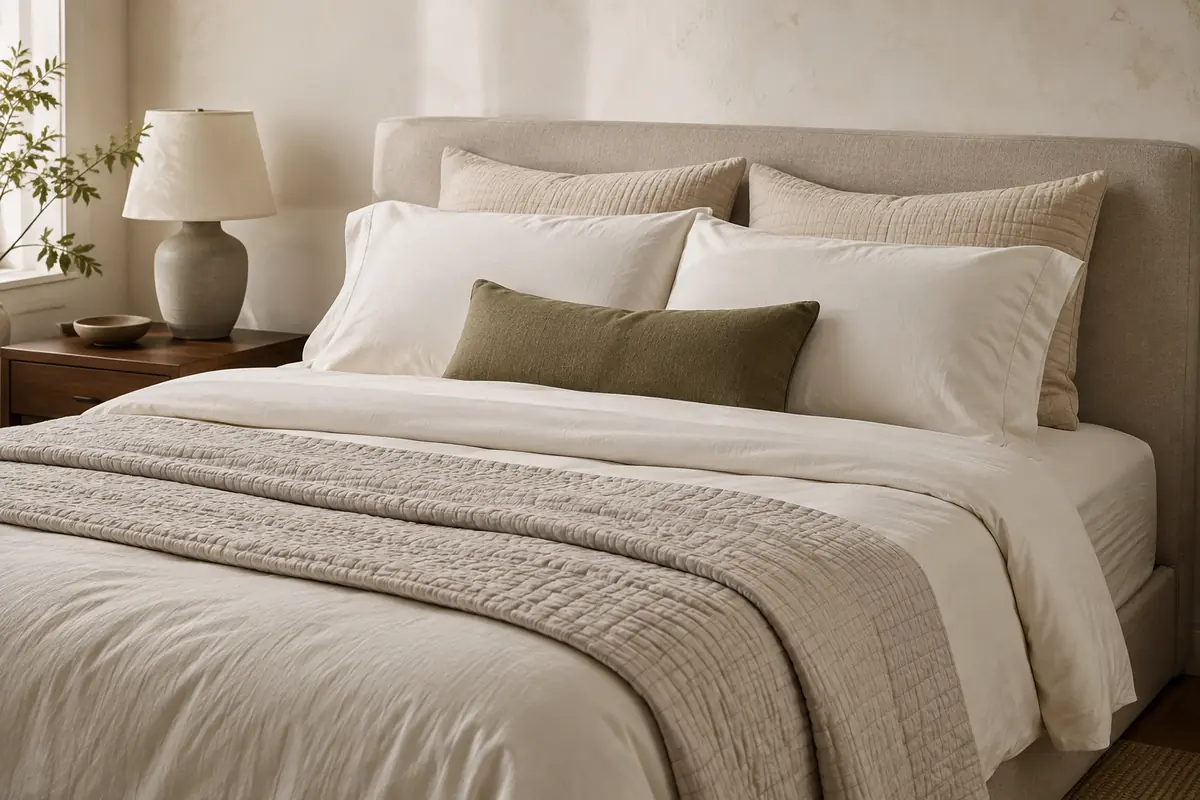
The bed covers more visual space than almost anything else in a bedroom, so improving it delivers an immediate return. A luxury look comes from fit, fullness, and texture—not from piling on a dozen pillows.
Start with bedding that fits correctly. A duvet insert that collapses inside an oversized cover will look tired no matter how expensive the fabric is. Smooth the cover, distribute the filling into the corners, and fold the top portion back to create depth. If you like a fuller hotel-style appearance, choose an insert designed for generous loft, but check its care requirements and warmth before purchasing. Comfort still matters more than a staged photograph.
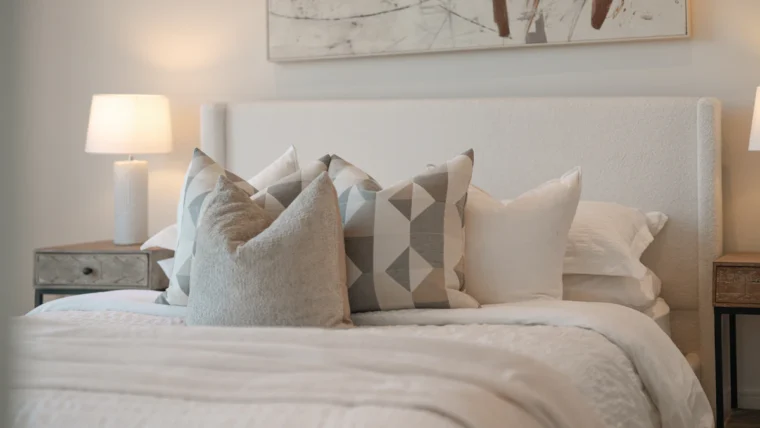
Use three visible layers: a smooth foundation, a loftier middle layer, and one textured accent. That might mean cotton sheets, a plain duvet, and a woven throw folded across the lower third of the bed. Restrict decorative pillows to a practical arrangement: sleeping pillows at the back, one smaller pair or two generous shams, and a single lumbar cushion. The bed should still be easy to make each morning.
You can find complementary ideas in 10 Modern Bedroom Ideas for a Cozy Retreat, especially if you want the room to feel refined without losing warmth.
Correct the Scale Around the Bed
High-end rooms usually feel balanced because the pieces are appropriately scaled. A tiny lamp on a wide nightstand or a narrow picture floating above a king bed can make the entire wall feel unresolved. You do not necessarily need larger furniture; you need the visible arrangement to hold its own against the bed.
Aim for nightstands that sit reasonably close to the top of the mattress so a glass of water or book is easy to reach. They do not have to be a matching pair. Two pieces can work together when they share a similar visual weight, height, color, or material. If one side has a small table, give it presence with a taller lamp or a modest stack of books.
Above the bed, choose one substantial piece of art, a balanced pair, or a compact grouping that reads as a single composition. Keep it narrower than the mattress or headboard, and leave enough space around it to feel intentional. If you already own several small frames, use matching mats or repeat one frame finish to unify them.
A headboard is not mandatory, but the wall needs an anchor. Affordable alternatives include a simple upholstered panel, painted arch, shallow picture ledge, or securely hung textile.
Hang Curtains High, Wide, and Full
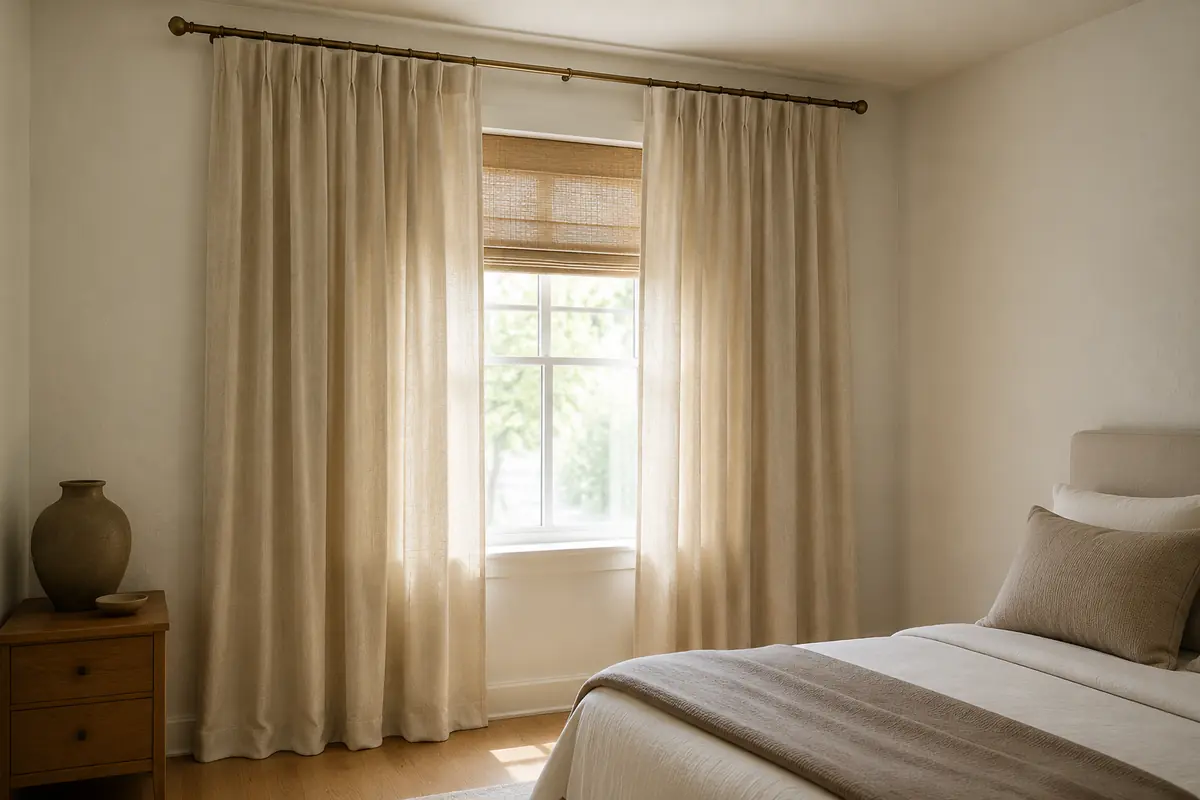
Short, narrow curtains visually compress a bedroom. When possible, mount the rod above the window frame and extend it beyond the glass so the open panels do not block much daylight. Full-length panels that just meet the floor usually create the cleanest, most forgiving finish; a deliberate puddle can look romantic, but it also collects dust and requires more upkeep.
Measure before shopping. IKEA’s curtain measurement guide recommends extending a fabric-curtain rod at least 6 inches (15 cm) on each side and using roughly 1.5 to 2 times the rod length for a single-pleat effect. Those proportions prevent panels from looking skimpy. Always adapt them to nearby walls, closet doors, vents, radiators, and window handles.
If custom curtains are outside the budget, buy ready-made panels long enough for the intended rod height and hem them with sewing tape or a simple stitched finish. Choose a fabric with a convincing drape rather than a shiny material that photographs well but hangs stiffly. Cotton blends, linen-look weaves, and softly textured blackout panels can all appear polished when they are full and properly pressed.
Layer the Lighting Instead of Relying on One Fixture
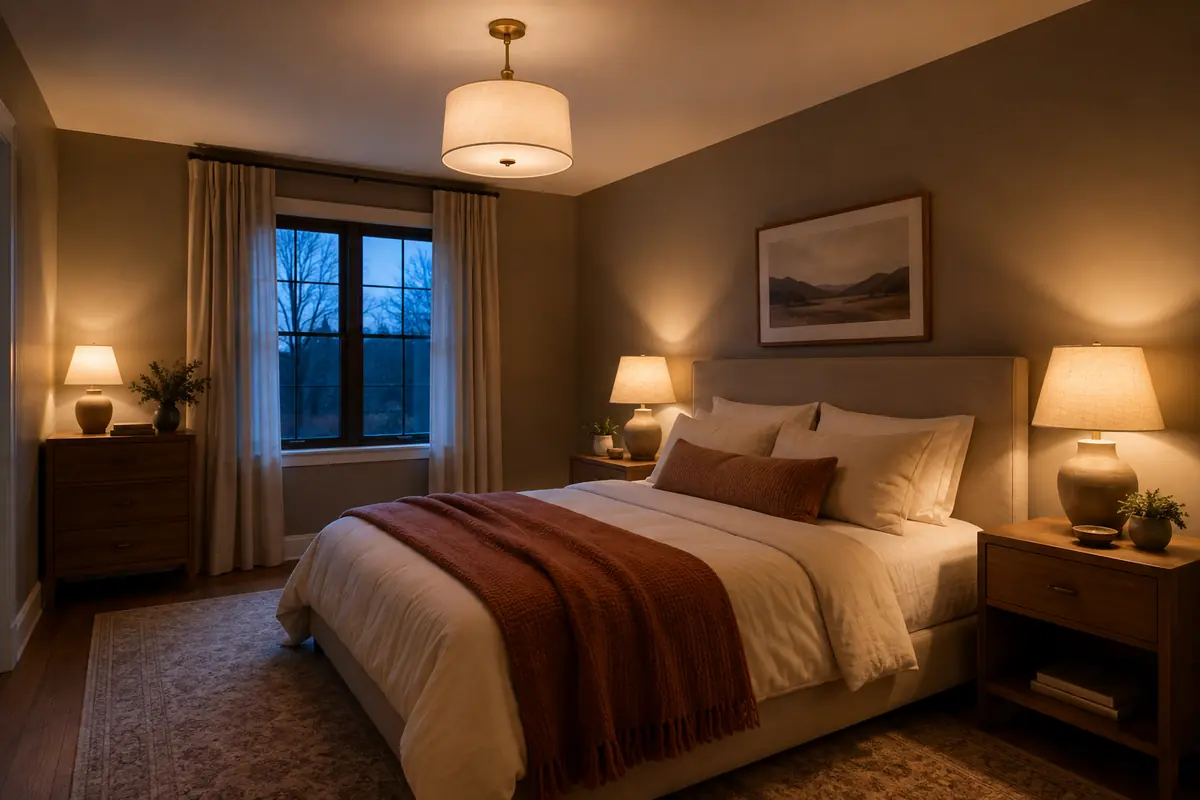
A harsh ceiling light can flatten color and make even a thoughtfully decorated bedroom feel utilitarian. Build the lighting in layers: general light for getting dressed and cleaning, bedside light for reading, and a softer accent source for atmosphere. You may already own enough fixtures; simply moving them and standardizing the bulbs can improve the room.
For a warm bedroom appearance, bulbs around 2700K are a practical starting point. The U.S. Department of Energy’s lighting guidance describes approximately 2700K as warm white and notes that color temperature can change the apparent warmth of a room and its finishes. Use the same color temperature in fixtures that are visible together.
Place bedside lamps at a height that illuminates a book without exposing a glaring bulb when you are sitting in bed. Wall-mounted or plug-in sconces can free the nightstand and create a tailored appearance, but check their cords and mounting hardware carefully. A small lamp on a dresser or in a dark corner will give the room more depth than an extremely bright bulb in one central fixture.
Refresh Furniture Instead of Replacing Every Piece
Budget furniture often looks more expensive after one strong detail is corrected. Replace lightweight or dated drawer pulls with hardware that feels comfortable and suits the room’s finish. Fill unused holes properly if the new pull has different spacing. Clean, tighten, and align drawers before judging the result—crooked gaps will remain noticeable under beautiful hardware.
Paint can unify a mismatched dresser or nightstand, but preparation determines whether it looks polished. Clean the surface, repair chips, sand or degloss as recommended for the material, use a compatible primer, and allow each coat to cure. A nearly matte body with a slightly more durable finish on the top can look refined, provided the products are compatible. Do not paint valuable vintage furniture before checking whether refinishing would reduce its character or value.
Look beyond traditional bedroom sets. A compact chest, small writing desk, wall shelf, or sturdy side table can serve as a nightstand. Matching every piece can make a room feel like a catalog package; coordinated differences often look more collected and personal.
Use Art, Mirrors, and Texture With Restraint
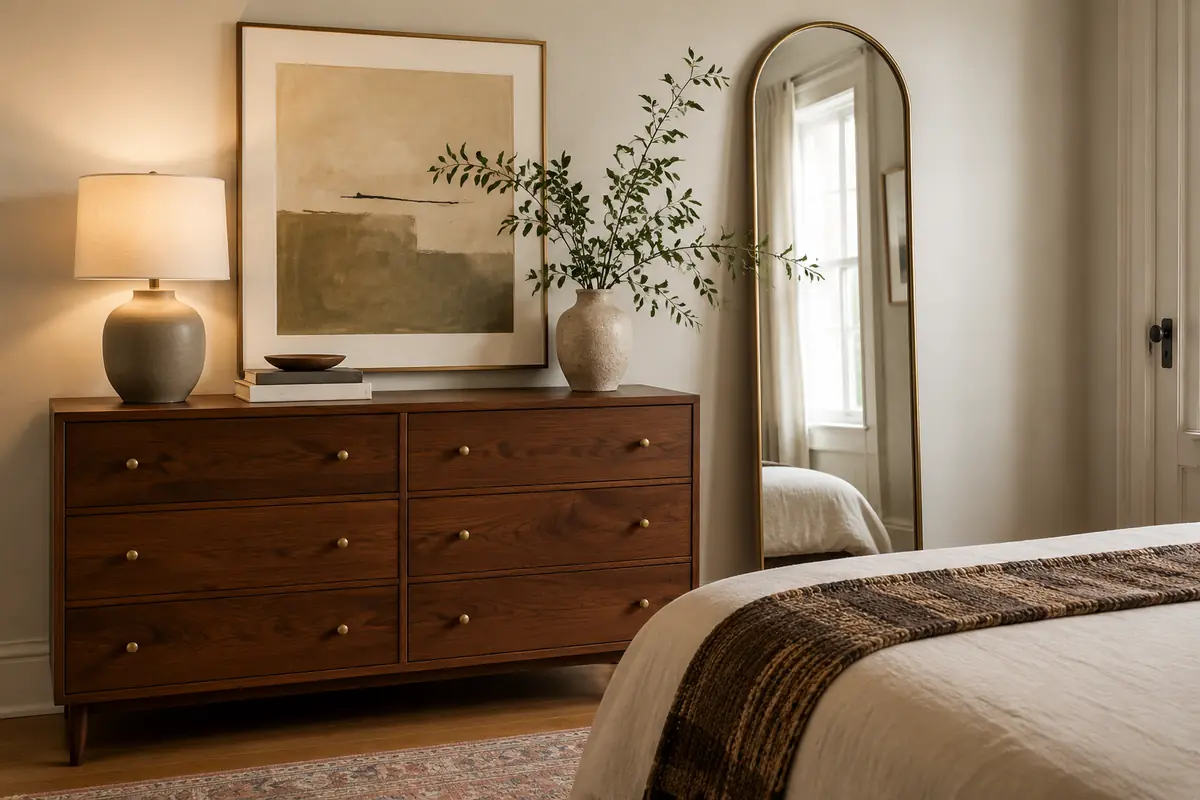
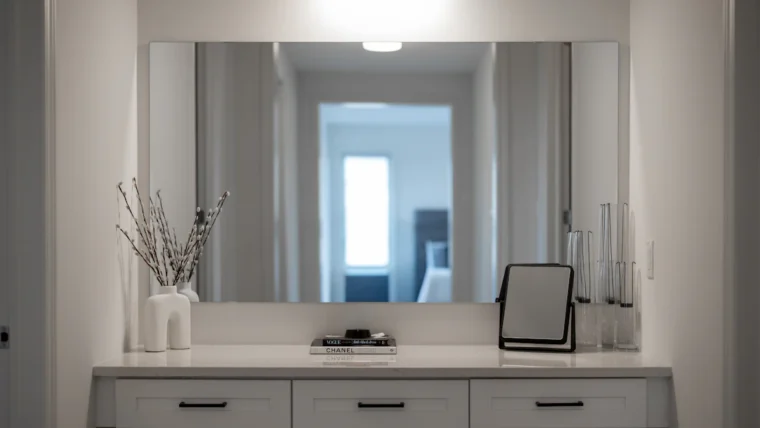
An oversized mirror can reflect daylight and give a blank wall purpose, but placement matters. Lean a heavy mirror only when it is designed and secured for that use. Avoid positioning a mirror where it reflects a cluttered open closet or creates glare from a bare bulb. A thrifted frame can be refreshed with careful cleaning or a restrained paint finish while preserving its useful patina.
Art looks more expensive when it has breathing room and a purposeful relationship to the furniture below it. Printable art can work if the paper, mat, and frame are convincing. Use a larger mat to give a modest print more presence, or group small pieces in a disciplined grid. Do not scatter small frames across every wall.
Texture prevents a neutral bedroom from becoming flat. Mix a crisp cotton, a nubby weave, smooth wood, and one reflective accent rather than buying several objects in the same trendy material. A woven throw, upholstered headboard, ceramic lamp, and brushed-metal frame provide enough contrast for most rooms. Repeat materials selectively so the room feels connected.
Decide Where to Spend and Where to Save
The most effective budget is based on impact, not an equal amount for every category. Spend more on what you touch daily or what establishes the room’s scale. Save on small decorative pieces that can be thrifted, moved from another room, or updated with paint.
| Budget level | Best priorities | What to postpone |
|---|---|---|
| No-spend refresh | Declutter, rearrange, clean fixtures, restyle bedding, move art, conceal cables | New decorative accessories |
| About $25–$75 | Matching warm bulbs, pillow covers, a simple tray, thrifted frame, new drawer hardware | A full matching furniture set |
| About $75–$200 | Better-fitting duvet or insert, full-length curtain panels and rod, larger artwork | Multiple small trend pieces |
| About $200–$400 | A correctly sized rug, durable bedding, substantial headboard, or one quality light fixture | Replacing items that already function well |
Prices vary by size, region, and material, so treat these ranges as planning guides rather than shopping guarantees. Choose one improvement that corrects the biggest weakness in the room. A properly sized rug will do more for a bare floor than five decorative cushions; good curtain proportions will have more impact than expensive tiebacks on undersized panels.
Follow a Practical Weekend Makeover Order
Avoid buying everything at once. Use this order so each decision informs the next:
- Photograph the bedroom from the doorway and from the foot of the bed.
- Remove clutter and anything waiting to be repaired or relocated.
- Set the bed, rug, dresser, and nightstands in their best positions.
- Choose a three- or four-color palette based on the fixed elements.
- Make the bed with the layers you already own and note what is truly missing.
- Correct the window treatment and lighting before shopping for accessories.
- Hang art only after the furniture placement is settled.
- Add a few useful decorative details, then remove one item from any surface that feels crowded.
Take another set of photographs before shopping. A photo flattens the room and makes awkward scale, bare areas, and color repetition easier to see. It also helps prevent attractive but unrelated purchases.
Common Mistakes That Make a Bedroom Look Cheaper
The most common mistake is buying many small items instead of fixing one large visual problem. Tiny rugs, short curtains, miniature lamps, and scattered wall decor create fragmentation. Correct the scale first.
Do not confuse luxury with shine. Glossy bedding, mirrored furniture, metallic wallpaper, and velvet can each work, but using all of them together often feels forced. Pair one glamorous element with quieter textures and repeat finishes selectively.
Finally, avoid styling that makes the room harder to use. If pillows land on the floor every night, curtains block a vent, or a decorative tray consumes the entire nightstand, the room will not feel luxurious in daily life. Ease and order are part of the finished look. The same principle—function first, followed by texture and personality—also appears in this step-by-step room decorating guide.
Frequently Asked Questions
What is the cheapest way to make a bedroom look expensive?
Begin by decluttering, centering the bed, concealing cables, restyling the bedding, and repositioning lamps or art. These no-cost changes improve order and proportion. If you can spend a little, matching warm-white bulbs and full-length curtains usually affect more of the room than small accessories.
What colors make a bedroom look more luxurious?
Warm whites, soft taupes, muted greens, dusty blues, and deep earthy accents can all look refined. The specific color matters less than consistency. Choose a limited palette, repeat each important tone, and test paint in the bedroom’s natural and artificial light.
Does white bedding always make a bedroom look expensive?
No. White bedding can create a crisp hotel-inspired look, but ivory, oatmeal, soft gray, or muted color can feel equally polished. Correct fit, clean fabric, visible texture, and a neatly made bed are more important than choosing pure white.
Can mismatched bedroom furniture still look high-end?
Yes. Mismatched pieces work when they share a connecting detail such as similar height, visual weight, wood tone, hardware finish, or color. Avoid forcing every item to match; repeat a few materials or colors so the differences look collected rather than accidental.
How many decorative pillows should be on a bed?
Use the fewest number that gives the bed enough structure. Sleeping pillows, one pair of shams, and one lumbar cushion are sufficient for many queen and king beds. A simpler arrangement is easier to maintain and often looks more confident than a crowded one.
How can renters create an expensive-looking bedroom?
Focus on reversible changes: long curtains, plug-in sconces, removable picture hooks, a large rug, upgraded bedding, and freestanding storage. Keep original hardware labeled and safely stored if your lease allows temporary replacements, and confirm wall-mounting rules before installation.
A Polished Bedroom Comes From Better Decisions
To make a bedroom look expensive on a budget, focus on the elements that shape the whole view: a well-made bed, correctly scaled pieces, generous curtains, warm layered lighting, and a controlled palette. Edit what you own before shopping, then put the available budget toward the one change that will improve the room every day. The result should not look expensive because it imitates a hotel or showroom; it should feel valuable because it is calm, comfortable, and thoughtfully finished.

1 Comment